David Levi Strauss – författare
Visar alla böcker från författaren . Handla med fri frakt och snabb leverans.
9 produkter
9 produkter
Inbunden, Engelska, 2010
455 kr
Skickas inom 5-8 vardagar
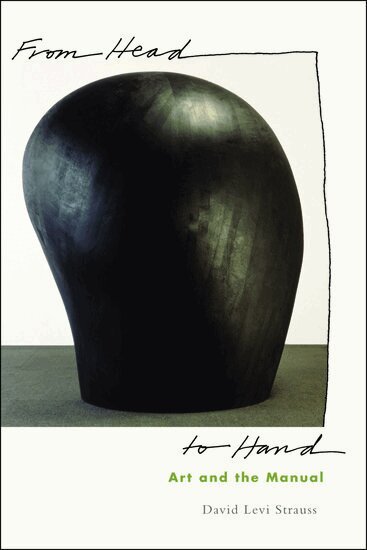
In his third book, David Levi Strauss delves into the mysterious process whereby an image or idea is born in the mind and materialized through the hand in the expression of an artwork. How exactly does this exchange take place? It's a question so basic, an act so fundamental to art-making, that it has rarely received attention. It makes an ideal topic for Strauss, one of our best art critics, who has an exceptional ability to animate art's philosophical dimensions in clear, persuasive manner. Featuring over 25 illustrations, the book explores the works of sculptors including Martin Puryear, painters like Ron Gorchov, the work of contemporary Haida carvers, and many recent writers. He takes up Cecilia Vicuña's "memory of the fingers;" reframes the legacy of Leon Golub and Nancy Spero; and grapples with the handiwork of curators in staging exhibitions. Known primarily for his writings on photography and politics, Strauss focuses here on the least mediated arts--painting, sculpture, and writing--to recover art's most raw resource: the immediacy of the hand and the language it makes possible.
E-bok
PDF, Engelska, 2010367 kr
Läs direkt efter köp
In his third book, Strauss delves into the mysterious process whereby an idea is born in the mind and materialized through the hand in the expression of an artwork. How exactly does this happen? It''s a question so basic, an act so fundamental to art-making, that it has rarely received attention. It makes an ideal topic for Strauss, a writer with an exceptional ability to animate art''s philosophical dimensions in a clear, persuasive manner. During this time when craft and the direct manipulation of materials by the artist appear to be in eclipse, Strauss comes to their defense in a spirited cri de coeur. Featuring over 35 illustrations, the book examines a wide variety of media and individual examples. It explores the works of sculptors Martin Puryear, Ursula von Rydingsvard, and Donald Lipski; painters Leon Golub and Ron Gorchov; and writers Robert Duncan, Robert Kelly, Guy Davenport, John Berger, and Leo Steinberg. In addition, there are essays on Joseph Beuys''s 7000 Oaks in Ireland, contemporary Haida carvers Reg Davidson and Jim Hart, Cecilia Vicu?a''s "memory of the fingers," and the influence of curators Harald Szeemann and Walter Hopps on the staging of contemporary art exhibitions. Known primarily for his writings on photography and politics, Strauss here focuses on the least mediated arts--painting, sculpture, and writing. His claims are supported by a series of close readings which succeed in recovering the immediacy of the hand and revitalizing contemporary art''s connection to the past.
E-bok
Engelska, 2010367 kr
Läs direkt efter köp
In his third book, Strauss delves into the mysterious process whereby an idea is born in the mind and materialized through the hand in the expression of an artwork. How exactly does this happen? It''s a question so basic, an act so fundamental to art-making, that it has rarely received attention. It makes an ideal topic for Strauss, a writer with an exceptional ability to animate art''s philosophical dimensions in a clear, persuasive manner. During this time when craft and the direct manipulation of materials by the artist appear to be in eclipse, Strauss comes to their defense in a spirited cri de coeur. Featuring over 35 illustrations, the book examines a wide variety of media and individual examples. It explores the works of sculptors Martin Puryear, Ursula von Rydingsvard, and Donald Lipski; painters Leon Golub and Ron Gorchov; and writers Robert Duncan, Robert Kelly, Guy Davenport, John Berger, and Leo Steinberg. In addition, there are essays on Joseph Beuys''s 7000 Oaks in Ireland, contemporary Haida carvers Reg Davidson and Jim Hart, Cecilia Vicu?a''s "memory of the fingers," and the influence of curators Harald Szeemann and Walter Hopps on the staging of contemporary art exhibitions. Known primarily for his writings on photography and politics, Strauss here focuses on the least mediated arts--painting, sculpture, and writing. His claims are supported by a series of close readings which succeed in recovering the immediacy of the hand and revitalizing contemporary art''s connection to the past.
Häftad, Engelska, 2012
194 kr
Skickas inom 5-8 vardagar
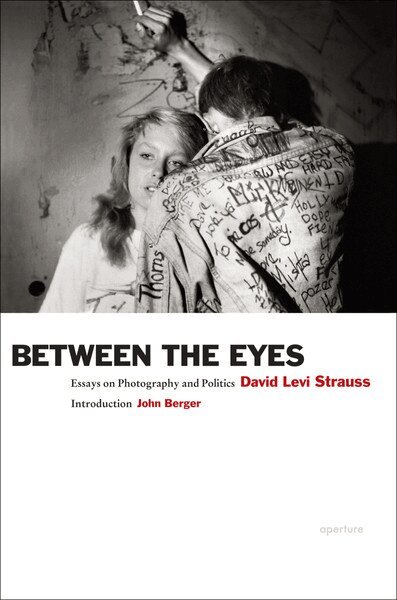
David Levi Strauss is a writer whose visual and intellectual sensibilities are both acute and expansive. His trenchant writings on photography and photographers have been collected for this volume from a broad range of magazines, including Aperture, Artforum and The Nation. In Between the Eyes: Essays on Photography and Politics, Strauss tackles subjects as diverse as “Photography and Propaganda,” the imagery of dreams, Sebastiao Salgado's epic social documents and the deeply personal photographic revelations of Francesca Woodman. The timely issue of photographic legitimacy is addressed in the essay “Photography and Belief,” and in “The Highest Degree of Illusion,” Strauss discusses the media frenzy surrounding the events of September 11. As our world is shaped more and more by images and their slipperiness, what he calls a media “pandemonium” in its root meaning of “the place of all howling demons,” we need a mind and voice like Levi Strauss' to bring clarity to our vision.
Inbunden, Engelska, 2020
1 106 kr
Skickas inom 5-8 vardagar
26 kr
Läs direkt efter köp
Anhand einer 3-D-Postkarte der Twin Towers von Joseph Beuys mit dem Titel Cosmos & Damian (1974) untersucht der Autor David Levi Strauss den Beuys''schen Prophetismus und die Maßnahmen seiner »Kunst der Heilung«. 27 Jahre bevor das World Trade Center zum Ziel einer internationalen fundamentalistischen Terrorgruppe erklärt wurde, hatte Beuys die Zwillingstürme frühzeitig als Symbole einer kalten »Todeszone« erkannt, in der das Kapital regiert. Diese verschwisterten Wunden der Gesellschaft benannte Beuys handschriftlich nach zwei historischen Wanderheilern: den arabischen Zwillingsbrüdern und christlichen Heiligen Cosmas und Damian. Auf den Spuren dieses ursprünglich indoeuropäischen Mythos reist Levi Strauss durch die Kunstgeschichte und füllt Beuys'' »therapeutische Bildmagie« mit neuem Leben.Der Autor David Levi Strauss leitet das Graduiertenprogramm für Kunstkritik an der School of Visual Arts in New York.Sprache: Deutsch/Englisch
E-bok
PDF, Tyska, 202326 kr
Läs direkt efter köp
Anhand einer 3-D-Postkarte der Twin Towers von Joseph Beuys mit dem Titel Cosmos & Damian (1974) untersucht der Autor David Levi Strauss den Beuys''schen Prophetismus und die Maßnahmen seiner » Kunst der Heilung«. 27 Jahre bevor das World Trade Center zum Ziel einer internationalen fundamentalistischen Terrorgruppe erklärt wurde, hatte Beuys die Zwillingstürme frühzeitig als Symbole einer kalten »Todeszone « erkannt, in der das Kapital regiert. Diese verschwisterten Wunden der Gesellschaft benannte Beuys handschriftlich nach zwei historischen Wanderheilern: den arabischen Zwillingsbrüdern und christlichen Heiligen Cosmas und Damian. Auf den Spuren dieses ursprünglich indoeuropäischen Mythos reist Levi Strauss durch die Kunstgeschichte und füllt Beuys'' » therapeutische Bildmagie « mit neuem Leben. Der Autor David Levi Strauss leitet das Graduiertenprogramm für Kunstkritik an der School of Visual Arts in New York. Sprache: Deutsch/Englisch
Häftad, Engelska, 2016
161 kr
Tillfälligt slut
Häftad, Engelska, 2014
262 kr
Tillfälligt slut
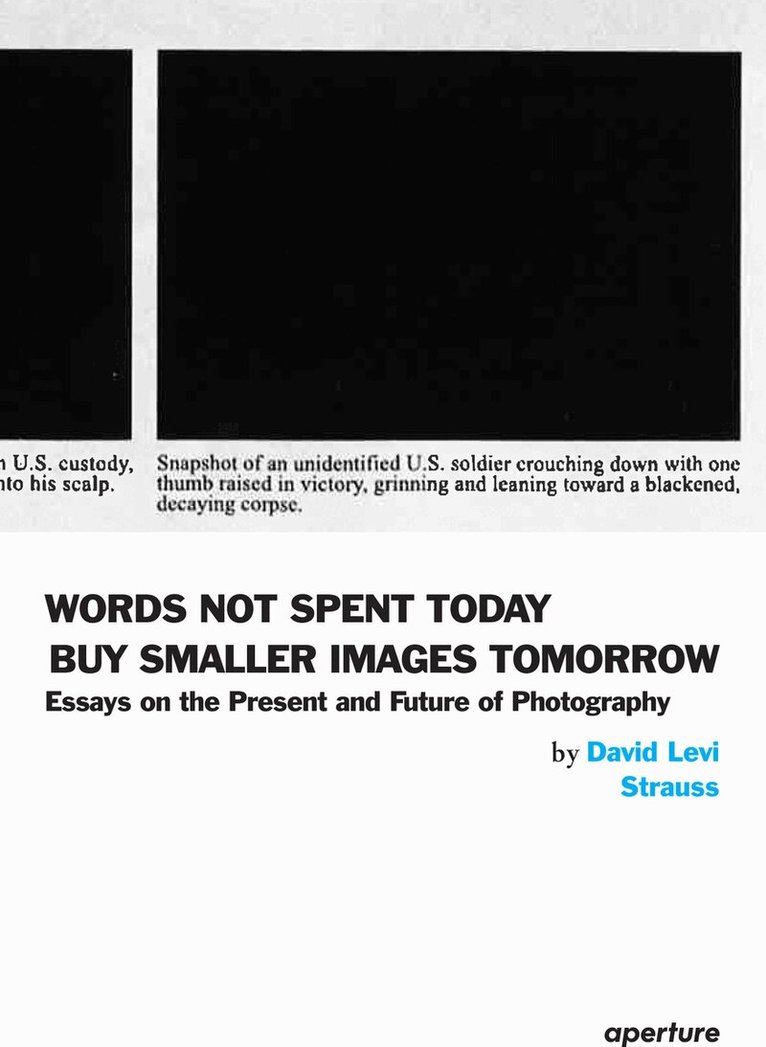
At this transitional moment in the field of photography, how should we consider what is to come for the medium? Can its past and present practitioners help guide us, both as creators and as observers? David Levi Strauss—eminent author, critic, and teacher—rises to the challenge of these questions and more in Words Not Spent Today Buy Smaller Images Tomorrow: Essays on the Present and Future of Photographs. In the course of twenty-five essays, Strauss discusses the work of artists who provoke us with revealing, clear-eyed investigations of the ostensibly patent world in front of us, and others who transport us to new realms, poetic and unreal—creative minds ranging from Frederick Sommer, Helen Levitt, Daido Moriyama, and Joseph Beuys, to contemporary photographers Sally Mann, James Nachtwey, Susan Meiselas, Robert Bergman, Tim Davis, and many others. Also considered are the groundbreaking theoretical writings of Susan Sontag and Jean-Luc Nancy, the films of Chris Marker and Stan Brakhage, and issues and events that have irrevocably altered the way we consider the medium of photography and how it communicates: 9/11, Abu Ghraib, the death of Osama bin Laden, the Arab Spring, and Occupy Wall Street. Words Not Spent Today is an incisive exploration of photography’s changing role as a tool of evidence and conscience as we move forward into—can we say it?—a post-photographic era.