David Mather – författare
Visar alla böcker från författaren David Mather. Handla med fri frakt och snabb leverans.
6 produkter
6 produkter
369 kr
Skickas inom 10-15 vardagar
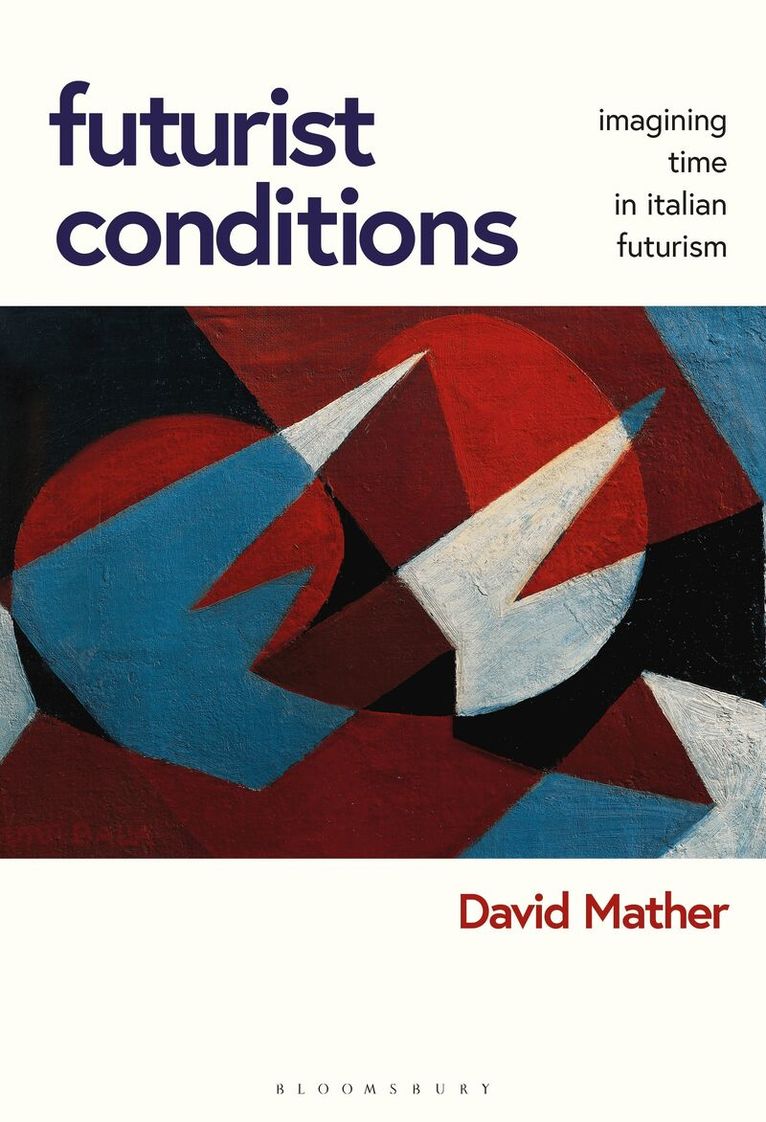
Italian futurism visualized diverse types of motion, which had been rooted in pervasive kinetic and vehicular forces generated during a period of dramatic modernization in the early 20th century. Yet, as David Mather’s sweeping intellectual and art historical scholarship demonstrates, it was the camera—not the engine—that proved to be the primary invention against which many futurist ideas and practices were measured.Overturning several misconceptions about Italian futurism’s interest in the disruptive and destructive effects of technology, Futurist Conditions provides a refreshing update to the historical narrative by arguing that the formal and conceptual approaches by futurist visual artists reoriented the possibly dehumanizing effects of mechanized imagery toward more humanizing, spiritual aims. Through its sustained analysis of the artworks and writings of Umberto Boccioni, Giacomo Balla, and the Bragaglia brothers, dating to the first decade after the movement’s founding in 1909, Mather’s account of their obsession with kinetic motion pivots around a 1913 debate on the place and relative import of photography among traditional artistic mediums—a debate culminating in the expulsion of the Bragaglias, but one that also prompted a range of productive responses by other futurist artists to world-changing social, political, and economic conditions.
English Electric Class 37
Co Co Diesel Electric Locomotives From Design to Demise
Inbunden, Engelska, 2025
379 kr
Skickas
The versatile and reliable Class 37s quickly established themselves as a firm favourite with engine men and enthusiasts alike. Equally at home in charge of Class 1 passenger or heavy freight trains they would prove their worth over lines the length and breadth of the network, operating from their initial delivery in 1960 through the demise of steam traction and even into the modern era.This book explains their origin, development and operation, with information on every one of the 309 examples introduced. Over time numerous modifications were made resulting in a number of sub-classes. Many are described in detail, including black and white and colour photographs depicting their transformations through the decades. Soon becoming the traction of choice to head rail-tours they were, and still are, in great demand by the preservation movement. They continue to attract enthusiasts of classic traction and several are key members of the locomotive pools of heritage railways throughout the land.David Mather describes the long and successful career of this iconic class and explains the origin and demise of those which succumbed to the cutter’s torch, together with details and up to date photographs of many in preservation, where they continue to operate to the delight of railway enthusiasts of all ages.
English Electric Class 55
Deltic Diesel Electric Locomotives, Flagship of the East Coast Main Line
Inbunden, Engelska, 2026
379 kr
Kommande
The East Coast Main Line has achieved a well-deserved reputation as the showground for some of the fastest trains to run between London and Edinburgh. Often remembered as ‘the route of the Flying Scotsman’, in steam days it was the iconic Gresley A4s which raced between the two capitals. As steam traction came to an end the search was on for a worthy replacement. Locomotives which could haul heavy passenger trains at even faster speeds along a track designed for record breakers. The age of the diesel-electric locomotive was upon us. Many were tried and tested before one would come to the fore. The engine design of ‘the chosen one’ was revolutionary in itself. Never before had such a concept been applied to railway locomotive power units.The long-established London engineering company of D. Napier and Son had built a reputation for power and precision, from motor cars to engines for the armed services and as time passed their designs evolved into high-speed compression-ignition forms generating exceptionally high power and thermal efficiency with very low fuel consumption. From these the inverted Delta design with its triangular opposed piston layout was developed. The Deltic engine was born and to house it the locomotive which would carry its name. A class of locomotive which would go on to set new standards when they emerged from English Electric’s Vulcan Foundry to grace the East Coast Main Line.
273 kr
Skickas
For as long as we could remember steam traction had been king on our railways. The resounding beat of exhaust from classic designs by Gresley, Stanier, Collett, Bulleid and many others had thrilled us all, while less prestigious work-horses' had kept commuters and freight moving throughout a vast network of major and minor routes. Mighty diesels had replaced them, notably the iconic Class 55 Deltics', setting new standards for speed and efficiency on the East Coast Main Line.Electrification became the buzz-word' as the need for speed increased and drove railway planning to a new level. The West Coast Main Line saw the wires go up by the mid-1970s and though other express routes would eventually follow the stage was set for the development and introduction of an alternative mode of traction for main lines not yet electrified, based on the concept of a powerful diesel locomotive at each end of a rake of newly designed carriages.The High Speed Diesel Train was thus conceived. Sleek and elegant. A modern design for a new age of rail travel. Capable of running at speeds of up to 125mph (201km/h) it was an immediate success and is still giving stalwart service some forty years later. A testament to its resilience.This is the story of the archetypal express diesel train - the Inter City 125.
351 kr
Skickas inom 5-8 vardagar
76 kr
Skickas