
David McDermott Hughes – författare
Visar alla böcker från författaren . Handla med fri frakt och snabb leverans.
6 produkter
6 produkter
Häftad, Engelska, 2008
578 kr
Skickas inom 3-6 vardagar
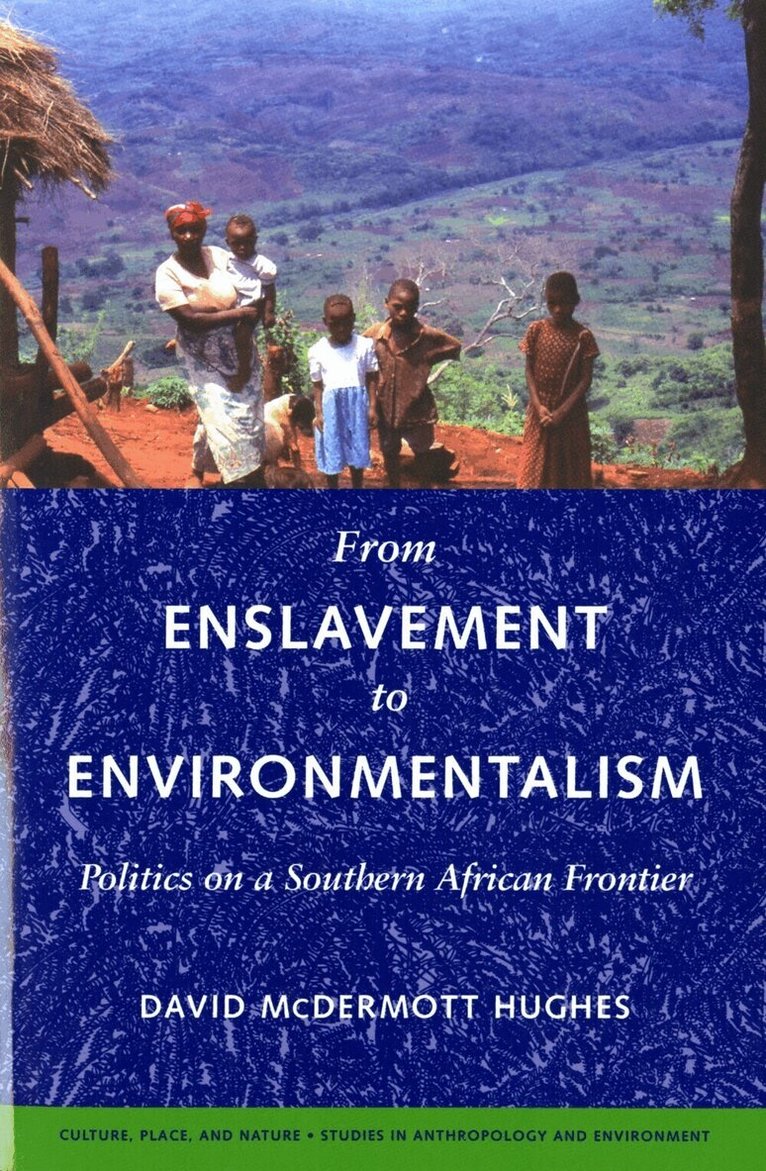
From Enslavement to Environmentalism takes a challenging ethnographic and historical look at the politics of eco-development in the Zimbabwe-Mozambique border zone. David Hughes argues that European colonization in southern Africa--essentially an unsuccessful effort to turn the region into another North America or Australia--has profoundly reshaped rural politics and culture and continues to do so, as neoliberal developers commoditize the lands of African peasants in the name of conservation and economic progress.Hughes builds his engaging analysis around a sort of natural experiment: in the past, whites colonized British Zimbabwe but avoided Portuguese Mozambique almost entirely. In Zimbabwe, chiefdoms that had historically focused on controlling people began to follow the English example of consolidating political power by dividing and controlling land. Meanwhile, in Mozambique, Portugal perpetuated traditional practices of recruiting and distributing forced labor as the primary means of securing power. The territory remained unmapped. For almost the entire twentieth century, a sharp disjuncture in the politics of land, leadership, labor, and resource use marked the border zone.In the late 1990s, as white South Africans began to establish timber plantations in Mozambique, that difference began to be effaced. Under the banner of environmentalism and economic progress, tourism firms were allowed to claim peasant farmland. The objectives of liberal conservationists and developers, though high-minded, led them to commoditize ancestral lands. Southern African policymakers supported this new form of colonization as a form of racial integration between white investors and black peasants, paving the way for an ironic and contentious situation in which ethnic tolerance, gentrification, and land-grabbing have gone hand in hand.From Enslavement to Environmentalism engages topics central to current debates in anthropology, resource politics, and development policy, and will be of interest to both regional specialists and generalists.
Häftad, Engelska, 2017
335 kr
Skickas inom 5-8 vardagar
In Energy without Conscience David McDermott Hughes investigates why climate change has yet to be seen as a moral issue. He examines the forces that render the use of fossil fuels ordinary and therefore exempt from ethical evaluation. Hughes centers his analysis on Trinidad and Tobago, which is the world's oldest petro-state, having drilled the first continuously producing oil well in 1866. Marrying historical research with interviews with Trinidadian petroleum scientists, policymakers, technicians, and managers, he draws parallels between Trinidad's eighteenth- and nineteenth-century slave labor energy economy and its contemporary oil industry. Hughes shows how both forms of energy rely upon a complicity that absolves producers and consumers from acknowledging the immoral nature of each. He passionately argues that like slavery, producing oil is a moral choice and that oil is at its most dangerous when it is accepted as an ordinary part of everyday life. Only by rejecting arguments that oil is economically, politically, and technologically necessary, and by acknowledging our complicity in an immoral system, can we stem the damage being done to the planet.
Inbunden, Engelska, 2017
1 210 kr
Skickas inom 5-8 vardagar
In Energy without Conscience David McDermott Hughes investigates why climate change has yet to be seen as a moral issue. He examines the forces that render the use of fossil fuels ordinary and therefore exempt from ethical evaluation. Hughes centers his analysis on Trinidad and Tobago, which is the world's oldest petro-state, having drilled the first continuously producing oil well in 1866. Marrying historical research with interviews with Trinidadian petroleum scientists, policymakers, technicians, and managers, he draws parallels between Trinidad's eighteenth- and nineteenth-century slave labor energy economy and its contemporary oil industry. Hughes shows how both forms of energy rely upon a complicity that absolves producers and consumers from acknowledging the immoral nature of each. He passionately argues that like slavery, producing oil is a moral choice and that oil is at its most dangerous when it is accepted as an ordinary part of everyday life. Only by rejecting arguments that oil is economically, politically, and technologically necessary, and by acknowledging our complicity in an immoral system, can we stem the damage being done to the planet.
Häftad, Engelska, 2021
202 kr
Skickas inom 7-10 vardagar
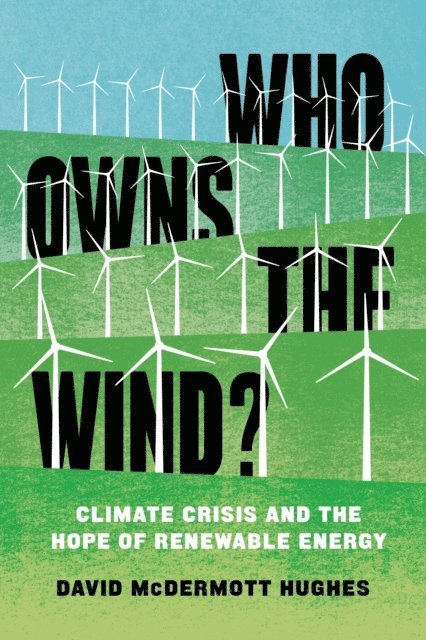
The energy transition has begun. To succeed - to replace fossil fuels with wind and solar power - that process must be fair. Otherwise, mounting popular protest against wind farms will prolong carbon pollution and deepen the climate crisis. David Hughes examines that anti-industrial, anti-corporate resistance, drawing insights from a Spanish village surrounded by turbines. In the lives of these neighbours - freighted with centuries of exploitation - clean power and social justice fit together only awkwardly. Proposals for a green economy, the Green New Deal, or Europe's Green Deal require more effort. We must rethink aesthetics, livelihood, property, and, most essentially, the private nature of wind resources. Ultimately, the energy transition will be public and just, or it may not be at all
E-bok
Engelska, 2021129 kr
Läs direkt efter köp
The energy transition has begun. To succeed - to replace fossil fuels with wind and solar power - that process must be fair. Otherwise, mounting popular protest against wind farms will prolong carbon pollution and deepen the climate crisis. David Hughes examines that anti-industrial, anti-corporate resistance, drawing insights from a Spanish village surrounded by turbines. In the lives of these neighbours - freighted with centuries of exploitation - clean power and social justice fit together only awkwardly. Proposals for a green economy, the Green New Deal, or Europe''s Green Deal require more effort. We must rethink aesthetics, livelihood, property, and, most essentially, the private nature of wind resources. Ultimately, the energy transition will be public and just, or it may not be at all
Inbunden, Engelska, 2027
284 kr
Kommande
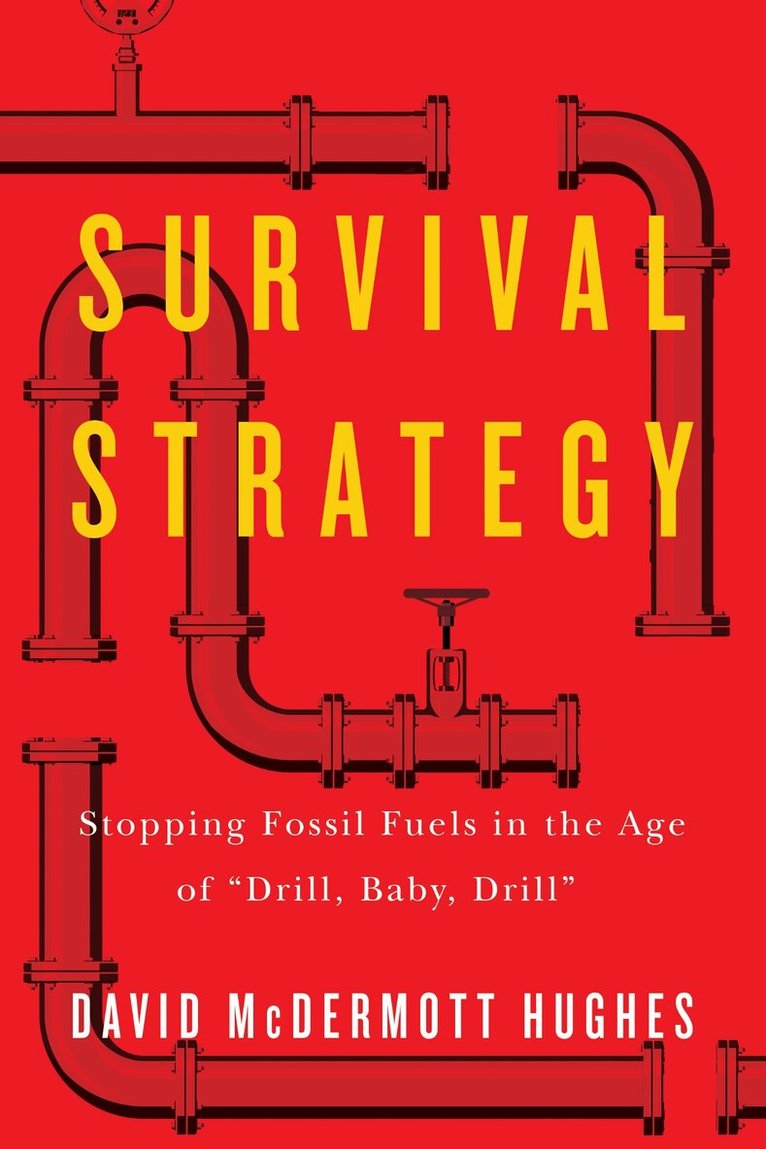
This book is a plea and a plan for a more daring form of climate politics. In the United States, the climate movement has failed in the all-important task of shutting down fossil fuels. Elected politicians – even those who support renewable energy - remain committed to the extraction of petroleum and methane. Those industries have effectively captured the federal government, converting it into a petrostate. What is to be done? Hughes proposes a widespread and sustained campaign of sabotage against fossil fuels. His strategy is risky and unlawful – but not entirely unpopular. Libertarians and other lovers of private property object to the construction of pipelines across farms and ranches. In trials of saboteurs, they could exercise the little-known power of jury nullification to make pipelines unprotectable. With trepidation, Hughes offers this last resort against the approaching climate catastrophe. Time is short, unfortunately, and we are running out of better options.