David P. Jordan – författare
Visar alla böcker från författaren David P. Jordan. Handla med fri frakt och snabb leverans.
5 produkter
5 produkter
Häftad, Engelska
336 kr
Skickas inom 5-8 vardagar
Inbunden, Engelska, 1999
645 kr
Skickas inom 5-8 vardagar
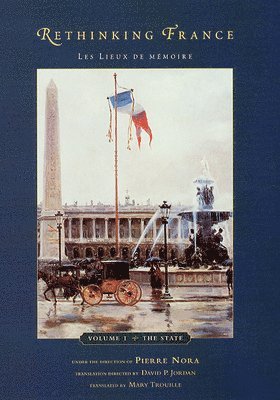
"Les Lieux de Memoire" is perhaps one of the most profound historical documents on the history and culture of the French nation. Assembled by Pierre Nora during the Mitterand years, this multi-volume series has been hailed as "a magnificent achievement" ("The New Republic") and "the grandest, most ambitious effort to dissect, interpret and celebrate the French fascination with their own past" (The Los Angeles Times"). Written during a time when French national identity was undergoing a pivotal change and the nation was struggling to define itself, this unprecedented series consists of essays by prominent historians and cultural commentators which take, as their points of departure, a "lieu de memoire": a site of memory used to order, concentrate and secure notions of France's past. The first volume in the Chicago translation, "Rethinking France", brings together works addressing the omnipresent role of the state in French life. As in the other volumes, the "lieux de memoire" serve as entries into the French past, whether they are actual sites, political traditions, rituals or even national pastimes and textbooks."Volume I: The State" offers a sophisticated and engaging view of the French and their past through widely diverse essays on, for example, the chateau of Versailles and the French history of absolutism; the "Code civil" and its ordering of French life; memoirs written by French statesmen; and Charlemagne and his place in French history. Nora's contributors constitute a who's who of French academia, yet they wear their erudition lightly. Taken as a whole, this extraordinary series documents how the French have come to see themselves and why.
Inbunden, Engelska, 2009
1 084 kr
Skickas inom 5-8 vardagar
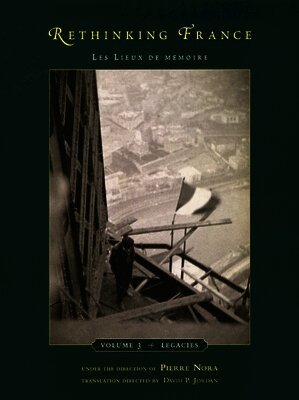
The third volume of Pierre Nora's monumental work documenting the history and culture of France turns to French manners, mores, and society. While previous volumes focused on specific historical events, people, and institutions within France, the essays in "Legacies" are concerned with the kinds of things that make up the heart of French culture: conversation, cafes, songs, wine, gallantry, and places imbued with national symbolism such as Notre Dame and Sacre Coeur cathedrals. Linking these diverse topics together is the idea of patrimony - a term used by the French to designate the collective culture of the country or its national heritage - a concept that has undergone radical changes beginning with the Revolution and corresponding to other dramatic ruptures throughout France's history. As a whole, these twelve essays by leading French historians add up to an illuminating and well-rounded portrait of those cherished traditions that together form the basic foundation for the distinctive culture of the French.
E-bok
Engelska, 1995170 kr
Läs direkt efter köp
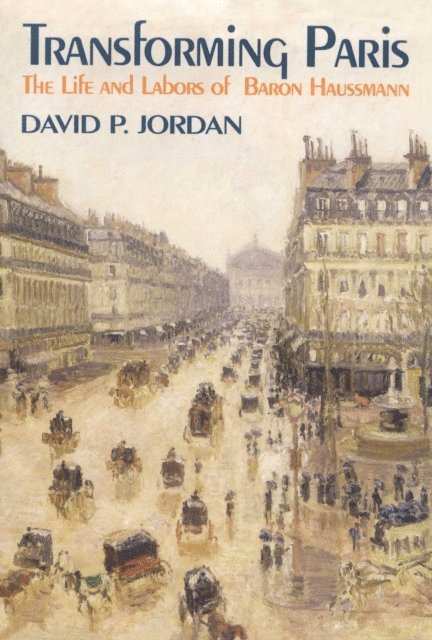
The Paris we know today, with its grand boulevards, its bridges and parks, its monumental beauty, was essentially built in only seventeen years, in the middle of the nineteenth century. In this brief period, whole neighborhoods of medieval and revolutionary Paris -- over-crowded, dangerous, and filthy -- were razed, and from the rubble a modern city of light and air emerged. This triumphant rebuilding was chiefly the work of one man, Baron Georges Haussmann, Napoleon III''s Prefect of the Seine.It was Haussmann''s task to assert, in stone, the power and permanence of Paris, to show the world that it was the seat of an empire of mythic proportions. To this end, he imposed grand visual perspectives, as when he transformed Napoleon I''s Arc de Triomphe into a magnificent twelve-armed star from which radiated the broadest boulevards of Europe. Below ground, his modern sewer system became one of the wonders of the civilized world, eagerly toured by royalty and commoners alike.Haussmann''s mandate was not only to create an impression of grandeur but to secure the city for better control by government. By creating formal spaces where there had previously been a maze of chaotic streets, Haussmann opened Paris to effective police control and thwarted the recurrent demonstration of its well-known revolutionary fervor. The determined and autocratic Haussmann imprinted rational order and bourgeois civility on the unruly city which had for so long simmered with riot and insurrection.Though he planted chestnut trees, installed gas lights, rebuilt the water supply, and improved transportation and housing, Haussmann''s labors were (and remain) controversial. He forced tens of thousands of the poor from the center of the city, and destroyed significant parts of old Paris. But in this important new biography David Jordan reminds us that Haussmann was not immune to the charms of the old city. By leaving some areas intact, the Baron achieved the grand effect of implanting a modern city boldly within an ancient one. Here, at last, Haussmann''s labors are given the aesthetic as well as the historical appreciation they deserve.

E-bok
Engelska, 2013142 kr
Läs direkt efter köp
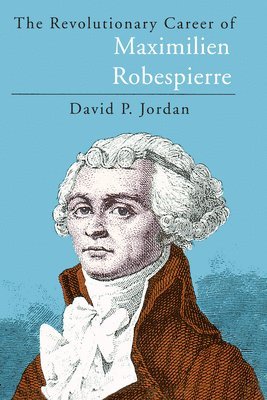
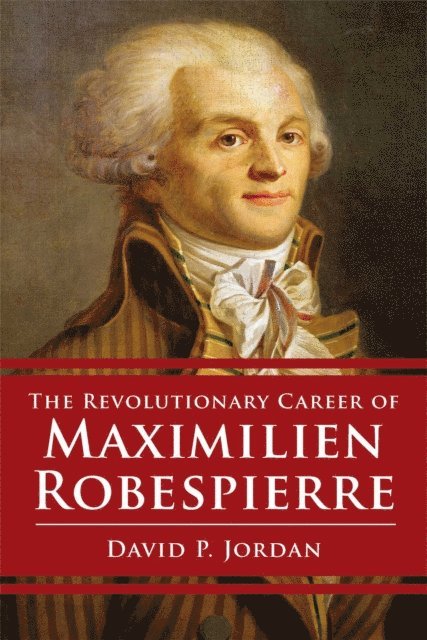
In changing forever the political landscape of the modern world, the French Revolution was driven by a new personality: the confirmed, self-aware revolutionary. Maximilien Robespierre originated the role, inspiring such devoted twentieth-century disciples as Lenin—who deemed Robespierre a Bolshevik avant la lettre. Although he dominated the Committee for Public Safety only during the last year of his life, Robespierre was the Revolution in flesh and blood. He embodies its ideological essence, its unprecedented extremes, its absolutist virtues and vices; he incarnated a new, completely politicized self to lead a new, wholly regenerated society. Yet as historian David P. Jordan observes, Robespierre has remained an enigma. While his revolutionary career embraced the most crucial years of the Revolutions—1789 to 1794—it was little presaged by the unremarkable course of his early life. The Jacobin leader to whom the revolutionary masses clung is thus both as mysterious as his remote provincial past and as awesome as the world-shaking regicide he inspired. Confronted by these extremes, historians have often contented themselves to caricature Robespierre as an antichrist, a bourgeois manipulator of the rabble, or a canny political tactician. Jordan looks to Robespierre’s own self-conception for a true understanding of the man and his Revolution. Indeed, Robespierre wrote about himself often, and at length. Influenced by Enlightenment rationalism and the new literary genre of autobiography, he left behind a voluminous body of speeches, newspaper articles, and pamphlets laced with reflections and revelations about his self-created destiny as living martyr and revolutionary Everyman. From these thoughts and words, Jordan attempts to uncover Robespierre, to reveal what made this unlikely figure—onetime provincial lawyer, small-town académicien, and uninspired versifier—the most important in revolutionary France.