David Truesdale – författare
Visar alla böcker från författaren David Truesdale. Handla med fri frakt och snabb leverans.
11 produkter
11 produkter
Inbunden, Engelska, 2023
272 kr
Skickas
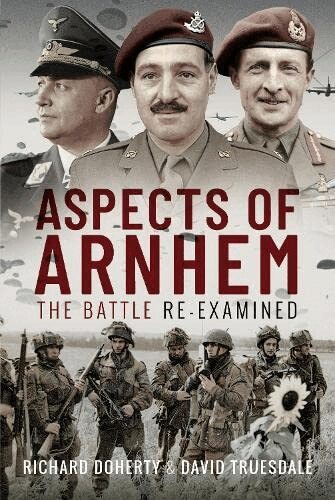
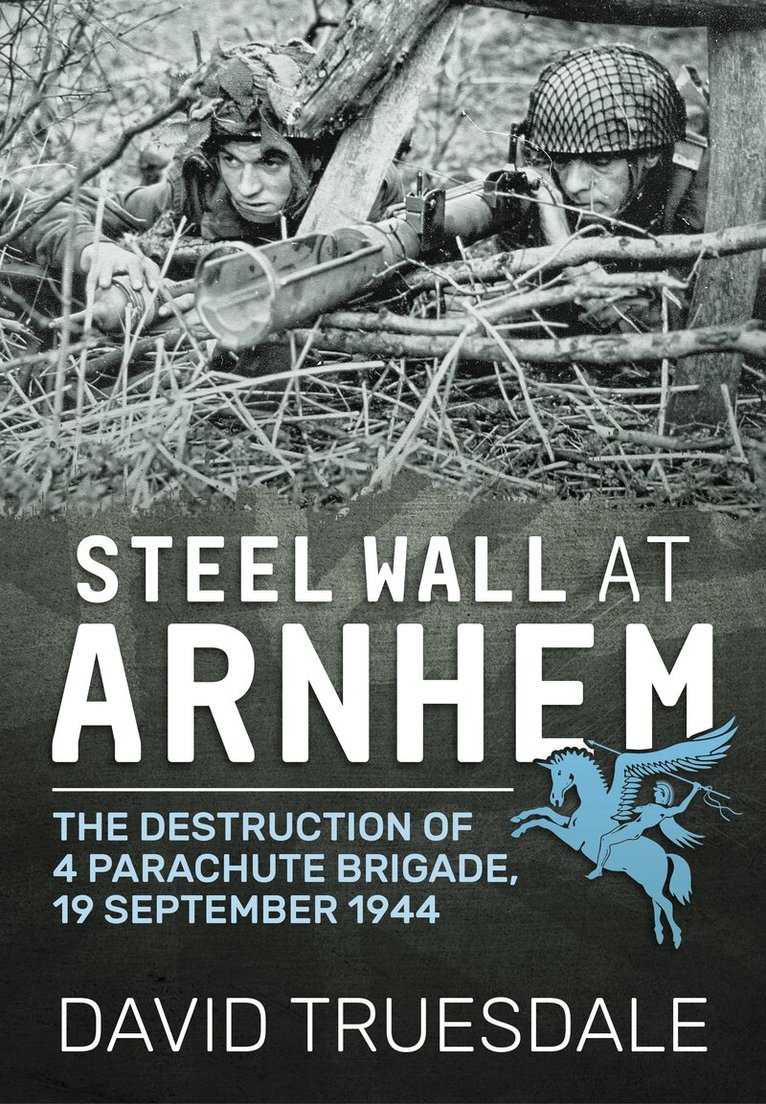
Almost 80 years on the battle for the Arnhem Rhine crossing remains controversial. Opinion on its justification and success differs widely.This superbly researched book, written by two acknowledged experts, takes a wide-ranging examination of Operation MARKET GARDEN from the strategic, operational and tactical level. The role of the Allied commanders involved is scrutinised with surprising results. For example, US General Brereton's pivotal role has seldom been mentioned, yet he is revealed as responsible for choosing landing and drop zones.The record of airborne forces, both German and Allied, prior to September 1944 raises questions and the doubt that many senior commanders, including Eisenhower, had as to their effectiveness is highlighted.The parts played by VIII and XII Corps of Second Army and General Dempsey, its Commander are scrutinised, as are the actions of local commanders and troops on the ground.Both those with a deep interest in military history and the layman will find much to inform and satisfy them in this valuable and at times provocative account.
E-bok
Engelska, 2023160 kr
Läs direkt efter köp
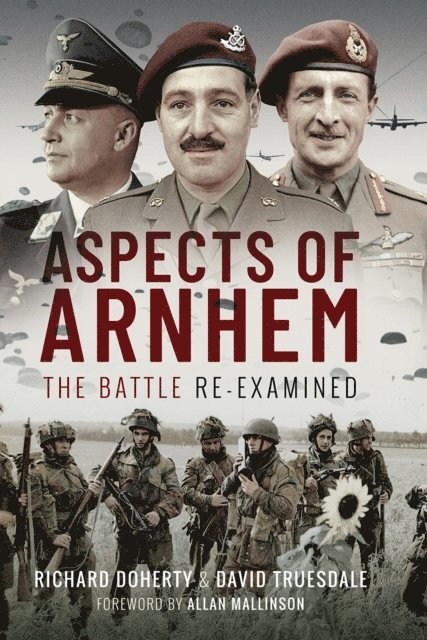
Almost 80 years on the battle for the Arnhem Rhine crossing remains controversial. Opinion on its justification and success differs widely.This superbly researched book, written by two acknowledged experts, takes a wide-ranging examination of Operation Market Garden from the strategic, operational and tactical level. The role of the Allied commanders involved is scrutinized with surprising results. For example, US General Brereton’s pivotal role has seldom been mentioned, yet he is revealed as responsible for choosing landing and drop zones.The record of airborne forces, both German and Allied, prior to September 1944 raises questions and the doubt that many senior commanders, including Eisenhower, had as to their effectiveness is highlighted.The parts played by VIII and XII Corps of Second Army and General Dempsey, its Commander are scrutinized, as are the actions of local commanders and troops on the ground.Both those with a deep interest in military history and the layman will find much to inform and satisfy them in this valuable and at times provocative account.
E-bok
PDF, Engelska, 2023159 kr
Läs direkt efter köp
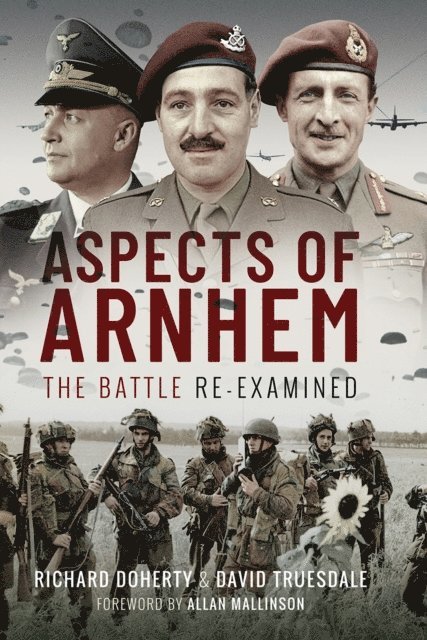
Almost 80 years on the battle for the Arnhem Rhine crossing remains controversial. Opinion on its justification and success differs widely.This superbly researched book, written by two acknowledged experts, takes a wide-ranging examination of Operation Market Garden from the strategic, operational and tactical level. The role of the Allied commanders involved is scrutinized with surprising results. For example, US General Brereton’s pivotal role has seldom been mentioned, yet he is revealed as responsible for choosing landing and drop zones.The record of airborne forces, both German and Allied, prior to September 1944 raises questions and the doubt that many senior commanders, including Eisenhower, had as to their effectiveness is highlighted.The parts played by VIII and XII Corps of Second Army and General Dempsey, its Commander are scrutinized, as are the actions of local commanders and troops on the ground.Both those with a deep interest in military history and the layman will find much to inform and satisfy them in this valuable and at times provocative account.
E-bok
Engelska, 2021123 kr
Läs direkt efter köp
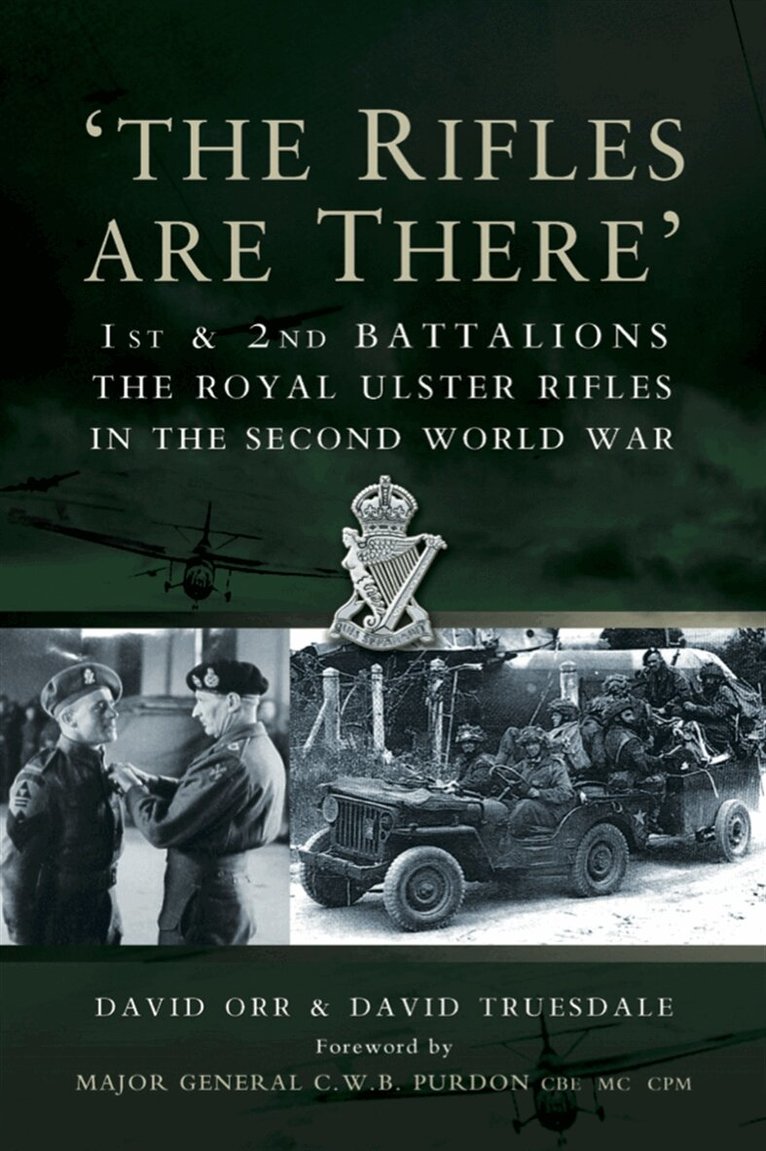
This is the long overdue history of the two Royal Ulster Rifles battalions during the Second World War. Although there was a healthy rivalry between the battalions, both reserved their fighting skills for the luckless enemy. At the outbreak of the war the 1st Battalion was garrisoned in India whereas the 2nd went to France with the BEF. Indeed the title of this book is credited to Major General Bernard Montgomery who was commanding 3rd Division during the retreat to Dunkirk. On hearing that the RUR were in the line, he reputedly exclaimed, 'it's alright then – the Rifles are there'.After arduous training both battalions landed in Normandy on D-Day; the 1st by gliders as part of 6th Airlanding Brigade and the 2nd with 9th Brigade of 3rd Division on SWORD Beach. Indeed the RUR have the unique distinction of being the only British regiment to be represented on D-Day by both regular battalions. In addition numerous Riflemen were in 9th Parachute Battalion (commanded by Lieutenant Colonel Terence Otway, himself a Rifles' Officer) and there is a full description of the legendary assault on the Merville Battery.This well-researched work goes on to describe the long slog through North West Europe to the heart of Germany. Of the manyfierce engagements that the battalions fought, those in the Ardennes during the German counter-attack and the massive Rhine Crossing Operation (VARSITY) deserve special mention.There were numerous battles, both major and minor, where the Rifles' legendary fighting skills and courage were put to the test.
Häftad, Engelska, 2022
377 kr
Skickas
E-bok
Engelska, 2021123 kr
Läs direkt efter köp
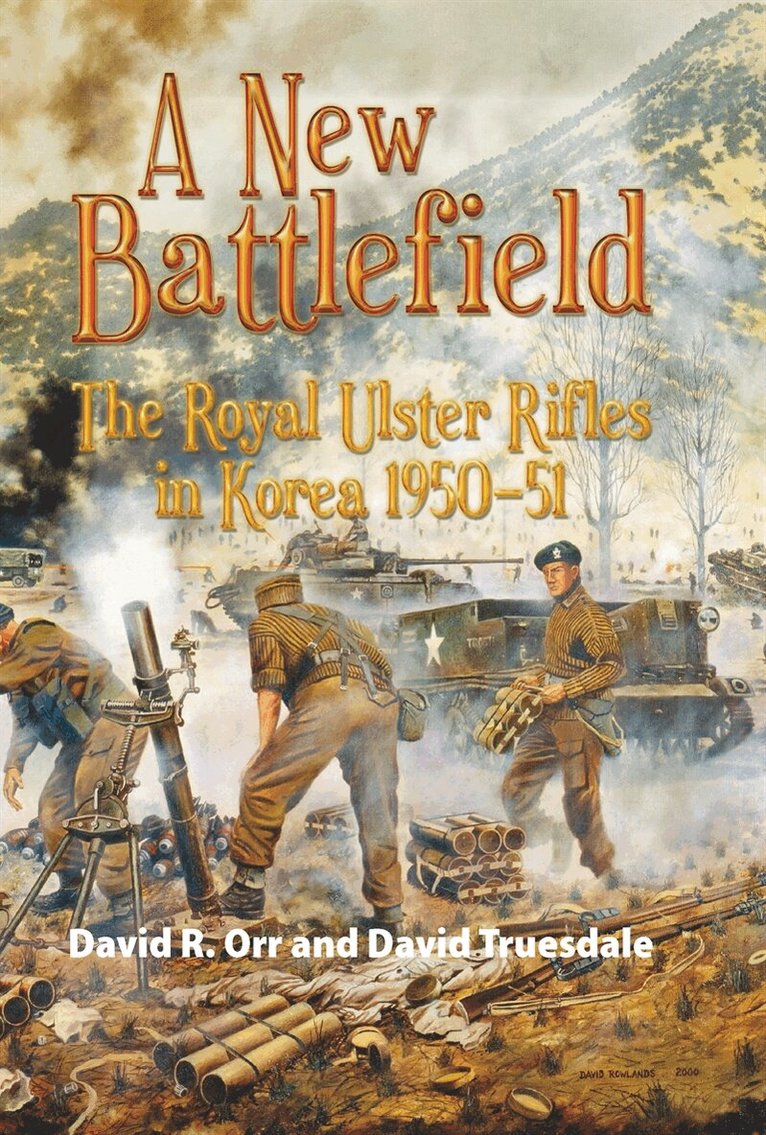
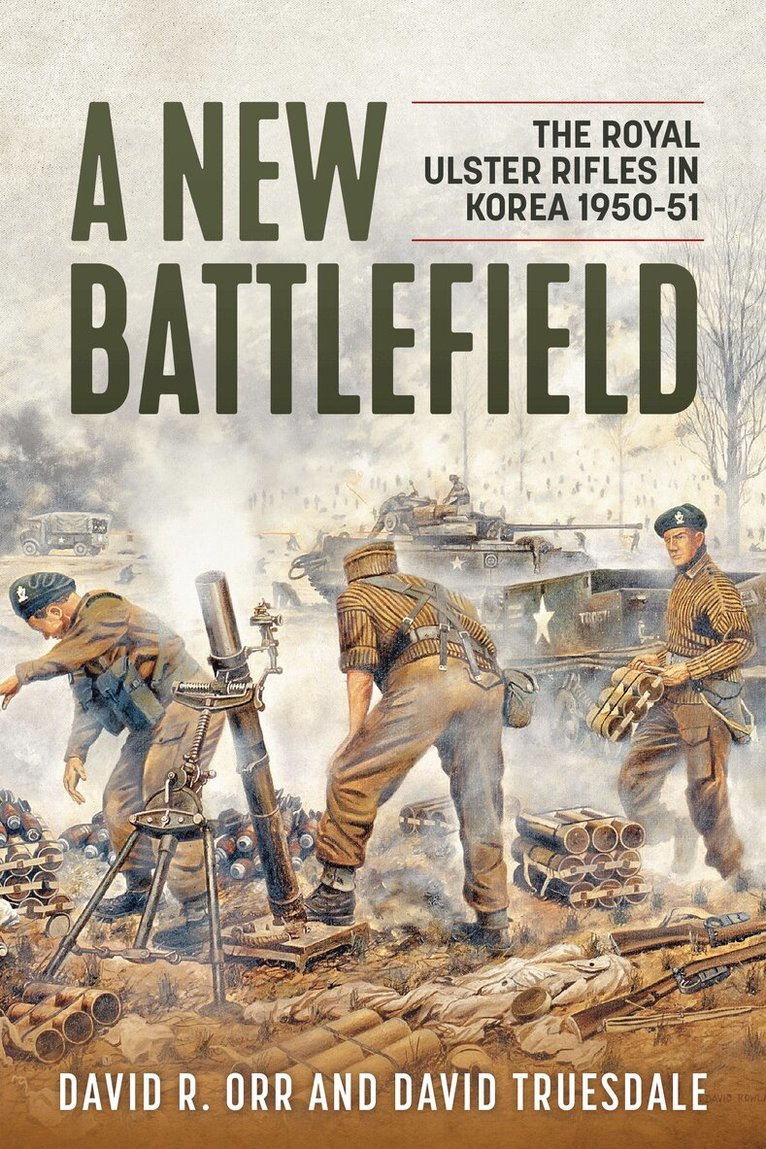
Since the publication of The Rifles Are There in 2005, which dealt with the 1st and 2nd Battalions Royal Ulster Rifles in the Second World War, it was felt by many that a follow up volume dealing with the Korean conflict was overdue. A limited yet competent history had been produced in 1953 by the then Adjutant Captain Hugh Hamill, although this has been long out of print. A New Battlefield follows the Battalion as it prepares for the first major conflict fought by Britain since the defeat of the Japanese in 1945. During the summer of 1950 the Battalion was stationed at Sobraon Barracks in Colchester and was in the process of being issued with desert kit for a tour of duty at Khartoum in the Sudan and its numbers were just under four hundred men. For service in Korea these numbers had to be drastically increased and drafts of volunteers and reservists were brought in from various sources. Consequently this 'Irish' Battalion contained men from the Lancastrian Brigade, Welsh Brigade, Mercian Brigade, the Light Infantry and other Battalions of the Irish Brigade, The Irish Brigade also reinforced other regiments, the Royal Inniskilling Fusiliers sending two officers and fifty 'other ranks' to the King's (Liverpool) Regiment. Despite their varied backgrounds all ranks soon coalesced into a professional unit that took the campaign in its stride. From winter temperatures that dropped well below 40f to a summer heat that rose to 105f with a humidity to match these men survived all and dealt with a brave and tenacious enemy. The Battalion sailed for Korea in October 1950 and fought its first major action in January 1951 at Chaegunghyon, or as it was known to the Rifles, 'Happy Valley'. Here, for the first time they faced an enemy that often literally fought to the death, despite overwhelming firepower, bombing and widespread use of napalm. Three months later, on the banks of the Imjin River, the Rifles, in conjunction with the remainder of 29 Brigade, faced an army that came in such numbers that running out of ammunition before the enemy ran out of men became a reality. While the Battle of the Imjin is today largely remembered for the last stand fought by the 'Glorious Glosters', research revels that it was the Royal Ulster Rifles that held open the door that allowed the survivors of 29 Brigade to escape annihilation. The media reacts with horror at the loss of life in Afghanistan when it is in single figures, yet during the fighting at 'Happy Valley' the Battalion lost 157 men in one twenty four period. In the 1950's with limited television and press coverage Korea was quite literally on the far side of the world and generated little interest with the population; it remains so to this day. With the current situation in that country its past deserves to be reexamined and reassessed. Besides numerous photographs there are also appendices including Honors and Awards, Operation 'Spitfire', an Order of Battle for 29 Brigade, and a Nominal Roll, which includes casualties. A New Battlefield will be produced in a strictly limited hardback printing of 500 numbered copies, each copy signed by both authors.
Häftad, Engelska, 2013
262 kr
Skickas
E-bok
Engelska, 2021123 kr
Läs direkt efter köp
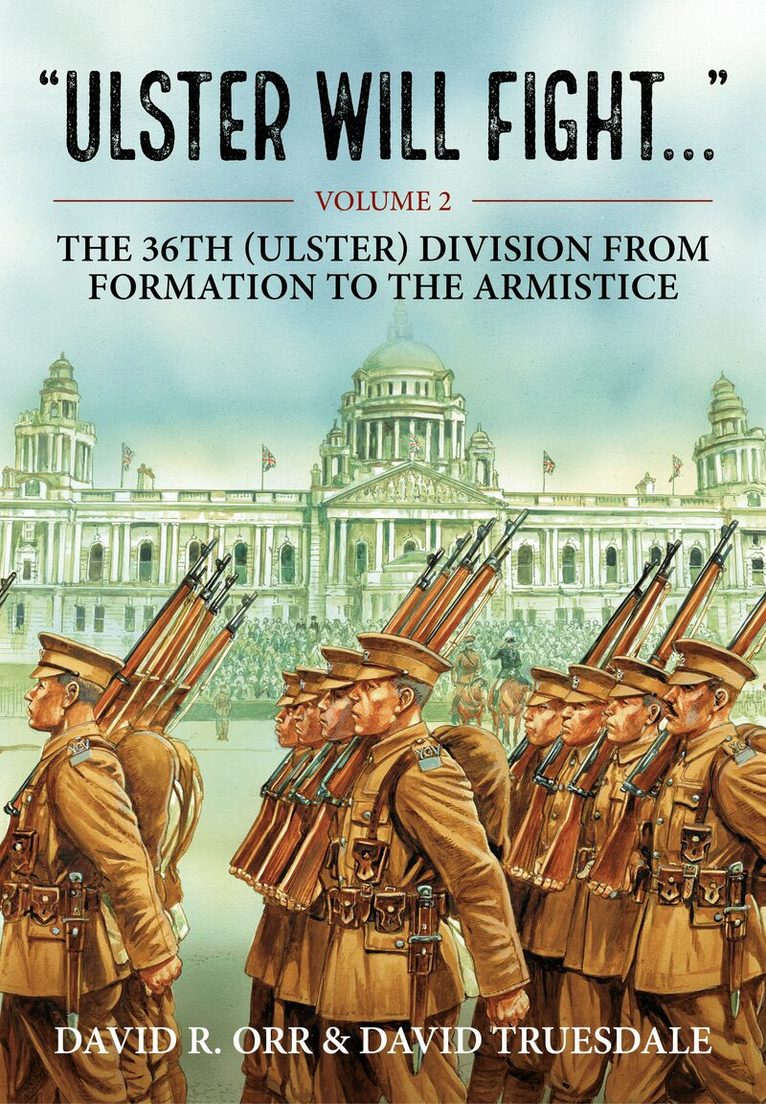
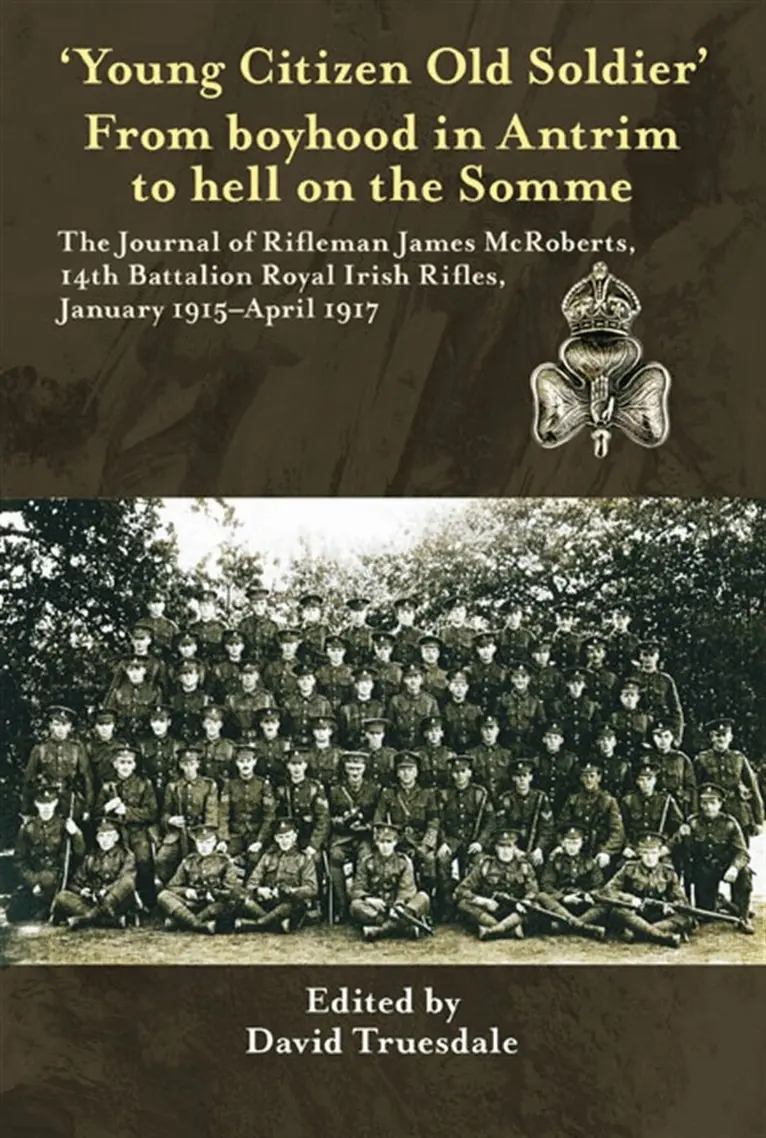
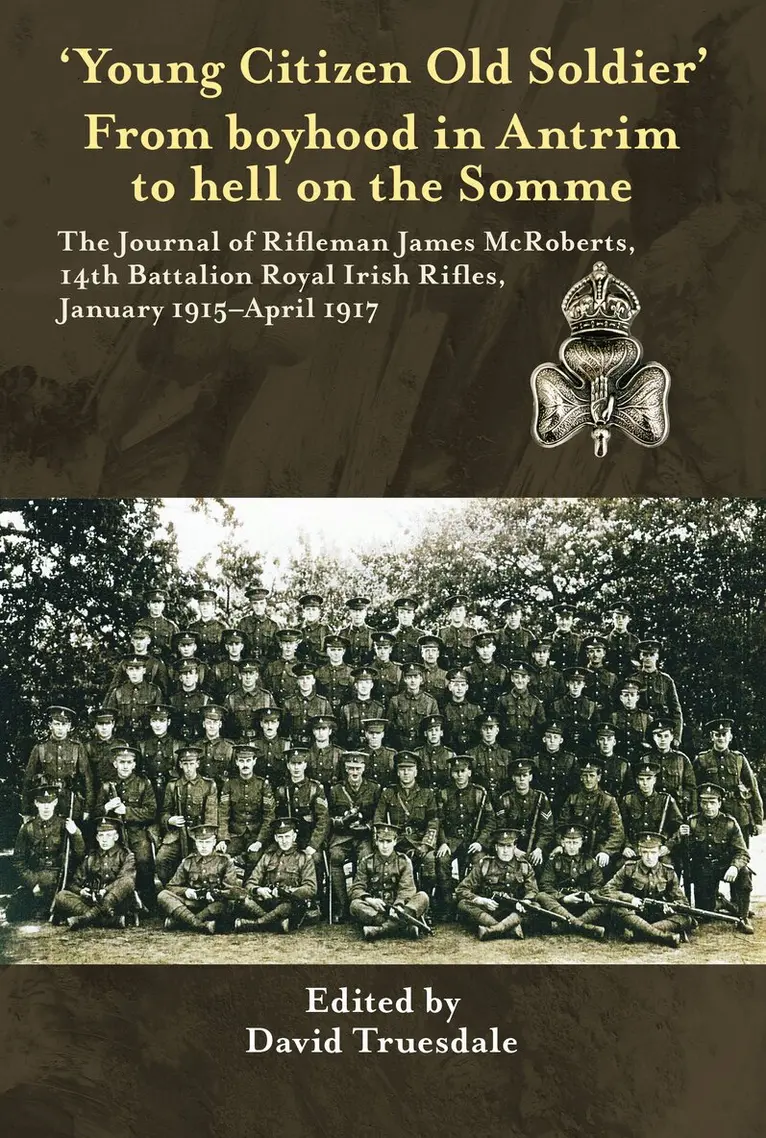
For almost 43 years three school notebooks lay in obscurity in the County Armagh home of sixty two-year old James McRoberts. The closely filled pages recorded just over two years in his life in uniform as he played his part in what was then known as the Great War. During the Home Rule crisis of 1914, one of several in Ireland's history, James McRoberts, like many other men, joined the Young Citizen Volunteers, an organization that eventually became the 14th Royal Irish Rifles, a battalion of the 36th (Ulster) Division. These notebooks, written at the time and with footnotes added some forty years later, record his Army service between 8 January 1915 and 3 April 1917. They tell, with remarkable immediacy, of his time at Randalstown, County Antrim and the move to Seaford in East Sussex. From here, after further training, James moved with his Battalion to the trenches of the Western Front. Written with a degree of humor and some detail his story covers the mundane routine of camp life, recreation behind the lines, the horrors of enemy shelling, the deaths of good friends and the momentous events of 1 July 1916 on the Somme, when his unit was in the thick of the action. On 1 November 1917, while acting as a scout for a night patrol at Messines Ridge, James was seriously wounded and evacuated to hospital - for him the War was over. Nevertheless, he continued to record what was happening around him both with humour and in detail. Classed as 80% disabled, he was eventually discharged and returned home to enjoy a postwar career as a surveyor in County Armagh. This is a remarkable memoir that is, by turns, lively, candid, humorous, poignant, and above all a window into the world of an Ulsterman who found himself both witness and participant to a series of remarkable events. His descriptions of army life, both daily routine and the inferno on the Somme in July 1916, add greatly to our knowledge of this most climactic period of history.David Truesdale opted for early retirement in 1998 and since then has written for films and television and produced two battlefield guides on behalf of the Royal Irish Fusiliers Museum - "The First Eagle: the 87th Foot at the Battle of Barrosa" and "Regulars by God! The 89th Foot at the Battle of Lundy's Lane". He is the author of "Brotherhood of the Cauldron: Irishmen in the 1st Airborne Division at Arnhem", "Angels and Heroes, the story of a machine gunner with the Royal Irish Fusiliers August 1914 to April 1915" (with Amanda Moreno), "Irish Winners of the Victoria Cross" (with Richard Doherty), "Leading The Way To Arnhem, a history of the 21st Independent Parachute Company" (with Peter Gijbels), "Arnhem Their Final Battle, the 11th Parachute Battalion 1943/44" (with Gerrit Pijpers). With David Orr he has written "The Rifles are There: 1st & 2nd Battalions The Royal Ulster Rifles in the Second World War" and "A New Battlefield; The Royal Ulster Rifles in Korea". They are currently in collaboration on a history of the Ulster Volunteer Force and 36th Ulster Division, 1913-1919. For relaxation he paints in watercolours following the Kelly school of innovation, photographs wildlife, listens to good music, drinks red wine and finds that Tomaso Albinoni (1671-1751) and his Oboe Concerto in D Minor, Op.9, No2, has been an inspiration during difficult times in any manuscript.
Häftad, Engelska, 2016
422 kr
Skickas inom 3-6 vardagar
Häftad, Engelska, 2019
218 kr
Tillfälligt slut
Häftad, Engelska, 2019
324 kr
Tillfälligt slut