Davide Trentacoste – författare
Visar alla böcker från författaren Davide Trentacoste. Handla med fri frakt och snabb leverans.
6 produkter
6 produkter
Inbunden, Engelska, 2026
639 kr
Kommande
This Element reassesses early modern Mediterranean diplomacy by positioning the Grand Duchy of Tuscany at the centre of cross-confessional interactions with several Islamic powers between 1574 and 1610. It demonstrates how a small state shaped and used diplomacy to pursue commerce, security, and prestige in the Islamic Mediterranean, while remaining reliant on papal and Spanish Habsburg support. The argument rests on three case studies: Bongianni Gianfigliazzi's 1578 embassy in Ottoman Constantinople; Medici diplomacy in the Maghreb, facilitated by the Corsican agent Andrea Gaspari, embedded in both Algerian and Moroccan power networks; and the 1610 negotiations with Shah Abbas I's envoy concerning Persian captives in Livorno. Together, these episodes present diplomacy as performative, negotiated, and multi-actor, demonstrating that small polities actively shaped Mediterranean order in the late sixteenth and early seventeenth centuries.
Häftad, Engelska, 2026
212 kr
Kommande
This Element reassesses early modern Mediterranean diplomacy by positioning the Grand Duchy of Tuscany at the centre of cross-confessional interactions with several Islamic powers between 1574 and 1610. It demonstrates how a small state shaped and used diplomacy to pursue commerce, security, and prestige in the Islamic Mediterranean, while remaining reliant on papal and Spanish Habsburg support. The argument rests on three case studies: Bongianni Gianfigliazzi's 1578 embassy in Ottoman Constantinople; Medici diplomacy in the Maghreb, facilitated by the Corsican agent Andrea Gaspari, embedded in both Algerian and Moroccan power networks; and the 1610 negotiations with Shah Abbas I's envoy concerning Persian captives in Livorno. Together, these episodes present diplomacy as performative, negotiated, and multi-actor, demonstrating that small polities actively shaped Mediterranean order in the late sixteenth and early seventeenth centuries.
Inbunden, Engelska, 2026
2 179 kr
Skickas inom 10-15 vardagar
The early modern period was not only an age of artistic and cultural flourishing but also one of intense diplomatic encounters across religious and cultural boundaries. Above all, it was a time that witnessed the very making of modern diplomacy. European powers increasingly engaged with distant empires such as Safavid Persia, which played a crucial role in shaping the geopolitical balance of the wider Mediterranean world. The Safavids in particular emerged as a key interlocutor for several European states in their long-standing confrontation with the Ottoman Empire. Within this framework, the Grand Duchy of Tuscany under the Medici initiated and maintained a continuous relationship with the Safavid dynasty from the late sixteenth and the early seventeenth century until its collapse in the eighteenth century.Although the existence of Medici–Safavid relations has been acknowledged, these contacts have remained marginal in historiography. This book offers the first comprehensive study of these exchanges, reconstructing their evolution across more than a century of correspondence, embassies and mutual negotiation. Drawing on extensive archival research and a large corpus of previously untapped primary sources, it explores the diplomatic, political and pragmatic dimensions of these encounters. It demonstrates how these interactions reveal the operation of early modern realpolitik, where confessional divides were often outweighed by strategic imperatives.Combining rigorous scholarship with a clear chronological narrative, the book will appeal to historians of Early Modern diplomacy, Mediterranean studies and cross-cultural exchange, as well as to readers interested in the interplay between Christian Europe and the Islamic world during a formative period of global interaction.
E-bok
PDF, Engelska, 2026746 kr
Läs direkt efter köp
The early modern period was not only an age of artistic and cultural flourishing but also one of intense diplomatic encounters across religious and cultural boundaries. Above all, it was a time that witnessed the very making of modern diplomacy. European powers increasingly engaged with distant empires such as Safavid Persia, which played a crucial role in shaping the geopolitical balance of the wider Mediterranean world. The Safavids in particular emerged as a key interlocutor for several European states in their long-standing confrontation with the Ottoman Empire. Within this framework, the Grand Duchy of Tuscany under the Medici initiated and maintained a continuous relationship with the Safavid dynasty from the late sixteenth and the early seventeenth century until its collapse in the eighteenth century. Although the existence of Medici-Safavid relations has been acknowledged, these contacts have remained marginal in historiography. This book offers the first comprehensive study of these exchanges, reconstructing their evolution across more than a century of correspondence, embassies and mutual negotiation. Drawing on extensive archival research and a large corpus of previously untapped primary sources, it explores the diplomatic, political and pragmatic dimensions of these encounters. It demonstrates how these interactions reveal the operation of early modern realpolitik, where confessional divides were often outweighed by strategic imperatives.Combining rigorous scholarship with a clear chronological narrative, the book will appeal to historians of Early Modern diplomacy, Mediterranean studies and cross-cultural exchange, as well as to readers interested in the interplay between Christian Europe and the Islamic world during a formative period of global interaction.
E-bok
Engelska, 2026746 kr
Läs direkt efter köp
The early modern period was not only an age of artistic and cultural flourishing but also one of intense diplomatic encounters across religious and cultural boundaries. Above all, it was a time that witnessed the very making of modern diplomacy. European powers increasingly engaged with distant empires such as Safavid Persia, which played a crucial role in shaping the geopolitical balance of the wider Mediterranean world. The Safavids in particular emerged as a key interlocutor for several European states in their long-standing confrontation with the Ottoman Empire. Within this framework, the Grand Duchy of Tuscany under the Medici initiated and maintained a continuous relationship with the Safavid dynasty from the late sixteenth and the early seventeenth century until its collapse in the eighteenth century. Although the existence of Medici-Safavid relations has been acknowledged, these contacts have remained marginal in historiography. This book offers the first comprehensive study of these exchanges, reconstructing their evolution across more than a century of correspondence, embassies and mutual negotiation. Drawing on extensive archival research and a large corpus of previously untapped primary sources, it explores the diplomatic, political and pragmatic dimensions of these encounters. It demonstrates how these interactions reveal the operation of early modern realpolitik, where confessional divides were often outweighed by strategic imperatives.Combining rigorous scholarship with a clear chronological narrative, the book will appeal to historians of Early Modern diplomacy, Mediterranean studies and cross-cultural exchange, as well as to readers interested in the interplay between Christian Europe and the Islamic world during a formative period of global interaction.
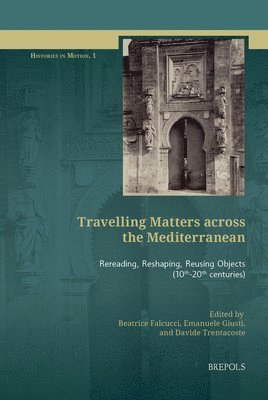
Del 1 - Histories in Motion
Travelling Matters Across the Mediterranean
Rereading, Reshaping, Reusing Objects (10th-20th Centuries)
Inbunden, Engelska, 2024
1 283 kr
Skickas inom 5-8 vardagar