D.C. Look – författare
Visar alla böcker från författaren D.C. Look. Handla med fri frakt och snabb leverans.
2 produkter
2 produkter
Häftad, Engelska, 1988
1 090 kr
Skickas inom 10-15 vardagar
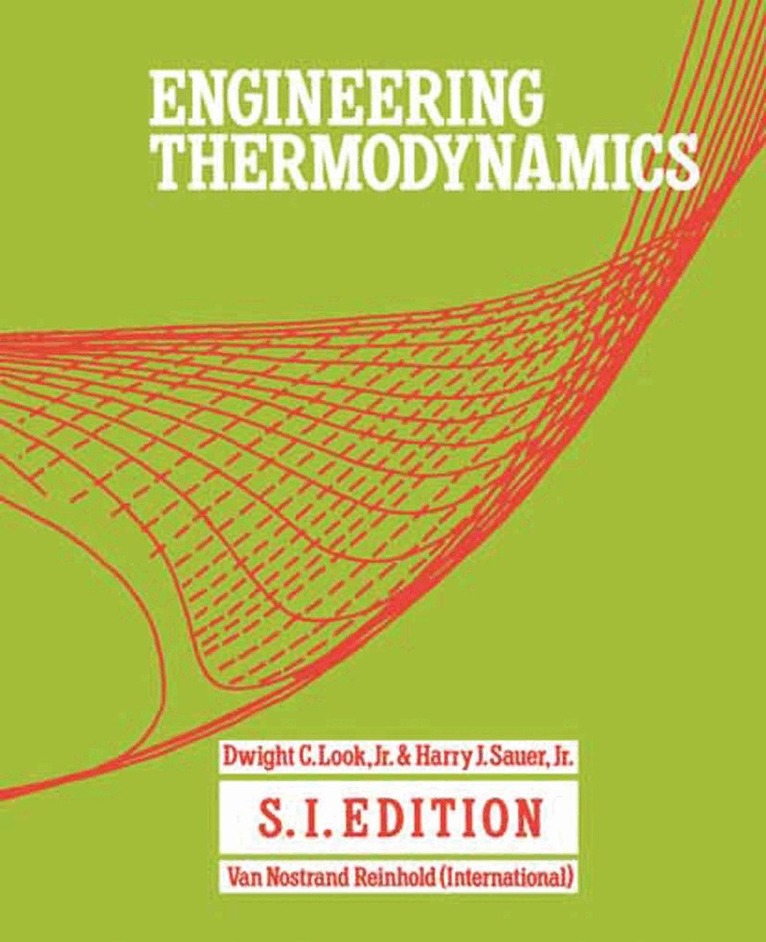
Energy-its discovery, its availability, its use-concerns all of us in general and the engineers of today and tomorrow in particular. The study of thermodynamics-the science of energy-is a critical element in the education of all types of engineers. Engineering Thermodynamics provides a thorough intro duction to the art and science of engineering thermodynamics. It describes in a straightforward fashion the basic tools necessary to obtain quantitative solutions to common engineering applications involving energy and its conversion, conser vation, and transfer. This book is directed toward sophomore, junior, and senior students who have studied elementary physics and calculus and who are majoring in mechanical engineering; it serves as a convenient reference for other engineering disciplines as well. The first part of the book is devoted to basic thermodynamic principles, essentially presented in the classic way; the second part applies these principles to many situations, including air conditioning and the interpretation of statistical phenomena.
E-bok
PDF, Engelska, 20121 367 kr
Läs direkt efter köp
Energy-its discovery, its availability, its use-concerns all of us in general and the engineers of today and tomorrow in particular. The study of thermodynamics-the science of energy-is a critical element in the education of all types of engineers. Engineering Thermodynamics provides a thorough intro duction to the art and science of engineering thermodynamics. It describes in a straightforward fashion the basic tools necessary to obtain quantitative solutions to common engineering applications involving energy and its conversion, conser vation, and transfer. This book is directed toward sophomore, junior, and senior students who have studied elementary physics and calculus and who are majoring in mechanical engineering; it serves as a convenient reference for other engineering disciplines as well. The first part of the book is devoted to basic thermodynamic principles, essentially presented in the classic way; the second part applies these principles to many situations, including air conditioning and the interpretation of statistical phenomena.