Deepak Chhabra - Böcker
Visar alla böcker från författaren Deepak Chhabra. Handla med fri frakt och snabb leverans.
11 produkter
11 produkter
2 088 kr
Skickas inom 10-15 vardagar
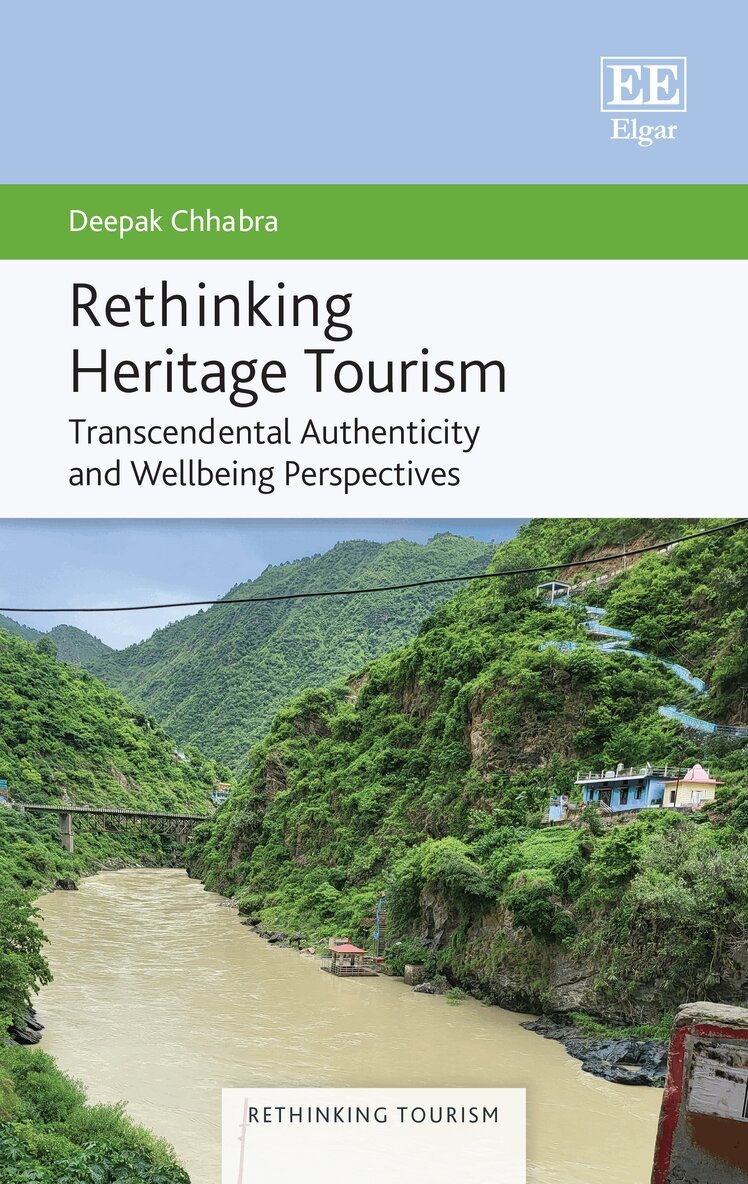
This book examines the authentication of authenticity in heritage tourism by using a resilient smart systems approach. It discusses the emerging trends in cultural tourism and outlines, in a detailed manner, their significance in negotiating authenticity in tourism experience.Authentication of authenticity is an evolving, less-researched field of inquiry in heritage tourism. This book advances research on this subject by exploring different authentication processes and scrutinizes their resilience in building transformative heritage tourism pathways. It offers a kaleidoscopic view of the manner authenticity has evolved over the last several decades by observing a broad spectrum of cultural expressions. The evolution and meaningfulness of negotiated authenticity is identified and discussed in the context of pre-, intra- and post-pandemic times. This book focuses on the moral and existentialist trajectories or authenticity and the notion of self-authentication. It proposes a smart resilient authentication model to delicately negotiate the objective and self-dimensions of authenticity in transformative times. Furthermore, by sharing examples of best practices, it offers unique insights on how authenticity is authenticated and mediated via digital platforms and artificial intelligence.This book offers novel perspectives on negotiated authenticity and its authentication in heritage tourism and will appeal to both practitioners and students/scholars in Heritage studies; Design and Innovation; Tourism Studies; Geography and Planning across North America, Europe, and East-Asian countries.
617 kr
Skickas inom 10-15 vardagar
This book examines the authentication of authenticity in heritage tourism by using a resilient smart systems approach. It discusses the emerging trends in cultural tourism and outlines, in a detailed manner, their significance in negotiating authenticity in tourism experience.Authentication of authenticity is an evolving, less-researched field of inquiry in heritage tourism. This book advances research on this subject by exploring different authentication processes and scrutinizes their resilience in building transformative heritage tourism pathways. It offers a kaleidoscopic view of the manner authenticity has evolved over the last several decades by observing a broad spectrum of cultural expressions. The evolution and meaningfulness of negotiated authenticity is identified and discussed in the context of pre-, intra- and post-pandemic times. This book focuses on the moral and existentialist trajectories or authenticity and the notion of self-authentication. It proposes a smart resilient authentication model to delicately negotiate the objective and self-dimensions of authenticity in transformative times. Furthermore, by sharing examples of best practices, it offers unique insights on how authenticity is authenticated and mediated via digital platforms and artificial intelligence.This book offers novel perspectives on negotiated authenticity and its authentication in heritage tourism and will appeal to both practitioners and students/scholars in Heritage studies; Design and Innovation; Tourism Studies; Geography and Planning across North America, Europe, and East-Asian countries.
2 150 kr
Skickas inom 10-15 vardagar
Authenticity and Authentication of Heritage presents an assimilation of chapters that critically address some of the key emerging areas associated with authenticity. It presents a variety of inspiring pieces of work that range from host-guest authentication and intangible heritage to knowledge transfer processes, authenticating heritage in fairy-tale settings, authenticity and anxiety in the smell of death and life, understanding the boundaries of authenticity, nostalgia, sustainability, marketing, destination competitiveness, examining affective connotations of authenticity, and their contribution towards optimizing hedonic and eudaimonic well-being during times of disruption.The contentious concept of authenticity continues to be valorised in heritage tourism. This scholarly initiative seeks to broaden the discursive parameters of authenticity and identify power mechanisms that shape the way authenticity is produced, marketed and consumed. This is an attempt to share contemporary views on how the contemporary notions of authenticity are derived, interpreted, applied, processed and legitimised in local and global contexts. Furthermore, the significant relationship between health and authenticity is explored. To put it simply, this pandemic has significantly halted the way people connect with their cultural resources and seek authenticity within their inner selves and the outside realms in the heritage tourism system. Heightened sense of global consciousness is a call to polish our authentic selves and elevate above inauthenticity or moral hypocrisy. So, is authenticity an evolving story or is it a story of floating immobility? Who can tell the story and who decides what elements to fossilise? How can existentialist authenticity and self authentication promote moral selving and well-being of the self and the society? Many questions like these have emerged in recent literature, and this book uses conceptual, empirical and theoretical explorations to identify and engage with such inquiries. The chapters in this book, except for the concluding chapter, were originally published as a special issue of the Journal of Heritage Tourism.
635 kr
Skickas inom 10-15 vardagar
Authenticity and Authentication of Heritage presents an assimilation of chapters that critically address some of the key emerging areas associated with authenticity. It presents a variety of inspiring pieces of work that range from host-guest authentication and intangible heritage to knowledge transfer processes, authenticating heritage in fairy-tale settings, authenticity and anxiety in the smell of death and life, understanding the boundaries of authenticity, nostalgia, sustainability, marketing, destination competitiveness, examining affective connotations of authenticity, and their contribution towards optimizing hedonic and eudaimonic well-being during times of disruption.The contentious concept of authenticity continues to be valorised in heritage tourism. This scholarly initiative seeks to broaden the discursive parameters of authenticity and identify power mechanisms that shape the way authenticity is produced, marketed and consumed. This is an attempt to share contemporary views on how the contemporary notions of authenticity are derived, interpreted, applied, processed and legitimised in local and global contexts. Furthermore, the significant relationship between health and authenticity is explored. To put it simply, this pandemic has significantly halted the way people connect with their cultural resources and seek authenticity within their inner selves and the outside realms in the heritage tourism system. Heightened sense of global consciousness is a call to polish our authentic selves and elevate above inauthenticity or moral hypocrisy. So, is authenticity an evolving story or is it a story of floating immobility? Who can tell the story and who decides what elements to fossilise? How can existentialist authenticity and self authentication promote moral selving and well-being of the self and the society? Many questions like these have emerged in recent literature, and this book uses conceptual, empirical and theoretical explorations to identify and engage with such inquiries. The chapters in this book, except for the concluding chapter, were originally published as a special issue of the Journal of Heritage Tourism.
2 101 kr
Skickas inom 10-15 vardagar
Actin is a ubiquitous protein present in high concentrations in virtually all cells. It's assembly and disassembly is modulated by more than 100 actin-binding proteins. These interactions are essential for a variety of important cellular processes including cell division, gene expression and motility.There are scattered reports in the published literature citing relationships between actin, actin-binding proteins and disease. This volume brings this information together for the first time, with a focus on human disorders.This volume is relevant to a wide readership including cell biologists interested in understanding how structural and functional changes in proteins impact on the organism as a whole. Additionally, clinicians will be interested because the book explains the role of cytoskeletal proteins in various diseases, including cancer and immune system disorders.
2 288 kr
Skickas inom 10-15 vardagar
Cultural attractions play an important role in tourism at all levels, and attract huge numbers of tourists interested in heritage and the arts. Cultural Heritage Tourism has positive economic and social impacts but can also have negative impacts on communities and regions. This book draws together and links ideas of tourism from sustainable marketing perspectives and embeds it within a heritage management setting. Through a discussion and analysis of existing literature and practices this book aims to propose a marketing strategy framework grounded in sustainable principles that can be used to sustain and preserve the authenticity of cultural heritage for future generations, whilst appealing to the suppliers, the regulators, and the consumers. The book first explains the dynamics of cultural heritage with its authenticity underpinnings, marketing, and tourism, and proposes a strategic praxis drawn from core sustainable principles. This is followed by a pragmatic examination of the proposed framework from the shaper’s (provider’s) perspective. The material presented in this book is not merely an agglomeration of documented secondary research, but the theoretical concepts are grounded in empirical research and interactive discussions with students and the travel and tourism industry. A variety of heritage institutions across the globe are used as starting points to test the applicability of the proposed paradigm: these include museums, historic house museums, heritage hotels/resorts, festivals, and heritage merchandize.This is a timely offering to a growing and vibrant area of research; what is most pertinent is that it is a thorough and fresh take on the topic with primary research included. It will find a place in student materials for a variety of courses and it should be read by practicing academics and researchers.
2 012 kr
Skickas inom 10-15 vardagar
This book proposes that sustainable marketing should be founded on a higher level of consciousness, governed by the Eastern ethical principles of dharma and karma. It suggests a socially responsible, integrated marketing strategy to boost transformational heritage tourism.The book puts forward a framework to promote and inspire transformative heritage tourism from a sustainable marketing perspective. Drawing on examples from different parts of the world such as Thailand, China, the USA, India, Australia, the United Kingdom, Spain, and Hong Kong, it takes a unique approach by integrating elements associated with distributive justice, procedural justice, morally motivated existentialist authentic experiences and the well-being of visited and visiting environments. The book pivots on the planning and marketing of heritage of communities such as local, descendent and indigenous across eight broad themes: (1) promotion and sustainable branding of heritage tourism; (2) empowerment of indigenous communities; (3) authenticity and conservation of heritage; (4) safeguarding of art, culture and cultural landscapes; (5) economic viability for the host communities; (6) interpretation and resolution of dissonant heritage representations; (7) stimulating audience engagement and co-created mindful spaces and; (8) facilitating moral consciousness and stimulating lasting inner transformation in guests and hosts. Scholars can replicate and/or test the proposed guided sustainable marketing model, referred to as the transformative heritage tourism pathway, which is adapted from a) the needs, activities and well-being sequential path of transformation and, b) the socially responsible sustainable marketing doctrine guided by the principles of 'dharma' and 'karma'. This book is unique as it stresses eudaimonia as the ultimate goal of well-being and argues that its pursuit can steer the sustained transformation route toward a higher sense of consciousness and responsible production and consumption of heritage resources.In summary, this book contributes toward advancing the dialogue on sustainable marketing and transformative heritage tourism. It will appeal to researchers, undergraduates and practitioners interested in sustainable marketing, transformative heritage tourism and social, ecological, cultural and economic welfare of visited and visiting destinations.
551 kr
Skickas inom 10-15 vardagar
This book proposes that sustainable marketing should be founded on a higher level of consciousness, governed by the Eastern ethical principles of dharma and karma. It suggests a socially responsible, integrated marketing strategy to boost transformational heritage tourism.The book puts forward a framework to promote and inspire transformative heritage tourism from a sustainable marketing perspective. Drawing on examples from different parts of the world such as Thailand, China, the USA, India, Australia, the United Kingdom, Spain, and Hong Kong, it takes a unique approach by integrating elements associated with distributive justice, procedural justice, morally motivated existentialist authentic experiences and the well-being of visited and visiting environments. The book pivots on the planning and marketing of heritage of communities such as local, descendent and indigenous across eight broad themes: (1) promotion and sustainable branding of heritage tourism; (2) empowerment of indigenous communities; (3) authenticity and conservation of heritage; (4) safeguarding of art, culture and cultural landscapes; (5) economic viability for the host communities; (6) interpretation and resolution of dissonant heritage representations; (7) stimulating audience engagement and co-created mindful spaces and; (8) facilitating moral consciousness and stimulating lasting inner transformation in guests and hosts. Scholars can replicate and/or test the proposed guided sustainable marketing model, referred to as the transformative heritage tourism pathway, which is adapted from a) the needs, activities and well-being sequential path of transformation and, b) the socially responsible sustainable marketing doctrine guided by the principles of 'dharma' and 'karma'. This book is unique as it stresses eudaimonia as the ultimate goal of well-being and argues that its pursuit can steer the sustained transformation route toward a higher sense of consciousness and responsible production and consumption of heritage resources.In summary, this book contributes toward advancing the dialogue on sustainable marketing and transformative heritage tourism. It will appeal to researchers, undergraduates and practitioners interested in sustainable marketing, transformative heritage tourism and social, ecological, cultural and economic welfare of visited and visiting destinations.
831 kr
Skickas inom 10-15 vardagar
Cultural attractions play an important role in tourism at all levels, and attract huge numbers of tourists interested in heritage and the arts. Cultural Heritage Tourism has positive economic and social impacts but can also have negative impacts on communities and regions. This book draws together and links ideas of tourism from sustainable marketing perspectives and embeds it within a heritage management setting. Through a discussion and analysis of existing literature and practices this book aims to propose a marketing strategy framework grounded in sustainable principles that can be used to sustain and preserve the authenticity of cultural heritage for future generations, whilst appealing to the suppliers, the regulators, and the consumers. The book first explains the dynamics of cultural heritage with its authenticity underpinnings, marketing, and tourism, and proposes a strategic praxis drawn from core sustainable principles. This is followed by a pragmatic examination of the proposed framework from the shaper’s (provider’s) perspective. The material presented in this book is not merely an agglomeration of documented secondary research, but the theoretical concepts are grounded in empirical research and interactive discussions with students and the travel and tourism industry. A variety of heritage institutions across the globe are used as starting points to test the applicability of the proposed paradigm: these include museums, historic house museums, heritage hotels/resorts, festivals, and heritage merchandize.This is a timely offering to a growing and vibrant area of research; what is most pertinent is that it is a thorough and fresh take on the topic with primary research included. It will find a place in student materials for a variety of courses and it should be read by practicing academics and researchers.
2 101 kr
Skickas inom 10-15 vardagar
Actin is a ubiquitous protein present in high concentrations in virtually all cells. It's assembly and disassembly is modulated by more than 100 actin-binding proteins. These interactions are essential for a variety of important cellular processes including cell division, gene expression and motility.There are scattered reports in the published literature citing relationships between actin, actin-binding proteins and disease. This volume brings this information together for the first time, with a focus on human disorders.This volume is relevant to a wide readership including cell biologists interested in understanding how structural and functional changes in proteins impact on the organism as a whole. Additionally, clinicians will be interested because the book explains the role of cytoskeletal proteins in various diseases, including cancer and immune system disorders.
Sustainable Development and Resilience of Tourism
Wellbeing and Quality of Life Perspectives
Inbunden, Engelska, 2024
1 625 kr
Skickas inom 10-15 vardagar
This volume examines progress in sustainable and resilient development of niche forms of tourism from a health and wellbeing perspective.