Del Dickson – författare
Visar alla böcker från författaren Del Dickson. Handla med fri frakt och snabb leverans.
5 produkter
5 produkter
Inbunden, Engelska, 2001
1 989 kr
Skickas inom 5-8 vardagar
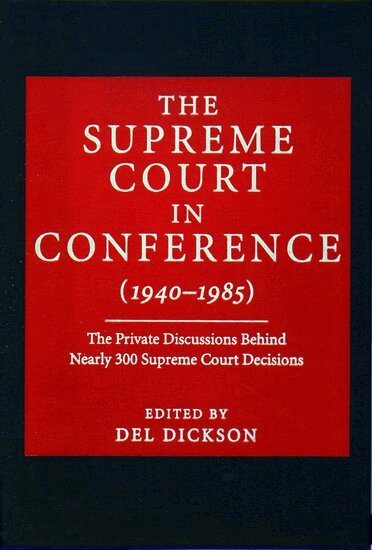
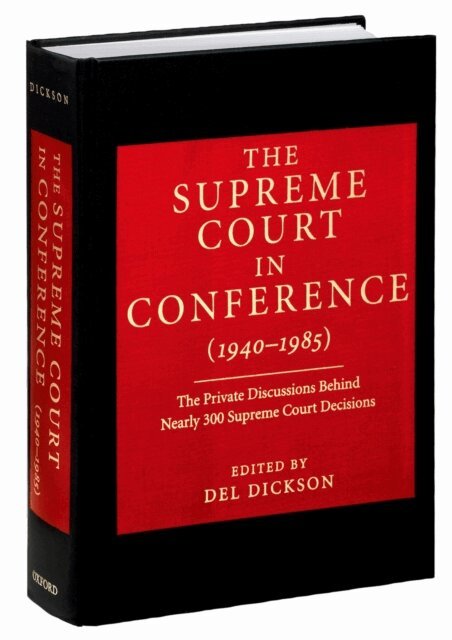
In public, Supreme Court Justices are not known for their candor while ruling upon a case. In private, however, a few days after hearing oral arguments, before deciding upon the case, the Justices openly discuss their views in what is known as the "Conference." Here, for the first time, are the transcriptions of those conference notes--taken by the Justices themselves--to more than two hundred landmark cases from 1945 to 1985, including such landmark decisions on civil rights, abortion, privacy, and Presidential power. The Supreme Court in Conference is the first book to presents the notes to the conference meetings--so private that only the Justices are present--with annotations and introductions by Del Dickson. Two lengthy essays on the conference notes put them into perspective and draw out the some of the patterns, tendencies, and personalities. Volume I covers cases involving the separation of powers and federalism, including such areas as Congressional authority, the Presidenvy, and foreign affairs. Volume II covers cases in civil rights and liberties: free speech, free press, religion, equal protection, privacy, reproductive rights, affirmative action, and many more. The full transcriptions are accompoanied with full notes, and citations. There is an extensive bibliography and index. he Supreme Court in Conference will become an essential reference work for scholars, lawyers, law students and the interested lay person.
Inbunden, Engelska, 2014
1 071 kr
Skickas inom 7-10 vardagar
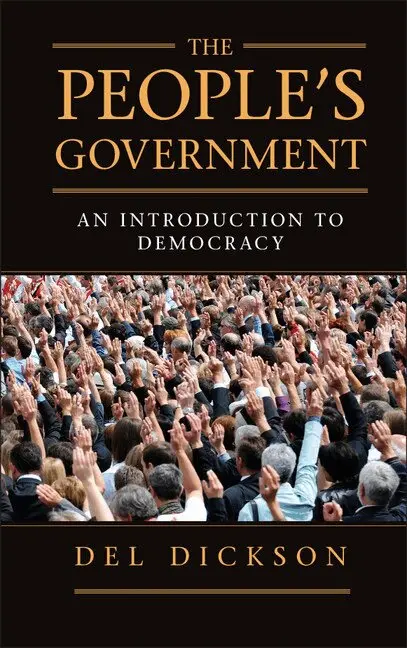
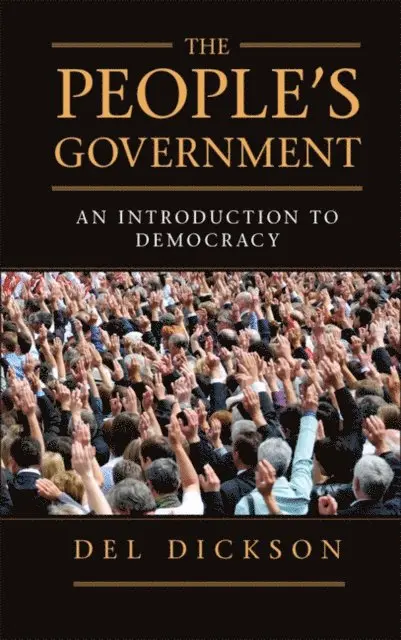
The People's Government is premised on the idea that democracy is based on two fundamental rights: freedom and liberty. Liberty is the right to be left alone, while freedom is the right to participate in a political community. How people view democracy depends on which of these two rights they think is more important. Liberal democrats place a higher value on liberty, while free democrats see freedom as the primary right. From this starting point, the author adds five dimensions to define and distinguish democratic societies: rights, participation and representation, inclusion, equality, and power. Liberal democracies emphasize individualism, negative rights, representative government, inclusive citizenship, equal opportunity, and limited government. Free democracies stress community, positive rights, direct participation, exclusive citizenship, equal outcomes, and robust government. The book examines the most important arguments for and against democracy, and explores the life cycle of democracies - how countries democratize, mature, and fail. Finally, the author uses the five dimensions established earlier to evaluate and grade American democracy.
E-bok
Engelska, 2014428 kr
Läs direkt efter köp
The People''s Government is premised on the idea that democracy is based on two fundamental rights: freedom and liberty. Liberty is the right to be left alone, while freedom is the right to participate in a political community. How people view democracy depends on which of these two rights they think is more important. Liberal democrats place a higher value on liberty, while free democrats see freedom as the primary right. From this starting point, the author adds five dimensions to define and distinguish democratic societies: rights, participation and representation, inclusion, equality, and power. Liberal democracies emphasize individualism, negative rights, representative government, inclusive citizenship, equal opportunity, and limited government. Free democracies stress community, positive rights, direct participation, exclusive citizenship, equal outcomes, and robust government. The book examines the most important arguments for and against democracy, and explores the life cycle of democracies - how countries democratize, mature, and fail. Finally, the author uses the five dimensions established earlier to evaluate and grade American democracy.
E-bok
PDF, Engelska, 2014428 kr
Läs direkt efter köp
The People''s Government is premised on the idea that democracy is based on two fundamental rights: freedom and liberty. Liberty is the right to be left alone, while freedom is the right to participate in a political community. How people view democracy depends on which of these two rights they think is more important. Liberal democrats place a higher value on liberty, while free democrats see freedom as the primary right. From this starting point, the author adds five dimensions to define and distinguish democratic societies: rights, participation and representation, inclusion, equality, and power. Liberal democracies emphasize individualism, negative rights, representative government, inclusive citizenship, equal opportunity, and limited government. Free democracies stress community, positive rights, direct participation, exclusive citizenship, equal outcomes, and robust government. The book examines the most important arguments for and against democracy, and explores the life cycle of democracies - how countries democratize, mature, and fail. Finally, the author uses the five dimensions established earlier to evaluate and grade American democracy.
Häftad, Engelska, 2014
355 kr
Tillfälligt slut
The People's Government is premised on the idea that democracy is based on two fundamental rights: freedom and liberty. Liberty is the right to be left alone, while freedom is the right to participate in a political community. How people view democracy depends on which of these two rights they think is more important. Liberal democrats place a higher value on liberty, while free democrats see freedom as the primary right. From this starting point, the author adds five dimensions to define and distinguish democratic societies: rights, participation and representation, inclusion, equality, and power. Liberal democracies emphasize individualism, negative rights, representative government, inclusive citizenship, equal opportunity, and limited government. Free democracies stress community, positive rights, direct participation, exclusive citizenship, equal outcomes, and robust government. The book examines the most important arguments for and against democracy, and explores the life cycle of democracies - how countries democratize, mature, and fail. Finally, the author uses the five dimensions established earlier to evaluate and grade American democracy.