Delabastita Dirk Delabastita – författare
Visar alla böcker från författaren Delabastita Dirk Delabastita. Handla med fri frakt och snabb leverans.
4 produkter
4 produkter
E-bok
Engelska, 20171 338 kr
Läs direkt efter köp
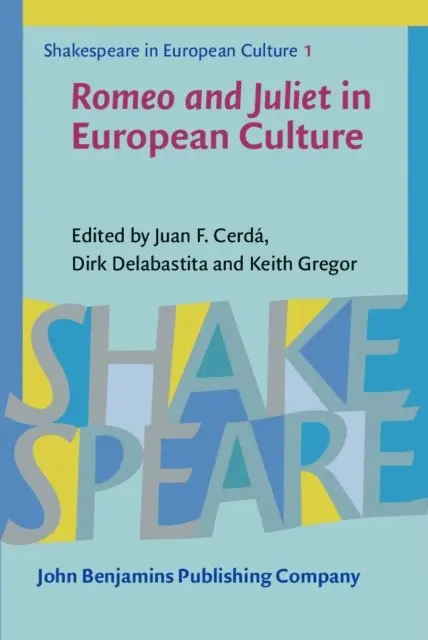
With its roots deep in ancient narrative and in various reworkings from the late medieval and early modern period, Shakespeare's Romeo and Juliet has left a lasting trace on modern European culture. This volume aims to chart the main outlines of this reception process in the broadest sense by considering not only critical-scholarly responses but also translations, adaptations, performances and various material and digital interventions which have, from the standpoint of their specific local contexts, contributed significantly to the consolidation of Romeo and Juliet as an integral part of Europe's cultural heritage. Moving freely across Europe's geography and history, and reflecting an awareness of political and cultural backgrounds, the volume suggests that Shakespeare's tragedy of youthful love has never ceased to impose itself on us as a way of articulating connections between the local and the European and the global in cases where love and hatred get in each other's way. The book is concluded by a selective timeline of the play's different materialisations.
E-bok
PDF, Engelska, 20151 271 kr
Läs direkt efter köp
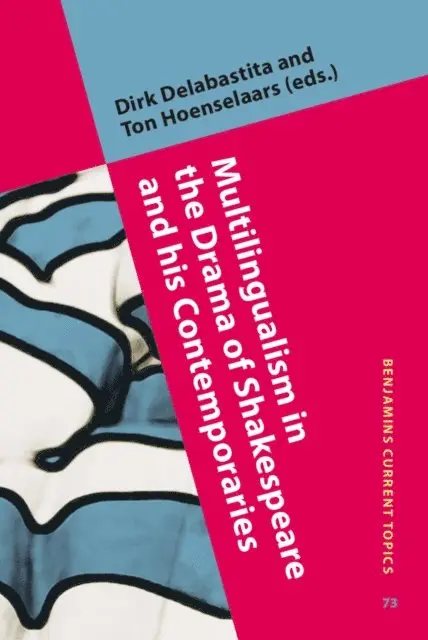
No literary tradition in early modern Europe was as obsessed with the interaction between the native tongue and its dialectal variants, or with ‘foreign’ languages and the phenomenon of ‘translation’, as English Renaissance drama. Originally published as a themed issue of English Text Construction 6:1 (2013), this carefully balanced collection of essays, now enhanced with a new Afterword, decisively demonstrates that Shakespeare and his colleagues were far more than just ‘English’ authors and that their very ‘Englishness’ can only be properly understood in a broader international and multilingual context. Showing a healthy disrespect for customary disciplinary borderlines, Multilingualism in the Drama of Shakespeare and his Contemporaries brings together a wide range of scholarly traditions and vastly different types of expertise. While several papers venture into previously uncharted territory, others critically revisit some of the loci classici of early modern theatrical multilingualism such as Shakespeare’s Henry V.
E-bok
PDF, Engelska, 19931 539 kr
Läs direkt efter köp
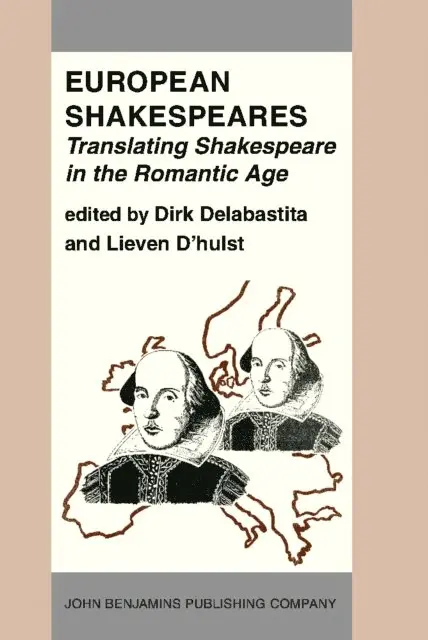
Where, when, and why did European Romantics take to Shakespeare? How about Shakespeare''s reception in enduring Neoclassical or in popular traditions? And above all: which Shakespeare did these various groups promote? This collection of essays leaves behind the time-honoured commonplaces about Shakespearean translation (the ''translatability'' of Shakespeare''s forms and meanings, the issue of ''loss'' and ''gain'' in translation, the distinction between ''translation'' and ''adaptation'', translation as an ''art''. etc.) and joins modern Shakespearean scholarship in its attempt to lay bare the cultural mechanisms endowing Shakespeare''s texts with their supposedly inherent meanings. The book presents a fresh approach to the subject by its radically descriptive stance, by its search for an adequate underlying theory along interdisciplinary lines, and not in the least by its truly European scope. It traces common trends and local features not just in France and Germany, but also in Hungary, Italy, the Netherlands, Portugal, Russia, Scandinavia, and the West Slavic cultures.
E-bok
PDF, Engelska, 20061 447 kr
Läs direkt efter köp
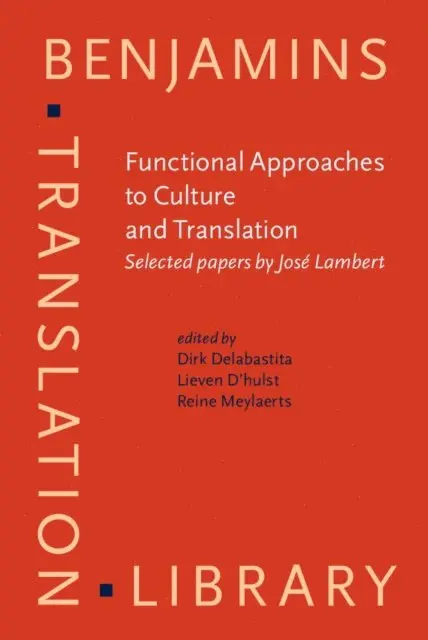
This volume contains a generous selection of articles on translation by Professor José Lambert (K.U. Leuven). It traces the intellectual itinerary of their author, who started out as a French and Comparative Literature scholar some four decades ago trying to get a better grip on the problem of inter-literary contacts, and who soon became a key figure in the emergent discipline of Translation Studies, where he is widely known as an indefatigable promoter of descriptively oriented research. This collection shows how José Lambert has never stopped asking new questions about the crucial but often hidden role of language and translation in the world of today. It includes some of the author’s classic papers as well as a few lesser known ones that deserve wider circulation. The editors’ introduction and the bibliography complete this thought-provoking survey of the career of one of the most creative researchers in the field.