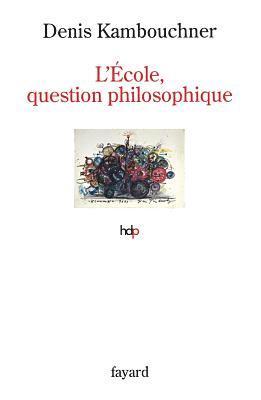
Denis Kambouchner – författare
Visar alla böcker från författaren Denis Kambouchner. Handla med fri frakt och snabb leverans.
6 produkter
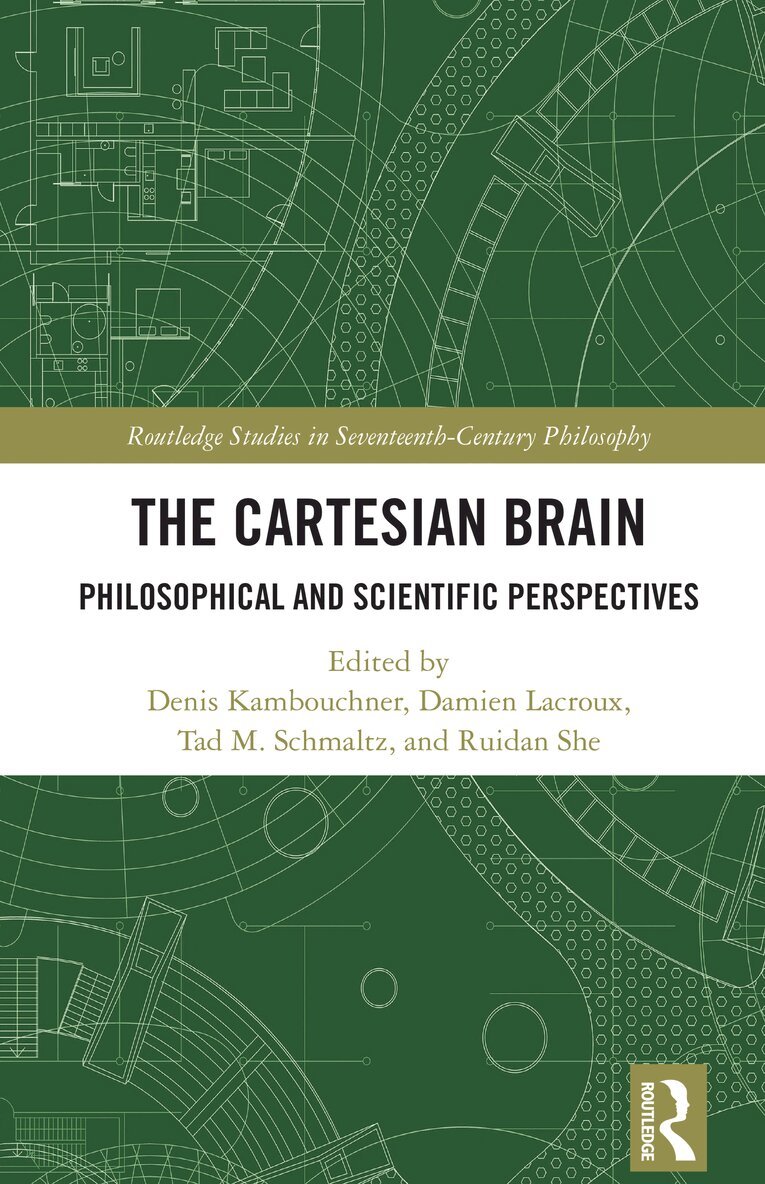
Cartesian Brain
Philosophical and Scientific Perspectives
Av Denis Kambouchner, Damien Lacroux m. fl.
Inbunden, 2024
2594 kr
Lägg i varukorg
This volume presents new research on Cartesian psychophysiology that combines historical and textual analysis with a consideration of recent advances in contemporary neuroscience research. It seeks to explain why the Cartesian theory of the brain and its communication with the mind still offer a …
Cartesian Brain
Philosophical and Scientific Perspectives
Av Denis Kambouchner, Damien Lacroux m. fl.
Häftad, 2026
708 kr
Lägg i varukorg
This volume presents new research on Cartesian psychophysiology that combines historical and textual analysis with a consideration of recent advances in contemporary neuroscience research. It seeks to explain why the Cartesian theory of the brain and its communication with the mind still offer a …
Cartesian Brain
Philosophical and Scientific Perspectives
Av Ruidan She, Tad M. Schmaltz m. fl.
E-bok, 2024
813 kr
Lägg i varukorg
This volume presents new research on Cartesian psychophysiology that combines historical and textual analysis with a consideration of recent advances in contemporary neuroscience research. It seeks to explain why the Cartesian theory of the brain and its communication with the mind still offer a …
Cartesian Brain
Philosophical and Scientific Perspectives
Av Ruidan She, Tad M. Schmaltz m. fl.
E-bok, 2024
813 kr
Lägg i varukorg
This volume presents new research on Cartesian psychophysiology that combines historical and textual analysis with a consideration of recent advances in contemporary neuroscience research. It seeks to explain why the Cartesian theory of the brain and its communication with the mind still offer a …
Descartes et la philosophie morale
E-bok, 2009
441 kr
Lägg i varukorg
On dit que Descartes réfléchissait sans cesse aux questions morales. Pourtant, entre la modeste « morale par provision » de 1637 et l''évocation, dix ans plus tard, d''une « plus haute et plus parfaite morale », « dernier degré de la sagesse », son oeuvre en la matière paraît discrète : dix pages …