Dennis Chow – författare
Visar alla böcker från författaren Dennis Chow. Handla med fri frakt och snabb leverans.
2 produkter
2 produkter
547 kr
Kommande
Modern enterprises are saturated with telemetry. Endpoint agents, centralized logging, behavioral analytics, and automated detections have made off-the-shelf red team tools increasingly brittle and predictable. Most red team tools fail not because they're buggy, but because they behave in ways detection systems are designed to notice. Red Team Tool Development teaches readers how to think, design, and build differently. Instead of showing how to run popular frameworks, this book focuses on how offensive tools actually behave in monitored environments and why that behavior so often gives them away. The authors walk readers through the foundations of detection-aware tool design, explaining how payload structure, execution flow, and environmental interaction influence visibility across modern detection stacks. Each chapter centers on modular, adaptable examples that show not just what works, but why it works. Readers learn how small design decisions surface in logs, alerts, and behavioral analytics, and how thoughtful toolcraft can reduce detection while still achieving realistic adversary objectives. The result is a field-ready reference for red teamers who need to build their own tools when public ones fail, and for detection engineers and threat hunters who want a clearer view of how advanced operators design tooling to evade automated defenses.

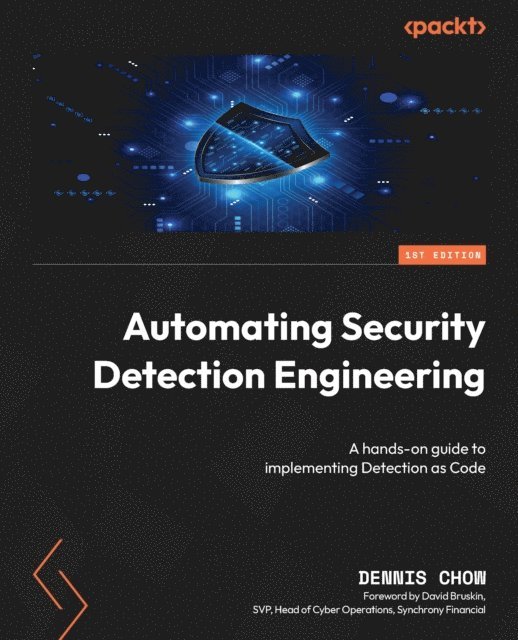
Automating Security Detection Engineering
A hands-on guide to implementing Detection as Code
Häftad, Engelska, 2024
681 kr
Skickas inom 5-8 vardagar
Accelerate security detection development with AI-enabled technical solutions using threat-informed defenseKey FeaturesCreate automated CI/CD pipelines for testing and implementing threat detection use casesApply implementation strategies to optimize the adoption of automated work streamsUse a variety of enterprise-grade tools and APIs to bolster your detection programPurchase of the print or Kindle book includes a free PDF eBookBook DescriptionToday's global enterprise security programs grapple with constantly evolving threats. Even though the industry has released abundant security tools, most of which are equipped with APIs for integrations, they lack a rapid detection development work stream. This book arms you with the skills you need to automate the development, testing, and monitoring of detection-based use cases.You’ll start with the technical architecture, exploring where automation is conducive throughout the detection use case lifecycle. With the help of hands-on labs, you’ll learn how to utilize threat-informed defense artifacts and then progress to creating advanced AI-powered CI/CD pipelines to bolster your Detection as Code practices. Along the way, you'll develop custom code for EDRs, WAFs, SIEMs, CSPMs, RASPs, and NIDS. The book will also guide you in developing KPIs for program monitoring and cover collaboration mechanisms to operate the team with DevSecOps principles. Finally, you'll be able to customize a Detection as Code program that fits your organization's needs.By the end of the book, you'll have gained the expertise to automate nearly the entire use case development lifecycle for any enterprise.What you will learnUnderstand the architecture of Detection as Code implementationsDevelop custom test functions using Python and TerraformLeverage common tools like GitHub and Python 3.x to create detection-focused CI/CD pipelinesIntegrate cutting-edge technology and operational patterns to further refine program efficacyApply monitoring techniques to continuously assess use case healthCreate, structure, and commit detections to a code repositoryWho this book is forThis book is for security engineers and analysts responsible for the day-to-day tasks of developing and implementing new detections at scale. If you’re working with existing programs focused on threat detection, you’ll also find this book helpful. Prior knowledge of DevSecOps, hands-on experience with any programming or scripting languages, and familiarity with common security practices and tools are recommended for an optimal learning experience.