Dhirendra Vajpeyi - Böcker
Visar alla böcker från författaren Dhirendra Vajpeyi. Handla med fri frakt och snabb leverans.
2 produkter
2 produkter
1 009 kr
Skickas inom 10-15 vardagar
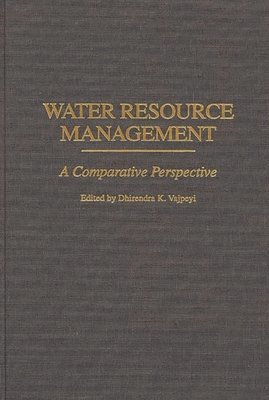
According to available estimates, only .3% of the total fresh water is usable for the world's entire human and animal populations. Some experts have observed that in the near future, the earth will face severe scarcity of water, resulting in an insufficient amount of water to sustain our ever increasing future needs. Others believe that such pessimistic estimates are unwarranted.Due to conflicting opinions and data-interpretations, the future levels of scarcity are difficult to accurately forecast. One fact, however, is above controversy: water resources are not evenly distributed. The world's 38 poorest countries are located near areas that lack ample water supplies. Even some areas, which seem to possess sufficient supplies, suffer zonal or regional shortages. In recent years there has been an increasing realization not only of the importance of water as a key factor for sustainable development, but also the impending strategies for water in the near future. The chapters in this collection examine this critical resource and the policies being pursued to meet the challenge of decreasing access to usable water by selected countries in Asia, Africa, Latin America, and Europe. A major study for students, researchers, and policymakers involved with environmental and development issues.
2 040 kr
Kommande
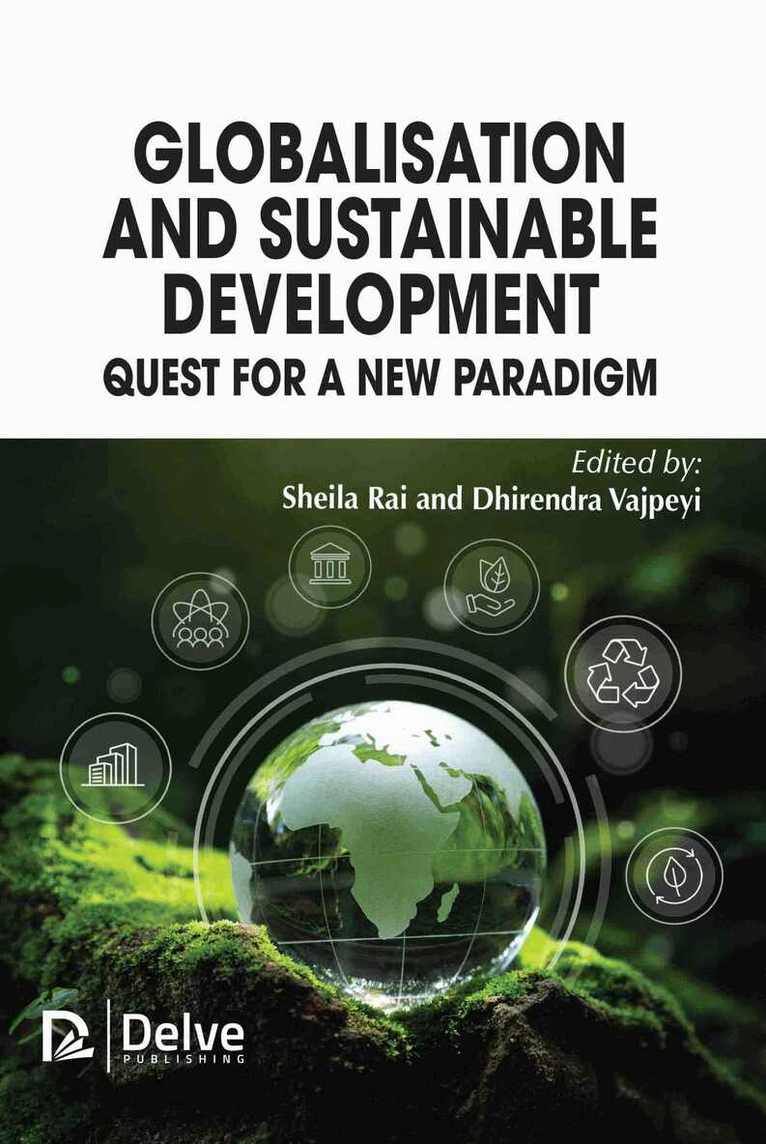
After the collapse of Soviet Union and its Marxist-Leninist economic and political model of development the Washington consensus inspired model of economic and political development popularly known as Globalization became the new mantra , the panacea to cure all societal ills, and the only option to raise global humanity from poverty, ill health, and political oppression. There is no doubt that it lifted hundreds of millions of people out of poverty, however its many gains were not equally or even near equally distributed. Economic inequality, human rights suffered specially in China and several countries in Eastern Europe, environmental degradation, unemployment, unregulated and unbridled dominance by multinationals (mostly Western , Americans ) brought about unprecedented economic crisis and social fragmentation. These developments raised serious doubts and questions about the viability of globalization model. The "discontent with globalization" forced academics and policymakers to reevaluate other alternatives. The present anthology discusses some of these issues in a comparative context by presenting alternative models to Western unregulated free market Globalization model.