Diego Barba – författare
Visar alla böcker från författaren Diego Barba. Handla med fri frakt och snabb leverans.
3 produkter
3 produkter
E-bok
PDF, Engelska, 20062 741 kr
Läs direkt efter köp
High mountains can be considered as particularly appropriate environments to detect effects ofclimate change on natural biocoenoses in a global scale for the following reasons: Firstly, ecosystems at the l- temperature limits of plant life are generally thought to be especially sensitive to climate change [1][2][3]. An already ongoing upward shift of vascular plants at high summits in the Alps, determined by the Austrian IGBP-research [4][5][6][7][8], is most likely a response to the atmospheric warming since the 19th century. Secondly, high mountains still comprise the most natural ecosystems in many countries, being largely untouched by human settlements and agricultural influences, Therefore, climatic effects on ecosystems can be studied without masking effects from human land use. Thirdly, high mountain ranges are present in virtually every major zonobiome of the earth. The research initiative GLORIA aims to establish an urgently needed global monitoring network, by using high mountain ecosystems as sensitive indicators, as required in the “IGBP-Mountain Workplan” [9]. Moreover, a deeper understanding of assemblagemechanisms andassemblage processes in vegetation patterns as a contribution to ecological theory can be expected. This paper gives a short general overview about GLORIA and a first outline about the concept, method, and some few results of the “Multi Summit-Approach”, one of the basic intentions within the proposed network. It aims to encourage the involvement of high mountain researchers and research co-ordinators in a detailed discussion of the proposed research activities and in a co-operation within the planned global monitoring network.
Del 9 - Advances in Global Change Research
Global Change and Protected Areas
Inbunden, Engelska, 2001
2 174 kr
Skickas inom 10-15 vardagar
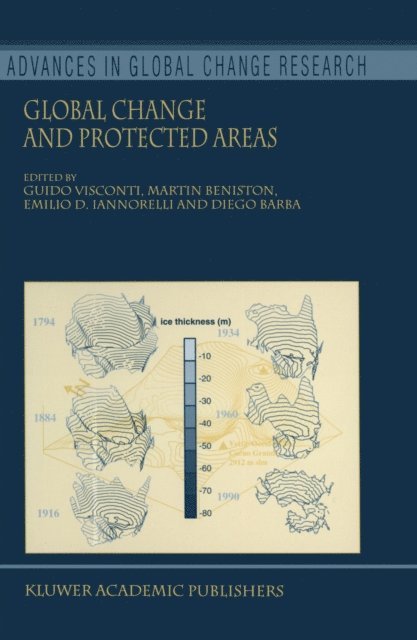
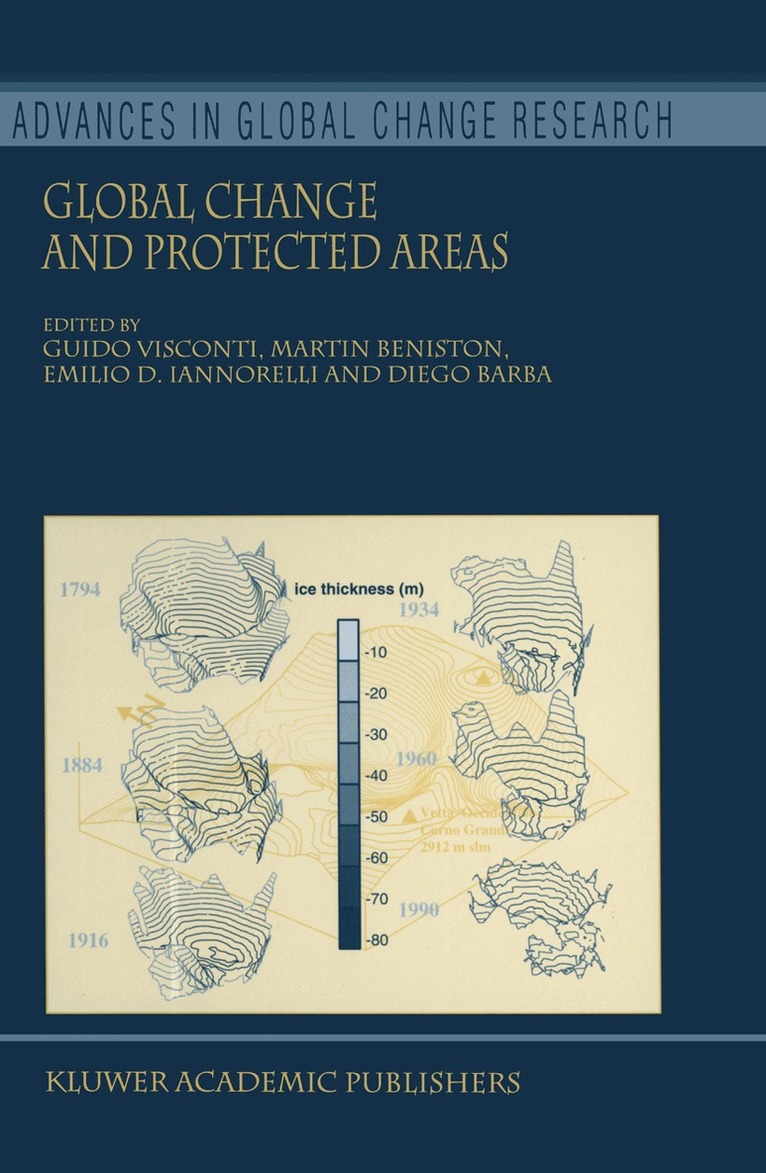
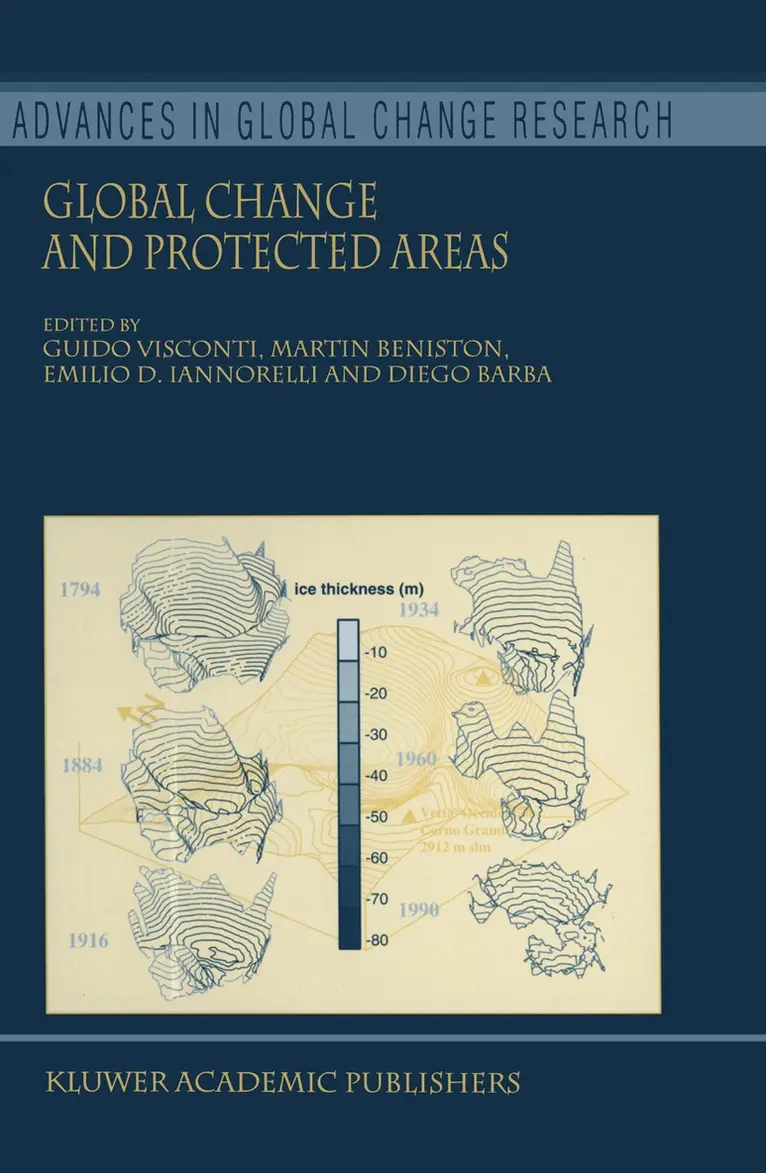
The scope of this book is to show that protected areas may be the regions where early signs of the impact of global change can be observed. These signs are not limited to physical parameters like temperature and precipitation, but could include changes in the biosphere and in social behaviour. The book is a collection of papers presented at the meeting "Global Change and Protected Areas" held in L'Aquila, Italy, in September 1998. It is divided into four sections dealing with the physical evidence for climatic and environmental changes, the impact on the biosphere and hydrology and the socio-economic implications. The last section is a case study on the Abruzzo Region which has the peculiarity among the Italian regions of having dedicated a third of its territory to natural parks. Most of the contributions have been prepared for this book and each section is opened by a general review that may also be very useful as a teaching tool.
Del 9 - Advances in Global Change Research
Global Change and Protected Areas
Häftad, Engelska, 2010
2 174 kr
Skickas inom 10-15 vardagar
High mountains can be considered as particularly appropriate environments to detect effects ofclimate change on natural biocoenoses in a global scale for the following reasons: Firstly, ecosystems at the l- temperature limits of plant life are generally thought to be especially sensitive to climate change [1][2][3]. An already ongoing upward shift of vascular plants at high summits in the Alps, determined by the Austrian IGBP-research [4][5][6][7][8], is most likely a response to the atmospheric warming since the 19th century. Secondly, high mountains still comprise the most natural ecosystems in many countries, being largely untouched by human settlements and agricultural influences, Therefore, climatic effects on ecosystems can be studied without masking effects from human land use. Thirdly, high mountain ranges are present in virtually every major zonobiome of the earth. The research initiative GLORIA aims to establish an urgently needed global monitoring network, by using high mountain ecosystems as sensitive indicators, as required in the “IGBP-Mountain Workplan” [9]. Moreover, a deeper understanding of assemblagemechanisms andassemblage processes in vegetation patterns as a contribution to ecological theory can be expected. This paper gives a short general overview about GLORIA and a first outline about the concept, method, and some few results of the “Multi Summit-Approach”, one of the basic intentions within the proposed network. It aims to encourage the involvement of high mountain researchers and research co-ordinators in a detailed discussion of the proposed research activities and in a co-operation within the planned global monitoring network.