Diego Pirillo – författare
Visar alla böcker från författaren Diego Pirillo. Handla med fri frakt och snabb leverans.
5 produkter
5 produkter
Inbunden, Engelska, 2026
884 kr
Kommande
Comparing four displaced communities in four early modern sanctuary cities (Rome, Venice, Livorno, and London), I show that refugees were not only the victims of state violence but actively negotiated with governments, contributing to the creation of asylum and resettlement policies. Reading the multilingual corpus of early modern refugee literature, I study the discursive practices that displaced people used to prevent persecution and secure rights for their communities. Thus, the history of displacement that emerges from this volume is not simply a "history from below," solely centered on persecuted minorities but rather a larger 'refugee history,' that studies both institutions and communities, and recovers the norms and practices that arose in response to forced migration. This title is also available as Open Access on Cambridge Core.
Häftad, Engelska, 2026
274 kr
Kommande
Comparing four displaced communities in four early modern sanctuary cities (Rome, Venice, Livorno, and London), I show that refugees were not only the victims of state violence but actively negotiated with governments, contributing to the creation of asylum and resettlement policies. Reading the multilingual corpus of early modern refugee literature, I study the discursive practices that displaced people used to prevent persecution and secure rights for their communities. Thus, the history of displacement that emerges from this volume is not simply a "history from below," solely centered on persecuted minorities but rather a larger 'refugee history,' that studies both institutions and communities, and recovers the norms and practices that arose in response to forced migration. This title is also available as Open Access on Cambridge Core.
Inbunden, Engelska, 2018
804 kr
Skickas inom 10-15 vardagar
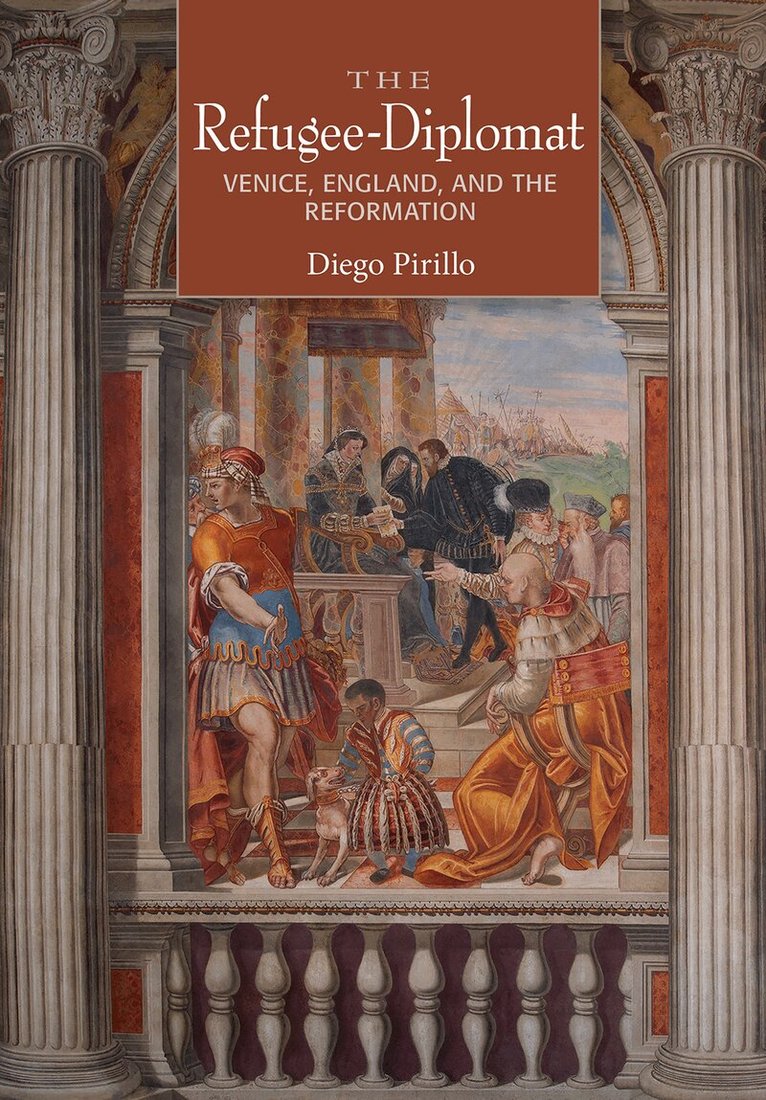
The establishment of permanent embassies in fifteenth-century Italy has traditionally been regarded as the moment of transition between medieval and modern diplomacy. In The Refugee-Diplomat, Diego Pirillo offers an alternative history of early modern diplomacy, centered not on states and their official representatives but around the figure of "the refugee-diplomat" and, more specifically, Italian religious dissidents who forged ties with English and northern European Protestants in the hope of inspiring an Italian Reformation.Pirillo reconsiders how diplomacy worked, not only within but also outside of formal state channels, through underground networks of individuals who were able to move across confessional and linguistic borders, often adapting their own identities to the changing political conditions they encountered. Through a trove of diplomatic and mercantile letters, inquisitorial records, literary texts, marginalia, and visual material, The Refugee-Diplomat recovers the agency of religious refugees in international affairs, revealing their profound impact on the emergence of early modern diplomatic culture and practice.
Inbunden, Engelska, 2026
577 kr
Skickas inom 10-15 vardagar
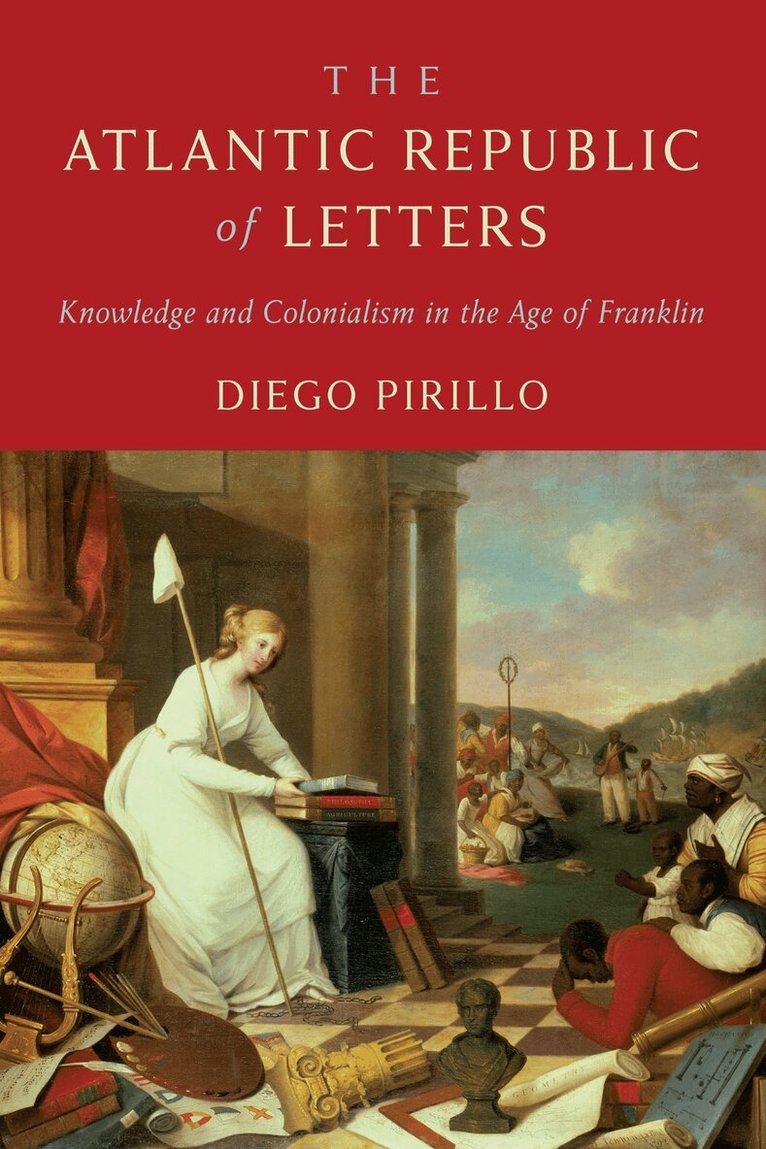
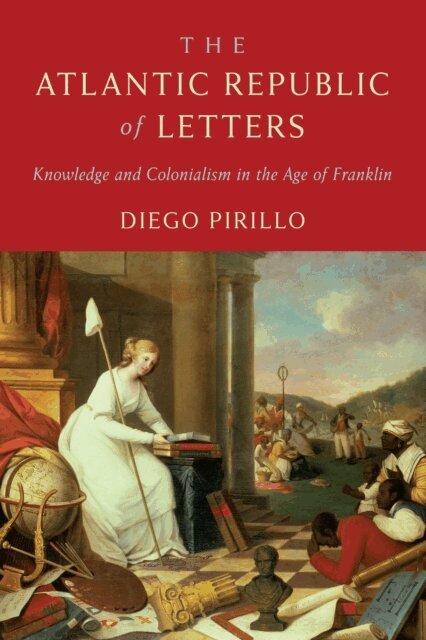
Places Benjamin Franklin's Philadelphia in the context of a broader Atlantic intellectual world and investigates the entanglement among books, knowledge, and colonialismThe Atlantic Republic of Letters offers an alternative intellectual history of early America. Focusing on Benjamin Franklin's Philadelphia, the book frames Euro-American colonialism as an intellectual enterprise, which was established not only through military and economic means but also through books, ideas, and cultural institutions.Through research in dozens of archives and rare book libraries, Diego Pirillo brings together two interconnected histories. First, he recovers the place of British America in the cosmopolitan world of the Republic of Letters, studying the communication system that facilitated the transatlantic circulation of knowledge. Second, he shows that knowledge was weaponized in the effort to survey and control North America. While fashioning themselves as independent and cosmopolitan scholars, Franklin and his associates, including James and Martha Logan, Isaac Norris II, Pierre Eugène Du Simitière, and Jane Colden, among others, were in fact deeply tied to political power and tailored their ideas to the needs of their patrons. They served as agents of empire and helped to devise and put into practice the colonial project. Not only were books, libraries, and cultural institutions funded by the wealth created by the slave trade and the expropriation of Indigenous land, but, as Pirillo argues, the very taxonomies and classification systems that Euro-American scholars devised directly shaped the colonial enterprise.In this respect, The Atlantic Republic of Letters illuminates the relationship among books, intellectuals, and colonial governance, and explores the ways in which knowledge circulated and shaped conquest.
E-bok
Engelska, 2026662 kr
Läs direkt efter köp
Places Benjamin Franklin's Philadelphia in the context of a broader Atlantic intellectual world and investigates the entanglement among books, knowledge, and colonialismThe Atlantic Republic of Letters offers an alternative intellectual history of early America. Focusing on Benjamin Franklin's Philadelphia, the book frames Euro-American colonialism as an intellectual enterprise, which was established not only through military and economic means but also through books, ideas, and cultural institutions.Through research in dozens of archives and rare book libraries, Diego Pirillo brings together two interconnected histories. First, he recovers the place of British America in the cosmopolitan world of the Republic of Letters, studying the communication system that facilitated the transatlantic circulation of knowledge. Second, he shows that knowledge was weaponized in the effort to survey and control North America. While fashioning themselves as independent and cosmopolitan scholars, Franklin and his associates, including James and Martha Logan, Isaac Norris II, Pierre Eugène Du Simitière, and Jane Colden, among others, were in fact deeply tied to political power and tailored their ideas to the needs of their patrons. They served as agents of empire and helped to devise and put into practice the colonial project. Not only were books, libraries, and cultural institutions funded by the wealth created by the slave trade and the expropriation of Indigenous land, but, as Pirillo argues, the very taxonomies and classification systems that Euro-American scholars devised directly shaped the colonial enterprise.In this respect, The Atlantic Republic of Letters illuminates the relationship among books, intellectuals, and colonial governance, and explores the ways in which knowledge circulated and shaped conquest.