
Dirk RAbbelke – författare
807 kr
Läs direkt efter köp
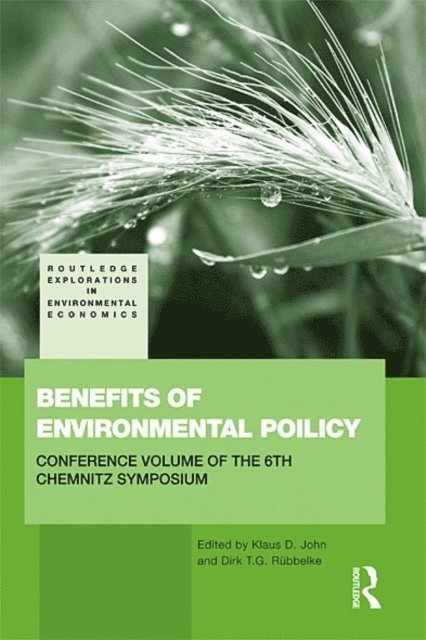
Environmental policy may produce effects which go beyond the scope of the specific policy’s initial aim. Reforestation, for example, generates positive benefits not only in the shape of climate protection but also in the shape of the combat of biodiversity loss and it may also raise the attractiveness of a region for tourists. There are several examples of environmental policies, generating initially unintended co-effects. These co-effects are not always positive, of course.
This book addresses the wide range of (co-)effects associated with environmental policies which may increase or decrease the attractiveness of these policies. Therefore, the book’s scope goes beyond the standard economic analyses, which regularly postulate a specific cause-and-effect chain. The complexity and wide range of benefits is investigated from different perspectives and by means of different methodologies. Among the environmental policies discussed are climate mitigation policies as well as adaptation policies. The inclusion of all relevant effects of environmental policy (and therefore not only of the primarily intended effects) tends to have a strong impact on the efficient policy design.
The areas which are covered by the book will be of great interest mainly for economists (environmental economics, ecological economics), ecologists and political scientists as well as practitioners, scientists and policy makers.
807 kr
Läs direkt efter köp
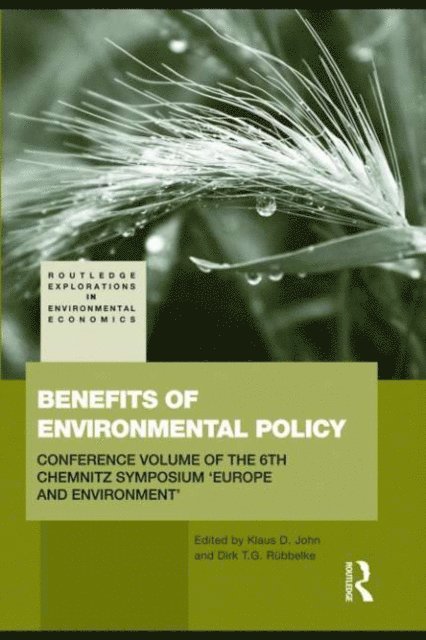
Environmental policy may produce effects which go beyond the scope of the specific policy’s initial aim. Reforestation, for example, generates positive benefits not only in the shape of climate protection but also in the shape of the combat of biodiversity loss and it may also raise the attractiveness of a region for tourists. There are several examples of environmental policies, generating initially unintended co-effects. These co-effects are not always positive, of course.
This book addresses the wide range of (co-)effects associated with environmental policies which may increase or decrease the attractiveness of these policies. Therefore, the book’s scope goes beyond the standard economic analyses, which regularly postulate a specific cause-and-effect chain. The complexity and wide range of benefits is investigated from different perspectives and by means of different methodologies. Among the environmental policies discussed are climate mitigation policies as well as adaptation policies. The inclusion of all relevant effects of environmental policy (and therefore not only of the primarily intended effects) tends to have a strong impact on the efficient policy design.
The areas which are covered by the book will be of great interest mainly for economists (environmental economics, ecological economics), ecologists and political scientists as well as practitioners, scientists and policy makers.
992 kr
Läs direkt efter köp
Rising fuel prices during recent years and the threat of global warming have reinforced public and scientific interest in the issue of sustainable energy, with the term sustainability understood as having economic, environmental and social dimensions.
Renewable energy is seen as an effective means to address several problems simultaneously, including climate change, exploitation of non-renewable resources, the high volatility of energy prices on the global markets, dependency on fuels from politically unstable countries (energy-insecurity) and the transfer of wealth to these countries.
This book addresses these and related topics including the diffusion of renewable technologies. Policies to induce sustainable energy use and production are discussed by researchers from a range of different disciplines. The result is a use-oriented and multidisciplinary perspective concerning policies to support sustainable energy use and production, which will be of great use to researchers and academics alike.
992 kr
Läs direkt efter köp
Rising fuel prices during recent years and the threat of global warming have reinforced public and scientific interest in the issue of sustainable energy, with the term sustainability understood as having economic, environmental and social dimensions.
Renewable energy is seen as an effective means to address several problems simultaneously, including climate change, exploitation of non-renewable resources, the high volatility of energy prices on the global markets, dependency on fuels from politically unstable countries (energy-insecurity) and the transfer of wealth to these countries.
This book addresses these and related topics including the diffusion of renewable technologies. Policies to induce sustainable energy use and production are discussed by researchers from a range of different disciplines. The result is a use-oriented and multidisciplinary perspective concerning policies to support sustainable energy use and production, which will be of great use to researchers and academics alike.