Don Rosenberg – författare
Visar alla böcker från författaren Don Rosenberg. Handla med fri frakt och snabb leverans.
7 produkter
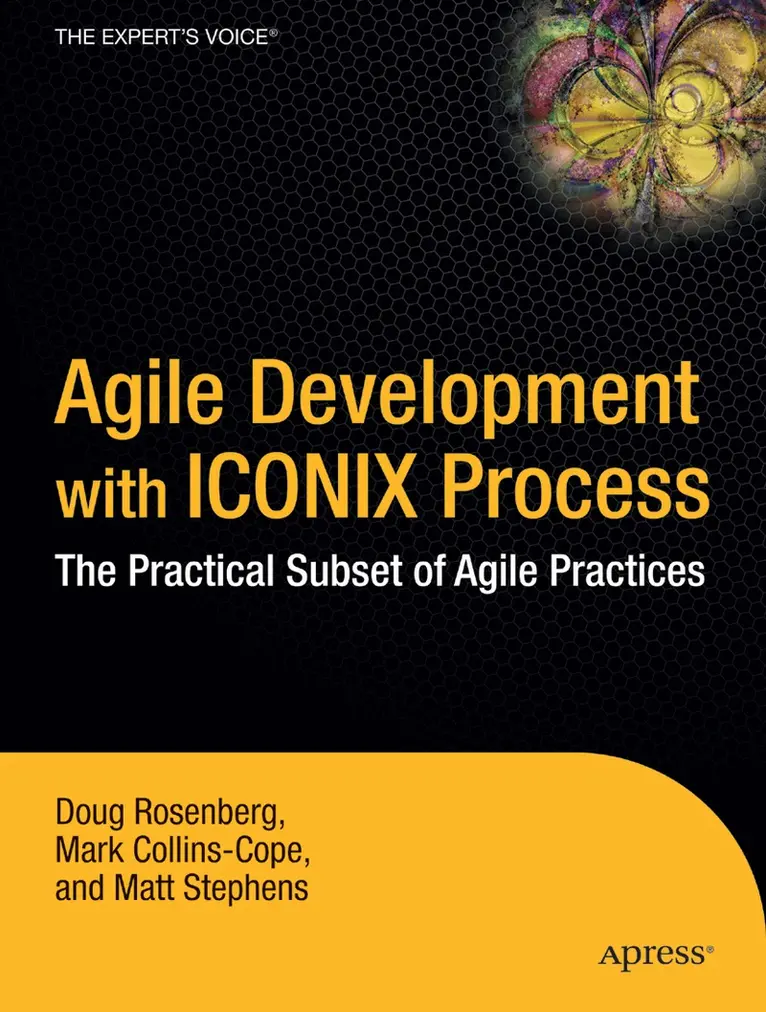
Agile Development with ICONIX Process
People, Process, and Pragmatism
Av Matt Stephens, Mark Collins-Cope m. fl.
E-bok, 2006
839 kr
Lägg i varukorg
This book describes how to apply ICONIX Process (a minimal, use case-driven modeling process) in an agile software project. It''s full of practical advice for avoiding common agile pitfalls. Further, the book defines a core agile subset so those of you who want to get agile need not spend years …
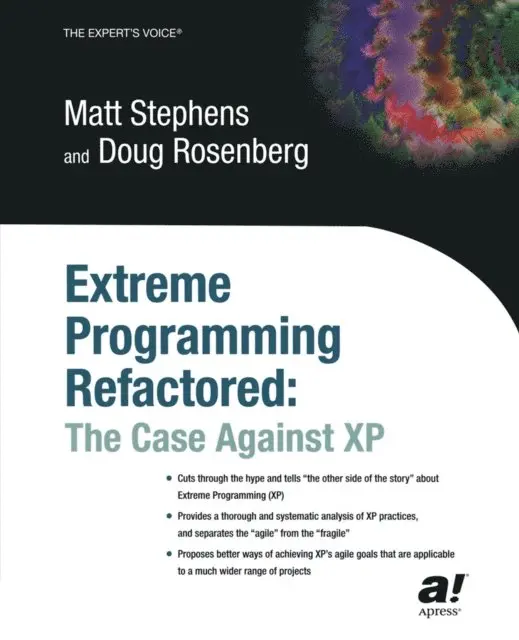
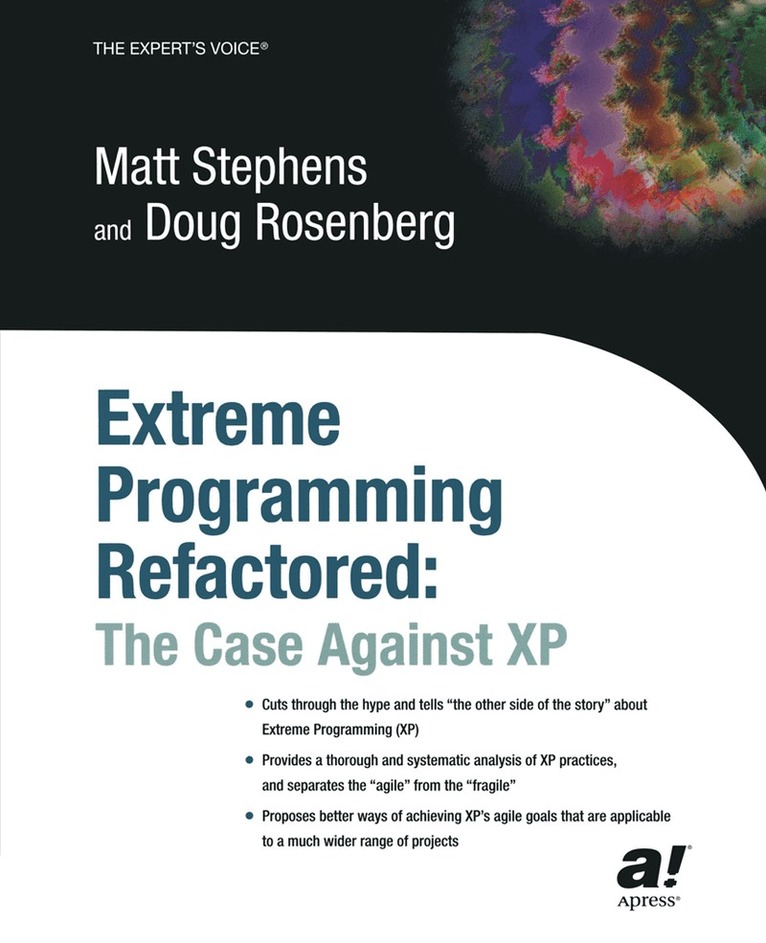
Extreme Programming Refactored
The Case Against XP
Av Matt Stephens, Don Rosenberg
E-bok, 2008
672 kr
Lägg i varukorg
Extreme Programming Refactored: The Case Against XP (featuring Songs of the Extremos ) takes a satirical look at the increasingly-hyped extreme programming (XP) methodology. It explores some quite astonishing Extremo quotes that have typified the XP approach quotes such as, “XPers are not afraid of …
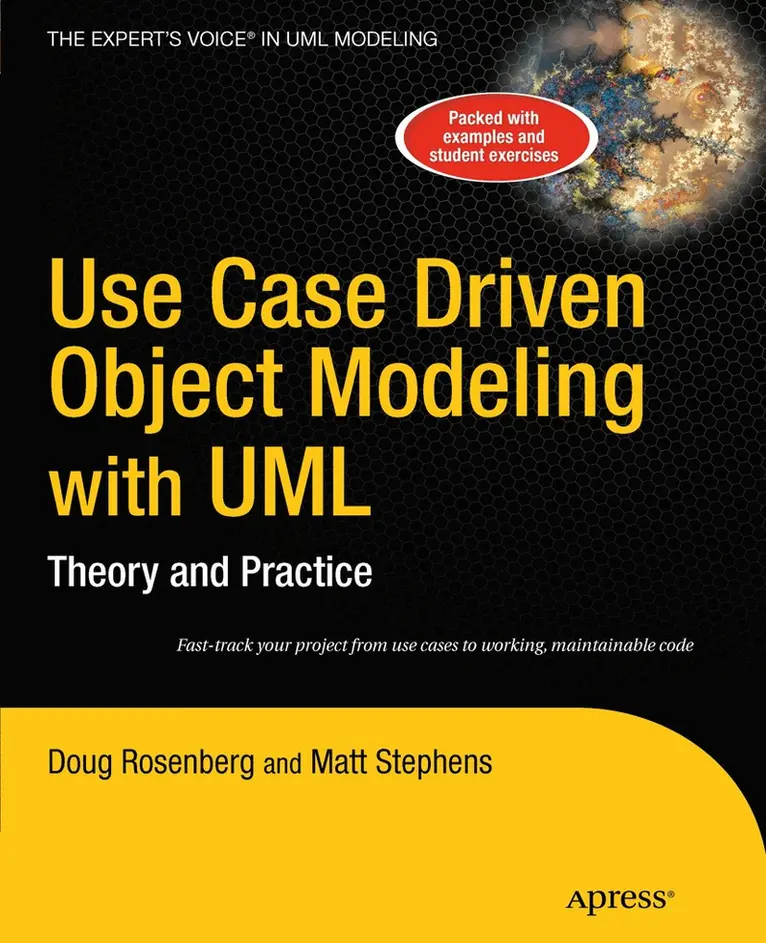
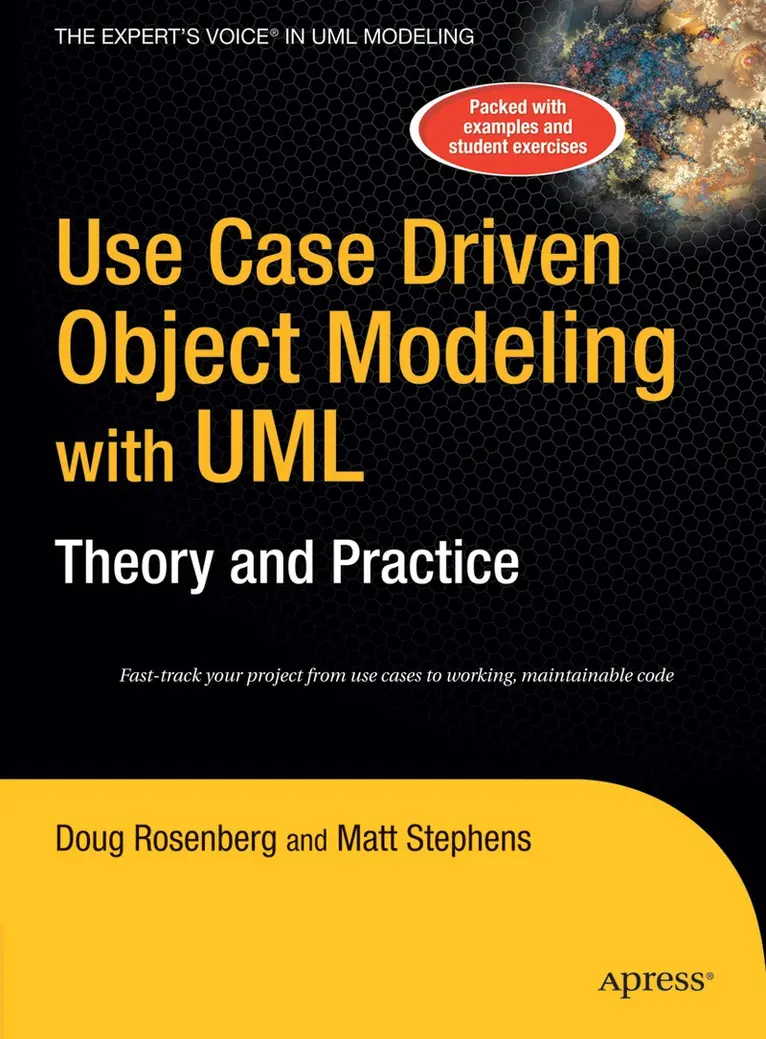
Use Case Driven Object Modeling with UML
Theory and Practice
Av Don Rosenberg, Matt Stephens
Häftad, 2013
736 kr
Lägg i varukorg
Use Case Driven Object Modeling with UML: Theory and Practice shows how to drive an object-oriented software design from use case all the way through coding and testing, based on the minimalist, UML-based ICONIX process. In addition to a comprehensive explanation of the foundations of the approach, …
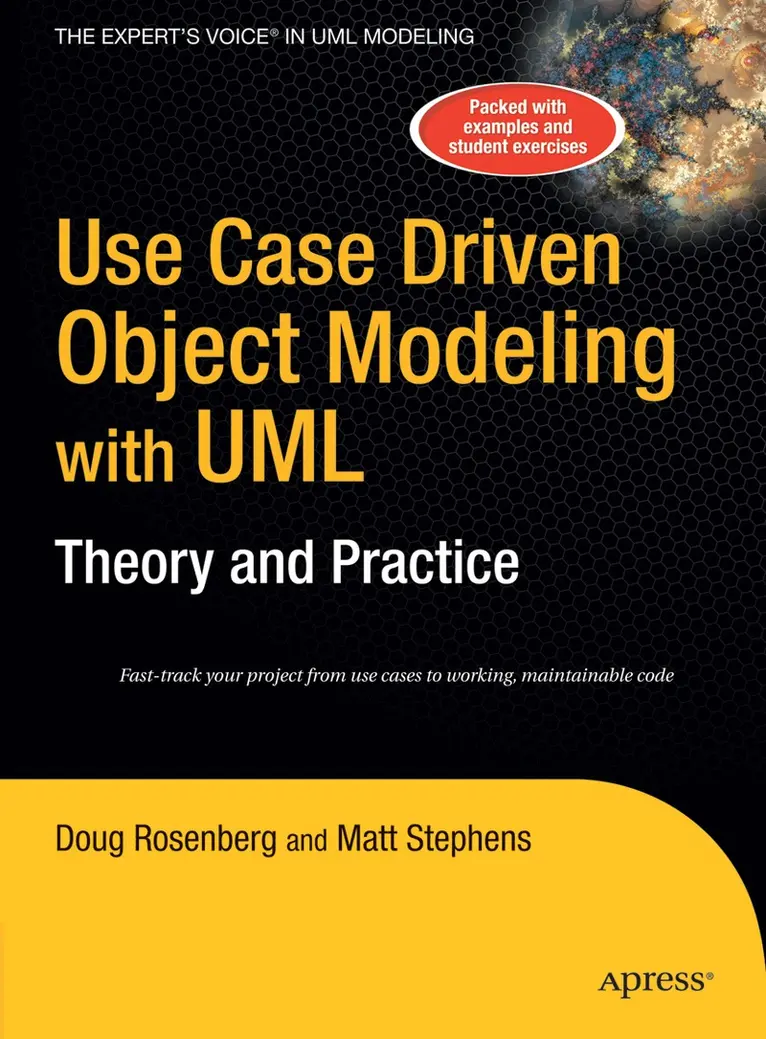
Use Case Driven Object Modeling with UMLTheory and Practice
Theory and Practice
Av Don Rosenberg, Matt Stephens
Häftad, 2016
792 kr
Lägg i varukorg
Use Case Driven Object Modeling with UML: Theory and Practice shows how to drive an object-oriented software design from use case all the way through coding and testing, based on the minimalist, UML-based ICONIX process. In addition to a comprehensive explanation of the foundations of the approach, …
Extreme Programming Refactored
The Case Against XP
Av Don Rosenberg, Matt Stephens
Häftad, 2003
495 kr
Lägg i varukorg
Extreme Programming Refactored: The Case Against XP (featuring Songs of the Extremos) takes a satirical look at the increasingly-hyped extreme programming (XP) methodology. It explores some quite astonishing Extremo quotes that have typified the XP approach quotes such as, “XPers are not afraid of …
Agile Development with ICONIX Process
People, Process, and Pragmatism
Av Don Rosenberg, Mark Collins-Cope m. fl.
Inbunden, 2005
624 kr
Lägg i varukorg
This book describes how to apply ICONIX Process (a minimal, use case-driven modeling process) in an agile software project. It's full of practical advice for avoiding common agile pitfalls. Further, the book defines a core agile subset so those of you who want to get agile need not spend years …
Use Case Driven Object Modeling with UMLTheory and Practice
Theory and Practice
Av Don Rosenberg, Matt Stephens
Inbunden, 2007
1129 kr
Lägg i varukorg
Use Case Driven Object Modeling with UML: Theory and Practice shows how to drive an object-oriented software design from use case all the way through coding and testing, based on the minimalist, UML-based ICONIX process. In addition to a comprehensive explanation of the foundations of the approach, …