Donald F. Tuzin – författare
Visar alla böcker från författaren Donald F. Tuzin. Handla med fri frakt och snabb leverans.
5 produkter
5 produkter
280 kr
Skickas inom 5-8 vardagar
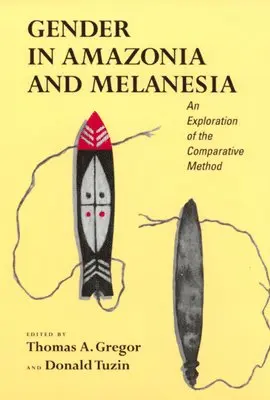
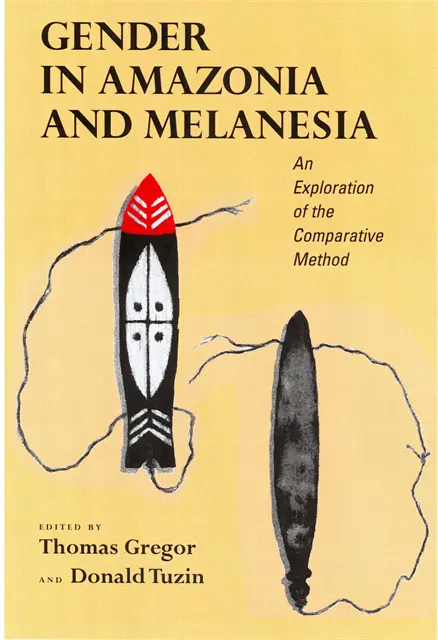
One of the great riddles of cultural history is the remarkable parallel that exists between the people of Amazonia and those of Melanesia. Although the two regions are separated by half a world in distance and at least 40,000 years of history, their cultures nonetheless reveal striking similarities in the areas of sex and gender. In both Amazonia and Melanesia, male-female differences infuse social organization and self-conception. They are the core of religion, symbolism, and cosmology, and they permeate ideas about body imagery, procreation, growth, men's cults, and rituals of initiation. The contributors to this innovative volume illuminate the various ways in which sex and gender are elaborated, obsessed over, and internalized, shaping subjective experiences common to entire cultural regions, and beyond. Through comparison of the life ways of Melanesia and Amazonia the authors expand the study of gender, as well as the comparative method in anthropology, in new and rewarding directions.
792 kr
Skickas inom 3-6 vardagar
The Voice of the Tambaran: Truth and Illusion in Ilahita Arapesh Religion by Donald F. Tuzin is a landmark ethnography of the Ilahita Arapesh of Papua New Guinea, focusing on the Tambaran men’s cult—the dominant symbolic system shaping social and religious life in the East Sepik region. For the Arapesh, the Tambaran is not simply a set of rituals or spirits: it personifies tradition itself, integrating collective identity, authority, and cosmology into a single, mystically compelling framework.Structured around the initiation sequence that spans a man’s lifetime, Tuzin’s study traces how ritual secrecy, myth, and symbolism in art and architecture define masculine power, social control, and ethical life in the village. He confronts the paradox of a cult that commands supreme cultural significance while systematically excluding and terrorizing women and children, probing the nuanced politics of belief and the divisions it produces among men as well as between genders. Drawing on earlier anthropological work on diffusion, Tuzin also analyzes how Arapesh communities adapted and reinterpreted imported ritual forms to fit their own mythological understandings.By combining meticulous description of ceremonies and myths with theoretical reflection on symbolism, secrecy, and social integration, The Voice of the Tambaran provides the first full-scale portrait of the cult in its local setting. It complements Tuzin’s earlier study of Ilahita social organization by adding the dimension of cultural meaning to structures of reciprocity and dual organization. Richly detailed and analytically ambitious, the book is essential reading for scholars of religion, Melanesian ethnography, and the anthropology of cultural change.This title is part of UC Press's Voices Revived program, which commemorates University of California Press’s mission to seek out and cultivate the brightest minds and give them voice, reach, and impact. Drawing on a backlist dating to 1893, Voices Revived makes high-quality, peer-reviewed scholarship accessible once again using print-on-demand technology. This title was originally published in 1980.
816 kr
Skickas inom 3-6 vardagar
The Ilahita Arapesh: Dimensions of Unity delves into the social and religious structures of Ilahita, a uniquely large and complex village in New Guinea's Torricelli Mountains. With nearly 1,500 residents, Ilahita challenges the norms of village size and organization in a region traditionally marked by smaller, segmented settlements. This anthropological study explores the historical, cultural, and adaptive processes that enabled Ilahita to grow and maintain unity without centralized authority. Through extensive fieldwork, the book examines how demographic pressures, historical disruptions, and adaptive mechanisms like dual organizational structures shaped the community's resilience and cohesion.This research not only provides an in-depth look at Ilahita’s integrative systems but also positions the village as a case study of broader anthropological significance. By addressing questions of adaptation, ritual complexity, and societal dynamics, the book connects Ilahita’s experience to theoretical frameworks on dualism, methodological individualism, and structural change. Drawing from ethnographic comparisons and firsthand data, it offers insights into how communities navigate both internal tensions and external challenges, making it a valuable contribution to studies on social complexity and cultural adaptation.This title is part of UC Press's Voices Revived program, which commemorates University of California Press’s mission to seek out and cultivate the brightest minds and give them voice, reach, and impact. Drawing on a backlist dating to 1893, Voices Revived makes high-quality, peer-reviewed scholarship accessible once again using print-on-demand technology. This title was originally published in 1976.
771 kr
Skickas inom 5-8 vardagar
The Voice of the Tambaran: Truth and Illusion in Ilahita Arapesh Religion by Donald F. Tuzin is a landmark ethnography of the Ilahita Arapesh of Papua New Guinea, focusing on the Tambaran men’s cult—the dominant symbolic system shaping social and religious life in the East Sepik region. For the Arapesh, the Tambaran is not simply a set of rituals or spirits: it personifies tradition itself, integrating collective identity, authority, and cosmology into a single, mystically compelling framework.Structured around the initiation sequence that spans a man’s lifetime, Tuzin’s study traces how ritual secrecy, myth, and symbolism in art and architecture define masculine power, social control, and ethical life in the village. He confronts the paradox of a cult that commands supreme cultural significance while systematically excluding and terrorizing women and children, probing the nuanced politics of belief and the divisions it produces among men as well as between genders. Drawing on earlier anthropological work on diffusion, Tuzin also analyzes how Arapesh communities adapted and reinterpreted imported ritual forms to fit their own mythological understandings.By combining meticulous description of ceremonies and myths with theoretical reflection on symbolism, secrecy, and social integration, The Voice of the Tambaran provides the first full-scale portrait of the cult in its local setting. It complements Tuzin’s earlier study of Ilahita social organization by adding the dimension of cultural meaning to structures of reciprocity and dual organization. Richly detailed and analytically ambitious, the book is essential reading for scholars of religion, Melanesian ethnography, and the anthropology of cultural change.This title is part of UC Press's Voices Revived program, which commemorates University of California Press’s mission to seek out and cultivate the brightest minds and give them voice, reach, and impact. Drawing on a backlist dating to 1893, Voices Revived makes high-quality, peer-reviewed scholarship accessible once again using print-on-demand technology. This title was originally published in 1980.
1 477 kr
Skickas inom 3-6 vardagar
The Ilahita Arapesh: Dimensions of Unity delves into the social and religious structures of Ilahita, a uniquely large and complex village in New Guinea's Torricelli Mountains. With nearly 1,500 residents, Ilahita challenges the norms of village size and organization in a region traditionally marked by smaller, segmented settlements. This anthropological study explores the historical, cultural, and adaptive processes that enabled Ilahita to grow and maintain unity without centralized authority. Through extensive fieldwork, the book examines how demographic pressures, historical disruptions, and adaptive mechanisms like dual organizational structures shaped the community's resilience and cohesion.This research not only provides an in-depth look at Ilahita’s integrative systems but also positions the village as a case study of broader anthropological significance. By addressing questions of adaptation, ritual complexity, and societal dynamics, the book connects Ilahita’s experience to theoretical frameworks on dualism, methodological individualism, and structural change. Drawing from ethnographic comparisons and firsthand data, it offers insights into how communities navigate both internal tensions and external challenges, making it a valuable contribution to studies on social complexity and cultural adaptation.This title is part of UC Press's Voices Revived program, which commemorates University of California Press’s mission to seek out and cultivate the brightest minds and give them voice, reach, and impact. Drawing on a backlist dating to 1893, Voices Revived makes high-quality, peer-reviewed scholarship accessible once again using print-on-demand technology. This title was originally published in 1976.