Donald H. Roy – författare
Visar alla böcker från författaren Donald H. Roy. Handla med fri frakt och snabb leverans.
2 produkter
2 produkter
668 kr
Tillfälligt slut
In this book, the author's primary task is to frame today's controversial public policy issues, in question form, present the major stances on the issues, and allow the reader to form a personal opinion on each matter. Basically, there are four types of arguments originally identified by Professor Richard Weaver: argument from authority; argument from analogy; argument from cause and effect; and argument from definition or principle. Contents: PROLOGUE: Dialogue Learning; Power, Public Policy and the Public Good; Levels of Argumentation; Acknowledgements; War PowersóGoing to War: Who is in Charge of the Charge?; The President versus The Congress; The Electoral College: To Retain or To Abolish?; Congress: Up With Congress or Down With Congress? Yeah or Nay?; Judgement Day Battle: Judicial Activism v. Judicial Restraint; Fiscal Policy: Deficit + Debt = Doom or Boom?; Do We Need a Balanced Budget Amendment to the Constitution?; Social Policy: Hearts and Heads, Welfare Reform and a Guaranteed Annual Income; National Health Service: The Proper Cure or a Remedy Worse than the Disease?; Obscenity and Pornography: Where Do We Draw the Line?; The First Amendment Right of Freedom of Expression; The Community's Need to Protect Itself and Represent Norms; Legal Policy: The Legalization of Drugs? Right On or Just Say No? Fly High or Straighten Up?; Legal Policy: Capital Punishment: To Be or Not To Be?; The Course of Educational Reform: What's Up Doc?; Is There a Treatment or Are We The People Getting The Treatment?; National Public Service: A Patriotic Commitment or Forced Labor?; Index.
1 486 kr
Skickas inom 10-15 vardagar
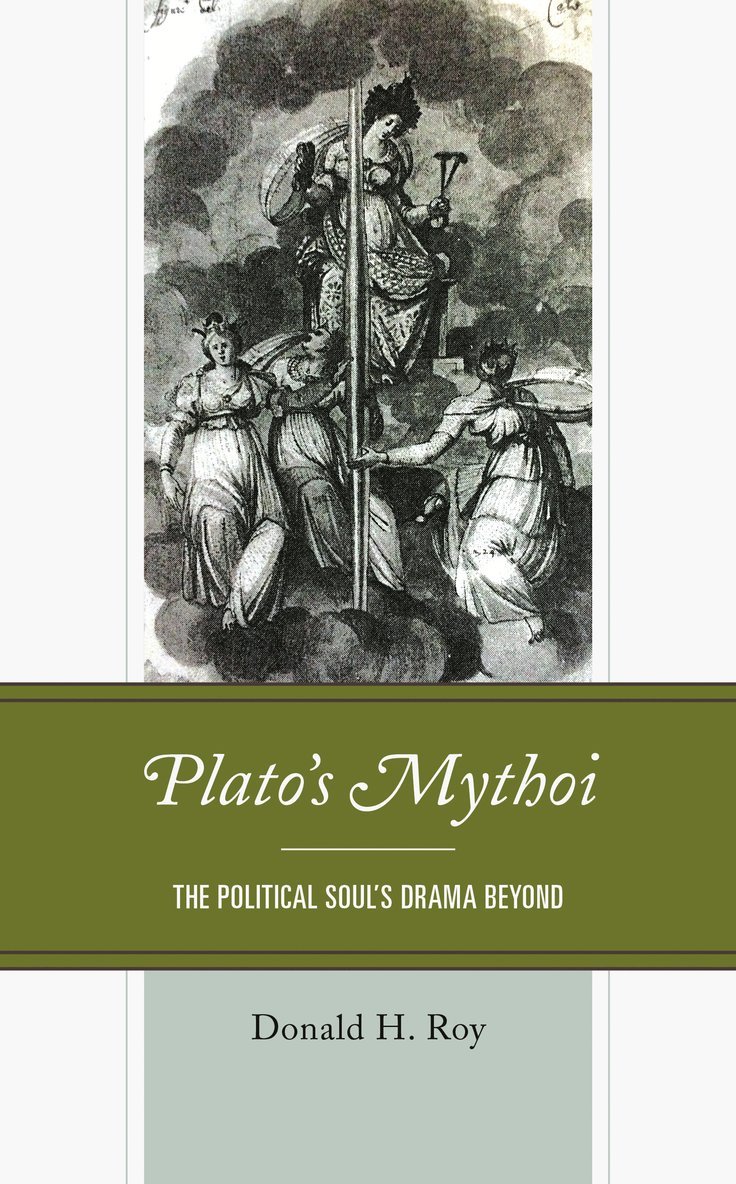
Recently, in the past thirty years, there has been an upsurge in serious treatment of Platonic mythoi, which were once thought to be only literary decoration and/or the simplistic presentation of philosophic conclusions for the demos (dummies in effect). Nevertheless, the dominant tendency in the exegesis of Platonic mythoi still is to subordinate them to philosophic logos (reason) and not to recognize that such mythoi are philosophic in themselves in the broad sense of “the love of wisdom”. There is something conversional about Plato’s philosophic mythos, reformulating and superseding traditional Greek mythos and then charting the drama of the human soul from Socratic aporia, up and out of the cave, and into the beyond, the Idea of the Good. The late Professor Eric Voegelin understood this existential drama, and his exegesis of Platonic mythos, from engendering pathos to symbols, is revelatory to say the least. My understanding is that logos (reason) is a fundamental and necessary check on mythos, but logos and mythos are complementary via medias; neither are dispensable nor reducible, one to the other. Also crucial to my study of Platonic mythoi is the “analogy of being,” that Voegelin only touches on, but Erich Przywara explores and develops. The relationship between the human and the divine is analogical (likenesses but also significant unlikenesses), and Plato certainly explored the play of opposites and affinities covering the difficult philosophical problems of becoming and being and the temporal and the eternal. Most philosophic commentators on Plato ignore the suffusive presence of the divine in Plato’s love of wisdom. Perhaps only Platonic mythos at its best offers the philosophic imagination the vision of transcendence.