Donald R. Dickson – författare
Visar alla böcker från författaren Donald R. Dickson. Handla med fri frakt och snabb leverans.
2 produkter
2 produkter
Häftad, Engelska, 2007
240 kr
Skickas inom 5-8 vardagar
The texts reprinted in this new Norton Critical Edition have been scrupulously edited and are from the Westmoreland manuscript where possible, collated against the most important families of Donne manuscripts—the Cambridge Belam, the Dublin Trinity, and the O’Flahertie—and compared with all seven seventeenth-century printed editions of the poems as well as all major twentieth-century editions.“Criticism” is divided into four sections and represents the best criticism and interpretation of Donne’s writing: “Donne and Metaphysical Poetry” includes seven seventeenth-century views by contemporaries of Donne such as Ben Jonson, Thomas Carew, and John Dryden, among others; “Satires, Elegies, and Verse Letters” includes seven selections that offer social and literary context for and insights into Donne’s frequently overlooked early poems; “Songs and Sonnets” features six analyses of Donne’s love poetry; and “Holy Sonnets/Divine Poems” explores Donne’s struggles as a Christian through four authoritative essays.A Chronology of Donne’s life and work, a Selected Bibliography, and an Index of Titles and First Lines are also included.
Del 88 - Brill's Studies in Intellectual History
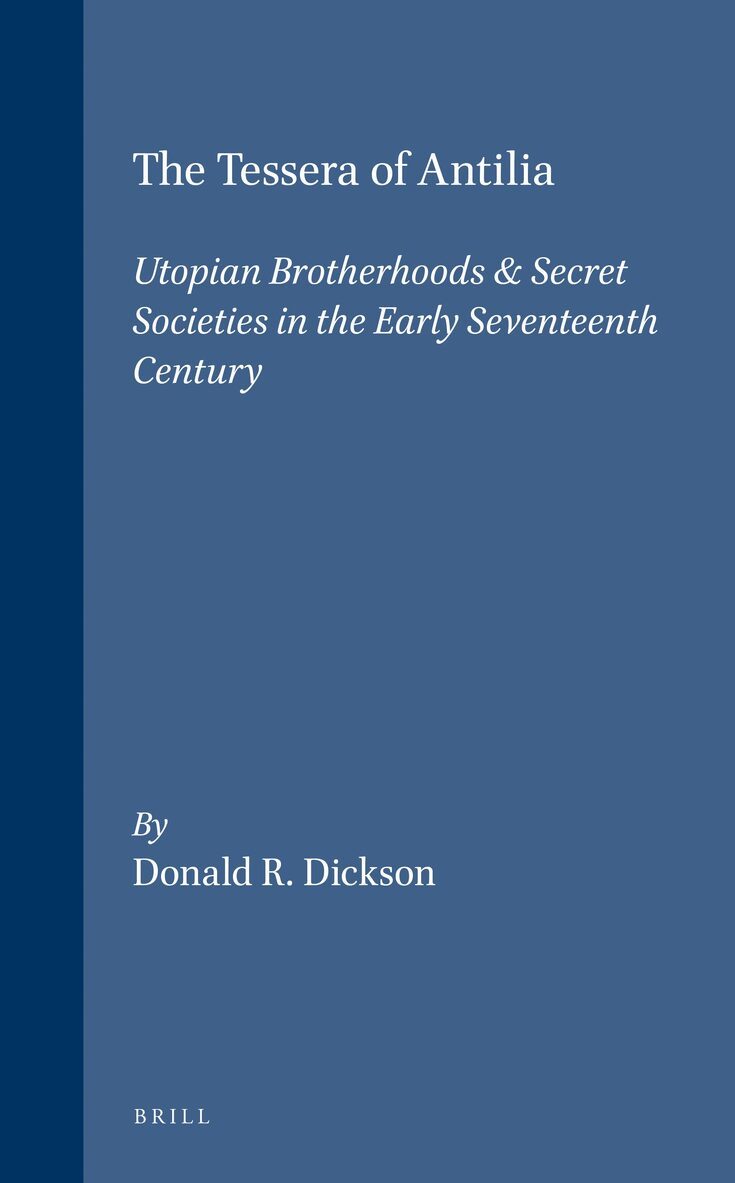
Tessera of Antilia
Utopian Brotherhoods & Secret Societies in the Early Seventeenth Century
Inbunden, Engelska, 1998
2 430 kr
Skickas inom 3-6 vardagar
A study of the Protestant utopian movement that began in Germany, inspired in large measure by the writings of Johann Valentin Adreae, and came to England through the efforts of the émigré Samuel Hartlib.The first chapters examine Andreae's utopian writings, including the Rosicrucian manifestos, as part of his lifelong commitment to found a Societas Christiana, a spiritual élite that would improve religious and intellectual life. His writings sparked a transnational movement in early modern Europe. The most significant of the German learned societies are discussed: The Societas Ereunetica, Unio Christiana, and Antilia. The latter chapters consider Hartlib's English circles and various utopian and learned societies in the 1650s.This study contributes to our understanding of the role that "secret" societies and epistolary networks had in the republic of letters.