Donald S. Hair - Böcker
Visar alla böcker från författaren Donald S. Hair. Handla med fri frakt och snabb leverans.
9 produkter
9 produkter
1 288 kr
Tillfälligt slut
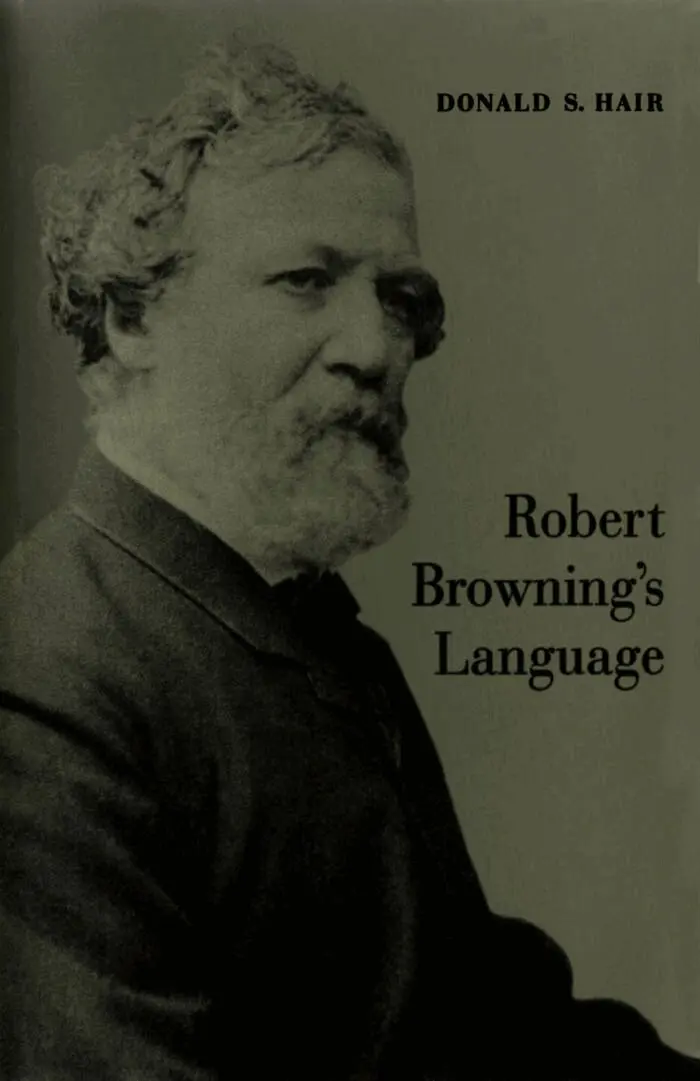
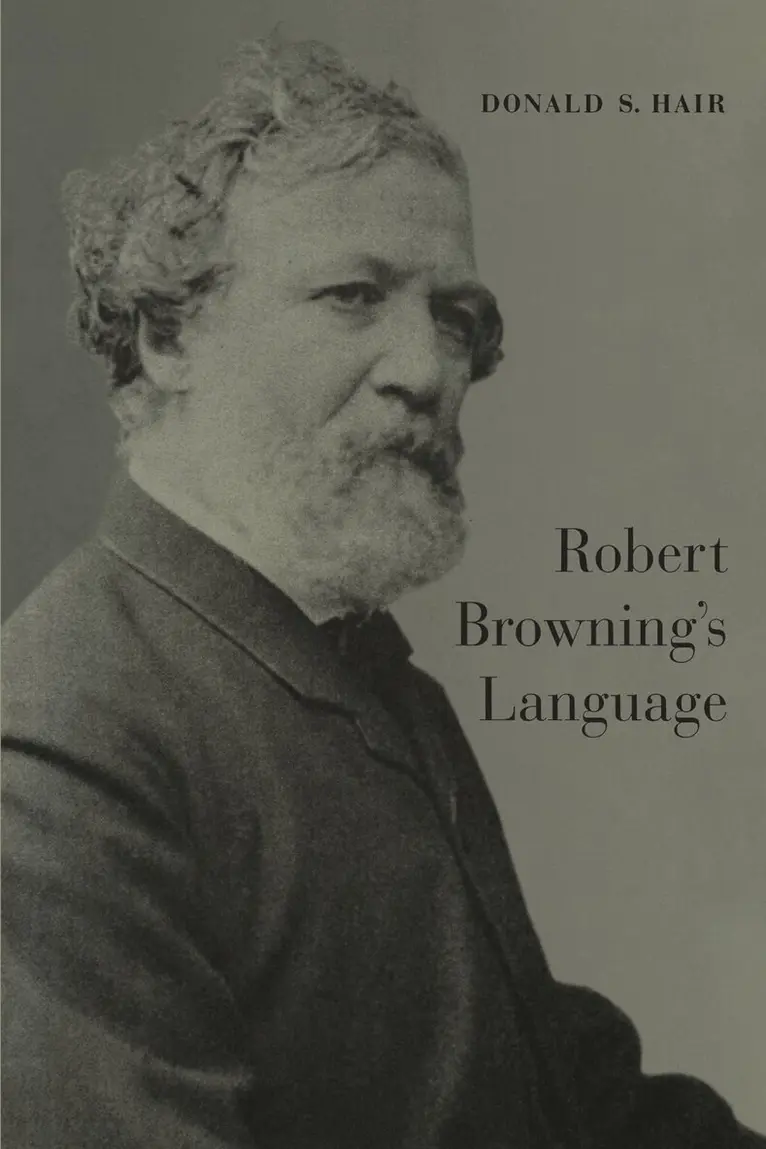
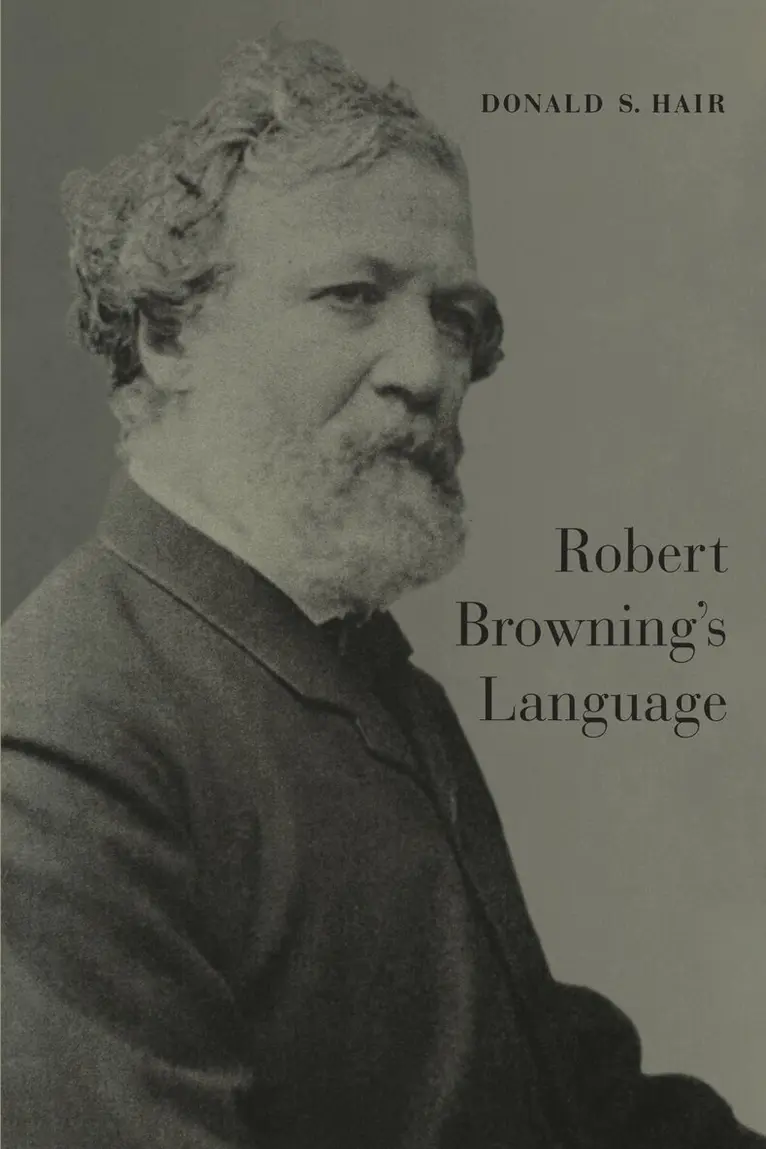
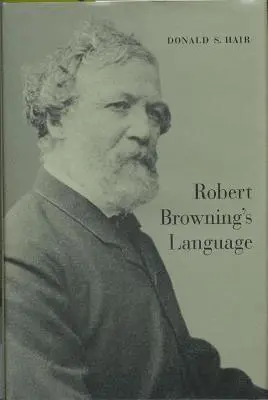
What are the influences that shaped the language used by one of the nineteenth century's greatest writers? How did his religious beliefs, the books he owned, the paintings and music he loved, affect almost sixty years' output of poems, plays, essays, and letters? This book attempts to define Browning's understanding of the nature and use of words and syntax by considering not only a full range of texts from the 1833 Pauline to the 1889 Asolando, but also the ideas important to Browning, the historical context in which he lived, and the other artistic passions that played a part in his life. In this companion volume to Tennyson's Language, Donald Hair establishes Browning's place at the crossroads between empirical and idealist traditions and explains his "double view" of language, arguing that both Locke and the Congregationalists found language to be at the same time empty and a God-given essential. The Victorian age's anti-theatrical bias, which Browning came to share, and his reading of predecessors, principally Quarles, Bunyan, Donne, and Smart, also shaped his understanding of the diction of poetry.Hair conceives of Browning's language as a theoretical whole, encompassing words, genres, rhyme, syntax, and phonetics. He also links Browning's interest in music with his rhyming, the most essential and characteristic feature of his prosody, and relates his interest in painting to the interpretation of the visual image in the emblem and in typology.
414 kr
Skickas inom 7-10 vardagar
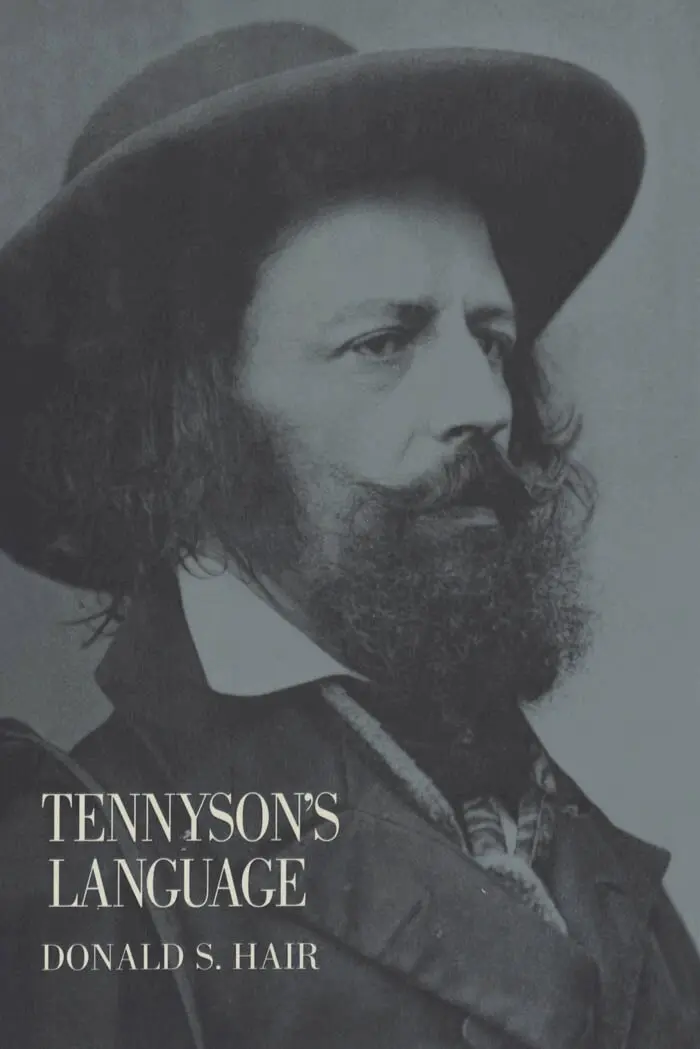
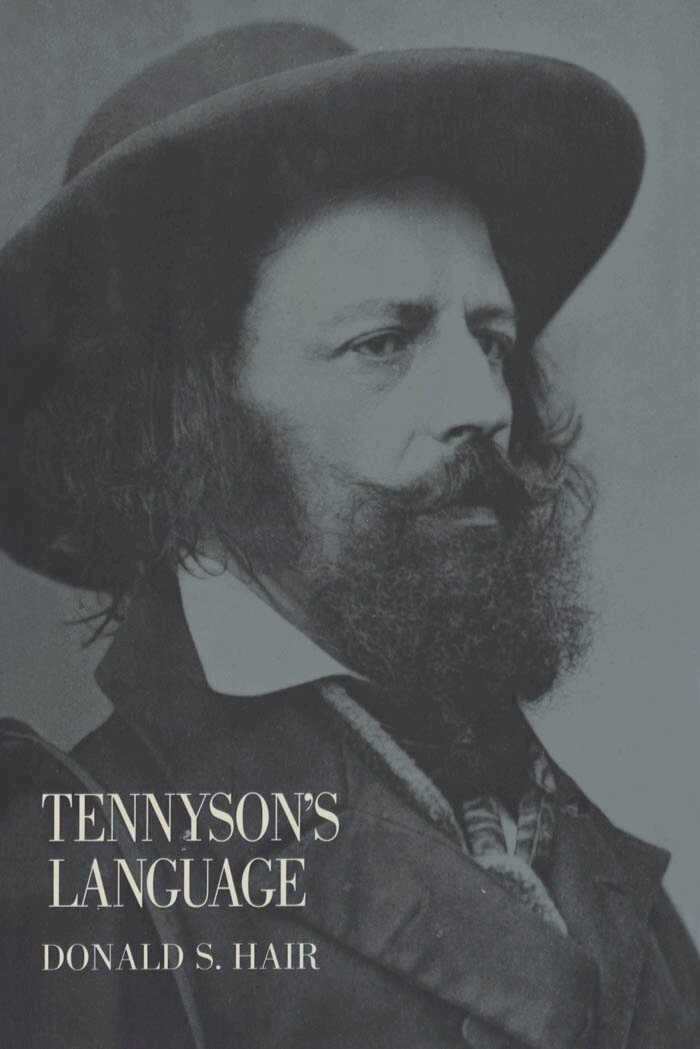
The study of language was central to the thinking of Tennyson and his circle of friends. The period of his education was a time of interest in the subject, as a new form of philology became widely known and accepted in Britain. In this study, Donald S. Hair discusses Tennyson’s own view of language, and sets them in the context of the language theories of his day.The scope of the book is broad. Hair draws upon a wide range of Tennyson’s poetry, from a quatrain he wrote at the age of eight to an ‘anthem-speech’ he wrote at the age of eighty-two, and pays particular attention to two major works: In Memoriam and Idylls of the King.He explores these in relation to the two theoretical traditions Tennyson inherited. One is derived from Locke and the language theory set out in Book III of An Essay Concerning Human Understanding, the other from Coleridge and the language theory of what Mill called the ‘Germano-Coleridgian’ tradition. He goes back to Plato’s Cratylus and Aristotle’s On Interpretation, and forward to the continental philology introduced into England by Tennyson’s friends, Kemble and Trench, among others. Finally, he links Tennyson’s language to thinkers such as Whewell, Hallam, and Maurice, who are not in themselves philologists but who make language part of their concerns-and Whewell was Tennyson’s tutor, Hallam and Maurice his friends.Hair offers a significant contribution to the development of linguistic theory in Britain while also providing some close readings of key passages of Tennyson’s work and examinations of the poet’s faith and views of society.
339 kr
Skickas inom 7-10 vardagar
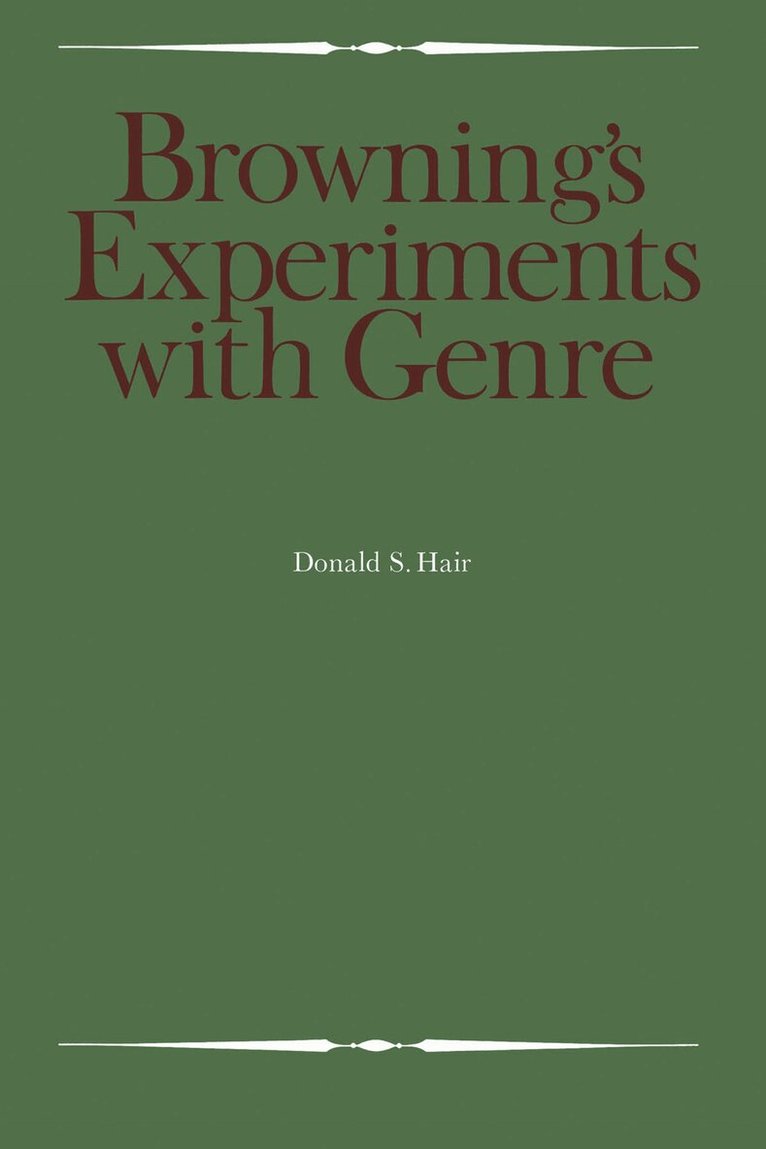
One of the chief characteristics of nineteenth-century poetics was a tendency to test the conventions and techniques of literary genres by shifting, modifying, and combining various styles and forms. Browning fully exploited these changes, because his interests and purposes as a poet seemed to demand more of the lyric, the dramatic, and the narrative than these kinds had traditionally been able to perform. His fascination was with the development of the individual soul and he was determined to evoke in his readers his own insights into the complexity of human concerns; thus he became a constant experimenter with genre. Browning never felt that any experiment, however unsatisfactory the result, was wasted effort; each direction tried made him better prepared to attempt another.This book explores the kinds and modes with which he worked and describes the nature of the experiments he made, concentrating on the earlier poetry and in particular on The Ring and the Book. Professor Hair is sensitive to Browning's work, and his criticism is a model of understanding, warm appreciation, and critical good sense.
369 kr
Skickas inom 7-10 vardagar
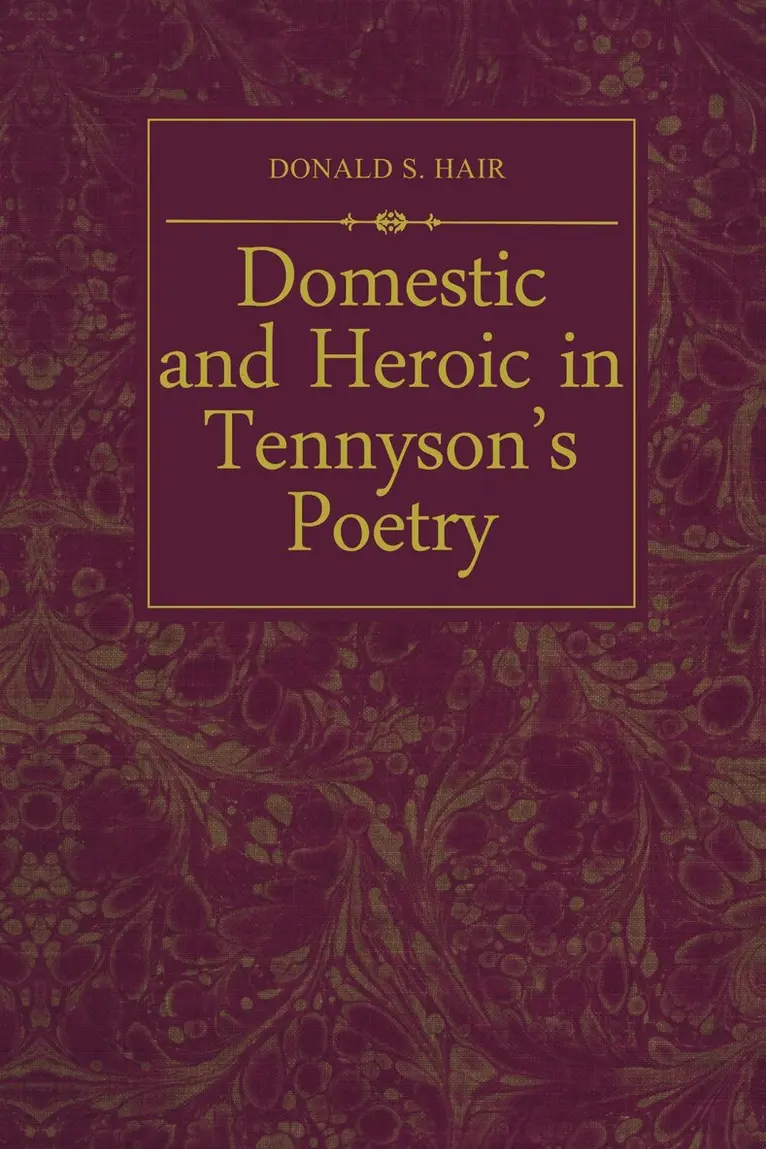
Tennyson shared the assumptions of his age concerning the value of family life, and treated the domestic as the source of the heroic in both action and character.This book provides a critical examination of these major Victorian themes as they appear in Tennyson's poetry and demonstrates how the poet's assumptions illuminate his use of elegy, idyl, and epyllion and his treatment of romance.Professor Hair analyses In Memoriam, the English Idylls, The Princess, and Idyls of the King; he examines Tennyson's view of the family as the model of social order, a civilizing influence on the nation, and a place where the greater man, or hero, is nurtured; and he reveals how much of Tennyson's poetry explores the link between domestic and heroic.He also discusses the patterns into which these pervasive domestic concerns fall, with emphasis on the most significant: separation and reunions. The myth of Demeter and Persephone, the Biblical story of Ruth, and the Sleeping Beauty fairy tale are all versions of Tennyson's treatment of this pattern.The English Idylls and other idyls and epyllia are explored as varying combinations of romance, satire, tragedy, comedy, and irony, with a detailed analysis of The Princess, the most complex of these medleys. Idylls of the King, wherein the fate of Camelot rests on the marriage of Arthur and Guinevere, is treated as the fullest exploration of the link between domestic and heroic.
414 kr
Skickas inom 7-10 vardagar
What are the influences that shaped the language used by one of the nineteenth century's greatest writers? How did his religious beliefs, the books he owned, the paintings and music he loved, affect almost sixty years' output of poems, plays, essays, and letters?This book attempts to define Browning's understanding of the nature and use of words and syntax by considering not only a full range of texts from the 1833 Pauline to the 1889 Asolando, but also the ideas important to Browning, the historical context in which he lived, and the other artistic passions that played a part in his life.In this companion volume to Tennyson's Language, Donald Hair establishes Browning's place at the crossroads between empirical and idealist traditions and explains his "double view" of language, arguing that both Locke and the Congregationalists found language to be at the same time empty and a God-given essential. The Victorian age's anti-theatrical bias, which Browning came to share, and his reading of predecessors, principally Quarles, Bunyan, Donne, and Smart, also shaped his understanding of the diction of poetry.Hair conceives of Browning's language as a theoretical whole, encompassing words, genres, rhyme, syntax, and phonetics. He also links Browning's interest in music with his rhyming, the most essential and characteristic feature of his prosody, and relates his interest in painting to the interpretation of the visual image in the emblem and in typology.
940 kr
Skickas inom 5-8 vardagar
1 315 kr
Skickas inom 3-6 vardagar
345 kr
Skickas inom 3-6 vardagar
68 kr
Skickas inom 5-8 vardagar