Dorian Gieseler Greenbaum – författare
Visar alla böcker från författaren Dorian Gieseler Greenbaum. Handla med fri frakt och snabb leverans.
8 produkter
8 produkter
Inbunden, Engelska, 2024
1 121 kr
Skickas inom 10-15 vardagar
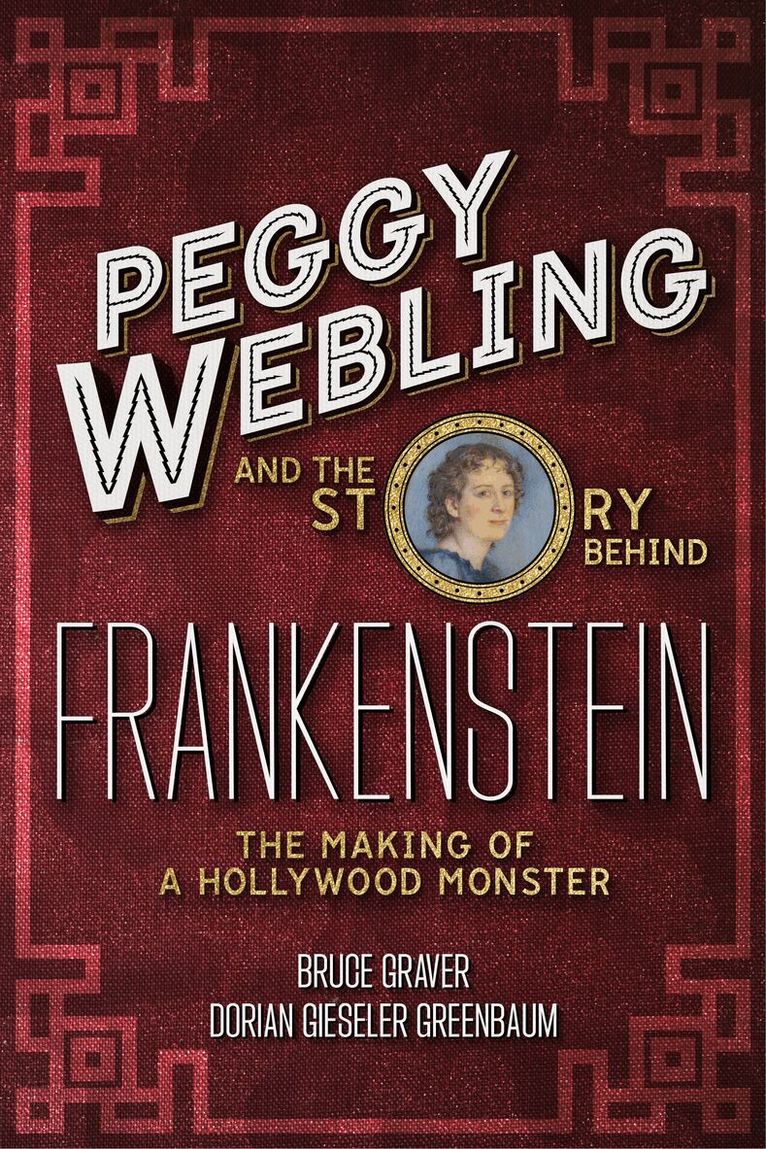
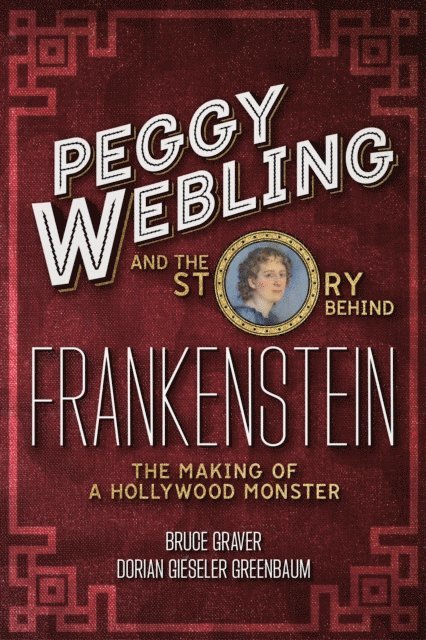
The 1931 Universal Pictures film adaptation of Frankenstein directed by James Whale and starring Boris Karloff as the now iconic Monster claims in its credits to be ‘Adapted from the play by Peggy Webling’. Webling’s play sought to humanize the creature, was the first stage adaptation to position Frankenstein and his creation as doppelgängers, and offered a feminist perspective on scientific efforts to create life without women, ideas that suffuse today’s perceptions of Frankenstein’s monster. The original play script exists in several different versions, only two of which have ever been consulted by scholars; no version has ever been published. Nor have scholars had access to Webling’s private papers and correspondence, preserved in a family archive, so that the evolution of Frankenstein from book to stage to screen has never been fully charted.In Peggy Webling and the Story behind Frankenstein, Dorian Gieseler Greenbaum (Webling’s great grandniece) and Bruce Graver present the full texts of Webling’s unpublished play for the first time. A vital critical edition, this book includes:- the 1927 British Library Frankenstein script used for the first production of the play in Preston, Lancashire- the 1928 Frankenstein script in the Library of Congress, used for productions in UK provincial theatres from autumn 1928 till 1930- the 1930 Frankenstein Prompt Script for the London production and later provincial performances, held by the Westminster Archive, London- Webling’s private correspondence including negotiations with theatre managers and Universal Pictures, family letters about the writing and production process, and selected contracts- Text of the chapter ‘Frankenstein’ from Webling’s unpublished literary memoir, The Story of a Pen for additional context- Biography of Webling that bears directly on the sensibilities and skills she brought to the writing of her play- History of how the play came to be written and produced- The relationship of Webling’s play to earlier stage and film adaptations- An exploration of playwright and screenwriter John L. Balderston’s changes to Webling’s play and Whale’s borrowings from it in the 1931 filmOffering a new perspective on the genesis of the Frankenstein movie, this critical exploration makes available a unique and necessary ‘missing link’ in the novel’s otherwise well-documented transmedia cultural history.
Häftad, Engelska, 2024
361 kr
Skickas
The 1931 Universal Pictures film adaptation of Frankenstein directed by James Whale and starring Boris Karloff as the now iconic Monster claims in its credits to be ‘Adapted from the play by Peggy Webling’. Webling’s play sought to humanize the creature, was the first stage adaptation to position Frankenstein and his creation as doppelgängers, and offered a feminist perspective on scientific efforts to create life without women, ideas that suffuse today’s perceptions of Frankenstein’s monster. The original play script exists in several different versions, only two of which have ever been consulted by scholars; no version has ever been published. Nor have scholars had access to Webling’s private papers and correspondence, preserved in a family archive, so that the evolution of Frankenstein from book to stage to screen has never been fully charted.In Peggy Webling and the Story behind Frankenstein, Dorian Gieseler Greenbaum (Webling’s great grandniece) and Bruce Graver present the full texts of Webling’s unpublished play for the first time. A vital critical edition, this book includes:- the 1927 British Library Frankenstein script used for the first production of the play in Preston, Lancashire- the 1928 Frankenstein script in the Library of Congress, used for productions in UK provincial theatres from autumn 1928 till 1930- the 1930 Frankenstein Prompt Script for the London production and later provincial performances, held by the Westminster Archive, London- Webling’s private correspondence including negotiations with theatre managers and Universal Pictures, family letters about the writing and production process, and selected contracts- Text of the chapter ‘Frankenstein’ from Webling’s unpublished literary memoir, The Story of a Pen for additional context- Biography of Webling that bears directly on the sensibilities and skills she brought to the writing of her play- History of how the play came to be written and produced- The relationship of Webling’s play to earlier stage and film adaptations- An exploration of playwright and screenwriter John L. Balderston’s changes to Webling’s play and Whale’s borrowings from it in the 1931 filmOffering a new perspective on the genesis of the Frankenstein movie, this critical exploration makes available a unique and necessary ‘missing link’ in the novel’s otherwise well-documented transmedia cultural history.
E-bok
PDF, Engelska, 2024400 kr
Läs direkt efter köp
The 1931 Universal Pictures film adaptation of Frankenstein directed by James Whale and starring Boris Karloff as the now iconic Monster claims in its credits to be ''Adapted from the play by Peggy Webling''. Webling''s play sought to humanize the creature, was the first stage adaptation to position Frankenstein and his creation as doppelgängers, and offered a feminist perspective on scientific efforts to create life without women, ideas that suffuse today''s perceptions of Frankenstein''s monster. The original play script exists in several different versions, only two of which have ever been consulted by scholars; no version has ever been published. Nor have scholars had access to Webling''s private papers and correspondence, preserved in a family archive, so that the evolution of Frankenstein from book to stage to screen has never been fully charted. In Peggy Webling and the Story behind Frankenstein, Dorian Gieseler Greenbaum (Webling''s great grandniece) and Bruce Graver present the full texts of Webling''s unpublished play for the first time. A vital critical edition, this book includes: - the 1927 British Library Frankenstein script used for the first production of the play in Preston, Lancashire - the 1928 Frankenstein script in the Library of Congress, used for productions in UK provincial theatres from autumn 1928 till 1930 - the 1930 Frankenstein Prompt Script for the London production and later provincial performances, held by the Westminster Archive, London - Webling''s private correspondence including negotiations with theatre managers and Universal Pictures, family letters about the writing and production process, and selected contracts - Text of the chapter ''Frankenstein'' from Webling''s unpublished literary memoir, The Story of a Pen for additional context - Biography of Webling that bears directly on the sensibilities and skills she brought to the writing of her play - History of how the play came to be written and produced - The relationship of Webling''s play to earlier stage and film adaptations - An exploration of playwright and screenwriter John L. Balderston''s changes to Webling''s play and Whale''s borrowings from it in the 1931 film Offering a new perspective on the genesis of the Frankenstein movie, this critical exploration makes available a unique and necessary ''missing link'' in the novel''s otherwise well-documented transmedia cultural history.
400 kr
Läs direkt efter köp
The 1931 Universal Pictures film adaptation of Frankenstein directed by James Whale and starring Boris Karloff as the now iconic Monster claims in its credits to be ''Adapted from the play by Peggy Webling''. Webling''s play sought to humanize the creature, was the first stage adaptation to position Frankenstein and his creation as doppelgängers, and offered a feminist perspective on scientific efforts to create life without women, ideas that suffuse today''s perceptions of Frankenstein''s monster. The original play script exists in several different versions, only two of which have ever been consulted by scholars; no version has ever been published. Nor have scholars had access to Webling''s private papers and correspondence, preserved in a family archive, so that the evolution of Frankenstein from book to stage to screen has never been fully charted. In Peggy Webling and the Story behind Frankenstein, Dorian Gieseler Greenbaum (Webling''s great grandniece) and Bruce Graver present the full texts of Webling''s unpublished play for the first time. A vital critical edition, this book includes: - the 1927 British Library Frankenstein script used for the first production of the play in Preston, Lancashire - the 1928 Frankenstein script in the Library of Congress, used for productions in UK provincial theatres from autumn 1928 till 1930 - the 1930 Frankenstein Prompt Script for the London production and later provincial performances, held by the Westminster Archive, London - Webling''s private correspondence including negotiations with theatre managers and Universal Pictures, family letters about the writing and production process, and selected contracts - Text of the chapter ''Frankenstein'' from Webling''s unpublished literary memoir, The Story of a Pen for additional context - Biography of Webling that bears directly on the sensibilities and skills she brought to the writing of her play - History of how the play came to be written and produced - The relationship of Webling''s play to earlier stage and film adaptations - An exploration of playwright and screenwriter John L. Balderston''s changes to Webling''s play and Whale''s borrowings from it in the 1931 film Offering a new perspective on the genesis of the Frankenstein movie, this critical exploration makes available a unique and necessary ''missing link'' in the novel''s otherwise well-documented transmedia cultural history.
Häftad, Engelska, 2005
254 kr
Skickas
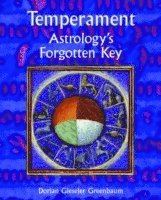
At last, the definitive guide to assessing the temperament in astrology. Many have shied away from this daunting task, traditionally seen as very complicated, but here the author gives a full history of the origins of temperament, then shows clearly and succinctly how to work it out for yourself. Copious case histories support her technique.
Häftad, Engelska, 2015
352 kr
Skickas inom 5-8 vardagar
Häftad, Engelska, 2015
341 kr
Skickas inom 5-8 vardagar
E-bok
Engelska, 20151 117 kr
Läs direkt efter köp
Astrology has recently become a subject of interest to scholars of the highest calibre. However, the tendency has been to look at the social context of astrology, the attacks on astrologers and their craft, and on astrological iconography and symbolism; i.e., largely looking on astrology from the outside. The intention of this book is to do is to look at the subject from the inside: the ideas and techniques of astrologers themselves. In both Western and Eastern cultures astrology was regarded as a pure science by most scholars, mathematicians, physicians, philosophers and theologians, and was taught in schools and universities. The greatest astronomers of the period under consideration, al-Kindi, Thabit ibn Qurra, Abraham Ibn Ezra, Galileo and Kepler, also wrote about and practised astrology. What did astrologers write about astrology and how did they teach their subject and practise their craft? What changes occurred in astrological theory and practice over time and from one culture to another? What cosmological and philosophical frameworks did astrologers use to describe their practice? What role did diagrams, tables and illustrations play in astrological text-books? What was astrology''s place in universities and academies? This book contains surveys of astrologers and their craft in Islamic, Jewish and Christian culture, and includes hitherto unpublished and unstudied astrological texts.