Dorit Bar-On – författare
Visar alla böcker från författaren Dorit Bar-On. Handla med fri frakt och snabb leverans.
4 produkter
4 produkter
1 611 kr
Kommande
How did human language evolve from animal communication? Drawing on insights from philosophy of language and mind, and findings from linguistics, ethology, biology, cognitive psychology, and more, Expression, Communication, and Origins of Meaning offers a novel solution to the 'first hard problem' of language evolution'. This is the problem of explaining the emergence of meaningful communication. Addressing this problem, Dorit Bar-On argues that there are significant pragmatic continuities between human natural languages and animal communication systems, side by side with significant syntactic and semantic differences. Building on these pragmatic continuities, Bar-On traces a path leading from animal communication to human linguistic communication via a pragmatically intermediate 'protolanguage'. One significant milestone on this path is the emergence of the capacity for expressive communication, which adult humans share with young children and with nonhuman animals. In expressive communication, minded creatures enable each other to recognize their psychological states through their expressive behaviors. A second milestone is the emergence of psychologically mediated communication, whereby expressive behaviors serve as 'psychological clues' that pragmatically enrich messages conveyed by animals' communicative signals. A third milestone is reached once communicators learn to make flexible use of psychological clues to communicate about the world intentionally. The road is then clear to the emergence of a pragmatically intermediate protolanguage - a fourth milestone. Protolanguage is a stable system of communication that enables communicators to convey messages about the world and about each other in pragmatically sophisticated ways. Although a pragmatically intermediate protolanguage lacks the distinctive semantic and structural features of human language, understanding its emergence and character should shed some light on the emergence of these further features. The book's concluding chapters offers a characterization of the hypothesized protolanguage and its evolutionary significance and identify potential present-day 'pragmatic fossils' of protolanguage - words and phrases whose uses are themselves pragmatically intermediate.
2 051 kr
Skickas inom 5-8 vardagar
Dorit Bar-On develops and defends an original view of avowals and self-knowledge which offers systematic answers to many persistent questions concerning our ability to know our own minds. According to Bar-On's Neo-Expressivist view, avowals - those everyday spontaneous pronouncements that we make about our own present states of mind - are acts through which we directly express, rather than merely report, the very mental conditions the avowals ascribe. Verbal acts of speaking our minds are thus similar to natural expressions, such as sighing, or smiling; they show, rather than simply telling of our present states of mind. Drawing on resources from the philosophy of language and of mind, the theory of action, and epistemology, Bar-On argues, as against many expressivists and their critics, that an expressivist explanation is consistent with a non-deflationary view of self-knowledge and a robust realism about mental states.
812 kr
Skickas inom 5-8 vardagar
Dorit Bar-On develops and defends a novel view of avowals and self-knowledge. Drawing on resources from the philosophy of language, the theory of action, epistemology, and the philosophy of mind, she offers original and systematic answers to many long-standing questions concerning our ability to know our own minds. We are all very good at telling what states of mind we are in at a given moment. When it comes to our own present states of mind, what we say goes; an avowal such as "I'm feeling so anxious" or "I'm thinking about my next trip to Paris," it is typically supposed, tells it like it is. But why is that? Why should what I say about my present mental states carry so much more weight than what others say about them? Why should avowals be more immune to criticism and correction than other claims we make? And if avowals are not based on any evidence or observation, how could they possibly express our knowledge of our own present mental states? Bar-On proposes a Neo-Expressivist view according to which an avowal is an act through which a person directly expresses, rather than merely reports, the very mental condition that the avowal ascribes. She argues that this expressivist idea, coupled with an adequate characterization of expression and a proper separation of the semantics of avowals from their pragmatics and epistemology, explains the special status we assign to avowals. As against many expressivists and their critics, she maintains that such an expressivist explanation is consistent with a non-deflationary view of self-knowledge and a robust realism about mental states. The view that emerges preserves many insights of the most prominent contributors to the subject, while offering a new perspective on our special relationship to our own minds.
309 kr
Skickas inom 5-8 vardagar
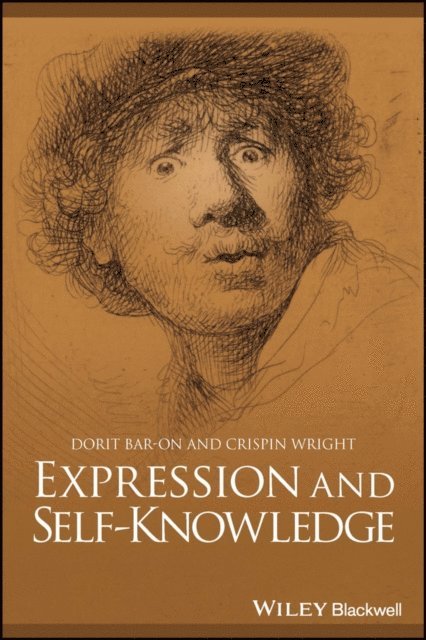
Provides a timely and original contribution to the debate surrounding privileged self-knowledge Contemporary epistemologists and philosophers of mind continue to find puzzling the nature and source of privileged self-knowledge: the ordinary and effortless ‘first-person’ knowledge we have of our own sensations, moods, emotions, beliefs, desires, and hopes. In Expression and Self-Knowledge, Dorit Bar-On and Crispin Wright articulate their joint dissatisfaction with extant accounts of self-knowledge and engage in a sustained and substantial critical debate over the merits of an expressivist approach to the topic. The authors incorporate cutting-edge research while defending their own alternatives to existing approaches to so-called ‘first-person privilege’. Bar-On defends her neo-expressivist account, addressing the objection that neo-expressivism fails to provide an adequate epistemology of ordinary self-knowledge, and addresses new objections levelled by Wright. Wright then presents an alternative pluralist approach, and Bar-On argues in response that pluralism faces difficulties neo-expressivism avoids. Providing invaluable insights on a hotly debated topic in epistemology and philosophy of mind, Expression and Self-Knowledge: Presents an in-depth debate between two leading philosophers over the expressivist approach Offers novel developments and penetrating criticisms of the authors' respective views Features two different perspectives on the influential remarks on expression and self-knowledge found in Wittgenstein’s later writings Includes four jointly written chapters that offer a critical overview of prominent existing accounts, which provide a useful advanced introduction to the subject.Expression and Self-Knowledge is essential reading for epistemologists, philosophers of mind and language, psychologists with an interest in self-knowledge, and researchers and graduate students working in expression, expressivism, and self-knowledge.