Dorota Bartusik-Aebisher – författare
Visar alla böcker från författaren . Handla med fri frakt och snabb leverans.
8 produkter
8 produkter
E-bok
PDF, Engelska, 20181 788 kr
Läs direkt efter köp
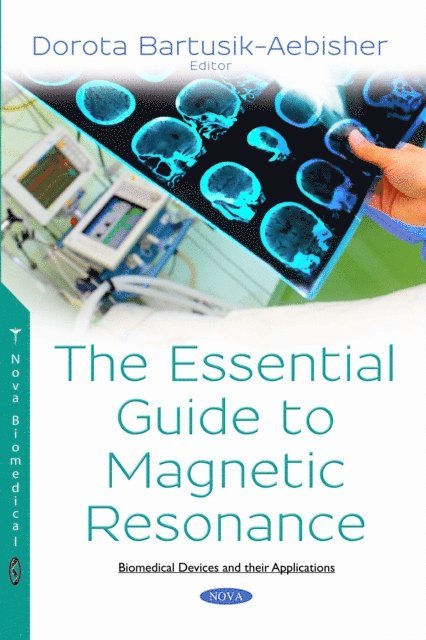
The opening chapter of The Essential Guide to Magnetic Resonance presents applications of Fluorine-19 Magnetic Resonance Imaging (19F MRI) in cancer research, tissue metabolomics, quantification of drug delivery, cellular tracking, tissue pH measurements and detection of 19F labeled cells. The authors review in vitro research applying 19F MRI and Magnetic Resonance Spectroscopy (MRS) to facilitate the synthesis, tracking and visualization of new fluorinated drug conjugates. 19F MRI also provides high contrast in vivo images due to the absence of an endogenous 19F signal, 100% natural abundance of 19F, and a chemical shift range of over 400 ppm. Afterwards, examples of current methods of magnetic resonance imaging (MRI) guided photodynamic therapy are presented. Recent development of MRI detectable nanoparticle constructs, magnetic resonance spectroscopy (MRS) sensors, gadolinium based photosensitizers and europium singlet oxygen probes are discussed. In addition, applications of Functional MRI using a blood oxygen dependent level (BOLD) MRI in monitoring photodynamic action are addressed, with the goal of informing researchers about the potential for using MRI guided photodynamic therapy and oxygen dosimetry. The applications of MRI within the sphere of pharmacy are analyzed; in particular, the use of MRI to track pharmaceuticals in vitro and in vivo noninvasively and monitoring their controlled-release. Functional MRI for noninvasive clinical brain imaging is explored as it is applied to studies of autism, schizophrenia, epilepsy Alzheimer’s disease, Parkinson''s disease, traumatic brain injury and blood oxygenation-level dependent (BOLD) imaging of brain function. An overview of the scope of MRI as a diagnostic technique in neurology and in neurosurgery is also provided.
E-bok
PDF, Engelska, 20201 544 kr
Läs direkt efter köp
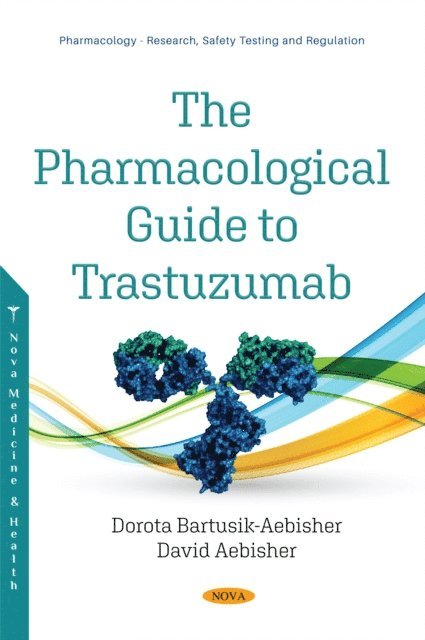
This book provides a current review of the field of Trastuzumab pharmacology from a variety of chemical, biochemical, physiological, pharmacokinetical, pharmacodynamical, biophysical and medical perspectives. This book covers breast cancer treatment including current Trastuzumab therapy, radiation therapy and excision of tumors within the limits of healthy tissue. The text presents current knowledge and analysis of pertinent literature and knowledge. This book reports results from experimental models of HER2 oncogene overexpression and treatments which have been used in an effort to understand the relationship between HER2 and response to therapeutics. In this book the HER2 oncogene has been extensively discussed as a prognostic factor and as a predictor of response to chemotherapy and endocrine therapy. The book includes data regarding the expression of HER2 oncogene in lung cancer and response to trastuzumab alone or in combination with chemotherapeutic agents. The interaction of HER2 with others drugs such as alkylating agents, platinum analogs and topoisomerase inhibitors, as well as additive interactions with taxanes, anthracyclines and some metabolites and antimetabolites are presented. Special cardiological supervision for patients with an increased risk of cardiotoxicity that have hypertension, ischemic heart disease, hypothyroidism or are heavy smokers during adjuvant trastuzumab therapy will also be reviewed.
E-bok
PDF, Engelska, 20201 503 kr
Läs direkt efter köp
This book provides a current review of the problem of heavy metal removal. Microorganisms and microbial activity in environments of water and soil are presented in Chapter 1. Chapter 2 covers current knowledge about photoactive materials based on porphyrins. This book reports the manner in which plants interact with heavy metals dependent mainly on the type of contamination, species of plant as well as conditions. The book presents biological strategies for the elimination of heavy metals from polluted habitats—phytoextraction, phytostabilization, phytodegradation, phytostimulation, phytovolatilization and phytofiltration. Also included are analytical methods to determine heavy metals in water such as atomic absorption spectrometry, electrochemical methods, colorimetric and chromatographic techniques.
E-bok
PDF, Engelska, 20203 629 kr
Läs direkt efter köp
The Biochemical Guide to Medicinal Plants presents the study of medicinal plants and organic chemistry, forming a bridge between the biology and chemistry of medicinal plants by studying complex chemical interactions. The book consists of 45 chapters, each describing one medicinal plant with figures. We present species of herbaceous and woody plants found on various continents and in various habitats, presenting their various adaptations to the environment. The book contains information about plants’ range, appearance, and biological and ecological characteristics, and the descriptions are enriched with surprising curiosities. The book also contains data on the plants’ life spans and flowering periods. Plants used as spices, plants that have no flowers, forest and meadow plants, and plants with medicinal and poisonous properties are described. The reader will learn about the properties of medicinal plants characteristic for each season. This book shows the beauty of plants used in medicine, with their richness of shape, color and fragrance.
E-bok
PDF, Engelska, 20211 333 kr
Läs direkt efter köp
This book addresses major problem in the management of patients with cancer of the head and neck. The authors have written six chapters of particular importance for head and neck cancer diagnosis, treatment, and rehabilitation. Chapter 1 describes treatment of patients with squamous cell carcinoma of the head. Chapter 2 presents treatment of patients with squamous cell carcinoma of the neck. Biochemical studies of head and neck cancer treatments are presented in Chaper 3. In chapter 4 biochemical studies of head and neck cancer biomarkers are presented. Photodynamic therapy (PDT) exploits light interactions and photosensitizers to induce cytotoxic reactive oxygen species. Photodynamic diagnosis (PDD) uses the phenomenon of photosensitizer emitting fluorescence to distinguish some tumors from normal tissue. PDT offers a therapeutic solution that has been found to be cost-effective compared to palliative major surgery or chemotherapy. However, despite the significant improvement noted in preclinical and clinical trials, PDT is still not considered the standard treatment option for head and neck cancer. Multiple photosensitizers have been studied and tumors have been treated in a variety of head and neck sites over the last 30 years. Photodynamic therapy is a palliative treatment option for head and neck squamous cell carcinoma patients which induces local inflammation and alters tumor cell morphology.
E-bok
PDF, Engelska, 20211 548 kr
Läs direkt efter köp
In this book Characterization of Archaeological Materials by the Use of Light the authors tried to demonstrate the high degree of technology used in laser scanning for archaeological sites. The data collection and review were obtained thanks to the conscious, proprietary data processing and individual knowledge of lidar products, by using the developed especially for archaeological analytical tools, visualization methods data and algorithms processing the point cloud, numerical models and their derivatives. The authors form an interdisciplinary team, they are both archaeologists and laser physicists. This book has four chapters titled: Aerial Laser Scanning, Laser in the conservation of archaeological monuments, Laser analysis of the chemical composition of ceramics and Laser applications to study various solid materials. We presents Airborne Laser Scanning (ALS) such as an advanced method of archaeological prospection. Inthe last few years an increasing number of applications of Light Detection and Ranging (LiDAR) data within World archaeology was noticed. At the same time, ALS is an extremely useful method for conservation purposes. On the other hand, carrying out successive measurements allows for monitoring of facilities, sites and landscapes over time. Along with the growing interest in the method and the growing number of its applications in archeology, it is worth paying attention to the efficiency of using the ALS and LIDAR.
E-bok
PDF, Engelska, 20213 639 kr
Läs direkt efter köp
The Biochemical View of Antioxidants presents research on medicinal plants and organic chemistry and relates to pharmacological applications. This book discusses antioxidants, derived from fruits and vegetables, that play a vital role in maintaining health. It forms a bridge between biology and chemistry of fruits and vegetables by studying the complex nature of antioxidants. The Biochemical View of Antioxidants consists of 45 chapters. The chapters show that food constitutes a source of many biologically active antioxidants important for health and disease prevention. The antioxidant properties of fruits and vegetables have to do with the presence of tissues with natural antioxidant compounds that protect plants from free radical damage caused by oxygen in the environment or exposure to ultraviolet radiation. According to nutritionists, the most valuable source of antioxidants are fresh fruit and vegetables and natural preparations made from them, such as juices, preserves, marmalades, jams and silage.
E-bok
PDF, Engelska, 20225 051 kr
Läs direkt efter köp
This book is an essential guide to current knowledge and analysis of vitamins. Vitamins are described in detail in medical and biotechnological processes. An analysis of vitamin sources is also provided from physiological point of view. In this book we discuss the historical point of view of the use of vitamins, medicinal plants, and the nature and advances of biopharmacy. This book reports results from experimental and clinical work. It includes data regarding Vitamin B3 in various sources including sesame, avocado, and bananas; Vitamin C in various sources including mango, strawberries, and green salat; Vitamin D in salmon, red meat, and fish oil; Vitamin K in various sources including cucumber, asparagus, and kale; Vitamin E in nuts, cherry, green olives, bell peppers, almonds, avocado, aloe, and olives; Vitamin B5 in various sources including in corn, cauliflower, and sweet potatoes; Vitamin B2 in various sources including raspberries, grapes, and apples; Vitamin B12 in various sources including soybeans and lemon; Vitamin B9 in various sources including broccoli, pineapples, and garlic; Vitamin B6 in various sources including strawberry, lemon, and spinach; Vitamin B1 in various sources including cabbage, pistachio, and almonds; Vitamin B7 in various sources including cauliflowers, bananas, and peanuts; Vitamin B3 in peanuts, nettle, and apricots; and Vitamin C in various sources including lime. The composition and structures of the vitamins are provided. This book provides a current review in the field of vitamins and pharmacology.