Doug Battersby – författare
Visar alla böcker från författaren Doug Battersby. Handla med fri frakt och snabb leverans.
2 produkter
2 produkter
Inbunden, Engelska, 2022
1 878 kr
Skickas inom 3-6 vardagar
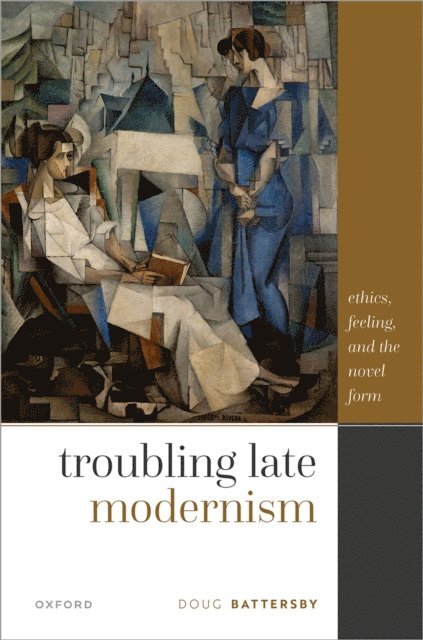
In the late nineteenth and early twentieth centuries, modernist writers developed new techniques for depicting characters' thoughts, feelings, and desires that revolutionized the novel form--a revolution novelists and critics are still reckoning with today. Troubling Late Modernism tracks how those techniques have been perversely reinvented by some of the most influential and innovative writers of the postwar period. Chapters on Vladimir Nabokov, Samuel Beckett, Toni Morrison, John Banville, J. M. Coetzee, and Eimear McBride reveal how these writers at once exploit and extend modernist forms of narration to cultivate disquieting affective attachments to protagonists compelled by violent or exploitative sexual desires. By interrogating the expressive power and ethical liabilities of modes of writing that give us intimate access to characters' inner lives, late modernism poses fundamental philosophical questions about emotion and its inseparability from knowledge and ethical deliberation. Whilst other historians of the novel have characterized late modernism's formal innovations as ethically and politically edifying, Troubling Late Modernism highlights their more disquieting potential for lending sympathy and profundity to sentiments deemed inadmissible in our everyday lives. Charting late modernism's characteristic fusion of aesthetic difficulty with emotional and ethical provocation demands an approach attuned to the experience of reading these disturbingly erotic narratives. In dialogue with recent debates about critical method, Troubling Late Modernism presents a new way of closely reading prose fiction that brings together the lessons of formalism and affect theory.
Inbunden, Engelska, 2027
1 252 kr
Kommande
In the history of human culture, no organ or body part has been more closely identified with emotion than the heart. Cardiac Realism: The Affective Life of the Modern Novel illuminates a tradition of British novelists writing from the 1840s to the 1920s who turn to the heart to grapple with one of the perennial challenges of the novel form: how can prose fiction express the physical intensity of emotional experience? Whilst engaging with a wide range of writers, from Daniel Defoe to Ben Lerner, this volume strategically pairs two nineteenth century realists with the two early twentieth century modernists that they most profoundly influenced. Dissatisfied with the perceived neglect of bodily feeling in the novels of their predecessors and peers, Charlotte Brontë, Thomas Hardy, May Sinclair, and D. H. Lawrence develop heart-centred strategies of affective description that refocus attention from mentation to the somatic lineaments of emotion, expanding the remit of novelistic 'interiority' to encompass the visceral commotions of the bodily interior. This more corporeal narrative of the modern novel—developed in dialogue with the history of medicine, science, and emotion—rethinks realism and modernism as literary modes animated by a far wider array of philosophies of experience than has yet been recognized. The most wide-reaching ramification of Cardiac Realism is its argument that novel criticism needs to recalibrate its methods to register the real philosophical work performed by experiential description—the novel form's most subtle and sophisticated tool for theorizing what it is like to be a thinking, feeling human being, with a racing mind and beating heart.