Doug Stokes - Böcker
Visar alla böcker från författaren Doug Stokes. Handla med fri frakt och snabb leverans.
9 produkter
9 produkter
687 kr
Skickas inom 5-8 vardagar
Giving students a perspective on US foreign policy that is critical and connected, US Foreign Policy is the student toolkit for navigating the ever-changing dynamics of the subject area.Using the book, students learn how to critically assess US foreign policy, as they are presented with diverse political perspectives and given the tools to come to their own conclusions.Carefully developed 'major debates' and 'controversies' features help students to connect theory with the real-world politics. As policy continues to change before our eyes, US Foreign Policy brings together the world's leading experts in the field to provide the most comprehensive overview of America's ever-changing role in international politics. This new edition reflects the legacy of the Obama administration, the unfurling impacts of President Trump, and the American role in world affairs. It includes new chapters on gender, religion, the rise of the US economy, East Asia, and the Liberal International Order. The following online resources for students and lecturers accompany the book:For students:Interactive map detailing U.S. foreign policy by regionMultiple choice questionsFor lecturers:Essay and seminar questions
595 kr
Skickas inom 5-8 vardagar
DescriptionCritical and connected: brings together diverse perspectives from many of the world's leading foreign policy experts.US Foreign Policy gives students the tools to critically evaluate America's role in a fast-changing and increasingly contested international system. The return of Donald Trump to the White House, the ongoing strategic competition with China, the war in Ukraine, and conflicts in the Middle East all feature prominently in updated chapters.Key features· 24 chapters tackle a range of topics, including the historical rise of the US through to the long march from the end of the Cold War to the new era of geopolitics; domestic factors shaping US foreign policy; the sources of American power; climate change; the role of gender in shaping foreign policy; regional challenges; and America's military role in the world. · The 4th edition sees the return of some of the most important voices in the debate on US foreign policy while at the same time introducing students to a number of new contributors. · Provides readers with the historical context, theoretical frameworks, and empirical analyses needed to understand the complex forces shaping America's role in the world.· Offers insights into the enduring patterns and emerging trends in US foreign policy, examining its institutional foundations, regional dimensions and key issue areas.New to this edition· Builds on the strengths of previous editions while reflecting on the significant changes in US foreign policy since 2018. · Updated to cover the Biden presidency and the start of the second Trump administration, helping students to understand the dynamics of contemporary US foreign policy.·All chapters have been completely revised, and ten new chapters cover climate change; internal divisions affecting America's global influence; the current state of US democracy and its implications for foreign policy; the dollar's role in sustaining US power; America's approach to military conflict; the US' relationship with Europe, India, Latin America and the Caribbean; and how America's soft power has evolved in recent years.The 4th edition is available for students and institutions to purchase in a variety of formats: the e-book and Politics Trove offer a mobile experience and convenient access along with PowerPoint slides for lecturers, navigation features and links that offer extra learning support for students.For more information about e-books, please visit www.oxfordtextbooks.co.uk/ebooks
2 091 kr
Skickas inom 10-15 vardagar
The recent debate about biopolitics in International Relations (IR) theory may well prove to be one of the most provocative and rewarding engagements with the concept of power in the history of the discipline. Building on Foucault's arguments concerning the role played by the concept of security in 19th-century liberal government, numerous IR scholars are now arguing for the relevance of his theories of biopolitics and governmentality for understanding the Global War on Terror (GWOT) and broader issues of security and governance in the post 9/11 world.Conversely, others have criticized this idea. Marxist and Communitarian scholars have challenged the notion that the category of biopolitics can be 'scaled' up to the level of international relations with any analytical precision. This edited volume covers these debates in IR with a series of critical engagements with Foucault's own thought and its increasing relevance for understanding international relations in the post 9/11 world.This book was based on a special issue of Global Society.
808 kr
Skickas inom 10-15 vardagar
The recent debate about biopolitics in International Relations (IR) theory may well prove to be one of the most provocative and rewarding engagements with the concept of power in the history of the discipline. Building on Foucault's arguments concerning the role played by the concept of security in 19th-century liberal government, numerous IR scholars are now arguing for the relevance of his theories of biopolitics and governmentality for understanding the Global War on Terror (GWOT) and broader issues of security and governance in the post 9/11 world.Conversely, others have criticized this idea. Marxist and Communitarian scholars have challenged the notion that the category of biopolitics can be 'scaled' up to the level of international relations with any analytical precision. This edited volume covers these debates in IR with a series of critical engagements with Foucault's own thought and its increasing relevance for understanding international relations in the post 9/11 world.This book was based on a special issue of Global Society.
633 kr
Tillfälligt slut
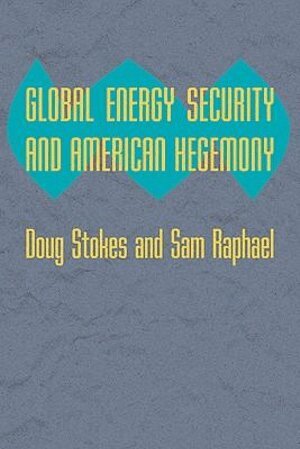
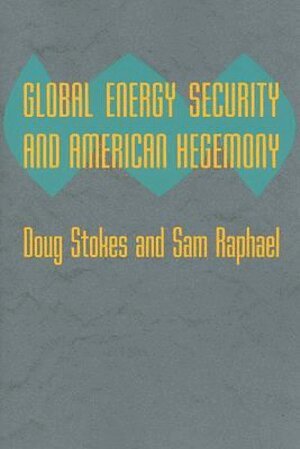
This analysis of the United States and energy security examines the close relationship between US military supremacy in oil-rich regions and America's maintenance of global power. Energy security generally evokes thoughts of American intervention in the Middle East to protect US interests in that region's oil-rich fields. Doug Stokes and Sam Raphael move beyond that framework to consider US actions in Latin America, Central Asia, and Africa. Drawing on State and Defense Department records and other primary sources and previous scholarship, they show how US foreign policy since World War II has sought to maintain a global energy security regime that supports the nation's allies while maintaining American hegemony. Stokes and Raphael explain how US intervention in energy-rich states insulates and stabilizes those nations' transnationally oriented actors and political economies and why American oil diversification strategy strengthens the country's position against rivals in the global capitalist system.They argue that counterinsurgency aid and other types of coercive US statecraft protect the recipient states from an array of potentially revolutionary armed and unarmed internal social forces, thereby securing the energy supplies of nations deemed strategically important to the United States or its allies. Clear and accessible, this cutting-edge contemporary policy analysis will engage scholars of US foreign policy and international relations as well as policymakers grappling with the importance of energy security in today's world.
326 kr
Tillfälligt slut
This analysis of the United States and energy security examines the close relationship between US military supremacy in oil-rich regions and America's maintenance of global power. Energy security generally evokes thoughts of American intervention in the Middle East to protect US interests in that region's oil-rich fields. Doug Stokes and Sam Raphael move beyond that framework to consider US actions in Latin America, Central Asia, and Africa. Drawing on State and Defense Department records and other primary sources and previous scholarship, they show how US foreign policy since World War II has sought to maintain a global energy security regime that supports the nation's allies while maintaining American hegemony. Stokes and Raphael explain how US intervention in energy-rich states insulates and stabilizes those nations' transnationally oriented actors and political economies and why American oil diversification strategy strengthens the country's position against rivals in the global capitalist system.They argue that counterinsurgency aid and other types of coercive US statecraft protect the recipient states from an array of potentially revolutionary armed and unarmed internal social forces, thereby securing the energy supplies of nations deemed strategically important to the United States or its allies. Clear and accessible, this cutting-edge contemporary policy analysis will engage scholars of US foreign policy and international relations as well as policymakers grappling with the importance of energy security in today's world.
430 kr
Skickas inom 7-10 vardagar
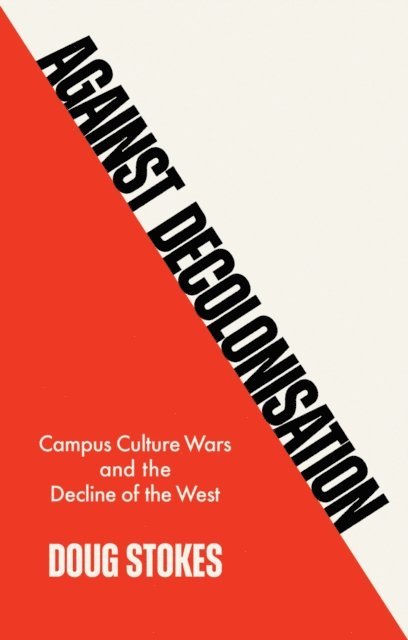
Following the killing of George Floyd in 2020, a moral panic gripped the US and UK. To atone for an alleged history of racism, statues were torn down and symbols of national identity attacked. Across universities, fringe theories became the new orthodoxy, with a cadre of activists backed by university technocrats adopting a binary worldview of moral certainty, sin and deconstructive redemption through Western self-erasure. This hard-hitting book surveys these developments for the first time. It unpacks and challenges the theories and arguments deployed by ‘decolonisers’ in a university system now characterised by garbled leadership and illiberal groupthink. The desire to question the West’s sense of itself, deconstruct its narratives and overthrow its institutional order is an impulse that, ironically, was underpinned by a more confident and assured Western hegemony, which is now waning and under great strain. If its light continues to dim, who or what will carry the torch for human freedom and progress?
148 kr
Skickas inom 7-10 vardagar
Following the killing of George Floyd in 2020, a moral panic gripped the US and UK. To atone for an alleged history of racism, statues were torn down and symbols of national identity attacked. Across universities, fringe theories became the new orthodoxy, with a cadre of activists backed by university technocrats adopting a binary worldview of moral certainty, sin and deconstructive redemption through Western self-erasure. This hard-hitting book surveys these developments for the first time. It unpacks and challenges the theories and arguments deployed by ‘decolonisers’ in a university system now characterised by garbled leadership and illiberal groupthink. The desire to question the West’s sense of itself, deconstruct its narratives and overthrow its institutional order is an impulse that, ironically, was underpinned by a more confident and assured Western hegemony, which is now waning and under great strain. If its light continues to dim, who or what will carry the torch for human freedom and progress?
434 kr
Skickas inom 10-15 vardagar
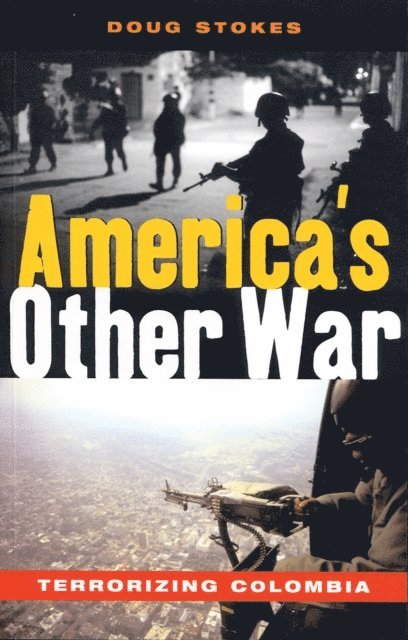
This controversial book maintains that in Colombia the US has long supported a pervasive campaign of state violence directed against both armed insurgents and a wide range of unarmed progressive social forces. While the context may change from one decade to the next, the basic policies remain the same: maintain the pro-US Colombian state, protect US economic interests and preserve strategic access to oil. Colombia is now the third largest recipient of US military aid in the world, and the largest by far in Latin America. Using extensive declassified documents, this book shows that the so-called "war on drugs", and now the new war on terror in Colombia are actually part of a long-term Colombian "war of state terror" that predates the end of the Cold War with US policy contributing directly to the human rights situation in Colombia today.