Douglas Flamming – författare
Visar alla böcker från författaren Douglas Flamming. Handla med fri frakt och snabb leverans.
8 produkter
8 produkter
Häftad, Engelska, 2006
400 kr
Skickas inom 5-8 vardagar
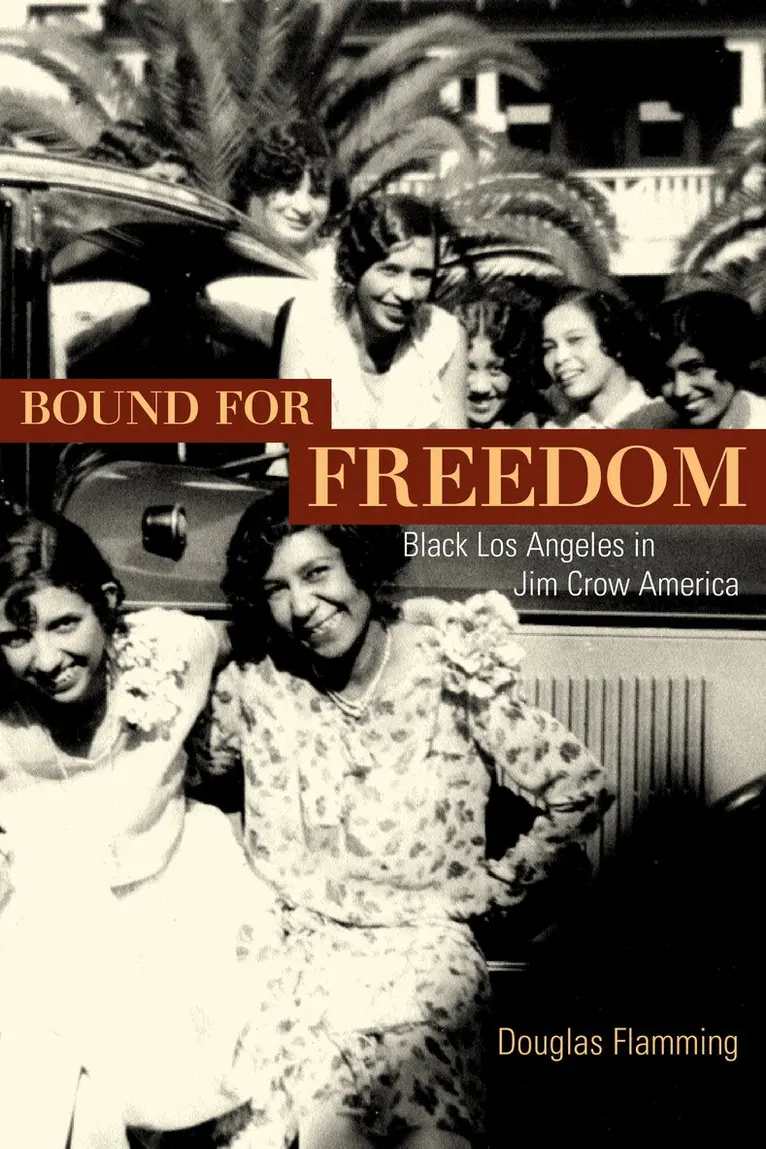
Paul Bontemps decided to move his family to Los Angeles from Louisiana in 1906 on the day he finally submitted to a strictly enforced Southern custom - he stepped off the sidewalk to allow white men who had just insulted him to pass by. Friends of the Bontemps family, like many others beckoning their loved ones West, had written that Los Angeles was 'a city called heaven' for people of color. But just how free was Southern California for African Americans? This splendid history, at once sweeping in its historical reach and intimate in its evocation of everyday life, is the first full account of Los Angeles' black community in the half century before World War II. Filled with moving human drama, it brings alive a time and place largely ignored by historians until now, detailing African American community life and political activism during the city's transformation from small town to sprawling metropolis. Writing with a novelist's sensitivity to language and drawing from fresh historical research, Douglas Flamming takes us from Reconstruction to the Jim Crow era, through the Great Migration, the Roaring Twenties, the Great Depression, and the build-up to World War II.Along the way, he offers rich descriptions of the community and its middle-class leadership, the women who were front and center with men in the battle against racism in the American West. In addition to drawing a vivid portrait of a little-known era, Flamming shows that the history of race in Los Angeles is crucial for our understanding of race in America. The civil rights activism in Los Angeles laid the foundation for critical developments in the second half of the century that continue to influence us to this day.
E-bok
PDF, Engelska, 2005452 kr
Läs direkt efter köp
Paul Bontemps decided to move his family to Los Angeles from Louisiana in 1906 on the day he finally submitted to a strictly enforced Southern custom—he stepped off the sidewalk to allow white men who had just insulted him to pass by. Friends of the Bontemps family, like many others beckoning their loved ones West, had written that Los Angeles was "a city called heaven" for people of color. But just how free was Southern California for African Americans? This splendid history, at once sweeping in its historical reach and intimate in its evocation of everyday life, is the first full account of Los Angeles''s black community in the half century before World War II. Filled with moving human drama, it brings alive a time and place largely ignored by historians until now, detailing African American community life and political activism during the city''s transformation from small town to sprawling metropolis. Writing with a novelist''s sensitivity to language and drawing from fresh historical research, Douglas Flamming takes us from Reconstruction to the Jim Crow era, through the Great Migration, the Roaring Twenties, the Great Depression, and the build-up to World War II. Along the way, he offers rich descriptions of the community and its middle-class leadership, the women who were front and center with men in the battle against racism in the American West. In addition to drawing a vivid portrait of a little-known era, Flamming shows that the history of race in Los Angeles is crucial for our understanding of race in America. The civil rights activism in Los Angeles laid the foundation for critical developments in the second half of the century that continue to influence us to this day.
Häftad, Engelska, 1995
536 kr
Skickas inom 10-15 vardagar
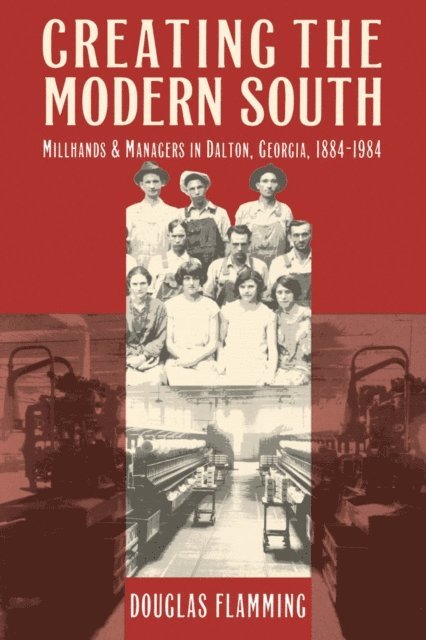
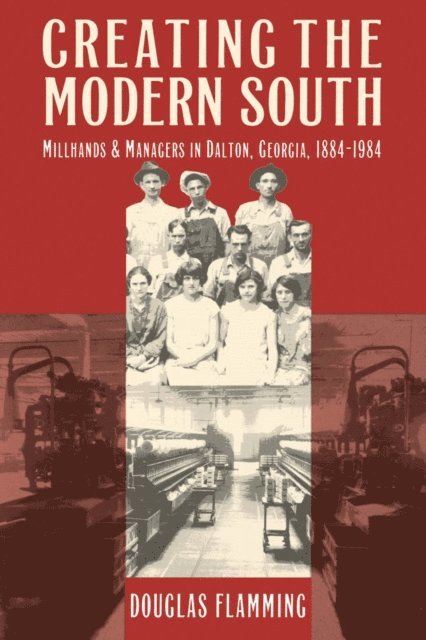
In Creating the Modern South , Douglas Flamming examines one hundred years in the life of the mill and the town of Dalton, Georgia, providing a uniquely perceptive view of Dixie's social and economic transformation. ""Beautifully written, it combines the rich specificity of a case study with broadly applicable synthetic conclusions.""-- Technology and Culture ""A detailed and nuanced study of community development. . . . Creating the Modern South is an important book and will be of interest to anyone in the field of labor history.""-- Journal of Economic History ""A rich and provocative study. . . . Its major contribution to our knowledge of the South is its careful account of the evolution and collapse of mill culture.""-- Journal of Southern History ""Ambitious, and at times provocative, Creating the Modern South is a well-researched, highly readable, and engaging book.""-- Journal of American History
520 kr
Läs direkt efter köp
Built by local entrepreneurs during Dixie’s Cotton Mill in Dalton, Georgia, acted as a magnet for thousands of newly impoverished white farm families who moved to the factory and its company-owned village from the surrounding countryside. In Creating the Modern South, Douglas Flamming examines one hundred years in the life of the mill and the town, providing a uniquely perceptive view of Dixie’s social and economic transformation.With a sophisticated blend of statistical analysis, oral history interviews, and a variety of such traditional sources as company records, federal census schedules, and local newspapers, Flamming weaves an empirically convincing, richly embroidered description of life in a southern cotton-mill village. Whereas some historians have characterized southern textile workers as slaves in an “industrial plantation” system, and others have described the creation of an autonomous culture of opposition to management, Flamming focuses on the intimate, ever-changing, and potentially explosive relationship between millhands and managers, effectively demonstrating that both groups acted as architects of the emerging industrial order.The Crown Mill story addresses important issues of social change faced by the modernizing South: the origins of small-town industry, worker migration from farm to factory, and the rise of an industrial elite; the adaptation of rural customs to an industrial environment and the development of a working-class culture; the advent of mill-village paternalism and the dilemmas of unionization; the impact of World War II on southern life; the collapse of paternalism and the antilabor backlash of the 1950s; and the decline of Dixie’s cotton mills in the burgeoning Sunbelt economy. Ultimately, the history of the Crown Mill community both underscores the human dimensions of industrialization and places the New South in the broader context of an industrialized America.
Inbunden, Engelska, 2009
865 kr
Skickas inom 10-15 vardagar
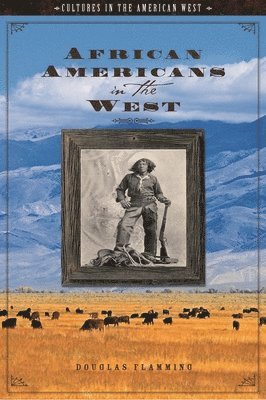
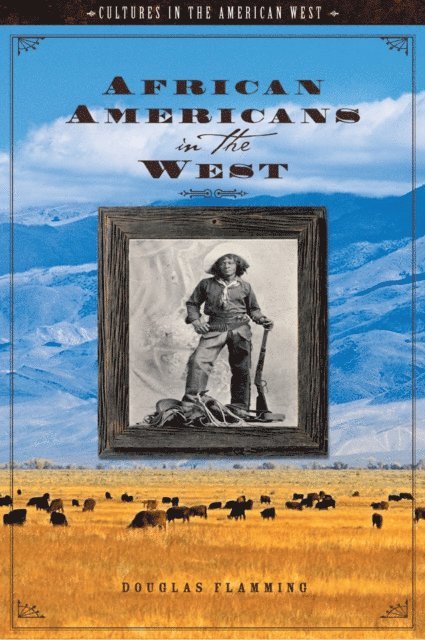
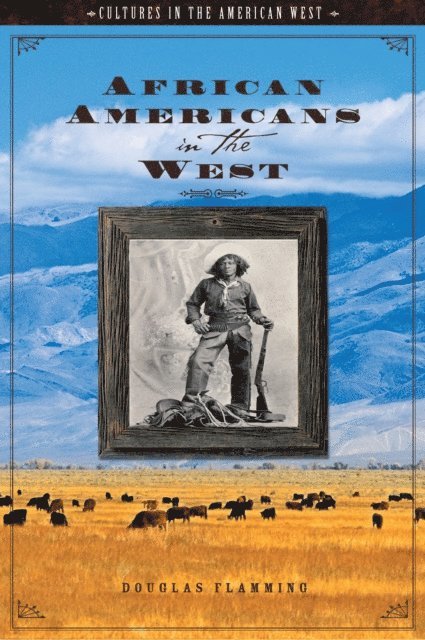
Based on the latest research, this work provides a new look at the lives of African Americans in the Western United States, from the colonial era to the present.From colonial times to the present, this volume captures the experiences of the westward migration of African Americans. Based on the latest research, it offers a fresh look at the many ways African Americans influenced—and were influenced by—the development of the U.S. frontier.African Americans in the West covers the rise of the slave trade to its expansion into what was at the time the westernmost United States; from the post–Civil War migrations, including the Exodusters who fled the South for Kansas in 1879 to the mid–20th century civil rights movement, which saw many critical events take place in the West—from the organization of the Black Panthers in Oakland to the tragic Watts riots in Los Angeles.A rich collection of photographs, many never before publishedA completely up-to-date bibliography highlighting significant resources for further study on African Americans in the West
E-bok
PDF, Engelska, 2009902 kr
Läs direkt efter köp
Based on the latest research, this work provides a new look at the lives of African Americans in the Western United States, from the colonial era to the present.From colonial times to the present, this volume captures the experiences of the westward migration of African Americans. Based on the latest research, it offers a fresh look at the many ways African Americans influenced—and were influenced by—the development of the U.S. frontier.African Americans in the West covers the rise of the slave trade to its expansion into what was at the time the westernmost United States; from the post–Civil War migrations, including the Exodusters who fled the South for Kansas in 1879 to the mid–20th century civil rights movement, which saw many critical events take place in the West—from the organization of the Black Panthers in Oakland to the tragic Watts riots in Los Angeles.
E-bok
Engelska, 2009902 kr
Läs direkt efter köp
Based on the latest research, this work provides a new look at the lives of African Americans in the Western United States, from the colonial era to the present.From colonial times to the present, this volume captures the experiences of the westward migration of African Americans. Based on the latest research, it offers a fresh look at the many ways African Americans influenced—and were influenced by—the development of the U.S. frontier.African Americans in the West covers the rise of the slave trade to its expansion into what was at the time the westernmost United States; from the post–Civil War migrations, including the Exodusters who fled the South for Kansas in 1879 to the mid–20th century civil rights movement, which saw many critical events take place in the West—from the organization of the Black Panthers in Oakland to the tragic Watts riots in Los Angeles.
E-bok
PDF, Engelska, 2000520 kr
Läs direkt efter köp
Built by local entrepreneurs during Dixie’s Cotton Mill in Dalton, Georgia, acted as a magnet for thousands of newly impoverished white farm families who moved to the factory and its company-owned village from the surrounding countryside. In Creating the Modern South, Douglas Flamming examines one hundred years in the life of the mill and the town, providing a uniquely perceptive view of Dixie’s social and economic transformation.With a sophisticated blend of statistical analysis, oral history interviews, and a variety of such traditional sources as company records, federal census schedules, and local newspapers, Flamming weaves an empirically convincing, richly embroidered description of life in a southern cotton-mill village. Whereas some historians have characterized southern textile workers as slaves in an “industrial plantation” system, and others have described the creation of an autonomous culture of opposition to management, Flamming focuses on the intimate, ever-changing, and potentially explosive relationship between millhands and managers, effectively demonstrating that both groups acted as architects of the emerging industrial order.The Crown Mill story addresses important issues of social change faced by the modernizing South: the origins of small-town industry, worker migration from farm to factory, and the rise of an industrial elite; the adaptation of rural customs to an industrial environment and the development of a working-class culture; the advent of mill-village paternalism and the dilemmas of unionization; the impact of World War II on southern life; the collapse of paternalism and the antilabor backlash of the 1950s; and the decline of Dixie’s cotton mills in the burgeoning Sunbelt economy. Ultimately, the history of the Crown Mill community both underscores the human dimensions of industrialization and places the New South in the broader context of an industrialized America.