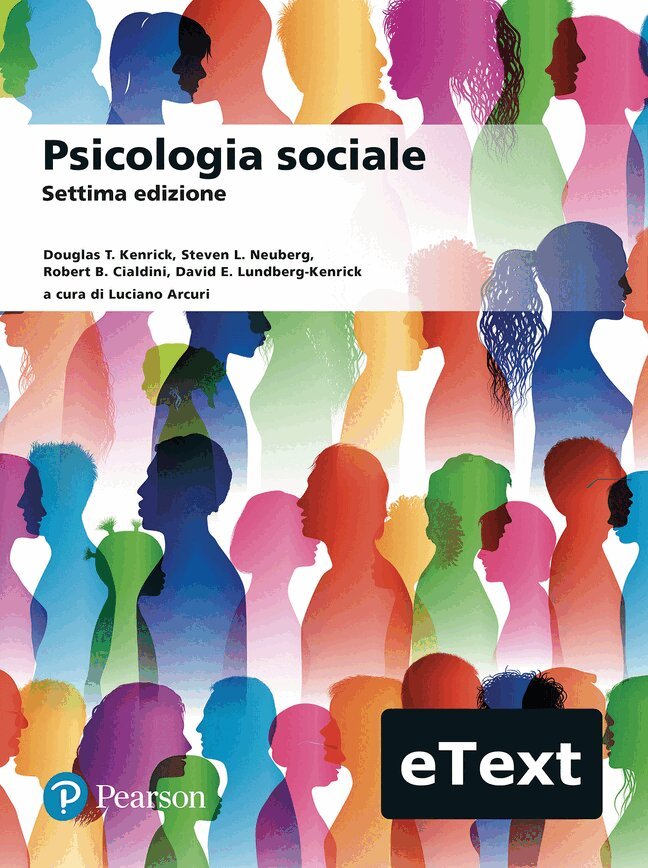
Douglas Kenrick – författare
1 096 kr
Skickas inom 7-10 vardagar
For an undergraduate introductory level course in social psychology.
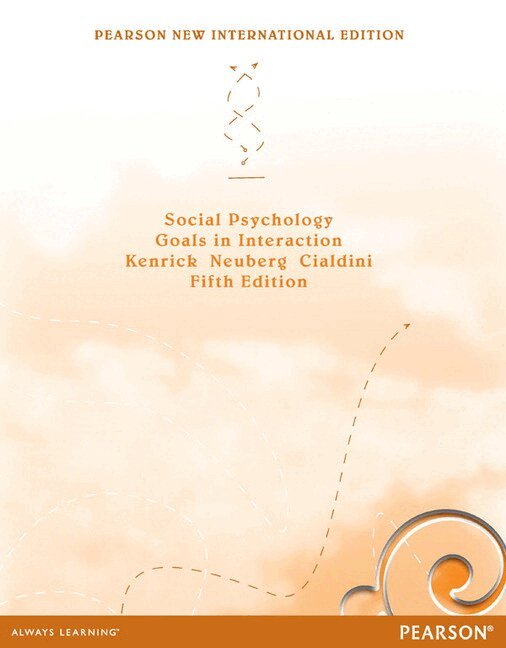
Social Psychology: Goals in Interaction reveals the motives behind social behavior—why people love, hate, lead, and follow, for example- and bridges the person and the social situation.
A unique integrated approach to social behavior: What do terrorist bombings, testosterone, one-minute “hurry dates,” Facebook, and political smear campaigns have to do with one another? Social Psychology textbooks typically provide a laundry list of interesting, but disconnected facts and theories. This standard approach grabs interest but falls short as a way to learn. Kenrick, Neuberg, and Cialdini instead provide an integrative approach, one that both builds upon traditional lessons learned by the field and pushes those lessons to the cutting-edge. By organizing each chapter around the two broad questions–“What are the goals that underlie the behavior in question?” and “What factors in the person and the situation connect to each goal?” –the book presents the discipline as a coherent framework for understanding human behavior. Expanding he integrative theme in this edition, KNC highlights social psychology as the ultimate bridge discipline– connectingthe different findings and theories of social psychology, exploring the field’s links to other areas of psychology (e.g., clinical, organizational, and neuroscience), and bridging to other important academic disciplines (e.g., anthropology, biology, economics, medicine, and law).
Opening mysteries: Each chapter begins with a mystery, designed not only to grab student interest, but also to organize the ensuing discussion of scientific research: Why did the beautiful and talented artist Frida Kahlo fall for the much older, and much less attractive, Diego Rivera, and then tolerate his numerous extramarital affairs? What psychological forces led the Dalai Lama, the most exalted personage in Tibet, to forge a lifelong friendship with a foreign vagabond openly scorned by Tibetan peasants? Why would a boy falsely confess to murdering his own mother?
The latest scholarship, engaging writing, engrossing real-world stories and the authors' strengths as renowned researchers and expert teachers, all come together to make the fifth edition of Social Psychology: Goals in Interaction an accessible and engaging read for students, while providing a modern and cohesive approach for their teachers.
Check out the authors' website! www.knc5.com/Ad_Psych
254 kr
Skickas inom 10-15 vardagar
473 kr
Skickas inom 10-15 vardagar
784 kr
Skickas inom 10-15 vardagar
899 kr
Läs direkt efter köp
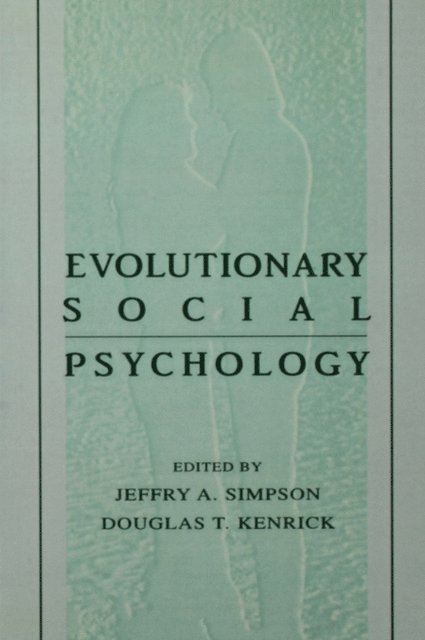
What a pity it would have been if biologists had refused to accept Darwin''s theory of natural selection, which has been essential in helping biologists understand a wide range of phenomena in many animal species. These days, to study any animal species while refusing to consider the evolved adaptive significance of their behavior would be considered pure folly--unless, of course, the species is homo sapiens. Graduate students training to study this particular primate species may never take a single course in evolutionary theory, although they may take two undergraduate and up to four graduate courses in statistics. These methodologically sophisticated students then embark on a career studying human aggression, cooperation, mating behavior, family relationships, or altruism with little or no understanding of the general evolutionary forces and principles that shaped the behaviors they are investigating. This book hopes to redress that wrong.It is one of the first to apply evolutionary theories to mainstream problems in personality and social psychology that are relevant to a wide range of important social phenomena, many of which have been shaped and molded by natural selection during the course of human evolution. These phenomena include selective biases that people have concerning how and why a variety of activities occur. For example:* information exchanged during social encounters is initially perceived and interpreted;* people are romantically attracted to some potential mates but not others;* people often guard, protect, and work hard at maintaining their closest relationships;* people form shifting and highly complicated coalitions with kin and close friends; and* people terminate close, long-standing relationships.Evolutionary Social Psychology begins to disentangle the complex, interwoven patterns of interaction that define our social lives and relationships.
899 kr
Läs direkt efter köp
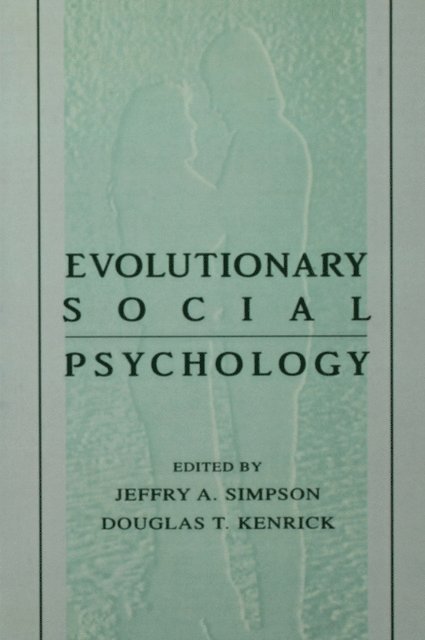
What a pity it would have been if biologists had refused to accept Darwin''s theory of natural selection, which has been essential in helping biologists understand a wide range of phenomena in many animal species. These days, to study any animal species while refusing to consider the evolved adaptive significance of their behavior would be considered pure folly--unless, of course, the species is homo sapiens. Graduate students training to study this particular primate species may never take a single course in evolutionary theory, although they may take two undergraduate and up to four graduate courses in statistics. These methodologically sophisticated students then embark on a career studying human aggression, cooperation, mating behavior, family relationships, or altruism with little or no understanding of the general evolutionary forces and principles that shaped the behaviors they are investigating. This book hopes to redress that wrong.It is one of the first to apply evolutionary theories to mainstream problems in personality and social psychology that are relevant to a wide range of important social phenomena, many of which have been shaped and molded by natural selection during the course of human evolution. These phenomena include selective biases that people have concerning how and why a variety of activities occur. For example:* information exchanged during social encounters is initially perceived and interpreted;* people are romantically attracted to some potential mates but not others;* people often guard, protect, and work hard at maintaining their closest relationships;* people form shifting and highly complicated coalitions with kin and close friends; and* people terminate close, long-standing relationships.Evolutionary Social Psychology begins to disentangle the complex, interwoven patterns of interaction that define our social lives and relationships.
546 kr
Skickas inom 7-10 vardagar
Accesso per 12 mesi a Pearson eTextbook, la versione digitale del testo, arricchita da funzionalità che ne favoriscono l’accessibilità e consentono di:
effettuare lettura audio digitalizzata inserire note e segnalibri, anche su smartphone e tablet generare flashcard cercare parole o concetti nel testo modificare carattere e colore dello sfondo tradurre porzioni di testo in 100+ linguePearson eTextbook è integrato da AI Study Tool, uno strumento di intelligenza artificiale che offre supporto immediato per generare:
spiegazioni e approfondimenti riassunti personalizzati per un ripasso più efficace quiz interattivi per verificare la preparazione