Douglas Robinson – författare
1 755 kr
Skickas inom 5-8 vardagar
1 413 kr
Läs direkt efter köp
425 kr
Läs direkt efter köp
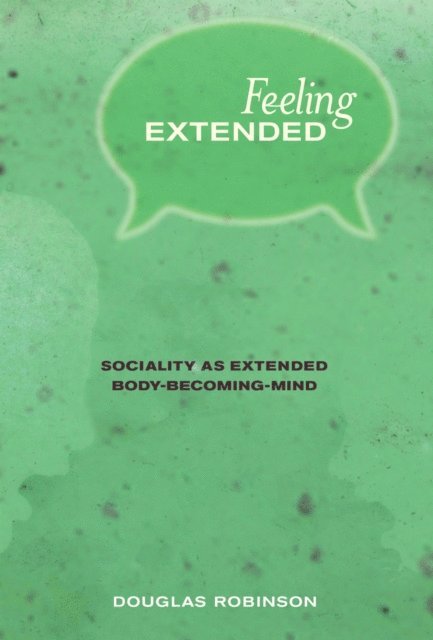
A new view of the extended mind thesis argues that a stark binary opposition between really extending and seeming to extend oversimplifies the issue.
The extended-mind thesis (EMT), usually attributed to Andy Clark and David Chalmers, proposes that in specific kinds of mind-body-world interaction there emerges an extended cognitive system incorporating such extracranial supports as pencils, papers, computers, and other objects and environments in the world. In Feeling Extended, Douglas Robinson accepts the thesis, but argues that the usual debate over EMT—which centers on whether mind really (literally, actually, materially) extends to body and world or only seems to—oversimplifies the issue. When we say that mind feels as if it extends, Robinson argues, what extends is precisely feeling—and mind, insofar as it arises out of feeling.
Robinson explores the world of affect and conation as intermediate realms of being between the physical movements of body and the qualitative movements of mind. He shows that affect is transcranial and tends to become interpersonal conation. Affective-becoming-conative sociality, he argues, is in fact the primary area in which body-becoming-mind extends. To make his case, Robinson draws on a wide spectrum of philosophical thought—from the EMT and qualia debates among cognitivists to the prehistory of such debates in the work of Hegel and Peirce to continental challenges to Hegelianism from Bakhtin and Derrida—as well as on extensive empirical research in social psychology and important sociological theories of face (Goffman), ritual (Connerton), and habitus (Bourdieu).
681 kr
Skickas inom 10-15 vardagar
702 kr

Skickas inom 10-15 vardagar
2 259 kr
Skickas inom 10-15 vardagar
600 kr
Skickas inom 10-15 vardagar
702 kr
Skickas inom 10-15 vardagar
816 kr
Skickas inom 10-15 vardagar
1 974 kr
Skickas inom 10-15 vardagar
615 kr
Skickas inom 10-15 vardagar
2 250 kr
Skickas inom 10-15 vardagar
617 kr
Skickas inom 10-15 vardagar
2 856 kr
Skickas inom 3-6 vardagar
806 kr
Skickas inom 10-15 vardagar
1 863 kr
Skickas inom 11-20 vardagar
630 kr
Skickas inom 5-8 vardagar
293 kr
Skickas inom 10-15 vardagar
793 kr
Läs direkt efter köp
This is a book-length commentary on Walter Benjamin’s 1923 essay "Die Aufgabe des Übersetzers," best known in English under the title "The Task of the Translator." Benjamin’s essay is at once an immensely attractive work for top-flight theorists of translation and comparative literature and a frustratingly cryptic work that cries out for commentary. Almost every one of the claims he makes in it seems wildly counterintuitive, because he articulates none of the background support that would help readers place it in larger literary-historical contexts: Jewish mystical traditions from Philo Judaeus’s Logos-based Neoplatonism to thirteenth-century Lurianic Kabbalah; Romantic and post-Romantic esotericisms from Novalis and the Schlegels to Hölderlin and Goethe; modernist avant-garde foreclosures on "the public" and generally the communicative contexts of literature.
The book is divided into 78 passages, from one to a few sentences in length. Each of the passages becomes its own commentarial unit, consisting of a Benjaminian interlinear box, a paraphrase, a commentary, and a list of other commentators who have engaged the specific passage in question. Because the passages cover the entire text of the essay in sequence, reading straight through the book provides the reader with an augmented experience of reading the essay.
Robinson’s commentary is key reading for scholars and postgraduate students of translation, comparative literature, and critical theory.
793 kr
Läs direkt efter köp
This is a book-length commentary on Walter Benjamin’s 1923 essay "Die Aufgabe des Übersetzers," best known in English under the title "The Task of the Translator." Benjamin’s essay is at once an immensely attractive work for top-flight theorists of translation and comparative literature and a frustratingly cryptic work that cries out for commentary. Almost every one of the claims he makes in it seems wildly counterintuitive, because he articulates none of the background support that would help readers place it in larger literary-historical contexts: Jewish mystical traditions from Philo Judaeus’s Logos-based Neoplatonism to thirteenth-century Lurianic Kabbalah; Romantic and post-Romantic esotericisms from Novalis and the Schlegels to Hölderlin and Goethe; modernist avant-garde foreclosures on "the public" and generally the communicative contexts of literature.
The book is divided into 78 passages, from one to a few sentences in length. Each of the passages becomes its own commentarial unit, consisting of a Benjaminian interlinear box, a paraphrase, a commentary, and a list of other commentators who have engaged the specific passage in question. Because the passages cover the entire text of the essay in sequence, reading straight through the book provides the reader with an augmented experience of reading the essay.
Robinson’s commentary is key reading for scholars and postgraduate students of translation, comparative literature, and critical theory.
706 kr
Läs direkt efter köp
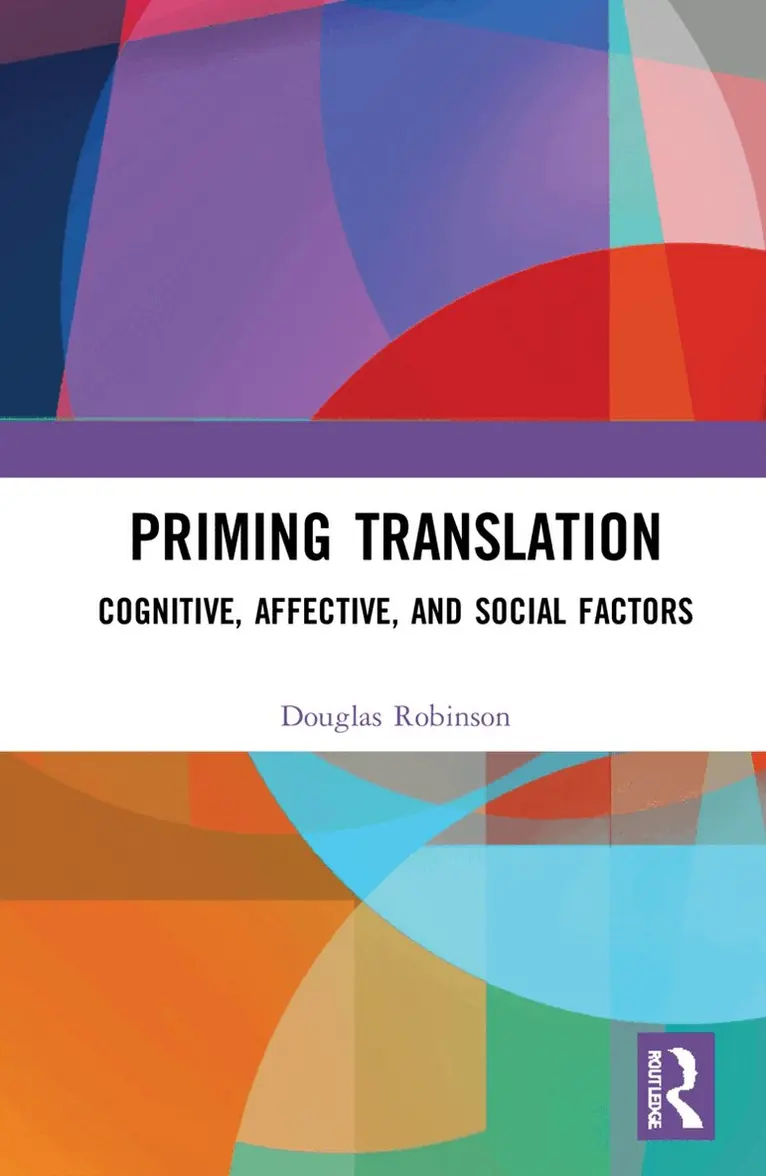
This innovative volume builds on Michael S. Gazzaniga’s Interpreter Theory toward radically expanding the theoretical and methodological scope of translational priming research.
Gazzaniga’s Interpreter Theory, based on empirical studies carried out with split-brain patients, argues for the Left-Brain Interpreter (LBI), a module in the brain’s left hemisphere that seeks to make sense of their world based on available evidence—and, where no evidence is available, primed by past memories, confabulates coherence. The volume unpacks this idea in translation research to test whether translators are primed to confabulate by the LBI in their own work. Robinson investigates existing empirical research to test hypotheses on the translational links between the LBI and cognitive priming, the Right-Brain Interpreter and affective priming, and the Collective Full-Brain Interpreter and social priming. Taken together, the book seeks to open translational priming studies up to the full range of cognitive, affective, and social primes and to prime cognitive translation researchers to implement this broader dynamic in future research.
This book will be of interest to scholars in translation and interpreting studies, especially those working in cognitive translation and interpreting studies.
706 kr
Läs direkt efter köp
This innovative volume builds on Michael S. Gazzaniga’s Interpreter Theory toward radically expanding the theoretical and methodological scope of translational priming research.
Gazzaniga’s Interpreter Theory, based on empirical studies carried out with split-brain patients, argues for the Left-Brain Interpreter (LBI), a module in the brain’s left hemisphere that seeks to make sense of their world based on available evidence—and, where no evidence is available, primed by past memories, confabulates coherence. The volume unpacks this idea in translation research to test whether translators are primed to confabulate by the LBI in their own work. Robinson investigates existing empirical research to test hypotheses on the translational links between the LBI and cognitive priming, the Right-Brain Interpreter and affective priming, and the Collective Full-Brain Interpreter and social priming. Taken together, the book seeks to open translational priming studies up to the full range of cognitive, affective, and social primes and to prime cognitive translation researchers to implement this broader dynamic in future research.
This book will be of interest to scholars in translation and interpreting studies, especially those working in cognitive translation and interpreting studies.
572 kr
Läs direkt efter köp
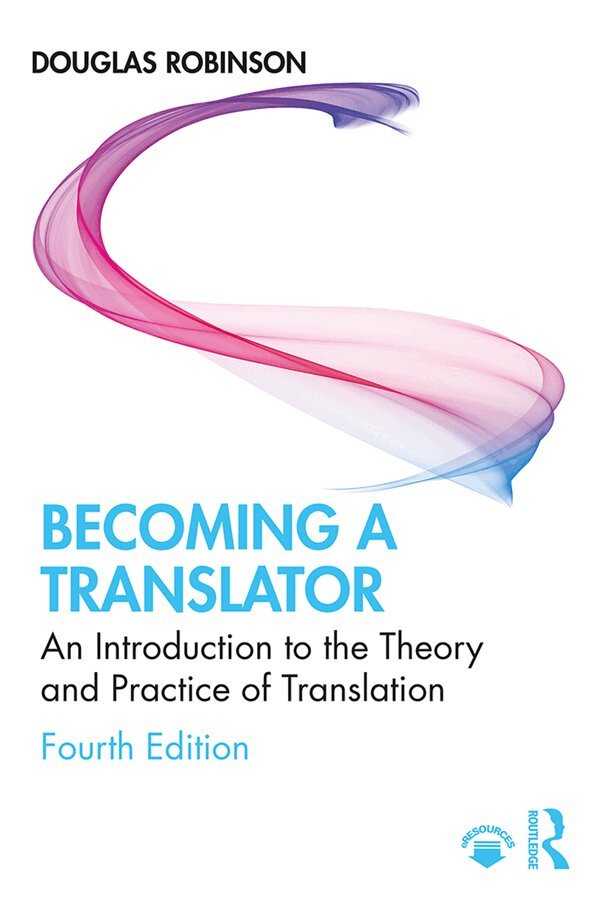
Fusing theory with advice and information about the practicalities of translating, Becoming a Translator is the essential resource for novice and practicing translators. The book explains how the market works, helps translators learn how to translate faster and more accurately, as well as providing invaluable advice and tips about how to deal with potential problems, such as stress.
The fourth edition has been revised and updated throughout, offering:
a whole new chapter on multimedia translation, with a discussion of the move from "intersemiotic translation" to "audiovisual translation," "media access" and "accessibility studies"
new sections on cognitive translation studies, translation technology, online translator communities, crowd-sourced translation, and online ethnography
"tweetstorms" capturing the best advice from top industry professionals on Twitter
student voices, especially from Greater China
Including suggestions for discussion, activities, and hints for the teaching of translation, and drawing on detailed advice from top translation professionals, the fourth edition of Becoming a Translator remains invaluable for students and teachers of Translation Studies, as well as those working in the field of translation.
572 kr
Läs direkt efter köp
Fusing theory with advice and information about the practicalities of translating, Becoming a Translator is the essential resource for novice and practicing translators. The book explains how the market works, helps translators learn how to translate faster and more accurately, as well as providing invaluable advice and tips about how to deal with potential problems, such as stress.
The fourth edition has been revised and updated throughout, offering:
a whole new chapter on multimedia translation, with a discussion of the move from "intersemiotic translation" to "audiovisual translation," "media access" and "accessibility studies"
new sections on cognitive translation studies, translation technology, online translator communities, crowd-sourced translation, and online ethnography
"tweetstorms" capturing the best advice from top industry professionals on Twitter
student voices, especially from Greater China
Including suggestions for discussion, activities, and hints for the teaching of translation, and drawing on detailed advice from top translation professionals, the fourth edition of Becoming a Translator remains invaluable for students and teachers of Translation Studies, as well as those working in the field of translation.
812 kr
Läs direkt efter köp
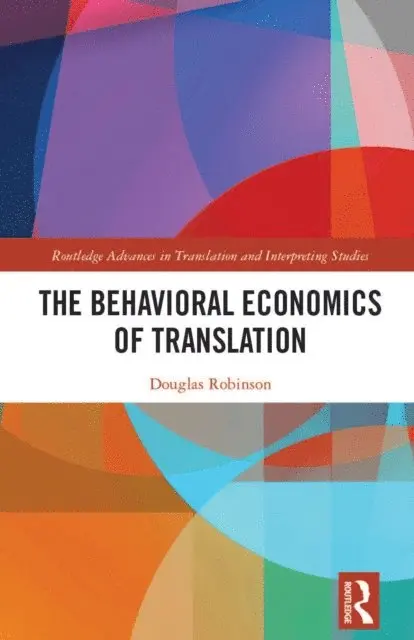
This book applies frameworks from behavioral economics to Western thinking about translation, mapping four approaches to eight keywords in translation studies to bring together divergent perspectives on the study of translation and interpreting.
The volume takes its points of departure from the tensions between the concerns of behavioral and neoclassical economists. The book considers on one side behavioral economists’ interest in the predictable irrationality of “Humans” and its nuances as they unfold in terms of gender, here organized around Masculine Human, Feminine Human, and Queer perspectives, and on the other side neoclassical economists’ chief concerns with the unfailing rationality of the “Econs.” Robinson applies these four approaches across eight chapters, each representing a keyword in the study of translation—agency; difference; Eurocentrism; hermeneutics; language; norms; rhetoric; and world literature—with case studies that problematize the different categories.
Taken together, the book offers a comprehensive treatment of the behavioral economics of translation and promotes new ways of thinking in the study of translation and interpreting, making it of interest to scholars in the discipline as well as those working along interdisciplinary lines in related fields such as philosophy, literature, and political science.
812 kr
Läs direkt efter köp
This book applies frameworks from behavioral economics to Western thinking about translation, mapping four approaches to eight keywords in translation studies to bring together divergent perspectives on the study of translation and interpreting.
The volume takes its points of departure from the tensions between the concerns of behavioral and neoclassical economists. The book considers on one side behavioral economists’ interest in the predictable irrationality of “Humans” and its nuances as they unfold in terms of gender, here organized around Masculine Human, Feminine Human, and Queer perspectives, and on the other side neoclassical economists’ chief concerns with the unfailing rationality of the “Econs.” Robinson applies these four approaches across eight chapters, each representing a keyword in the study of translation—agency; difference; Eurocentrism; hermeneutics; language; norms; rhetoric; and world literature—with case studies that problematize the different categories.
Taken together, the book offers a comprehensive treatment of the behavioral economics of translation and promotes new ways of thinking in the study of translation and interpreting, making it of interest to scholars in the discipline as well as those working along interdisciplinary lines in related fields such as philosophy, literature, and political science.
853 kr
Skickas inom 7-10 vardagar
285 kr
Läs direkt efter köp
275 kr
Läs direkt efter köp
239 kr
Skickas inom 7-10 vardagar