
Douglas Selvage – författare
Visar alla böcker från författaren . Handla med fri frakt och snabb leverans.
3 produkter
3 produkter
Inbunden, Tyska, 2021
324 kr
Skickas inom 3-6 vardagar
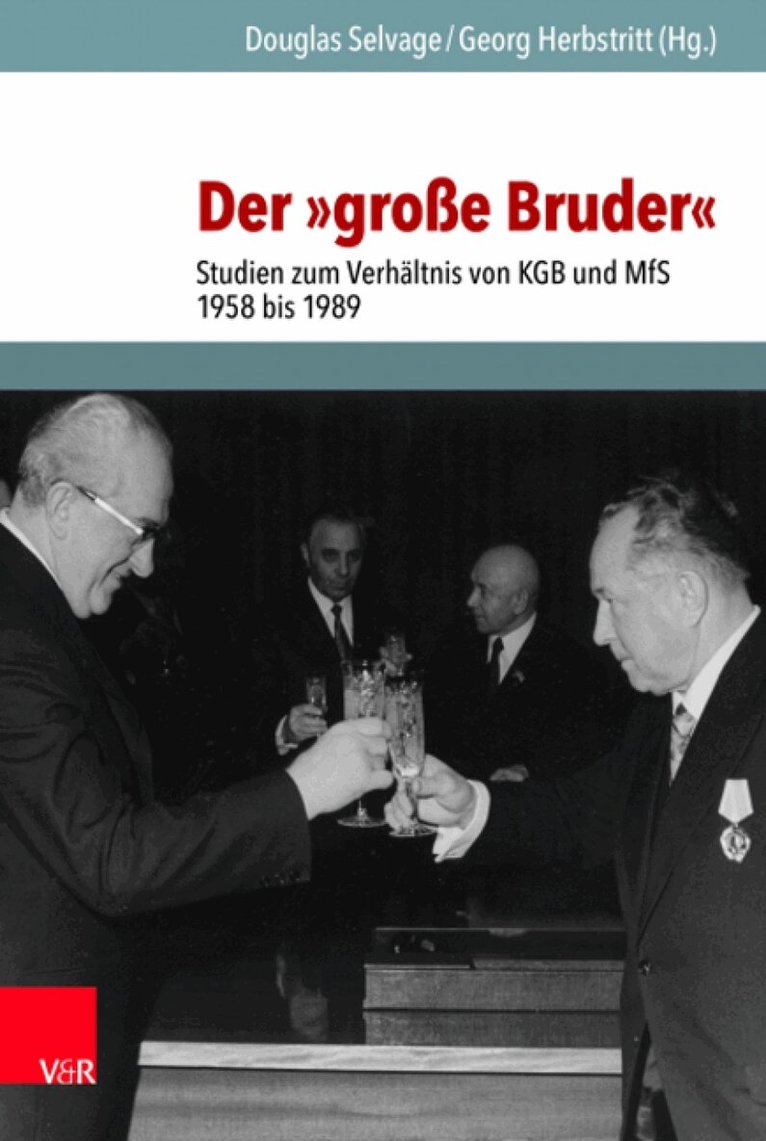
The GDR Ministry for State Security (MfS) remained a "servant of two masters" even after its formal equality with the Soviet secret service KGB in 1958. It continued to act both as a "shield and sword" for the ruling state party, the SED, and as a service provider for the Soviet "friends". In fact, it was not equality but informal submission of the MfS that shaped the cooperation with the KGB. It is hardly known that the KGB not only used the possibilities and capacities of the Stasi, but also those of the People's Police and the Ministry of the Interior to strengthen and expand its agent networks for espionage in the West or to collect information in the GDR - and this often without the knowledge of the MfS. The KGB viewed the GDR as its operational playground, in which it alone determined the laws of action. This volume illustrates the different facets of the KGB presence in the GDR on the basis of newly evaluated documents with many concrete examples.
E-bok
PDF, Tyska, 2019611 kr
Läs direkt efter köp
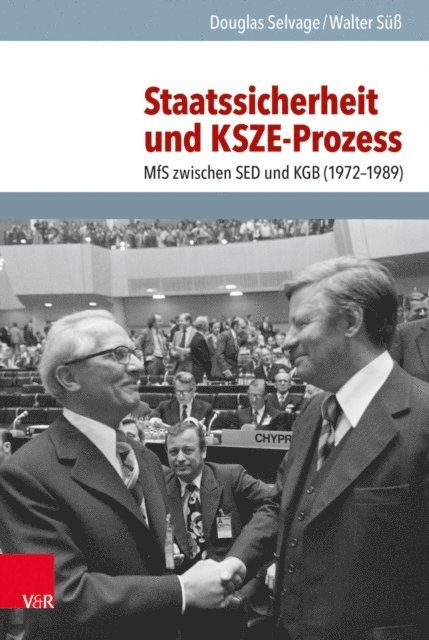
The book analyzes the role, activities and influence of the East German Ministry of State Security (MfS or Stasi) not only in connection with the Conference for Security and Cooperation in Europe (CSCE) and its follow-up conferences (i. e., the "CSCE Process"), but also in terms of limiting its influence upon East German society in terms of improved human rights and increased human contacts between East and West. On the one hand, the MfS supported the hard line of the East German party and state leadership in the CSCE process – also, when necessary, in opposition to the Soviet Union. On the other hand, the MfS supported Moscow''s demands – also communicated by its "fraternal organ", the KGB – that the East German leadership should conduct a policy of strict "delimitation" (Abgrenzung) with regard to West Germany in order to seal Germany''s division. In general, Minister of State Security Erich Mielke supported the hardest possible line toward West Germany, whether as a representative of the East German Party leadership with regard to Moscow or as a supporter of Moscow''s hard line for the GDR towards West Germany within the SED regime. However, the economic weakness of the GDR and the Soviet Union, further exacerbated by the arms race with NATO and especially the U.S. in the 1980''s, led to concessions by both regimes to the West both within and outside of the CSCE process that further limited the possibilities of the MfS in terms of repressing East German dissidents. More importantly, this was also the case with regard to the growing movement to emigrate from the GDR to West Germany that had developed in response to the GDR''s signing of the CSCE Final Act in Helsinki in August 1975. In the end, the Stasi, which had always been a "servant of two masters" – i. e. the East German Party and the Soviet Union, represented by the KGB – could no longer keep the domestic effects arising from the CSCE process and détente under control because of the concessions of its two erstwhile "masters" to the West.
E-bok
PDF, Tyska, 2021280 kr
Läs direkt efter köp
Das DDR-Ministerium für Staatssicherheit (MfS) blieb auch nach seiner formellen Gleichberechtigung mit dem sowjetischen Geheimdienst KGB 1958 ein »Diener zweier Herren«. Es agierte weiterhin zugleich als »Schild und Schwert« der herrschenden Staatspartei SED und als Dienstleister für die sowjetischen »Freunde«.Tatsächlich prägte nicht Gleichberechtigung, sondern informelle Unterwerfung des MfS die Kooperation mit dem KGB. Kaum bekannt ist, dass der KGB nicht nur die Möglichkeiten und Kapazitäten des MfS benutzte, sondern auch jene von Volkspolizei und Innenministerium, um seine Agenten-Netze für die Spionage im Westen zu stärken und auszubauen oder Informationen in der DDR zu sammeln - und dies oftmals ohne Wissen des MfS. Der KGB betrachtete die DDR als seine operative Spielwiese, in der er alleine die Gesetze des Handelns bestimmte.Dieser Band veranschaulicht anhand neu ausgewerteter Dokumente mit vielen konkreten Beispielen die unterschiedlichen Facetten der KGB-Präsenz in der DDR.