Douglas Tave – författare
Visar alla böcker från författaren Douglas Tave. Handla med fri frakt och snabb leverans.
3 produkter
3 produkter
3 488 kr
Skickas inom 10-15 vardagar
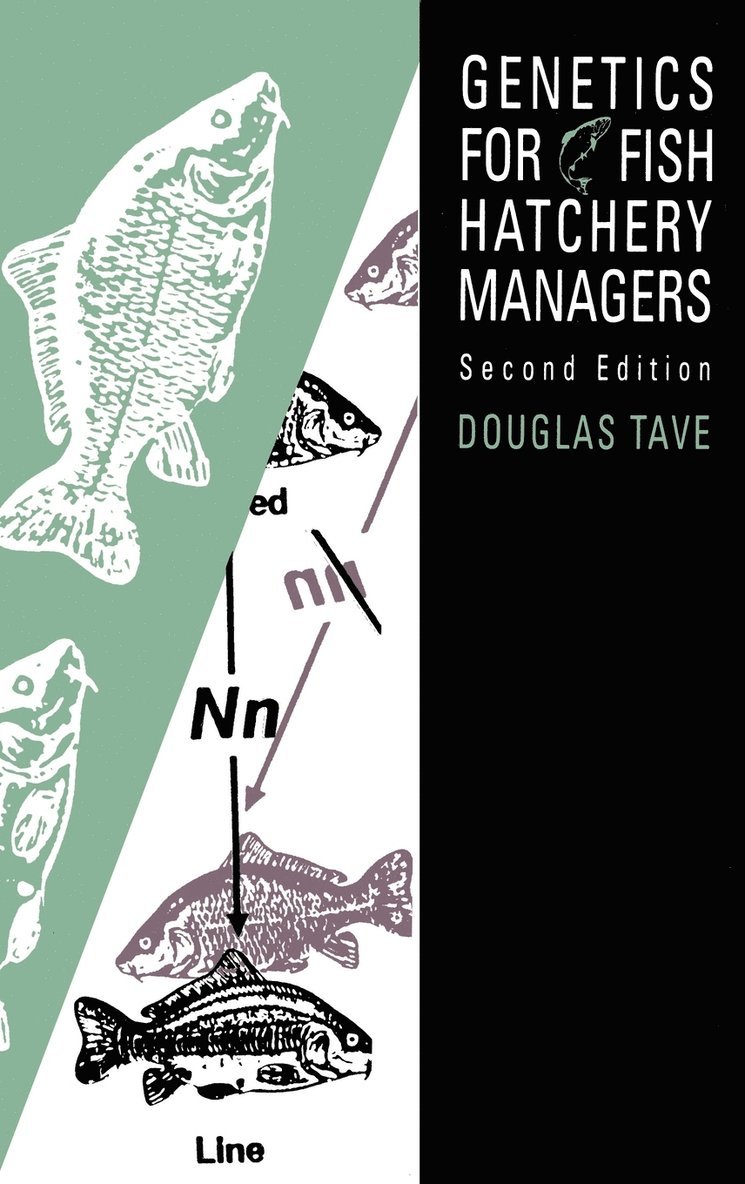
Here is a straightforward primer on the principles and practices of genetics as they relate to fish farming. Hatchery managers, fish farmers, and fish biologists will gain practical insights into the ways fish genetics can be used to better manage fish populations and dramatically improve their productivity. The book first reviews basic genetic principles and the genetics of sex determination. It then focuses on the genetics of qualitative traits, such as body colour, explaining the different types of inheritance, showing how to determine gene frequencies, and profiling selection programs that produce true breeding populations. Also considered are quantitative issues, including weight, selection, hybridization, inbreeding, genetic-environmental interactions, and environmental variance. Readers will also learn the fundamentals of broodstock management, and find detailed coverage of genetic engineering, chromosomal manipulation, and electrophoresis. This book should be of interest to fish farmers; hatchery managers; fish biologists.
1 148 kr
Skickas inom 10-15 vardagar
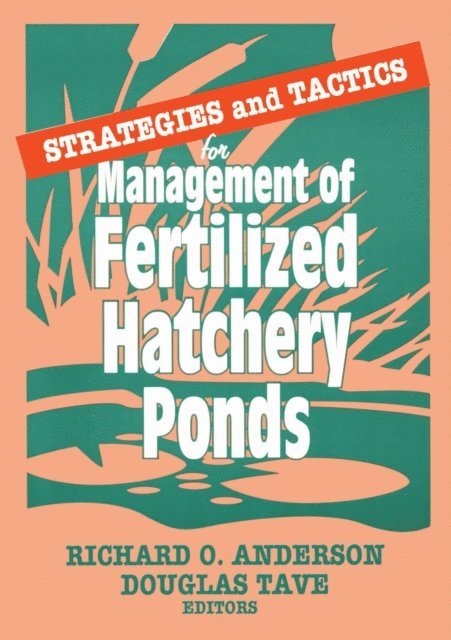
You?ll learn strategies and tactics that can be used to improve production and efficiency in the propagation of fingerlings in fertilized hatchery ponds. This book covers the production of a variety of fish, as well as shrimp, and provides a framework for a systems approach to management decisionmaking. Chapters present information that can be used to improve ecological efficiencies and the economics of production. Strategies and Tactics for Management of Fertilized Hatchery Ponds explains the systems approach to management. In the future, the most effective hatchery managers will base management decisions on information that is site- and pond-specific. This book provides you with needed information on organic and inorganic fertilizer materials; dynamics of water quality; pond filling schedules; biological control of problem organisms; fingerling production of walleye, striped bass, paddlefish, largemouth bass, and others. Readers find solutions to several common problems and learn about the processes needed to solve others.Chapters help answer questions important to the success and effectiveness of management of fertilized hatchery ponds such as:What kinds or sources of nutrients should be purchased?How much time and water are needed before larvae are stocked?What density and age of fish should be stocked?How can a satisfactory quality of larvae and environmental variables be achieved so that fish survive stocking and initiate normal feeding and growth?Has the initial survival and growth been satisfactory, or should the pond be drawn down and restocked?What kind and how much fertilizer should be added to a given pond?This book provides you with information essential for making hatchery ponds as effective and efficient as possible. Whether you?re a fish hatchery manager, student of aquaculture, or agency or academic researcher involved in hatchery management, you will find Strategies and Tactics for Management of Fertilized Hatchery Ponds an indispensable guide for your daily work and studies.
Conservation Aquaculture
An Evolution-based Approach for the Production of Fish for Aquaculture-assisted Fisheries Programs
Inbunden, Engelska, 2025
1 378 kr
Skickas inom 10-15 vardagar
Stocking hatchery-produced fish has been a standard component of fisheries management for over 100 years. This book discusses the production of hatchery fish used in aquaculture-assisted fisheries programs to help stabilize and recover endangered species. For the most part, these programs have been unsuccessful, and a reason why is that the traditional approach to fish culture produces fish that are genetically and behaviorally ill-suited to help recover an imperiled species. The hatchery environment and management used to culture the fish makes them sub-viable in the wild. Even if most of the augmented fish die, survivors that mate with wild fish lower the fitness of the endangered population, making the conservation program counter-productive. Since traditional aquaculture programs have been shown to produce fish that are ill-suited to help recovery, a new way of producing fish is needed. That new way is conservation aquaculture. In conservation aquaculture, fish are raised in naturalized mesocosms that mimic the environment in which the endangered species lives. Management is naturalized, so domestication does not produce genetic changes, and so fish develop a full and effective suite of behaviors that enable them to forage efficiently and detect and avoid predators when stocked.The conservation aquaculture management techniques described in the book can also be used to improve commercial and recreational fish stocking programs.