Ebru Boyar - Böcker
Visar alla böcker från författaren Ebru Boyar. Handla med fri frakt och snabb leverans.
9 produkter
9 produkter
422 kr
Skickas inom 7-10 vardagar
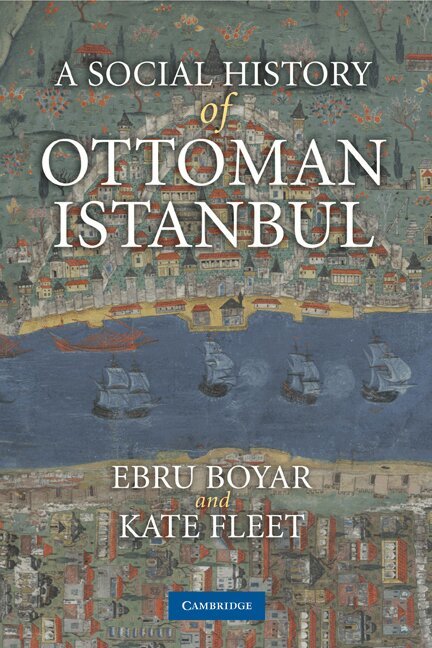
Using a wealth of contemporary Ottoman sources, this book recreates the social history of Istanbul, a huge, cosmopolitan metropolis and imperial capital of the Ottoman Empire. Seat of the Sultan and an opulent international emporium, Istanbul was also a city of violence shaken regularly by natural disasters and by the turmoil of sultanic politics and violent revolt. Its inhabitants, entertained by imperial festivities and cared for by the great pious foundations which touched every aspect of their lives, also amused themselves in the numerous pleasure gardens and the many public baths of the city. While the book is focused on Istanbul, it presents a broad picture of Ottoman society, how it was structured and how it developed and transformed across four centuries. As such, the book offers an exciting alternative to the more traditional histories of the Ottoman Empire.
1 200 kr
Skickas inom 7-10 vardagar
Using a wealth of contemporary Ottoman sources, this book recreates the social history of Istanbul, a huge, cosmopolitan metropolis and imperial capital of the Ottoman Empire. Seat of the Sultan and an opulent international emporium, Istanbul was also a city of violence shaken regularly by natural disasters and by the turmoil of sultanic politics and violent revolt. Its inhabitants, entertained by imperial festivities and cared for by the great pious foundations which touched every aspect of their lives, also amused themselves in the numerous pleasure gardens and the many public baths of the city. While the book is focused on Istanbul, it presents a broad picture of Ottoman society, how it was structured and how it developed and transformed across four centuries. As such, the book offers an exciting alternative to the more traditional histories of the Ottoman Empire.
850 kr
Kommande
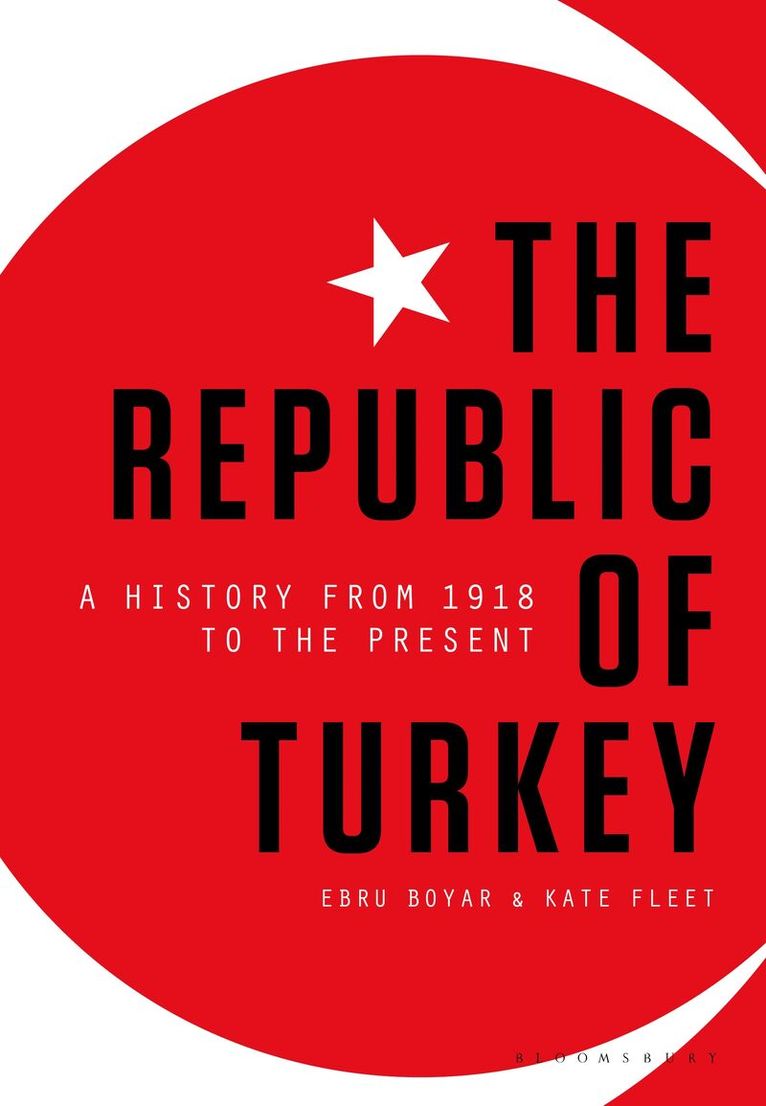
Taking the period from the collapse of the Ottoman Empire and the establishment of the Turkish Republic in 1923 to the present day, this book examines Turkey’s political trajectory, its economic developments and downturns and its positioning in the international arena. Breaking away from the Cold War paradigm and its focus on military coups and international security as well as approaches to Turkey which over emphasise the Ottoman past, this book also engages with cultural and social aspects of the period. Following a clear chronology, the book charts the rise of the Turkish nation-state, Turkey in the Second World War, the beginning of multi-party politics, the political plurality of the 1960s, the upheavals of the 1970s, the neo-liberal politics of the 1980s, the crumbling of the 1990s and the religious politics and presidentialism of the 2000s. Each period is divided into three sections and each chapter is accompanied by boxes inserted into the text which provide more extensive information on one particular aspect, such as cinema, political satire and social media. The book takes readers through the period providing both a clear chronological structure and an understanding of each period both from the perspective of its political and economic development and its cultural and social concerns.
266 kr
Kommande
This book takes readers through the major events and debates in the modern history of the Republic of Turkey. Beginning with the collapse of the Ottoman Empire at the end of WWI and the victory of nationalist forces in 1923, it relays the key turning points, issues and trends in the Republic’s history. It gives readers a strong grounding in the political history as well as historiographical debates including: - the nation building process and nationalisms;- the development of political Islam- the impact on Turkey of the Cold War- decolonisation- the role of the army in politics and the dominance of the coup in historiography- class structure- human rights- civil society - secularism- the Ottoman legacyThe book incorporates the very latest thinking on the study of Turkey into its narrative, covering essential issues hitherto left out of introductory texts which prioritise security such as migration (both internal within Turkey and out of and into Turkey); economic models; Turkey’s geostrategic position; energy resources and policies; the environment; gender: and entertainment culture including sport. Each of the book’s 13 chronological chapters includes a chronology of major events and a further reading and sources section which include Turkish short stories, novels or poems in translation, online open access sources, films and documentaries and text boxes containing, poetry, film posters, newspaper headlines, short biographies, adverts, and information on specific events such as the introduction of TV feature throughout the text to aid learning. Breaking with the Cold War paradigm and its focus on the coups and security as well as approaches to Turkey which over emphasise the Ottoman past, this book offers readers a new assessment of the Republic which reflects the diverse approaches to its history prevalent in current scholarship.
1 888 kr
Skickas inom 10-15 vardagar
The loss of the Balkans was not merely a physical but also a psychological disaster for the Ottoman Empire. In this frank assessment, Ebru Boyar charts the creation of modern Turkish self-perception during the transition period from the late Ottoman Empire to the Turkish Republic. The Balkans played a key role in identity construction during this period; humiliated by defeat, the Ottomans were stung by what they saw as a betrayal and ingratitude of the peoples of the region to whom they had brought peace and order for centuries and whom they had defended at the cost of much Turkish blood. It induced a sense of isolation and encapsulated the destruction of the Ottoman Empire's military machine and sense of self-esteem by the Great Powers. This victim mentality was sustained by late Ottoman history-writing and by the historians of the early Republic, for whom history was an essential tool in the creation of the new Turkish national identity for the new Turkish Republic of the 20th century.
1 888 kr
Skickas inom 5-8 vardagar
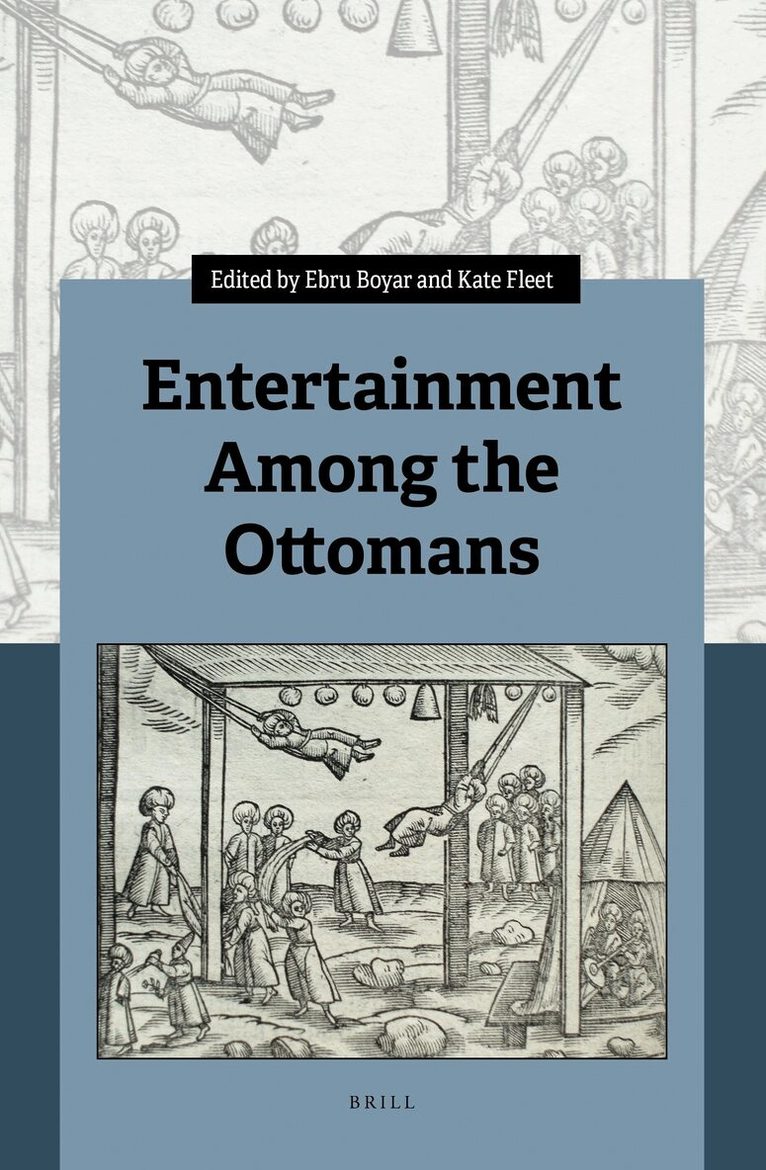
Approaching Ottoman social history through the lens of entertainment, this volume considers the multi-faceted roles of entertainment within society. At its most basic level entertainment could be all about pleasure, leisure and fun. But it also played a role in socialisation, gender divisions, social stratification and the establishment of moral norms, political loyalties and social, ethnic or religious identities. By addressing the ways in which entertainment was employed and enjoyed in Ottoman society, Entertainment Among the Ottomans introduces the reader to a new way of understanding the Ottoman world.Contributors are: Antonis Anastasopoulos, Tülay Artan, Ebru Boyar, Palmira Brummett, Kate Fleet, James Grehan, Svetla Ianeva, Yavuz Köse, William Kynan-Wilson, Milena Methodieva and Yücel Yanıkdağ.
Del 14 - Women and Gender: The Middle East and the Islamic World
Ottoman Women in Public Space
Inbunden, Engelska, 2016
2 427 kr
Skickas inom 5-8 vardagar
Using a wealth of primary sources and covering the entire Ottoman period, Ottoman Women in Public Space challenges the traditional view that sees Ottoman women as a largely silent element of society, restricted to the home and not seen beyond the walls of the house or the public bath. Instead, taking women in a variety of roles, as economic and political actors, prostitutes, flirts and slaves, the book argues that women were active participants in the public space, visible, present and an essential element in the everyday, public life of the empire. Ottoman Women in Public Space thus offers a vibrant and dynamic understanding of Ottoman history.Contributors are: Edith Gülçin Ambros, Ebru Boyar, Palmira Brummett, Kate Fleet and Svetla Ianeva.
1 499 kr
Skickas inom 5-8 vardagar
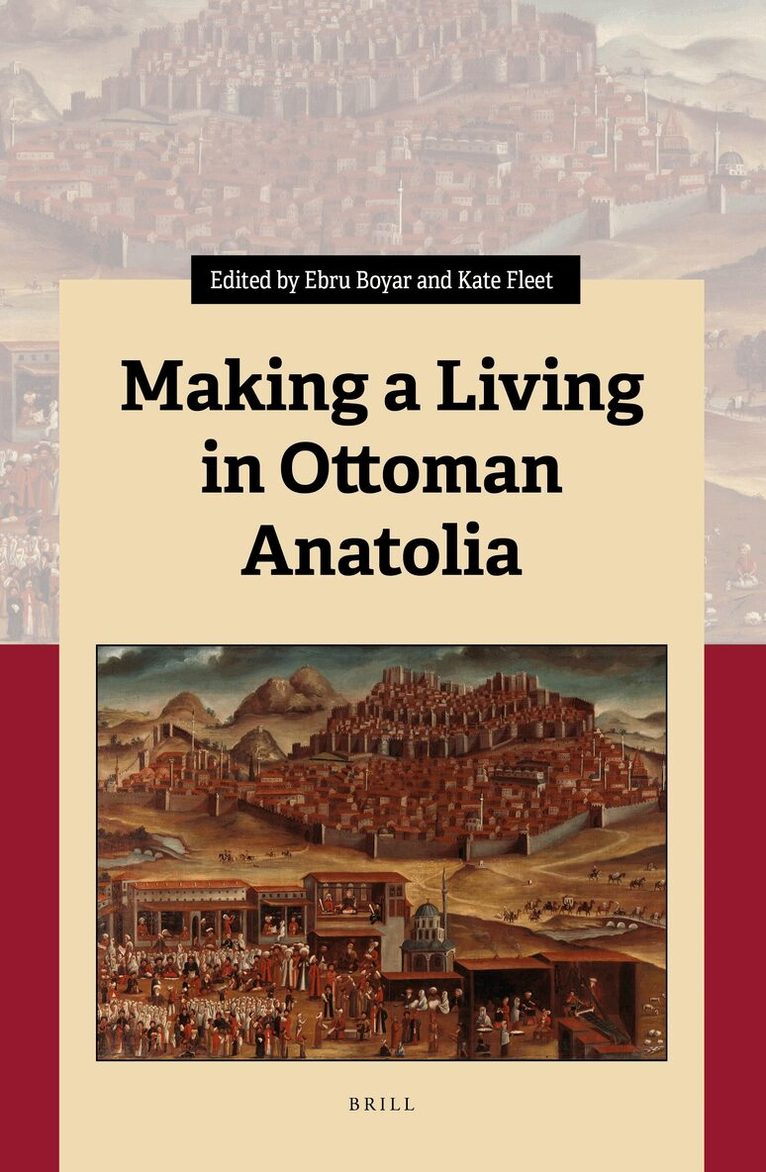
Centred on the socio-economic life of Ottoman Anatolia, this volume examines aspects of production, local and international trade, consumption and the role of the state, both at a local and a central level. Based on a wide array of data and adopting a variety of approaches, chapters range from the macro to the micro, from the overview of Anatolian economic resources to the in-depth examination of the petition language of provincial economic actors. Making a Living in Ottoman Anatolia thus offers the reader an entrée into the rich and varied socio-economic life of a central region of the Ottoman empire.Contributors are Marc Aymes, Ebru Boyar, Metin Coşgel, Suraiya Faroqhi, Kate Fleet, Elena Frangakis-Syrett, Yonca Köksal, Mehmet Öz, Mehmet Polatel and Sadullah Yıldırım.
Borders, Boundaries and Belonging in Post-Ottoman Space in the Interwar Period
Inbunden, Engelska, 2022
1 564 kr
Skickas inom 5-8 vardagar
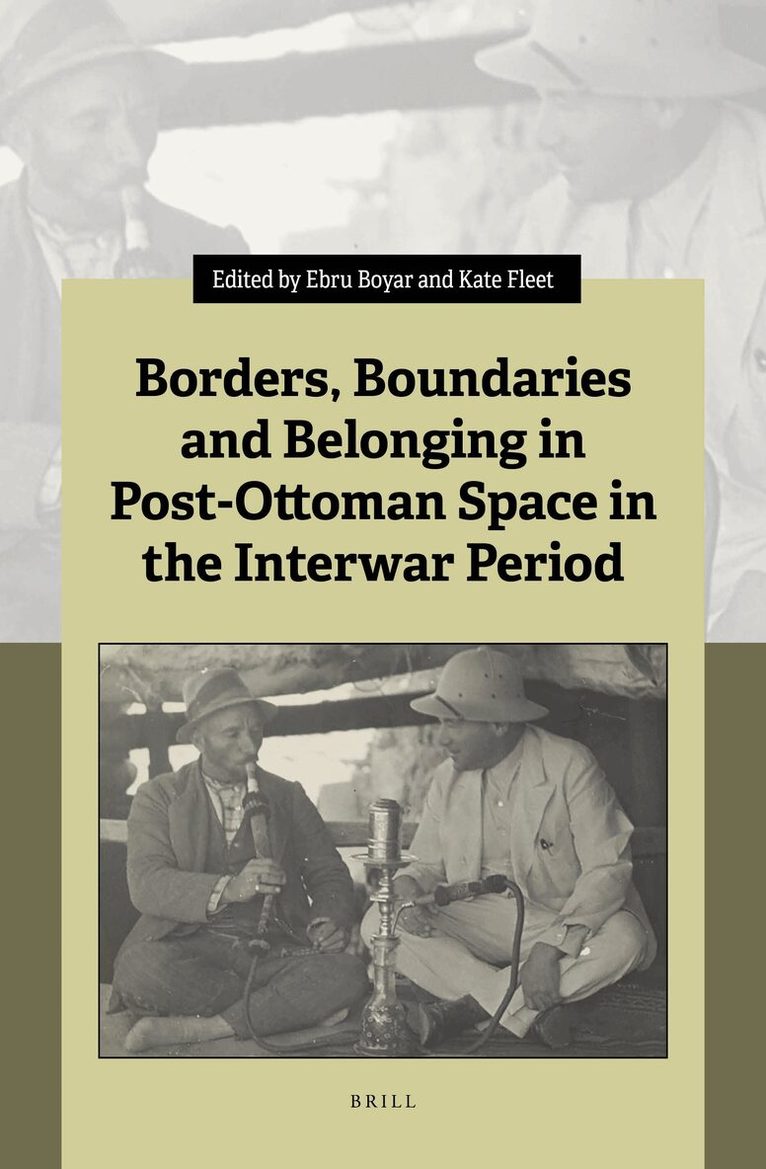
Focusing on new nation states and mandates in post-Ottoman territories, Borders, Boundaries and Belonging in Post-Ottoman Space in the Interwar Period examines how people negotiated, imagined or ignored new state borders and how they conceived of or constructed belonging. Through investigations of border crossing, population transfer, exile and emigration, this book explores the intricacies of survival within and beyond newly imposed state borders, the exploitation of opportunities and the human cost of political partition.Contributors are Toufoul Abou-Hodeib, Leyla Amzi-Erdogdular, Amit Bein, Ebru Boyar, Onur İşçi, Liat Kozma, Brian McLaren, Nikola Minov, Eli Osheroff, Ramazan Hakkı Öztan, Michael Provence, Jordi Tejel and Peter Wien.