Edith Raim – författare
Visar alla böcker från författaren Edith Raim. Handla med fri frakt och snabb leverans.
12 produkter
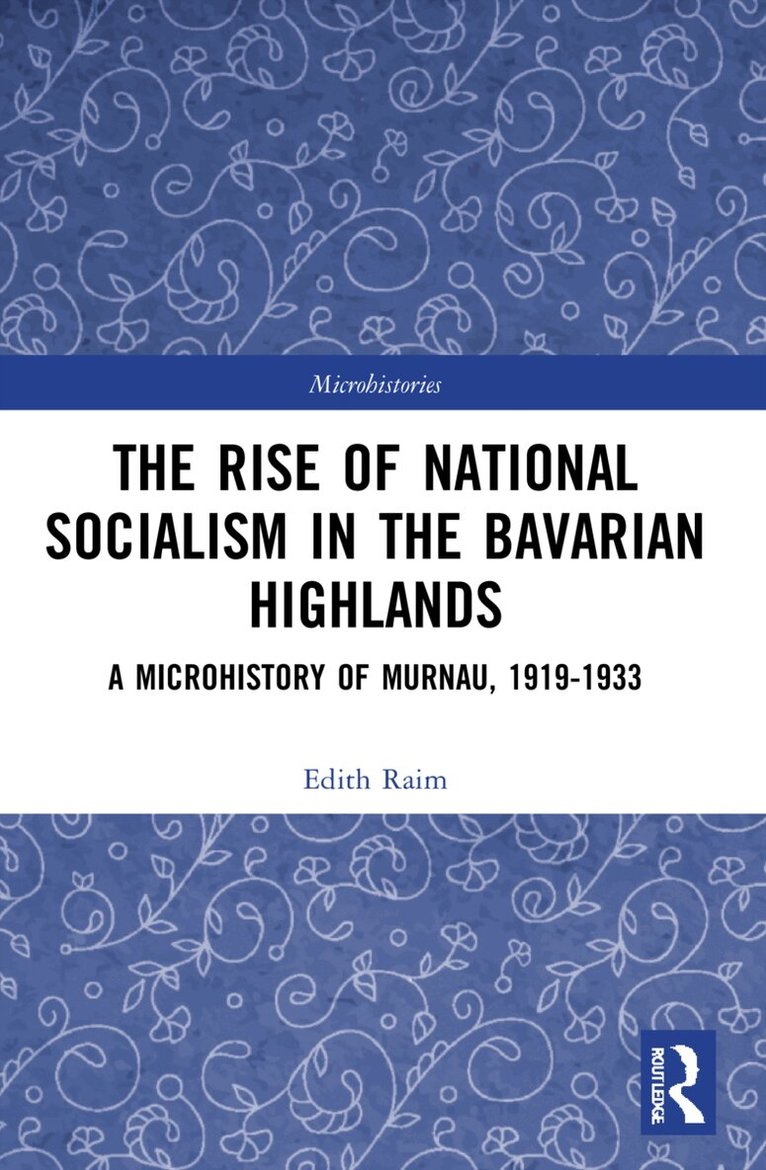
Rise of National Socialism in the Bavarian Highlands
A Microhistory of Murnau, 1919-1933
Av Edith Raim
E-bok, 2021
768 kr
Lägg i varukorg
The Rise of National Socialism in the Bavarian Highlands offers a microhistory of the town of Murnau between 1919 and 1933, a period which witnessed the rise of national socialism in Germany. National socialism had its roots in Bavaria, where the Weimar Republic found it difficult to secure popular …
Rise of National Socialism in the Bavarian Highlands
A Microhistory of Murnau, 1919-1933
Av Edith Raim
E-bok, 2021
760 kr
Lägg i varukorg
The Rise of National Socialism in the Bavarian Highlands offers a microhistory of the town of Murnau between 1919 and 1933, a period which witnessed the rise of national socialism in Germany. National socialism had its roots in Bavaria, where the Weimar Republic found it difficult to secure popular …
Rise of National Socialism in the Bavarian Highlands
A Microhistory of Murnau, 1919-1933
Av Edith Raim
Inbunden, 2021
2578 kr
Lägg i varukorg
The Rise of National Socialism in the Bavarian Highlands offers a microhistory of the town of Murnau between 1919 and 1933, a period which witnessed the rise of national socialism in Germany. National socialism had its roots in Bavaria, where the Weimar Republic found it difficult to secure popular …
Rise of National Socialism in the Bavarian Highlands
A Microhistory of Murnau, 1919-1933
Av Edith Raim
Häftad, 2023
665 kr
Lägg i varukorg
The Rise of National Socialism in the Bavarian Highlands offers a microhistory of the town of Murnau between 1919 and 1933, a period which witnessed the rise of national socialism in Germany. National socialism had its roots in Bavaria, where the Weimar Republic found it difficult to secure popular …
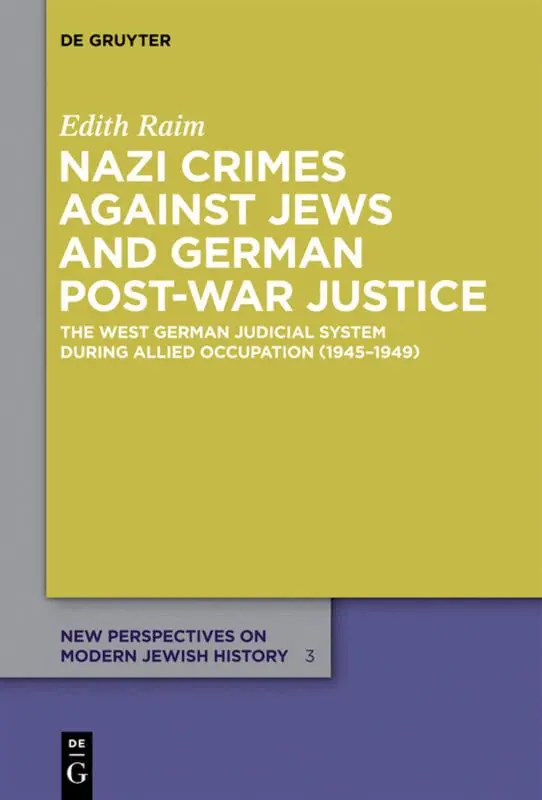
Nazi Crimes against Jews and German Post-War Justice
The West German Judicial System During Allied Occupation (1945–1949)
Av Edith Raim
Inbunden, 2014
2096 kr
Lägg i varukorg
No detailed description available for "Nazi Crimes against Jews and German Post-War Justice".
Nazi Crimes against Jews and German Post-War Justice
The West German Judicial System During Allied Occupation (1945–1949)
Av Edith Raim
E-bok, 2014
2016 kr
Lägg i varukorg
Of all victims of Nazi persecution, German Jews had to suffer the Nazi yoke for the longest time. Throughout the Third Reich, they were exposed to anti-Jewish propaganda, discrimination, anti-Semitic laws and increasingly to outrages and offences by non-Jewish Germans. While the International …
Nazi Crimes against Jews and German Post-War Justice
The West German Judicial System During Allied Occupation (1945–1949)
Av Edith Raim
E-bok, 2014
2061 kr
Lägg i varukorg
Of all victims of Nazi persecution, German Jews had to suffer the Nazi yoke for the longest time. Throughout the Third Reich, they were exposed to anti-Jewish propaganda, discrimination, anti-Semitic laws and increasingly to outrages and offences by non-Jewish Germans. While the International …
Nazi Crimes against Jews and German Post-War Justice
The West German Judicial System During Allied Occupation (1945–1949)
Av Edith Raim
Häftad, 2017
238 kr
Lägg i varukorg
No detailed description available for "Nazi Crimes against Jews and German Post-War Justice".
Der Jüdische Mäzen Und Die Nazis
James Loeb Und Murnau 1919-1933
Av Edith Raim
Inbunden, 2024
725 kr
Lägg i varukorg
Der jüdische Mäzen und die Nazis
James Loeb und Murnau 1919–1933
Av Edith Raim
E-bok, 2024
649 kr
Lägg i varukorg
Die Forschung zur Weimarer Republik konzentriert sich vor allem auf die Städte, insbesondere Berlin; die Forschung zum Stifterwesen insbesondere auf das deutsche Kaiserreich. Das Werk behandelt einen beispiellosen Ausnahmefall jüdischen Mäzenatentums in der Zwischenkriegszeit auf dem Land. Der …
Der jüdische Mäzen und die Nazis
James Loeb und Murnau 1919–1933
Av Edith Raim
E-bok, 2024
629 kr
Lägg i varukorg
Die Forschung zur Weimarer Republik konzentriert sich vor allem auf die Städte, insbesondere Berlin; die Forschung zum Stifterwesen insbesondere auf das deutsche Kaiserreich. Das Werk behandelt einen beispiellosen Ausnahmefall jüdischen Mäzenatentums in der Zwischenkriegszeit auf dem Land. Der …
Justiz Zwischen Diktatur Und Demokratie
Wiederaufbau Und Ahndung Von Ns-Verbrechen in Westdeutschland 1945-1949
Av Edith Raim
Inbunden, 2013
1951 kr
Lägg i varukorg