Edmund Hayes – författare
Visar alla böcker från författaren Edmund Hayes. Handla med fri frakt och snabb leverans.
6 produkter
6 produkter
1 693 kr
Skickas inom 7-10 vardagar
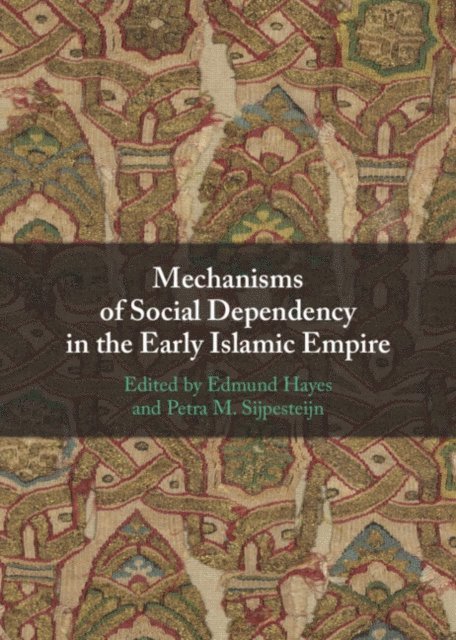
The success of Islamic imperialism in the period from the conquests to the Ayyubid dynasty has traditionally been explained as purely the result of military might. This book, however, adopts a bottom-up approach which puts social relationships and local power dynamics at the centre of the Islamic empire's cohesion. Its chapters draw on sources in diverse languages: not just Arabic, but also Greek, Coptic, Syriac, Hebrew, and Bactrian, showing how different linguistic communities intersected and contributed to a connected yet diverse empire. They highlight how not just literary and historical texts, but also physical documents and archaeological evidence should be incorporated into writing histories of the late antique and early medieval Middle East. Social institutions and relationships explored include oaths; petitions, decrees, and begging letters; and financial frameworks such as debt and taxation. This title is also available as Open Access on Cambridge Core.
Crimes and Punishments;
Or, an Analytical Digest of the Criminal Statute Law of Ireland
Inbunden, Engelska, 2022
524 kr
Tillfälligt slut
Crimes and Punishments;
Or, an Analytical Digest of the Criminal Statute Law of Ireland
Häftad, Engelska, 2022
403 kr
Tillfälligt slut
1 113 kr
Skickas inom 7-10 vardagar
In 874 CE, the eleventh Imam died, and the Imami community splintered. The institutions of the Imamate were maintained by the dead Imam's agents, who asserted they were in contact with a hidden twelfth Imam. This was the beginning of 'Twelver' Shiʿism. Edmund Hayes provides an innovative approach to exploring early Shiʿism, moving beyond doctrinal history to provide an analysis of the socio-political processes leading to the canonisation of the Occultation of the twelfth Imam. Hayes shows how these agents cemented their authority by reproducing the physical signs of the Imamate, including protocols of succession, letters and the alm taxes. Four of these agents were ultimately canonised as "envoys" but traces of earlier conceptions of authority remain embedded in the earliest reports. Hayes dissects the complex and contradictory Occultation narratives to show how, amidst the claims of numerous actors, the institutional positioning of the envoys allowed them to assert a quasi-Imamic authority in the absence of an Imam.
412 kr
Skickas inom 7-10 vardagar
In 874 CE, the eleventh Imam died, and the Imami community splintered. The institutions of the Imamate were maintained by the dead Imam's agents, who asserted they were in contact with a hidden twelfth Imam. This was the beginning of 'Twelver' Shiʿism. Edmund Hayes provides an innovative approach to exploring early Shiʿism, moving beyond doctrinal history to provide an analysis of the socio-political processes leading to the canonisation of the Occultation of the twelfth Imam. Hayes shows how these agents cemented their authority by reproducing the physical signs of the Imamate, including protocols of succession, letters and the alm taxes. Four of these agents were ultimately canonised as "envoys" but traces of earlier conceptions of authority remain embedded in the earliest reports. Hayes dissects the complex and contradictory Occultation narratives to show how, amidst the claims of numerous actors, the institutional positioning of the envoys allowed them to assert a quasi-Imamic authority in the absence of an Imam.
Water Management in the Premodern Middle East
Forces from "Above" and "Below"
Inbunden, Engelska, 2026
1 494 kr
Kommande
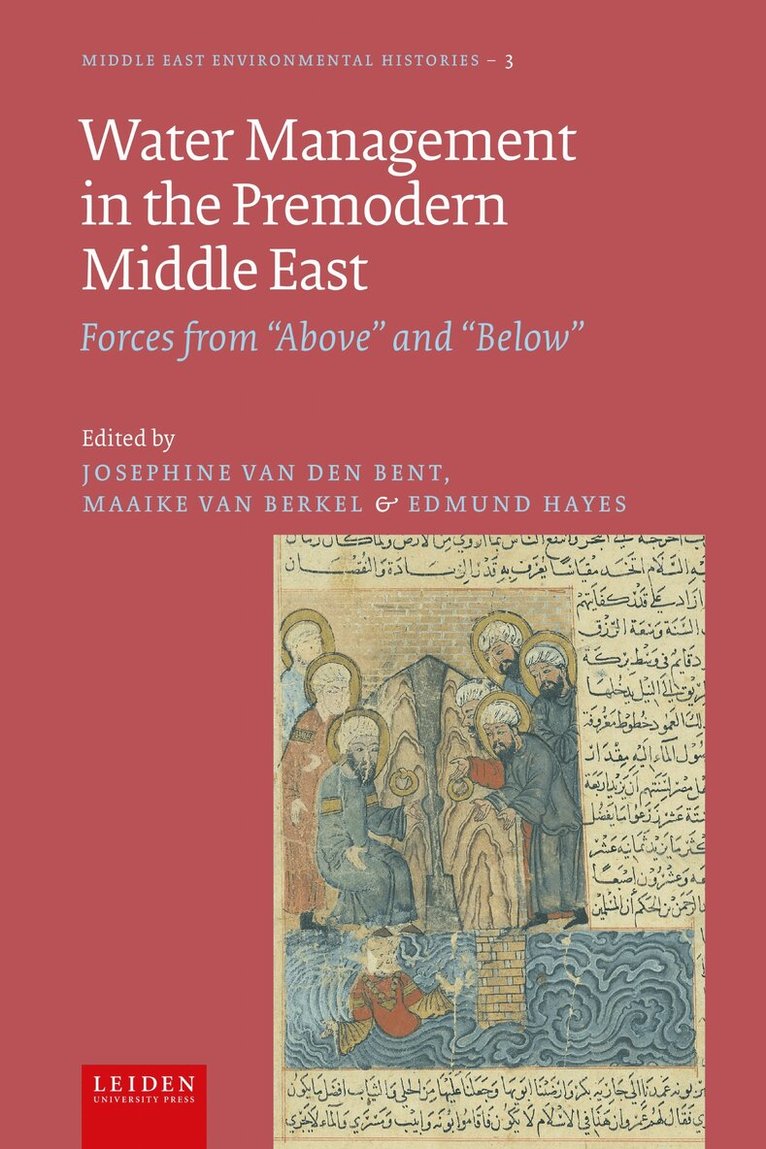
This volume analyses water management in pre-1500 Middle Eastern cities. Managing access to fresh water for large numbers of people has always been great challenge. Nevertheless, premodern societies of the Middle East and North Africa were rather successful in providing water to city dwellers, pilgrims and travellers in and around large and highly populated cities such as Cairo, Damascus, Baghdad, Samarra, Basra, and Medina. The contributions to this volume delve into the question of how this was accomplished by examining the intersection between social institutions and the physical reality of water use. These studies analyse the identity and interactions between many different players and stakeholders in water management in cities. Who was responsible for the building, management and maintenance of different elements in premodern waters systems? Who had access to that water? The volume focuses on the sometimes fraught relationships between forces from "above"—central authorities, formal institutions and elites—and forces from "below"— more informal practices within local communities. This volume maps a wide variety of physical infrastructures related to water management to be found in densely populated or travelled areas. At the same time, it explores the multitude of social institutions which mediated the distribution of water to medieval urban and rural populaces. Thus, water management provides a microcosm for the wider mechanisms and evolutions of premodern urban governance and its interactions with rural hinterlands. By bringing together a wide range of scholars working on different aspects of these issues, in different contexts and at different times, this volume makes an important new contribution to our understanding of how water was distributed, regulated, and used by urban populations in premodern societies.