Edward A. Hinck – författare
Visar alla böcker från författaren Edward A. Hinck. Handla med fri frakt och snabb leverans.
4 produkter
4 produkter
Inbunden, Engelska, 1993
1 041 kr
Skickas inom 10-15 vardagar
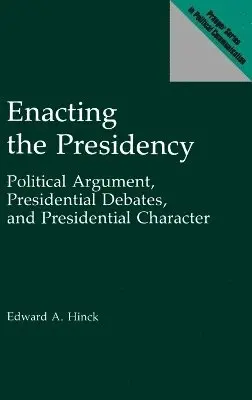
Presidential debates are forums designed to present and select candidates for national office: Their purpose is to provide opportunities for candidates to win over undecided voters, to reinforce voters who have already made a decision about who to vote for, and to change the minds of those who are willing to reconsider their initial judgments concerning which candidate seems more fit to serve as president. Edward Hinck argues that debates are not primarily about presidential policy-making. Rather, they are opportunities to demonstrate a candidate's ability to lead by summarizing, in a specific test of presidential character, the larger conflict between the candidates. Hinck develops an in-depth rhetorical analysis of the presidential and vice presidential debates of 1960 to 1988.The analysis of each series of debates begins with an introduction that focuses discussion on the most important aspects of political image for each of the candidates, then develops a case for understanding the ways in which the debates revealed the rhetorical strengths and weaknesses of each candidate's performance. Hinck's neo-Aristotelian approach asserts that debates serve both deliberative and epideictic ends because they provide important information about the candidates that cannot be disclosed except in the dramatic confrontation of the debate, and because this dramatic confrontation enacts the democratic values of rational dialogue. Enacting The Presidency is recommended to scholars in communication and political science.
E-bok
Engelska, 20181 747 kr
Läs direkt efter köp
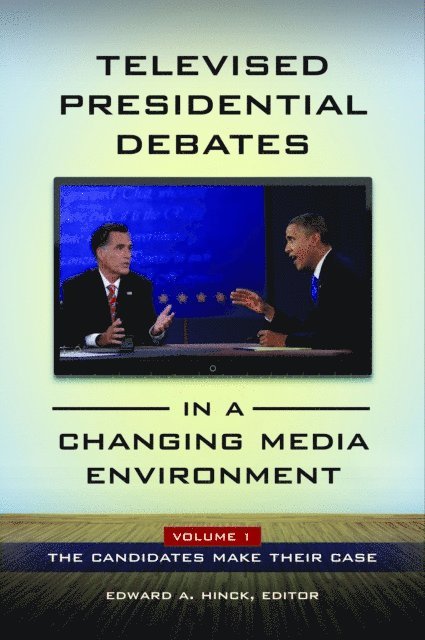
This two-volume set examines recent presidential and vice presidential debates, addresses how citizens make sense of these events in new media, and considers whether the evolution of these forms of consumption is healthy for future presidential campaigns—and for democracy.The presidential debates of 2016 underscored how television highlights candidates' and campaigns' messages, which provide fodder for citizens' widespread use of new media to "talk back" to campaigns and other citizens. Social media will continue to affect the way that campaign events like presidential debates are consumed by audiences and how they shape campaign outcomes. This two-volume study is one of the first to examine the relationship between debates as televised events and events consumed by citizens through social media. It also assesses the town hall debate format from 1992 to 2016, uses the lens of civil dialogue to consider how citizens watch the debates, and considers the growing impact of new media commentary on candidate images that emerge in presidential and vice presidential debates.Televised Presidential Debates in a Changing Media Environment features contributions from leading political communication scholars that illuminate how presidential debates are transforming from events that are privately contemplated by citizens, to events that are increasingly viewed and discussed by citizens through social media. The first volume focuses on traditional studies of debates as televised campaign events, and the second volume examines the changing audiences for debates as they become consumed and discussed by viewers outside the traditional channels of newspapers, cable news channels, and campaign messaging. Readers will contemplate questions of new forms, problems, and possibilities of political engagement that are resulting from citizens producing and consuming political messages in new media.
E-bok
Engelska, 20181 786 kr
Läs direkt efter köp
This two-volume set examines recent presidential and vice presidential debates, addresses how citizens make sense of these events in new media, and considers whether the evolution of these forms of consumption is healthy for future presidential campaigns—and for democracy.The presidential debates of 2016 underscored how television highlights candidates' and campaigns' messages, which provide fodder for citizens' widespread use of new media to "talk back" to campaigns and other citizens. Social media will continue to affect the way that campaign events like presidential debates are consumed by audiences and how they shape campaign outcomes. This two-volume study is one of the first to examine the relationship between debates as televised events and events consumed by citizens through social media. It also assesses the town hall debate format from 1992 to 2016, uses the lens of civil dialogue to consider how citizens watch the debates, and considers the growing impact of new media commentary on candidate images that emerge in presidential and vice presidential debates.Televised Presidential Debates in a Changing Media Environment features contributions from leading political communication scholars that illuminate how presidential debates are transforming from events that are privately contemplated by citizens, to events that are increasingly viewed and discussed by citizens through social media. The first volume focuses on traditional studies of debates as televised campaign events, and the second volume examines the changing audiences for debates as they become consumed and discussed by viewers outside the traditional channels of newspapers, cable news channels, and campaign messaging. Readers will contemplate questions of new forms, problems, and possibilities of political engagement that are resulting from citizens producing and consuming political messages in new media.
Inbunden, Engelska, 2007
772 kr
Tillfälligt slut
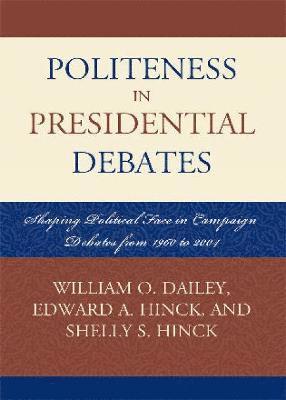
Politeness and Political Debate analyzes politeness theory and political debate, categorically evaluating politeness strategies in presidential and vice presidential debates from 1960 to 2004. The book also features an introduction to politeness theory and how to apply it to debates. To remedy the lack of information on relational dimensions of debates, politeness theory offers a compelling way of explaining audience assessments of leadership and advocacy skills. The authors summarize the results for each candidate's politeness strategies, relate them to the historical context of the campaign in which they take place, and consider them in relation to other studies conducted on the campaign debates. Debates fall into one of three sections: debating policies; attacking policies and the opponent; and directly attacking the opponent. This well-researched book ends with implications for debate planners, politicians, citizens, and scholars, including an insightful chapter on the electorate's ideal debate.