Edward E. "Doc" Smith – författare
19 kr
Läs direkt efter köp
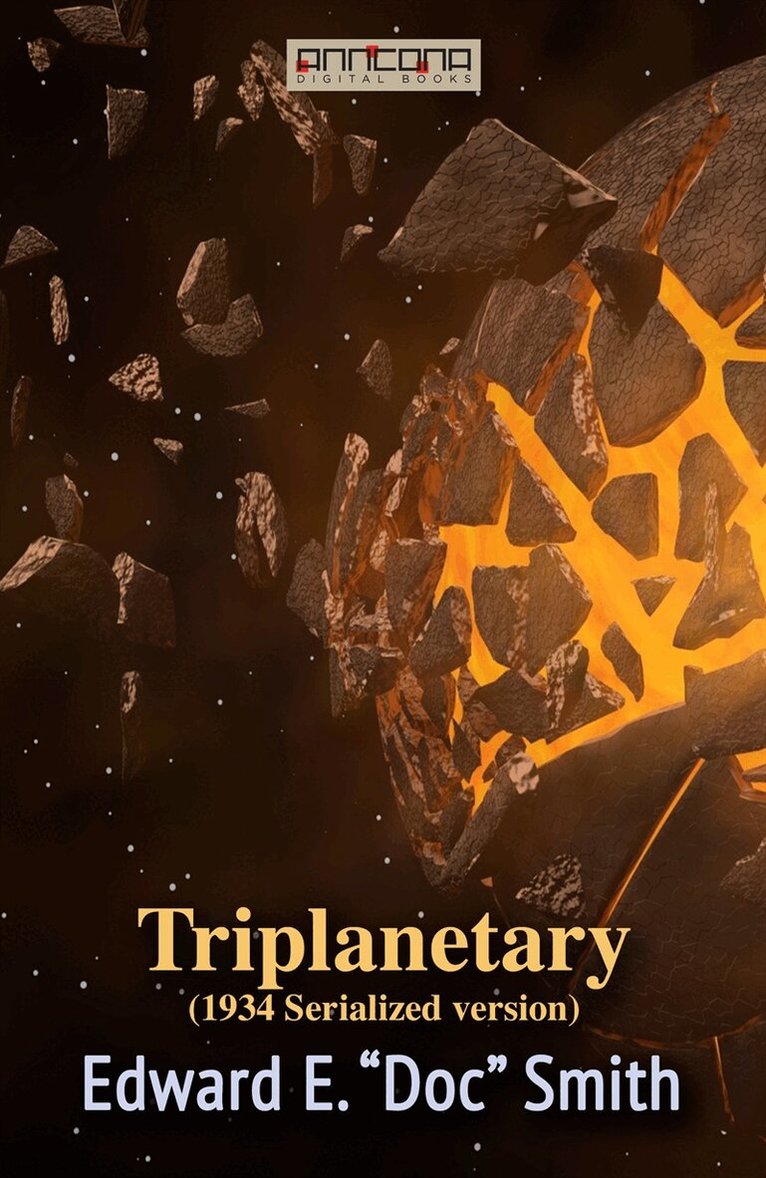
Triplanetary (1934, SERIALIZED version) is a science fiction novel and space opera by American author E. E. ”Doc” Smith. It was first serialized in the magazine Amazing Stories in 1934.
The novel covers several episodes in an eons-long human breeding project by the super-intelligences of the Arisians. This alien race is breeding two genetic lines to become the ultimate weapon in Arisia's cosmic war with their arch-enemies, the Eddorians.
“Doc” E.E. Smith pretty much invented the space opera genre, and Triplanetary is a good and well-known example. Physics, time, and politics never stand in the way of a plot that gallops ahead without letup. Having earned a PhD in chemical engineering, it’s understandable that the heroes of Smith’s story are all scientists.
He didn’t want to be constrained by the limits of known science, however, so in his hands the electromagnetic spectrum becomes a raw material to be molded into ever-more amazing and lethal forms, and the speed of light is no bar to traveling through the interstellar void.
Enjoy this story of yesteryear, set in tomorrow, where real women ignite love at a glance, real men achieve in days what governments manage in decades, and aliens are an ever-present threat to Life-As-We-Know-It!
After the original four novels of the Lensman series were published, Smith expanded and reworked Triplanetary into the first of two prequels for the series.
Triplanetary was first serialized in Amazing Stories in 1934. After the Lensman series became popular, Smith took his Triplanetary story and turned it into the first of the Lensman series, using it as a prequel to give the back story for the protaganists in the Lensman series. He added 6 new chapters, doubling it in size and it's really a different book from the serialized novel, being published 14 years after the first. The expanded Triplanetary was published in book form in 1948.
The second prequel, First Lensman, was a new original novel published in 1950.
This is the 1934 serialized version from Amazing Stories January, February, March and April 1934.
Edward Elmer Smith (also E. E. Smith or E. E. "Doc" Smith; 1890-1965) was an American food engineer (specializing in doughnut and pastry mixes) and an early science-fiction author, best known for the Lensman and Skylark series. Smith's novels are generally considered to be classic space operas, and he is sometimes called the first of the three "novas" of 20th-century science fiction (with Stanley G. Weinbaum and Robert A. Heinlein as the second and third novas).
69 kr
Lyssna direkt efter köp
Triplanetary (1934, SERIALIZED version) is a science fiction novel and space opera by American author E. E. ”Doc” Smith. It was first serialized in the magazine Amazing Stories in 1934.
The novel covers several episodes in an eons-long human breeding project by the super-intelligences of the Arisians. This alien race is breeding two genetic lines to become the ultimate weapon in Arisia's cosmic war with their arch-enemies, the Eddorians.
“Doc” E.E. Smith pretty much invented the space opera genre, and Triplanetary is a good and well-known example. Physics, time, and politics never stand in the way of a plot that gallops ahead without letup. Having earned a PhD in chemical engineering, it’s understandable that the heroes of Smith’s story are all scientists.
He didn’t want to be constrained by the limits of known science, however, so in his hands the electromagnetic spectrum becomes a raw material to be molded into ever-more amazing and lethal forms, and the speed of light is no bar to traveling through the interstellar void.
Enjoy this story of yesteryear, set in tomorrow, where real women ignite love at a glance, real men achieve in days what governments manage in decades, and aliens are an ever-present threat to Life-As-We-Know-It!
After the original four novels of the Lensman series were published, Smith expanded and reworked Triplanetary into the first of two prequels for the series.
Triplanetary was first serialized in Amazing Stories in 1934. After the Lensman series became popular, Smith took his Triplanetary story and turned it into the first of the Lensman series, using it as a prequel to give the back story for the protaganists in the Lensman series. He added 6 new chapters, doubling it in size and it's really a different book from the serialized novel, being published 14 years after the first. The expanded Triplanetary was published in book form in 1948.
The second prequel, First Lensman, was a new original novel published in 1950.
This is the 1934 serialized version from Amazing Stories January, February, March and April 1934.Total Running Time (TRT): 6 hours, 21 min. Reading by Mark F. Smith.
Edward Elmer Smith (also E. E. Smith or E. E. "Doc" Smith; 1890-1965) was an American food engineer (specializing in doughnut and pastry mixes) and an early science-fiction author, best known for the Lensman and Skylark series. Smith's novels are generally considered to be classic space operas, and he is sometimes called the first of the three "novas" of 20th-century science fiction (with Stanley G. Weinbaum and Robert A. Heinlein as the second and third novas).
19 kr
Läs direkt efter köp
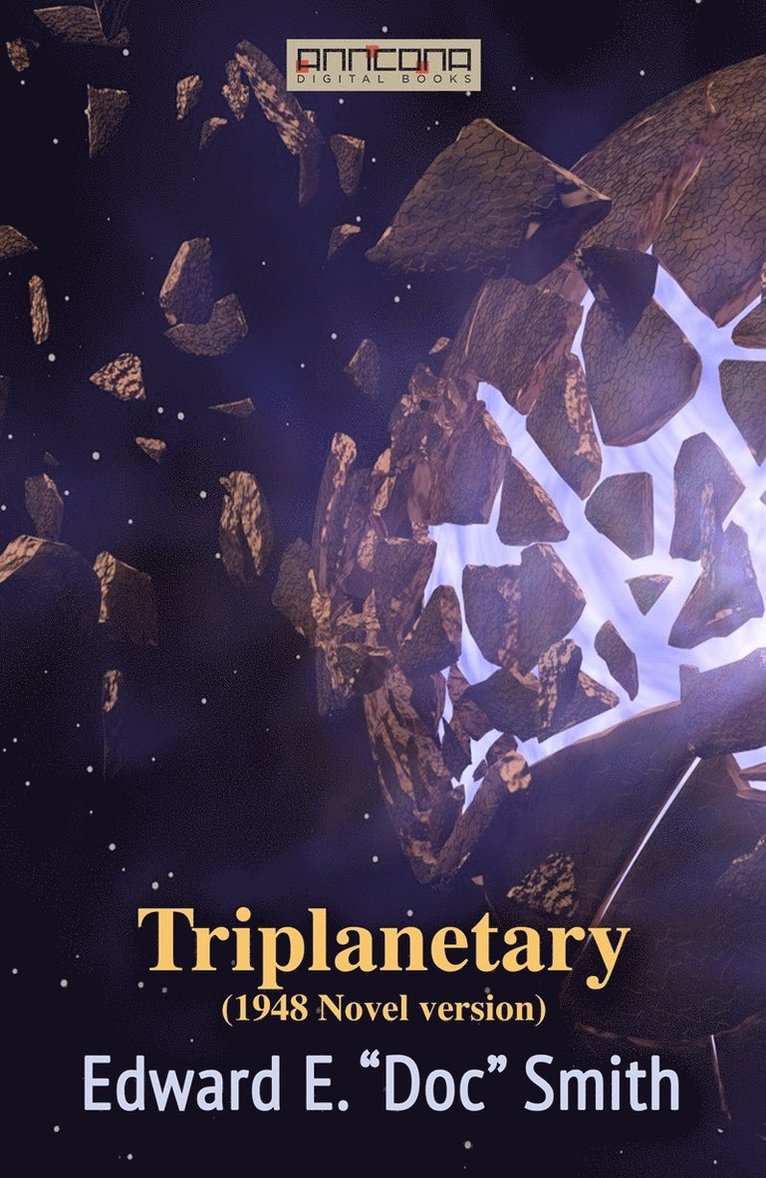
Triplanetary (1948 NOVEL version) is a science fiction novel and space opera by American author E. E. ”Doc” Smith. It was first serialized in the magazine Amazing Stories in 1934.
The novel covers several episodes in an eons-long human breeding project by the super-intelligences of the Arisians. This alien race is breeding two genetic lines to become the ultimate weapon in Arisia's cosmic war with their arch-enemies, the Eddorians.
“Doc” E.E. Smith pretty much invented the space opera genre, and Triplanetary is a good and well-known example. Physics, time, and politics never stand in the way of a plot that gallops ahead without letup. Having earned a PhD in chemical engineering, it’s understandable that the heroes of Smith’s story are all scientists.
He didn’t want to be constrained by the limits of known science, however, so in his hands the electromagnetic spectrum becomes a raw material to be molded into ever-more amazing and lethal forms, and the speed of light is no bar to traveling through the interstellar void.
Enjoy this story of yesteryear, set in tomorrow, where real women ignite love at a glance, real men achieve in days what governments manage in decades, and aliens are an ever-present threat to Life-As-We-Know-It!
Triplanetary was first serialized in Amazing Stories in 1934. After the Lensman series became popular, Smith took his Triplanetary story and turned it into the first of the Lensman series, using it as a prequel to give the back story for the protaganists in the Lensmen series. He added 6 new chapters, doubling it in size and it's really a different book from the serialized novel, being published 14 years after the first. The expanded Triplanetary was published in book form in 1948.
The second prequel, First Lensman, was a new original novel published in 1950.
This is the 1948 expanded and reworked novel edition.
Edward Elmer Smith (also E. E. Smith or E. E. "Doc" Smith; 1890-1965) was an American food engineer (specializing in doughnut and pastry mixes) and an early science-fiction author, best known for the Lensman and Skylark series. Smith's novels are generally considered to be classic space operas, and he is sometimes called the first of the three "novas" of 20th-century science fiction (with Stanley G. Weinbaum and Robert A. Heinlein as the second and third novas).
69 kr
Lyssna direkt efter köp
Triplanetary (NOVEL version) is a science fiction novel and space opera by American author E. E. ”Doc” Smith. It was first serialized in the magazine Amazing Stories in 1934.
The novel covers several episodes in an eons-long human breeding project by the super-intelligences of the Arisians. This alien race is breeding two genetic lines to become the ultimate weapon in Arisia's cosmic war with their arch-enemies, the Eddorians.
“Doc” E.E. Smith pretty much invented the space opera genre, and Triplanetary is a good and well-known example. Physics, time, and politics never stand in the way of a plot that gallops ahead without letup. Having earned a PhD in chemical engineering, it’s understandable that the heroes of Smith’s story are all scientists.
He didn’t want to be constrained by the limits of known science, however, so in his hands the electromagnetic spectrum becomes a raw material to be molded into ever-more amazing and lethal forms, and the speed of light is no bar to traveling through the interstellar void.
Enjoy this story of yesteryear, set in tomorrow, where real women ignite love at a glance, real men achieve in days what governments manage in decades, and aliens are an ever-present threat to Life-As-We-Know-It!
Triplanetary was first serialized in Amazing Stories in 1934. After the Lensman series became popular, Smith took his Triplanetary story and turned it into the first of the Lensman series, using it as a prequel to give the back story for the protaganists in the Lensmen series. He added 6 new chapters, doubling it in size and it's really a different book from the serialized novel, being published 14 years after the first. The expanded Triplanetary was published in book form in 1948.
The second prequel, First Lensman, was a new original novel published in 1950.
This is the 1948 expanded and reworked edition.
Total Running Time (TRT): 10 hours, 31 min.
Edward Elmer Smith (also E. E. Smith or E. E. "Doc" Smith; 1890-1965) was an American food engineer (specializing in doughnut and pastry mixes) and an early science-fiction author, best known for the Lensman and Skylark series. Smith's novels are generally considered to be classic space operas, and he is sometimes called the first of the three "novas" of 20th-century science fiction (with Stanley G. Weinbaum and Robert A. Heinlein as the second and third novas).
19 kr
Läs direkt efter köp
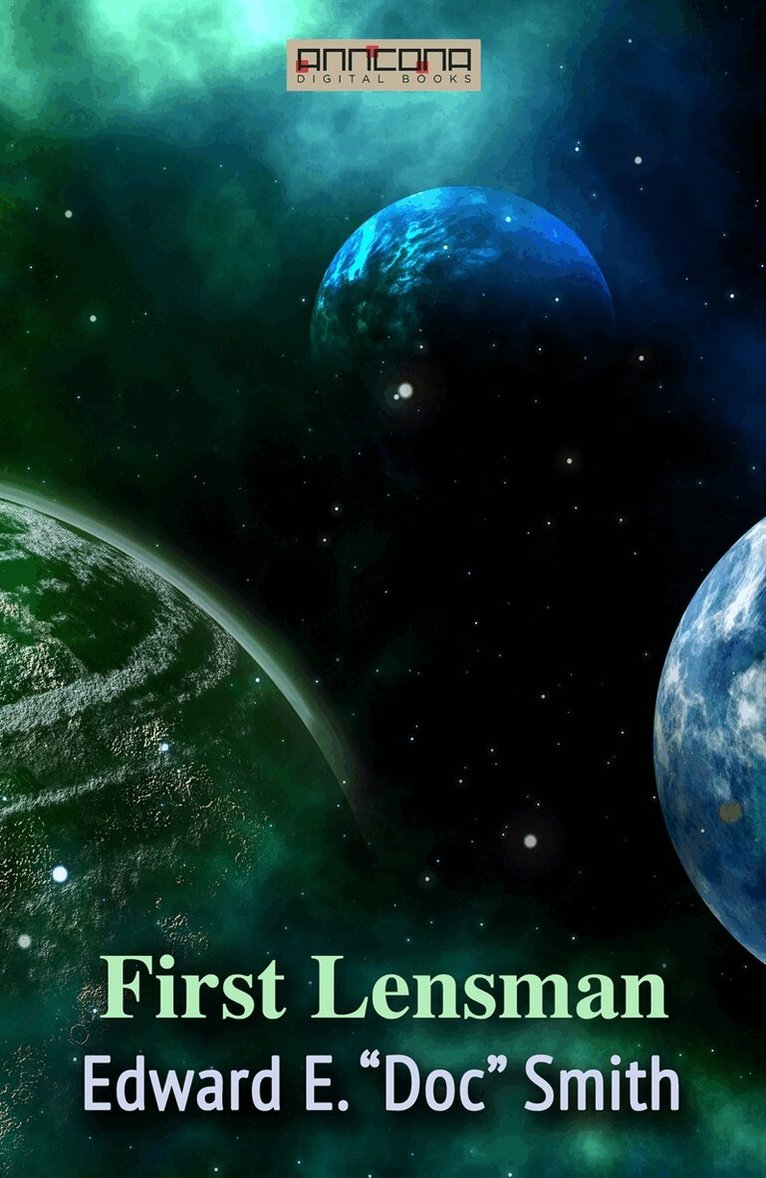
First Lensman is a science fiction novel and space opera by American author E. E. ”Doc” Smith. It was first published in 1950.
First Lensman is the sequel to Triplanetary, and the second book of E.E. "Doc" Smith's classic Lensman series.
It was The Secret Planet. No human had ever landed on the hidden planet of Arisia. A mysterious space barrier turned back both men and ships.
Then the word came to Earth, "Go to Arisia!", Virgil Samms of the Galactic Patrol went--and came back with the Lens, the strange device that gave its wearer powers no man had ever possessed before.
Samms knew the price of that power would be high. But even he had no idea of the ultimate cost, and the weird destiny waiting for the First Lensman.
Although it is the second novel in the Lensman series, it was the sixth written. The novel chronicles the founding of the Galactic Patrol by Virgil Samms, the first sentient being in our cosmos to wear the "Lens", a unique badge of authority which is actually a form of "pseudo-life" that grants telepathic powers to the defenders of Civilization.
Edward Elmer Smith (also E. E. Smith or E. E. "Doc" Smith; 1890-1965) was an American food engineer (specializing in doughnut and pastry mixes) and an early science-fiction author, best known for the Lensman and Skylark series. Smith's novels are generally considered to be classic space operas, and he is sometimes called the first of the three "novas" of 20th-century science fiction (with Stanley G. Weinbaum and Robert A. Heinlein as the second and third novas).
69 kr
Lyssna direkt efter köp
First Lensman is a science fiction novel and space opera by American author E. E. ”Doc” Smith. It was first published in 1950.
First Lensman is the sequel to Triplanetary, and the second book of E.E. "Doc" Smith's classic Lensman series.
It was The Secret Planet. No human had ever landed on the hidden planet of Arisia. A mysterious space barrier turned back both men and ships.
Then the word came to Earth, "Go to Arisia!", Virgil Samms of the Galactic Patrol went--and came back with the Lens, the strange device that gave its wearer powers no man had ever possessed before.
Samms knew the price of that power would be high. But even he had no idea of the ultimate cost, and the weird destiny waiting for the First Lensman.
Although it is the second novel in the Lensman series, it was the sixth written. The novel chronicles the founding of the Galactic Patrol by Virgil Samms, the first sentient being in our cosmos to wear the "Lens", a unique badge of authority which is actually a form of "pseudo-life" that grants telepathic powers to the defenders of Civilization.
Total Running Time (TRT): 11 hours, 7 min. Reading by Mark Nelson.
Edward Elmer Smith (also E. E. Smith or E. E. "Doc" Smith; 1890-1965) was an American food engineer (specializing in doughnut and pastry mixes) and an early science-fiction author, best known for the Lensman and Skylark series. Smith's novels are generally considered to be classic space operas, and he is sometimes called the first of the three "novas" of 20th-century science fiction (with Stanley G. Weinbaum and Robert A. Heinlein as the second and third novas).
19 kr
Läs direkt efter köp
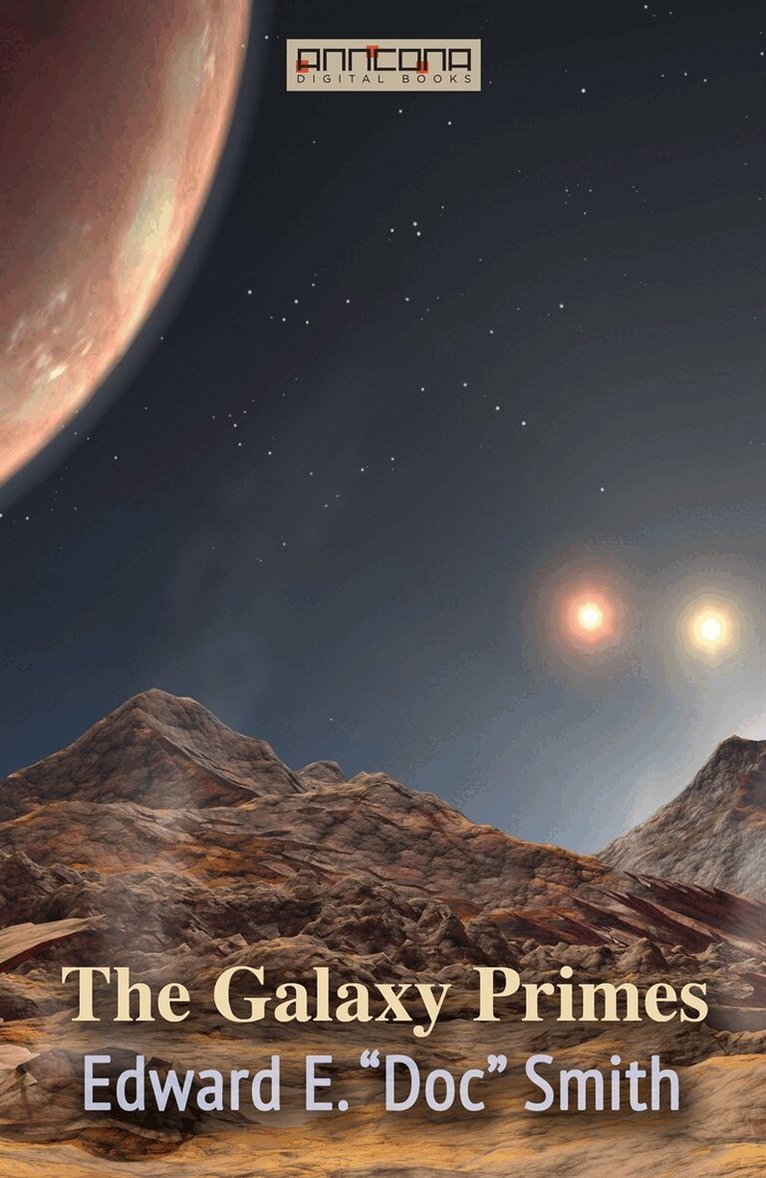
The Galaxy Primes is a science fiction novel and space opera by American author E. E. ”Doc” Smith. It was first published in 1959.
They were four of the greatest minds in the Universe: Two men, two women, lost in an experimental spaceship billions of parsecs from home.
And as they mentally charted the Cosmos to find their way back to earth, their own loves and hates were as startling as the worlds they encountered.
The Galaxy Primes was first serialized in Amazing Stories and published in March, April and May 1959.
Edward Elmer Smith (also E. E. Smith or E. E. "Doc" Smith; 1890-1965) was an American food engineer (specializing in doughnut and pastry mixes) and an early science-fiction author, best known for the Lensman and Skylark series. Smith's novels are generally considered to be classic space operas, and he is sometimes called the first of the three "novas" of 20th-century science fiction (with Stanley G. Weinbaum and Robert A. Heinlein as the second and third novas).
69 kr
Lyssna direkt efter köp
The Galaxy Primes is a science fiction novel and space opera by American author E. E. ”Doc” Smith. It was first published in 1959.
They were four of the greatest minds in the Universe: Two men, two women, lost in an experimental spaceship billions of parsecs from home.
And as they mentally charted the Cosmos to find their way back to earth, their own loves and hates were as startling as the worlds they encountered.
The Galaxy Primes was first seriliazed in Amazing Stories and published in March, April and May 1959.
Total Running Time (TRT): 7 hours, 40 min. Reading by Mark Nelson.
Edward Elmer Smith (also E. E. Smith or E. E. "Doc" Smith; 1890-1965) was an American food engineer (specializing in doughnut and pastry mixes) and an early science-fiction author, best known for the Lensman and Skylark series. Smith's novels are generally considered to be classic space operas, and he is sometimes called the first of the three "novas" of 20th-century science fiction (with Stanley G. Weinbaum and Robert A. Heinlein as the second and third novas).
19 kr
Läs direkt efter köp
Spacehounds of IPC is a science fiction novel and space opera by American author E. E. ”Doc” Smith. It was first published in 1931.
When the Inter-Planetary Corporation's (IPC) crack liner “IPV Arcturus” took off on a routine flight to Mars, it turned out to be the beginning of a unexpected and long voyage.
There had been too many reports of errors in ship's flight positions from the Check Stations and brilliant physicist Dr. Percival (“Steve”) Stevens is aboard the Arcturus on a fact-finding mission to find out what's really happening, and hopefully save the honor of the brave pilots of the space-liner Arcturus from the desk-jockeys' in the Check Stations implications of imprecision - the nastiest insult you could cast at a ships pilot.
He and the pilots are right, it was the Check Stations that were out of position, not the ships. But that's cold consolation because before the Arcturus reaches Mars it's attacked by a small, mysterious, globe shaped spaceship.
Earlier "Doc" Smith had written the first great novels of interstellar exploration, the Skylark series, and later he created another sweeping multi-volume series about the Galactic Patrol in the Lensman series.
But this story, Spacehounds of IPC, stands alone. Although it has many similarities to the Lensmen series, the technology and the lifeforms in the story cannot be reconciled with the universe of the Lensmen. The story was the first to use the term "tractor beam", a name and concept that has been adopted by many subsequent literary works of fiction and other media until the present day. The novel was originally serialized in the August, September and October issues of the magazine Amazing Stories in 1931.
Edward Elmer Smith (also E. E. Smith or E. E. "Doc" Smith; 1890-1965) was an American food engineer (specializing in doughnut and pastry mixes) and an early science-fiction author, best known for the Lensman and Skylark series. Smith's novels are generally considered to be classic space operas, and he is sometimes called the first of the three "novas" of 20th-century science fiction (with Stanley G. Weinbaum and Robert A. Heinlein as the second and third novas).
69 kr
Lyssna direkt efter köp
Spacehounds of IPC is a science fiction novel and space opera by American author E. E. ”Doc” Smith. It was first published in 1931.
When the Inter-Planetary Corporation's (IPC) crack liner “IPV Arcturus” took off on a routine flight to Mars, it turned out to be the beginning of a unexpected and long voyage.
There had been too many reports of errors in ship's flight positions from the Check Stations and brilliant physicist Dr. Percival (“Steve”) Stevens is aboard the Arcturus on a fact-finding mission to find out what's really happening, and hopefully save the honor of the brave pilots of the space-liner Arcturus from the desk-jockeys' in the Check Stations implications of imprecision - the nastiest insult you could cast at a ships pilot.
He and the pilots are right, it was the Check Stations that were out of position, not the ships. But that's cold consolation because before the Arcturus reaches Mars it's attacked by a small, mysterious, globe shaped spaceship.
The novel was originally serialized in the August, September and October issues of the magazine Amazing Stories in 1931.
Earlier "Doc" Smith had written the first great novels of interstellar exploration, the Skylark series, and later he created another sweeping multi-volume series about the Galactic Patrol in the Lensman series.
But this story, Spacehounds of IPC, stands alone. Although it has many similarities to the Lensmen series, the technology and the lifeforms in the story cannot be reconciled with the universe of the Lensmen. The story was the first to use the term "tractor beam", a name and concept that has been adopted by many subsequent literary works of fiction and other media until the present day.
Total Running Time (TRT): 9 hours, 42 min.
Edward Elmer Smith (also E. E. Smith or E. E. "Doc" Smith; 1890-1965) was an American food engineer (specializing in doughnut and pastry mixes) and an early science-fiction author, best known for the Lensman and Skylark series. Smith's novels are generally considered to be classic space operas, and he is sometimes called the first of the three "novas" of 20th-century science fiction (with Stanley G. Weinbaum and Robert A. Heinlein as the second and third novas).
19 kr
Läs direkt efter köp
Masters of Space is a science fiction novel and space opera by American author E. E. ”Doc” Smith and Edward Everett Evans, first published in 1962.
Sometime in the future Jarvis Hilton is placed in charge of a team of scientists on a space mission called Project Theta Orionis in order to obtain uranexium ore for Earth. Little does he know that they're gonna have to encounter strange telepathic like robots, weird planets, a war, and to top it all off, become super humans...
The Masters had ruled all space with an unconquerable iron fist. But the Masters were gone. And this new, young race who came now to take their place--could they hope to defeat the ancient Enemy of All?
Masters of Space was first serialized in Worlds of If November 1961 and January 1962.
Edward Elmer Smith (also E. E. Smith or E. E. "Doc" Smith; 1890-1965) was an American food engineer (specializing in doughnut and pastry mixes) and an early science-fiction author, best known for the Lensman and Skylark series. Smith's novels are generally considered to be classic space operas, and he is sometimes called the first of the three "novas" of 20th-century science fiction (with Stanley G. Weinbaum and Robert A. Heinlein as the second and third novas).
Edward Everett Evans (1893-1958) was an American science fiction author and fan. His works included the novels Man of Many Minds (1953), The Planet Mappers (1955), Alien Minds (1955), and the posthumously-published collaboration with E. E. "Doc" Smith Masters of Space (1976); and the collection Food for Demons (1971).
19 kr
Läs direkt efter köp
Subspace Survivors is a science fiction novella by American author E. E. ”Doc” Smith.
”There has always been, and will always be, the problem of surviving the experience that any trained expert can handle ... when there hasn't been any first survivor to be an expert! When no one has ever gotten back to explain what happened....”
A team of space travelers are caught in a subspace accident which, up to now, no one has ever survived.
But some of the survivors of the Procyon are not ordinary travelers. Their psi abilities allow them to see things before they happen. But will it be enough?
Subspace Survivors first appeared in the July 1960 issue of the magazine Astounding Science and Facts.
Edward Elmer Smith (also E. E. Smith or E. E. "Doc" Smith; 1890-1965) was an American food engineer (specializing in doughnut and pastry mixes) and an early science-fiction author, best known for the Lensman and Skylark series. Smith's novels are generally considered to be classic space operas, and he is sometimes called the first of the three "novas" of 20th-century science fiction (with Stanley G. Weinbaum and Robert A. Heinlein as the second and third novas).
19 kr
Läs direkt efter köp
The Skylark of Space is a science fiction novel and space opera by American author E. E. ”Doc” Smith and Lee Hawkins Garby, first published in 1928.
The Skylark of Space is one of the earliest novels of interstellar travel and is considered a classic of pulp science fiction. Originally serialized in 1928 in the magazine Amazing Stories it is often categorized as the first literary space opera, complete with protagonists perfect in mind, body, and spirit, who fight against villains of absolute evil.
The novel begins with the accidental discovery, in a Government laboratory in Washington D. C., of a form of clean nuclear power. Our hero, Dr. Richard Seaton, uses this power to build first a flying belt and then an interstellar spaceship.
When his government coworkers do not believe him, Seaton acquires rights to his discovery from the government and commercializes it with the aid of his friend, millionaire inventor Martin Crane. A former colleague, Dr. Marc DuQuesne, joins with the unscrupulous World Steel Corporation to try to steal Seaton's invention.
The resulting conflict escalates, as Seaton and Duquesne develop greater and greater technical capabilities and enlist more and more powerful alien races as allies..
The Skylark of Space is considered to be one of the earliest novels of interstellar travel and the first example of space opera. The novel was followed by several sequels, beginning with Skylark Three.
Frederik Pohl said of The Skylark of Space, "With the exception of the works of H. G. Wells, possibly those of Jules Verne—and almost no other writer—it has inspired more imitators and done more to change the nature of all the science fiction written after it than almost any other single work."
Though the original idea for the novel was Smith's, he co-wrote the first part of the novel with Lee Hawkins Garby, the wife of his college classmate and later neighbor Carl Garby.
This is the serialized version from Amazing Stories August, September and October 1928. Note that there were significant changes between the 1928 serialized magazine publication and the 1946 hardcover, and between the early hardcovers and the late 1950s and later paperback editions.
Edward Elmer Smith (also E. E. Smith or E. E. "Doc" Smith; 1890-1965) was an American food engineer (specializing in doughnut and pastry mixes) and an early science-fiction author, best known for the Lensman and Skylark series. Smith's novels are generally considered to be classic space operas, and he is sometimes called the first of the three "novas" of 20th-century science fiction (with Stanley G. Weinbaum and Robert A. Heinlein as the second and third novas).
Lee Hawkins Garby (1892 - 1953) was acknowledged in some circles as an early female writer of science fiction. She made no known contributions to the field beyond her involvement with The Skylark of Space, the first science fiction story in which humans left the solar system, of which she was credited as co-author in the first edition.
69 kr
Lyssna direkt efter köp
The Skylark of Space is a science fiction novel and space opera by American author E. E. ”Doc” Smith and Lee Hawkins Garby, first published in 1928.
The Skylark of Space is one of the earliest novels of interstellar travel and is considered a classic of pulp science fiction. Originally serialized in 1928 in the magazine Amazing Stories it is often categorized as the first literary space opera, complete with protagonists perfect in mind, body, and spirit, who fight against villains of absolute evil.
The novel begins with the accidental discovery, in a Government laboratory in Washington D. C., of a form of clean nuclear power. Our hero, Dr. Richard Seaton, uses this power to build first a flying belt and then an interstellar spaceship.
When his government coworkers do not believe him, Seaton acquires rights to his discovery from the government and commercializes it with the aid of his friend, millionaire inventor Martin Crane. A former colleague, Dr. Marc DuQuesne, joins with the unscrupulous World Steel Corporation to try to steal Seaton's invention.
The resulting conflict escalates, as Seaton and Duquesne develop greater and greater technical capabilities and enlist more and more powerful alien races as allies..
The Skylark of Space is considered to be one of the earliest novels of interstellar travel and the first example of space opera. The novel was followed by several sequels, beginning with Skylark Three.
Frederik Pohl said of The Skylark of Space, "With the exception of the works of H. G. Wells, possibly those of Jules Verne—and almost no other writer—it has inspired more imitators and done more to change the nature of all the science fiction written after it than almost any other single work."
Though the original idea for the novel was Smith's, he co-wrote the first part of the novel with Lee Hawkins Garby, the wife of his college classmate and later neighbor Carl Garby.
This is the serialized version from Amazing Stories August, September and October 1928. Note that there were significant changes between the 1928 serialized magazine publication and the 1946 hardcover, and between the early hardcovers and the late 1950s and later paperback editions.
Total Running Time (TRT): 9 hours, 19 min. Reading by Richard Kilmer.
Edward Elmer Smith (also E. E. Smith or E. E. "Doc" Smith; 1890-1965) was an American food engineer (specializing in doughnut and pastry mixes) and an early science-fiction author, best known for the Lensman and Skylark series. Smith's novels are generally considered to be classic space operas, and he is sometimes called the first of the three "novas" of 20th-century science fiction (with Stanley G. Weinbaum and Robert A. Heinlein as the second and third novas).
Lee Hawkins Garby (1892 - 1953) was acknowledged in some circles as an early female writer of science fiction. She made no known contributions to the field beyond her involvement with The Skylark of Space, the first science fiction story in which humans left the solar system, of which she was credited as co-author in the first edition.
69 kr
Lyssna direkt efter köp
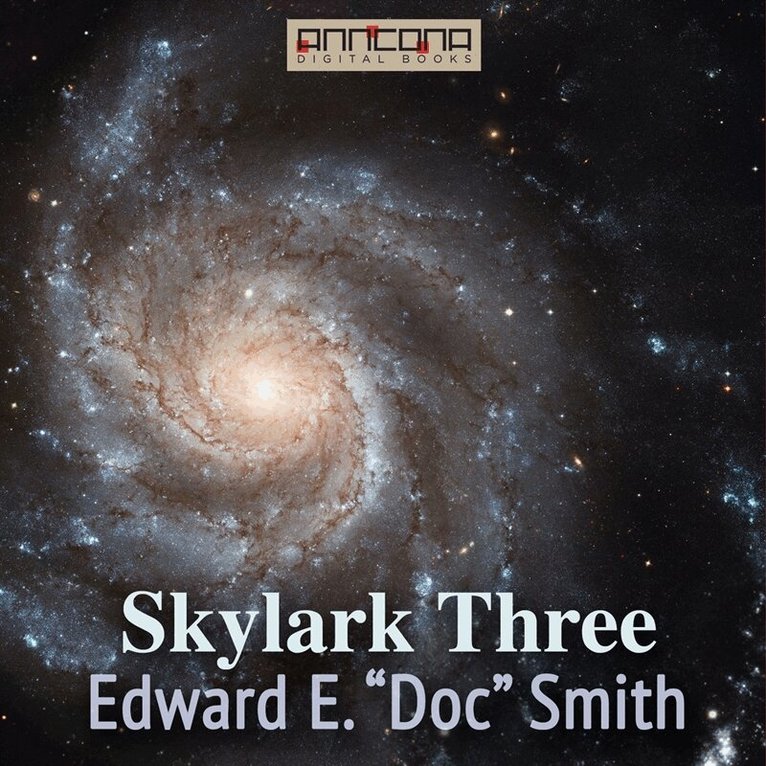
Skylark Three is a science fiction novel and space opera by American author E. E. ”Doc” Smith. It was first published in 1930.
Skylark Three is the second novel in the Skylark series. Originally serialized through the Amazing Stories magazine in 1930, it was first collected in book form in 1948.
The novel concerns Richard Seaton and his allies who have encounters with aliens while fighting DuQuesne and the Fenachrone.
In this sequel to The Skylark of Space, danger again waits for genius inventor and interplanetary adventurer Dr. Richard Seaton. Seaton’s allies on the planet Kondal are suffering devastating attacks by the forces of the Third Planet. Even worse, the menacing Fenachrones are threatening to conquer the galaxy and wipe out all who oppose them.
And don’t forget Seaton’s arch-nemesis, DuQuesne, who embarks on a mission of his own.
Featuring even more technological wizardry, alien worlds, and all-out action than in the first novel, Skylark Three is wieved as the high point of the Skylark series.
Skylark Three is the second book in the Skylark series and is set a year after the events of The Skylark of Space, during which year antagonist Marc "Blackie" DuQuesne has used the wealth obtained in the previous book to buy a controlling interest in the story's 'World Steel Corporation', a large company known for its ruthless attitude.
This is the serialized version from Amazing Stories in August, September and October 1930.
Total Running Time (TRT): 9 hours, 57 min.
Edward Elmer Smith (also E. E. Smith or E. E. "Doc" Smith; 1890-1965) was an American food engineer (specializing in doughnut and pastry mixes) and an early science-fiction author, best known for the Lensman and Skylark series. Smith's novels are generally considered to be classic space operas, and he is sometimes called the first of the three "novas" of 20th-century science fiction (with Stanley G. Weinbaum and Robert A. Heinlein as the second and third novas).
19 kr
Läs direkt efter köp
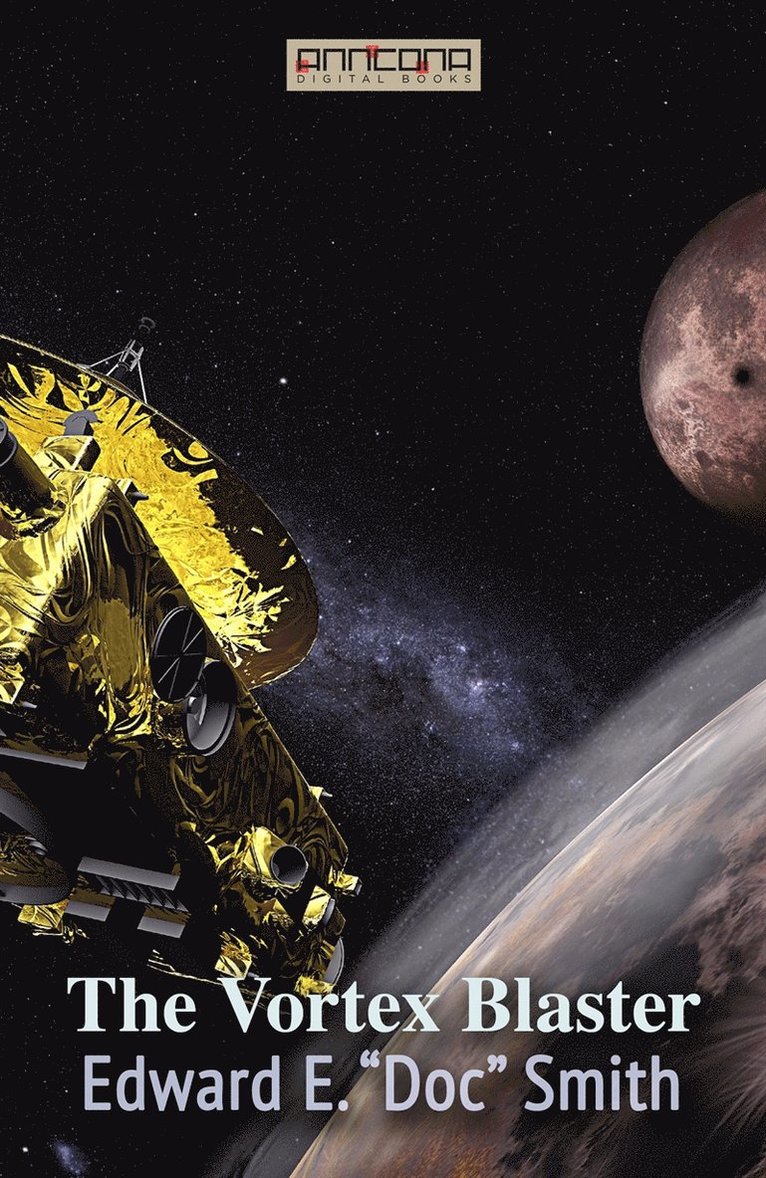
The Vortex Blaster is a science fiction novella by American author E. E. ”Doc” Smith. It was first published in 1941. The novella is part of E.E. "Doc" Smith's classic Lensman series.
Uncontrolled, terribly violent Atomic Vortices are slowly destroying civilization on every human planet throughout the galaxy.
Nothing can contain or stop them despite the lensmen's best efforts until one destroys the home and family of "Storm" Cloud, the brilliant atomic physicist.
The tragedy triggers actions on his part that pit him one-on-one against the horrible vortices. Introducing "Storm" Cloud as The Vortex Blaster.
The Vortex Blaster was first published in the July issue of Comet magazine in 1941.
Edward Elmer Smith (also E. E. Smith or E. E. "Doc" Smith; 1890-1965) was an American food engineer (specializing in doughnut and pastry mixes) and an early science-fiction author, best known for the Lensman and Skylark series. Smith's novels are generally considered to be classic space operas, and he is sometimes called the first of the three "novas" of 20th-century science fiction (with Stanley G. Weinbaum and Robert A. Heinlein as the second and third novas).
49 kr
Lyssna direkt efter köp
The Vortex Blaster is a science fiction novella by American author E. E. ”Doc” Smith. It was first published in 1930. The novella is part of E.E. "Doc" Smith's classic Lensman series.
Uncontrolled, terribly violent Atomic Vortices are slowly destroying civilization on every human planet throughout the galaxy.
Nothing can contain or stop them despite the lensmen's best efforts until one destroys the home and family of "Storm" Cloud, the brilliant atomic physicist.
The tragedy triggers actions on his part that pit him one-on-one against the horrible vortices. Introducing "Storm" Cloud as The Vortex Blaster.
Total Running Time (TRT): 55 min.
Edward Elmer Smith (also E. E. Smith or E. E. "Doc" Smith; 1890-1965) was an American food engineer (specializing in doughnut and pastry mixes) and an early science-fiction author, best known for the Lensman and Skylark series. Smith's novels are generally considered to be classic space operas, and he is sometimes called the first of the three "novas" of 20th-century science fiction (with Stanley G. Weinbaum and Robert A. Heinlein as the second and third novas).
19 kr
Läs direkt efter köp
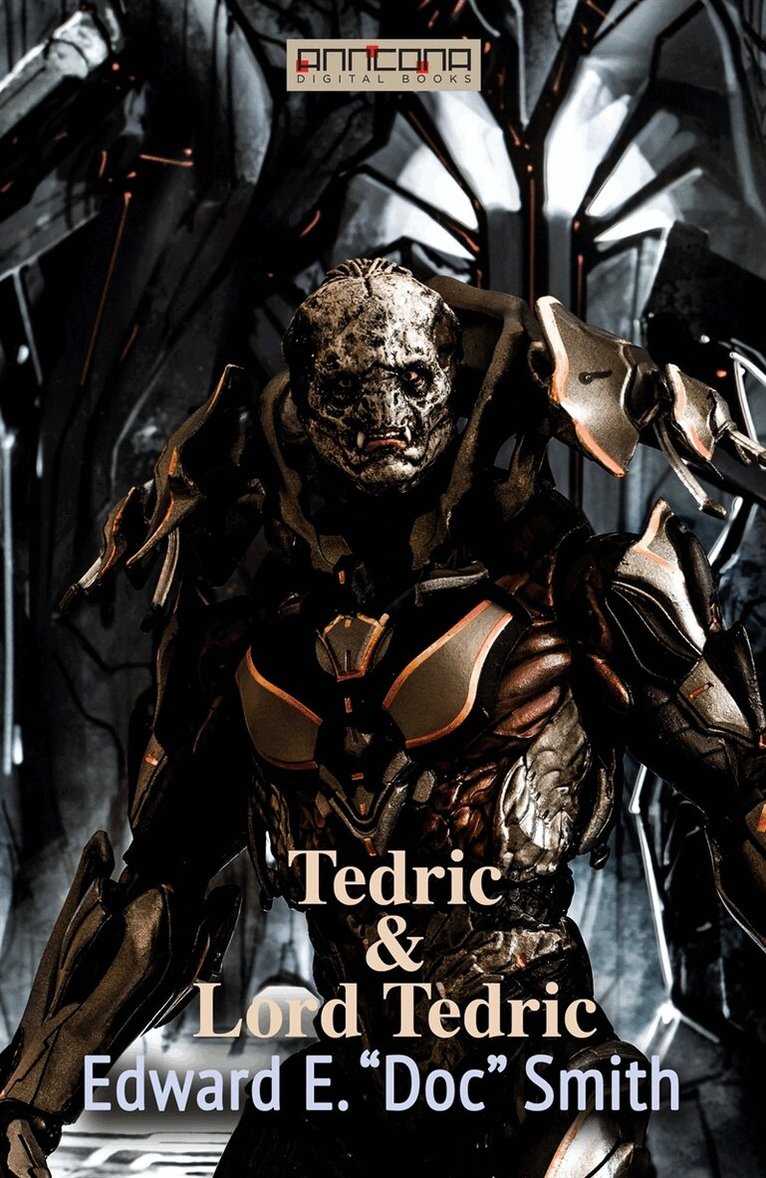
Tedric and Lord Tedric are two science fiction novellettes by American author E. E. ”Doc” Smith.
Smith published the two novelettes entitled Tedric in Other Worlds Science Fiction Stories (1953) and Lord Tedric in Universe Science Fiction (1954).
Tedric and Lord Tedric tells a wonderful combination of far future science fiction with Conan-like sword and sorcery; lots of blood, gore, honor and evil.
In Tedric, the immensely powerful hero, Tedric, is a man's man who refuses to accept the cruel human sacrifices demanded by the 'god' Sarpedion and is set on destroying him.
To do this he needs some secrets of metallurgy that future social scientists are willing to give him. He manages to overcome all obstacles until of course he meets the dazzlingly lovely Lady Rhoaan who stops him cold.
In Lord Tedric - Time is the strangest of all mysteries. Relatively unimportant events, almost unnoticed as they occur, may, in hundreds of years, result in Ultimate Catastrophe.
On Time Track Number One, that was the immutable result. But on Time Track Number Two there was one little event that could be used to avert it—the presence of a naked woman in public.
So, Skandos One removed the clothing from the Lady Rhoann and after one look, Lord Tedric did the rest!
TWO great stories written by the incomparable E. E. "Doc" Smith, author of the Lensman series.
Edward Elmer Smith (also E. E. Smith or E. E. "Doc" Smith; 1890-1965) was an American food engineer (specializing in doughnut and pastry mixes) and an early science-fiction author, best known for the Lensman and Skylark series. Smith's novels are generally considered to be classic space operas, and he is sometimes called the first of the three "novas" of 20th-century science fiction (with Stanley G. Weinbaum and Robert A. Heinlein as the second and third novas).
49 kr
Lyssna direkt efter köp
Tedric & Lord Tedric are two science fiction novellettes by American author E. E. ”Doc” Smith.
Smith published the two novelettes entitled Tedric in Other Worlds Science Fiction Stories (1953) and Lord Tedric in Universe Science Fiction (1954).
Tedric and Lord Tedric tells a wonderful combination of far future science fiction with Conan-like sword and sorcery; lots of blood, gore, honor and evil.
In Tedric (53 min), the immensely powerful hero, Tedric, is a man's man who refuses to accept the cruel human sacrifices demanded by the 'god' Sarpedion and is set on destroying him.
To do this he needs some secrets of metallurgy that future social scientists are willing to give him. He manages to overcome all obstacles until of course he meets the dazzlingly lovely Lady Rhoaan who stops him cold.
In Lord Tedric (1 hour, 22 min) - Time is the strangest of all mysteries. Relatively unimportant events, almost unnoticed as they occur, may, in hundreds of years, result in Ultimate Catastrophe.
On Time Track Number One, that was the immutable result. But on Time Track Number Two there was one little event that could be used to avert it—the presence of a naked woman in public.
So, Skandos One removed the clothing from the Lady Rhoann and after one look, Lord Tedric did the rest!
TWO great stories written by the incomparable E. E. "Doc" Smith, author of the Lensman series.
Total Running Time (TRT): 2 hours, 15 min.
Edward Elmer Smith (also E. E. Smith or E. E. "Doc" Smith; 1890-1965) was an American food engineer (specializing in doughnut and pastry mixes) and an early science-fiction author, best known for the Lensman and Skylark series. Smith's novels are generally considered to be classic space operas, and he is sometimes called the first of the three "novas" of 20th-century science fiction (with Stanley G. Weinbaum and Robert A. Heinlein as the second and third novas).