Edward J. Cashin – författare
Visar alla böcker från författaren Edward J. Cashin. Handla med fri frakt och snabb leverans.
8 produkter
8 produkter
534 kr
Skickas inom 5-8 vardagar
Henry Ellis (1721-1806) is recognized as the most capable of Georgia's three colonial governors. In this biography Edward J. Cashin presents the fullest account to date of Ellis's life, and shows that his tenure as governor of Georgia was but one of many accomplishments by a man of exemplary intelligence, courage, and vision. Cashin puts Ellis's life and career in the context of the great cultural migrations, encounters, and conflicts of British imperial and American colonial history. As he traces Ellis's rise from one who implemented British foreign policy to one who played a crucial hand in formulating it, Cashin reveals the inner workings of the imperial bureaucracy and shows how colonial politics were inextricably linked to the intrigues of the royal court and the vagaries of the nobility's patronage system.The book's early chapters recall Ellis's youth and formative years as a transplanted Briton in Ireland, and then tell of his seafaring exploits as he searched Canada's arctic waters for the Northwest Passage and engaged in the slave trade between Africa, the Caribbean, and the American colonies—all the while enhancing his reputation as an explorer, scientist, and man of letters.As Georgia's governor (1757-1760) Ellis came to be known as the colony's "Second Founder" (after James Oglethorpe) by recasting it into one of the more economically sound, less politically factionalized North American colonies. In his account of Ellis's governorship Cashin shows how he had to function as a local administrator and a representative of the crown, managing, for instance, the French and Indian War as it was fought both in his colony and in the halls and chambers of Parliament.The middle chapters cover Ellis's return to England in 1761. There he accepted, but eventually relinquished, an appointment as governor of Nova Scotia. Choosing instead to remain in England, Ellis drew on his knowledge of French and Spanish colonial activity, the slave trade, and Indian affairs to advise Pitt, Egremont, Halifax, and others of the king's ministry. A polished statesman, Ellis weathered the machinations surrounding George III's ascension to the throne, and influenced the course of the war with France and the terms of its peace settlement in 1763. Ellis also had a hand in the political appointments, boundary settlements, and trade decisions attendant to the epochal Proclamation of 1763, which set the course of history for Quebec, Nova Scotia, the Floridas, and the British West Indies.After his invaluable help in reorganizing Britain's expanded American empire, Ellis withdrew from public service in 1768. Cashin portrays Ellis in genteel retirement, during which he increased his absentee landholdings in Ireland and traveled in Italy, France, Belgium, and elsewhere on the Continent. In his last years, Ellis was a much-sought-after guest, and moved within a circle of friends that included Horatio Nelson, the king of Sweden, and the Abbe Raynal.More than an artful biography, this is the story of a crucial period in American and British history, as told through the experiences of one of the period's most influential, behind-the-scenes power brokers.
Lachlan McGillivray, Indian Trader
The Shaping of the Southern Colonial Frontier
Häftad, Engelska, 2012
534 kr
Skickas inom 5-8 vardagar
On the southern colonial frontier—the lands south of the Carolinas from the Savannah to the Mississippi rivers—Indian traders were an essential commercial and political link between Native Americans and European settlers. By following the career of one influential trader from 1736 to 1776, Edward J. Cashin presents a historical perspective of the frontier not as the edge of European civilization but as a zone of constant change and interaction between many cultures.Lachlan McGillivray knew firsthand of the frontier's natural wealth and strategic importance to England, France, and Spain, because he lived deep within it among his wife's people, the Creeks. Until he returned to his native Scotland in 1782, he witnessed, and often participated in, the major events shaping the region—from decisive battles to major treaties and land cessions. He was both a consultant to the leaders of colonial Georgia and South Carolina and their emissary to the great chiefs of the Creeks, Cherokees, Choctaws, and Chickasaws.Cashin discusses the aims and ambitions of the frontier's many interest groups, profiles the figures who catalyzed the power struggles, and explains events from the vantage points of traders and Native Americans. He also offers information about the rise of the southern elite, for in the decade before he left America, McGillivray was a successful planter and slave trader, a popular politician, and a member of the Savannah gentry. Against the panorama of the southern colonial frontier, Edward J. Cashin affirms the importance of traders in regional and international politics and commerce.
454 kr
Skickas inom 5-8 vardagar
These essays look at southern social customs within a single city in the nineteenth and early twentieth centuries. In particular, the volume focuses on paternalism between masters and slaves, husbands and wives, elites and the masses, and industrialists and workers. How Augusta's millworkers, homemakers, and others resisted, exploited, or endured the constraints of paternalism reveals the complex interplay between race, class, and gender.One essay looks at the subordinating effects of paternalism on women in the Old South—slave, free black, and white—and the coping strategies available to each group. Another focuses on the Knights of Labor union in Augusta. With their trappings of chivalry, the Knights are viewed as a response by Augusta's white male millworkers to the emasculating "maternalism" to which they were subjected by their own wives and daughters and those of mill owners and managers. Millworkers are also the topic of a study of mission work in their communities, a study that gauges the extent to which religious outreach by elites was a means of social control rather than an outpouring of genuine concern for worker welfare. Other essays discuss Augusta's "aristocracy of color," who had to endure the same effronteries of segregation as the city's poorest blacks; the role of interracial cooperation in the founding of the Colored Methodist Episcopal Church as a denomination, and of Augusta's historic Trinity CME Church; and William Jefferson White, an African American minister, newspaper editor, and founder of Morehouse College.The varied and creative responses to paternalism discussed here open new ways to view relationships based on power and negotiated between men and women, blacks and whites, and the prosperous and the poor.
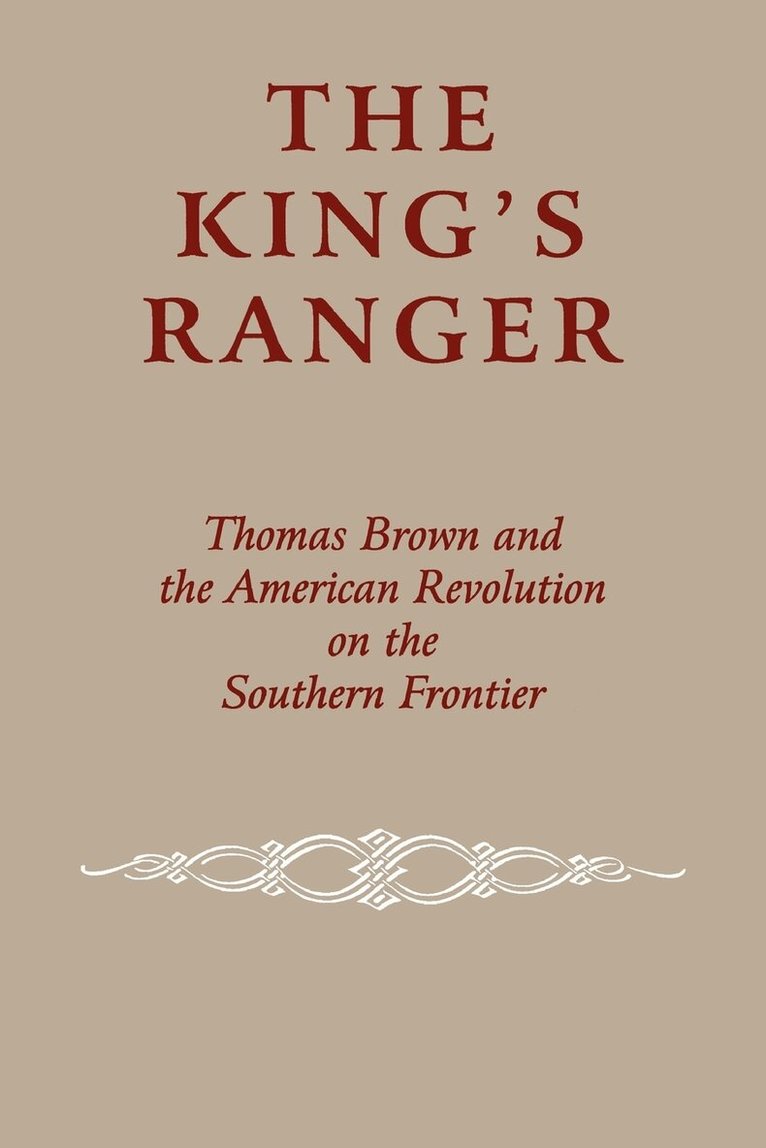
King's Ranger
Thomas Brown and the American Revolution on the Southern Frontier
Inbunden, Engelska, 1999
1 200 kr
Skickas inom 10-15 vardagar
The King's Ranger explores not only military history but also such aspects of the American past as colonial migration, upheaval in the backcountry... and the formation of new settlements in the Caribbean.
King's Ranger
Thomas Brown and the American Revolution on the Southern Frontier
Häftad, Engelska, 1999
427 kr
Skickas inom 7-10 vardagar
The King's Ranger explores not only military history but also such aspects of the American past as colonial migration, upheaval in the backcountry... and the formation of new settlements in the Caribbean.
541 kr
Skickas inom 5-8 vardagar
296 kr
Skickas inom 10-15 vardagar
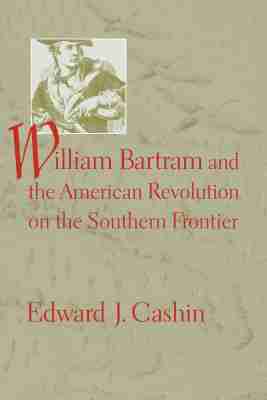
In his germinal 1791 account ""Travels"", William Bartram recorded the natural world he saw around him but, rather incredibly, omitted any reference to events of the American Revolution. Cashin places Bartram in the context of his times and explains his conspicuous avoidance of people, places, and events embroiled in revolutionary fervor. Cashin suggests that Bartram offered ""Travels"" as a means of shaping the new country and illuminates the convictions that motivated Bartram - that if Americans lived in communion with nature, heeded the moral law, and treated the people of the interior with respect, then America would be blessed with greatness.
365 kr
Skickas inom 10-15 vardagar
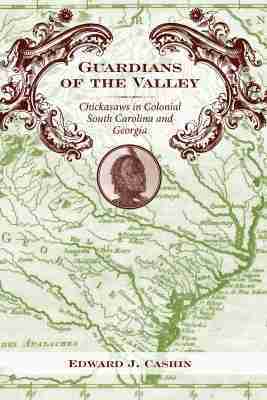
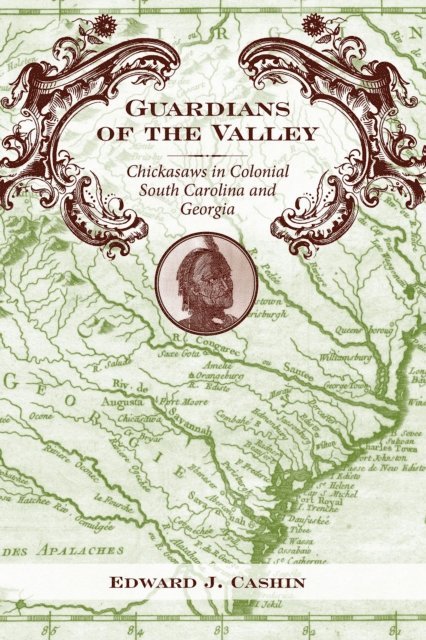
This is the first comprehensive history of the Lower Chickasaws in the Savannah River Valley. Edward J. Cashin, the preeminent historian of colonial Georgia history, offers an account of the Lower Chickasaws, who settled on the Savannah River near Augusta in the early eighteenth century and remained an integral part of the region until the American Revolution. Fierce allies to the English settlers, the Chickasaws served as trading partners, loyal protectors, and diplomatic representatives to other southeastern tribes. In the absence of their benevolence, the English settlements would not have developed as rapidly or securely in the Savannah River Valley. Aided by his unique access to the modern Chickasaw Nation, Cashin has woven together details on the eastern Chickasaws from diverse source materials to create this cohesive narrative set against the shifting backdrop of the Southern frontier. The Chickasaws offered primary allegiance to South Carolina and Georgia at different times in their history but always served as a link in ongoing trade between Charleston and the Chickasaw homeland in what is now Mississippi. By recounting the political, social, and military interactions between the native peoples and settlers, Cashin introduces readers to a colorful cast of Chickasaw leaders, including Squirrel King, the Doctor, and Mingo Stoby, each an important component to a story that has until now gone untold.