Edward Peter Stringham – författare
Visar alla böcker från författaren Edward Peter Stringham. Handla med fri frakt och snabb leverans.
5 produkter
5 produkter
E-bok
Engelska, 2015867 kr
Läs direkt efter köp
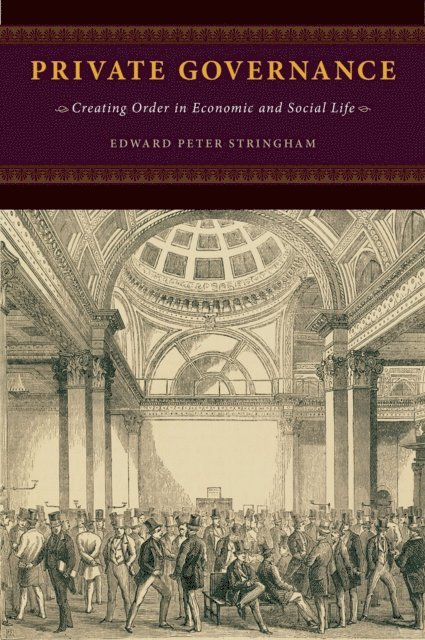
From the first stock markets of Amsterdam,London, and New York to the billions of electronic commerce transactions today, privately produced and enforced economic regulations are more common, more effective, and more promising than commonly considered.In Private Governance, prominent economist Edward Stringham presents case studies of the various forms of private enforcement, self-governance, or self-regulation among private groups or individuals that fill a void that government enforcement cannot. Through analytical narratives the book provides a close examination of the world''s first stock markets, key elements of which were unenforceable by law; the community of Celebration, Florida, and other private communities that show how public goods can be bundled with land and provided more effectively; and the millions of credit-card transactions that occur daily and are regulated by private governance. Private Governance ultimately argues that while potential problems of private governance, such as fraud, are pervasive, so are the solutions it presents, and that much of what is orderly in the economy can be attributed to private groups and individuals. With meticulous research, Stringham demonstrates that private governance is a far more common source of order than most people realize, and that private parties have incentives to devise different mechanisms for eliminating unwanted behavior.Private Governance documents numerous examples of private order throughout history to illustrate how private governance is more resilient to internal and external pressure than is commonly believed. Stringham discusses why private governance has economic and social advantages over relying on government regulations and laws, and explores the different mechanisms that enable private governance, including sorting, reputation, assurance, and other bonding mechanisms. Challenging and rigorously-written, Private Governance will make a compelling read for those with an interest in economics, political philosophy, and the history of current Wall Street regulations.
Inbunden, Engelska, 2015
785 kr
Skickas inom 5-8 vardagar
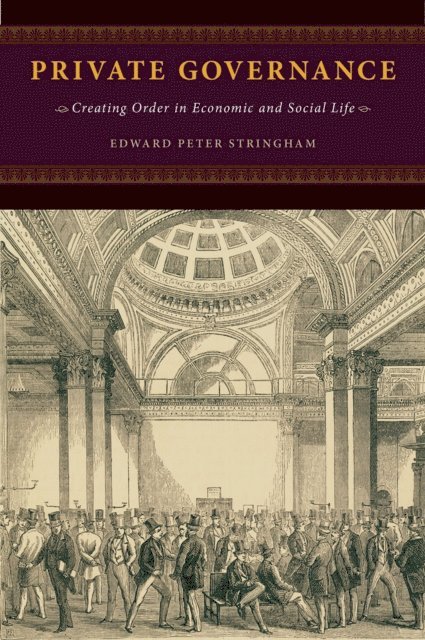
From the first stock markets of Amsterdam and London to the millions of credit card transactions governed by arbitration, privately produced and enforced economic regulations are more common, more effective, and more promising than commonly considered. In Private Governance, prominent economist Edward Stringham presents case-studies of the various forms of private enforcement, self-governance, or self-regulation among private groups or individuals that fill a void that government enforcement cannot. Through analytical narratives the book provides a close examination of the world's first stock markets, key elements of which were unenforceable by law; the community of Celebration, Florida, and other private communities that show how public goods can be bundled with land and provided more effectively; and the millions of credit-card transactions that occur daily and are regulated by private governance. Private Governance ultimately argues that while potential problems of private governance, such as fraud, are pervasive, so are the solutions it presents, and that much of what is orderly in the economy can be attributed to private groups and individuals.With meticulous research, Stringham demonstrates that private governance is a far more common source of order than most people realize, and that private parties have incentives to devise different mechanisms for eliminating unwanted behavior. Private Governance documents numerous examples of private order throughout history to illustrate how private governance is more resilient to internal and external pressure than is commonly believed. Stringham discusses why private governance has economic and social advantages over relying on government regulations and laws, and explores the different mechanisms that enable private governance, including sorting, reputation, assurance, and other bonding mechanisms. Challenging and rigorously-written, Private Governance will make a compelling read for those with an interest in economics, political philosophy, and the history of current Wall Street regulations.
E-bok
PDF, Engelska, 2015990 kr
Läs direkt efter köp
From the first stock markets of Amsterdam,London, and New York to the billions of electronic commerce transactions today, privately produced and enforced economic regulations are more common, more effective, and more promising than commonly considered. In Private Governance, prominent economist Edward Stringham presents case studies of the various forms of private enforcement, self-governance, or self-regulation among private groups or individuals that fill a void that government enforcement cannot. Through analytical narratives the book provides a close examination of the world''s first stock markets, key elements of which were unenforceable by law; the community of Celebration, Florida, and other private communities that show how public goods can be bundled with land and provided more effectively; and the millions of credit-card transactions that occur daily and are regulated by private governance. Private Governance ultimately argues that while potential problems of private governance, such as fraud, are pervasive, so are the solutions it presents, and that much of what is orderly in the economy can be attributed to private groups and individuals. With meticulous research, Stringham demonstrates that private governance is a far more common source of order than most people realize, and that private parties have incentives to devise different mechanisms for eliminating unwanted behavior. Private Governance documents numerous examples of private order throughout history to illustrate how private governance is more resilient to internal and external pressure than is commonly believed. Stringham discusses why private governance has economic and social advantages over relying on government regulations and laws, and explores the different mechanisms that enable private governance, including sorting, reputation, assurance, and other bonding mechanisms. Challenging and rigorously-written, Private Governance will make a compelling read for those with an interest in economics, political philosophy, and the history of current Wall Street regulations.
Häftad, Engelska, 2026
381 kr
Kommande
Few figures shaped the Stone-Campbell Restoration movement more than David Lipscomb, whose influence on its theology and practice rivaled that of any of his contemporaries. Yet the writings in this volume have long been unavailable to general readers, and most people are no longer familiar with his ideas, including his belief that Christians should not participate in secular politics.In the early decades of the Stone-Campbell movement, adherents argued their positions in person and in print, and the direction of the movement was decided by these wide-ranging theological discussions. Dissent was built into the discourse and considered a part of the spiritual well-being of the movement. Followers were expected to read and have opinions on all these discussions. And now most of these books and articles have all but vanished from circulation—not just Lipscomb’s but many of the nineteenth-century Campbellite theologians’ writings.This volume comprises three of Lipscomb’s most important works regarding Christians’ relationship to civil government, along with an introduction by Edward Peter Stringham and Norman R. Horn that explains how Lipscomb’s political writings receded from view within the movement he once shaped.
Inbunden, Engelska, 2026
1 076 kr
Kommande
Few figures shaped the Stone-Campbell Restoration movement more than David Lipscomb, whose influence on its theology and practice rivaled that of any of his contemporaries. Yet the writings in this volume have long been unavailable to general readers, and most people are no longer familiar with his ideas, including his belief that Christians should not participate in secular politics.In the early decades of the Stone-Campbell movement, adherents argued their positions in person and in print, and the direction of the movement was decided by these wide-ranging theological discussions. Dissent was built into the discourse and considered a part of the spiritual well-being of the movement. Followers were expected to read and have opinions on all these discussions. And now most of these books and articles have all but vanished from circulation—not just Lipscomb’s but many of the nineteenth-century Campbellite theologians’ writings.This volume comprises three of Lipscomb’s most important works regarding Christians’ relationship to civil government, along with an introduction by Edward Peter Stringham and Norman R. Horn that explains how Lipscomb’s political writings receded from view within the movement he once shaped.