Edwin M. Yamauchi – författare
Visar alla böcker från författaren . Handla med fri frakt och snabb leverans.
12 produkter
12 produkter
Häftad, Engelska, 1997
643 kr
Skickas inom 3-6 vardagar
In his historical-archaeological study, Yamauchi explains Persian history and culture in the context of biblical accounts, enlarging upon this connection in brief discussions of numerous topics surrounding Persian rulers, seats of government, and religion. The book contains many useful elements: a broad survey of the literature and recent archaeological findings; indexes including biblical issues; pertinent maps, diagrams, and illustrations; a large, select bibliography; and meticulous documentation. A valuable basic biblical reference tool or a point of departure for more advanced historical research.
Häftad, Engelska, 2006
377 kr
Skickas inom 11-20 vardagar
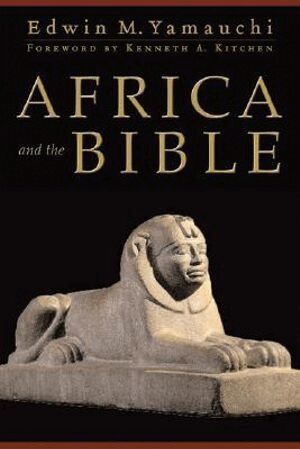
The "curse of Ham" has been used to legitimize slavery. Both Ethiopians and Arabians claim the queen of Sheba. Could Moses and Jesus have been black?Edwin Yamauchi explores the historical and archaeological background of biblical texts that refer to Africa and traces the results of past interpretations and misinterpretations. He covers such topics as the curse of Ham's son Canaan, Moses' Cushite wife, Simon the Cyrene, and afrocentric biblical interpretation. Along the way, he dispels myths, interacts with current theories, and provides readers with sound judgments as to what the Bible does and does not say.Readers interested in the connections between Africa and the Bible will enjoy this insightful book. More then eighty photos, maps, and charts are included.
Häftad, Engelska, 2003
222 kr
Skickas inom 5-8 vardagar
Häftad, Engelska, 2003
245 kr
Skickas inom 5-8 vardagar
Häftad, Engelska, 2003
319 kr
Skickas inom 5-8 vardagar
Inbunden, Engelska, 2017
948 kr
Skickas inom 3-6 vardagar
E-bok
PDF, Engelska, 2003374 kr
Läs direkt efter köp
Every student of the letters of Paul, the Acts of the Apostles, and the Book of Revelation will find much of value in 'New Testament Cities in Western Asia Minor',"e; writes W. Ward Gasque. The author investigates the status of the archaeological information which we now have about key cities of western Asia Minor during the early Roman Empire"e;: Assos, Pergamum, Thyateira, Smyrna, Sardis, Philadelphia, Ephesus, Miletus, Didyma, Laodicea, Hierapolis, and Colossae.
E-bok
PDF, Engelska, 2003337 kr
Läs direkt efter köp
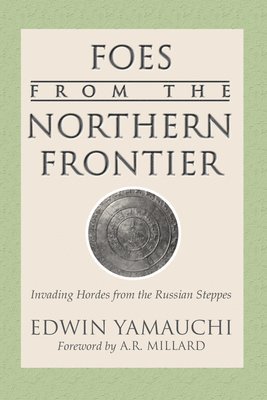
Are there any biblical references to territories in what is today the country of Russia? The author's answer is yes, but Ezekiel's reference to Rosh and Meshech is not one of them. In a thoroughly documented discussion, the author describes the Uratrians, Manneans, Cimmerians, and Scythians. Three of these northern foes of Israel are referred to by Jeremiah (in 51:27), the Cimmerians by Ezekiel (38:6). ...with the exception of Egypt, writes the author, almost all of Israel's enemies came from the north, though from the viewpoint of a modern map, many of these came ultimately from the east. The Urartians occupied what is now Soviet Armenia, southeastern Turkey, and northwestern Iran. The Manneans lived south of Lake Urmia, between Urartu and Assyria. The Cimmerians first appeared in the steppes north of the Caucasus, then crossed the Caucasus, and eventually invaded Asia Minor. The Scythians were nomadic tribes from the Russian steppes, some of whom settled in the Ukraine north of the Black Sea, others east of the Caspian. But what of Rosh, Messhech, and other names in Ezekiel 38:2? Is Rosh, Russia and Meshech Moscow? Rosh cannot possibly be related to Russia, insists the author. Nor can the terms Gog and Magog, no proposed identification for which has yet to win universal consent. Meshech and Tubal, on the other hand, have been located for certain - in central and eastern Anatolia.
E-bok
PDF, Engelska, 2003505 kr
Läs direkt efter köp
One of the most important issues facing New Testament scholarship today is the issue of Gnosticism. So wrote the author in 1973 in the first edition. With the publication since then of the entire Nag Hammadi library, this observation has become even more incisive. Was there a pre-Christian Gnosticism? Did Gnosticism directly or indirectly influence nascent Christianity? Many modern scholars argue that Gnosticism preceded the emergence of New Testament Christianity and constituted the raw material from which the apostles formed their message about Jesus. The author here analyzes the evidence used to support this thesis. He notes a series of methodological fallacies in the use of this evidence and concludes that clearly Gnostic materials are late and pre-Christian materials are not clearly Gnostic. A new chapter in this paperback edition brings the discussion up to date.
E-bok
PDF, Engelska, 2013169 kr
Läs direkt efter köp
Häftad, Engelska, 2024
482 kr
Skickas inom 5-8 vardagar
E-bok
Engelska, 2024669 kr
Läs direkt efter köp
An Asian American Ancient Historian and Biblical Scholar is not simply a memoir of Edwin M. Yamauchi. It is an expansive multi-generational story of a Japanese-American family (Issei, Nisei, Sansei) that began with immigrants from Okinawa, who used a narrow window of time (1900-1915) to emigrate to Hawaii to work on the sugar plantations there. After the suicide of his father when he was three, Edwin was raised by his mother, who knew little English, by working as a maid for twelve years. Deprived of other distractions, Edwin turned to the reading of books. From a nominal Buddhist and then a nominal Episcopalian background, Edwin was converted to Christ at the age of fifteen and determined to become a missionary. Lacking in funds, he worked his way through college. With an aptitude for languages, he earned his PhD under Cyrus Gordon. After a short stint at Rutgers University in New Jersey, he enjoyed a long career (1969-2005) at Miami University in Ohio. His memoir includes descriptions of the schools, societies, scholars, and travels of his life, as well as his witness to Christ and his role in the establishment of a campus church.