Elaine Lewinnek – författare
Visar alla böcker från författaren Elaine Lewinnek. Handla med fri frakt och snabb leverans.
4 produkter
4 produkter
569 kr
Läs direkt efter köp
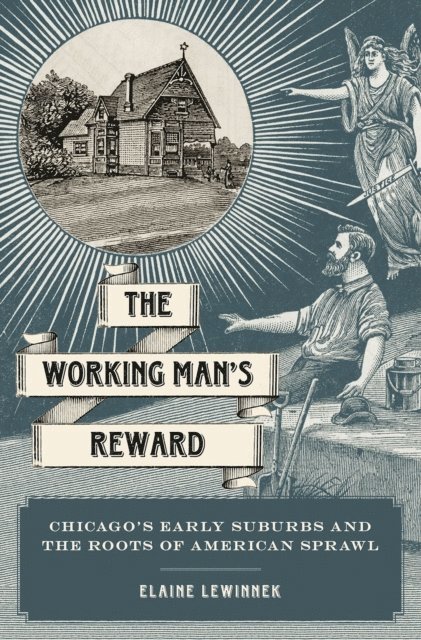
Between the 1860s and 1920s, Chicago''s working-class immigrants designed the American dream of home-ownership. They imagined homes as small businesses, homes that were simultaneously a consumer-oriented respite from work and a productive space that workers hoped to control. Stretching out of town along with Chicago''s assembly-line factories, Chicago''s early suburbs were remarkably socially and economically diverse. They were marketed by real estate developers and urban boosters with the elusive promise that homeownership might offer some bulwark against the vicissitudes of industrial capitalism, that homes might be "better than a bank for a poor man" and "the working man''s reward." This promise evolved into what Lewinnek terms "the mortgages of whiteness," the hope that property values might increase if that property could be kept white. Suburbs also developed through nineteenth-century notions of the gendered respectability of domesticity, early ideas about city planning and land economics, and an evolving twentieth-century discourse about the racial attributes of property values. Looking at the persistent challenges of racial difference, economic inequality, and private property ownership that were present in urban design and planning from the start, Lewinnek argues that white Americans'' attachment to property and community were not simply reactions to post-1945 Civil Rights Movement and federally enforced integration policies. Rather, Chicago''s mostly immigrant working class bought homes, seeking an elusive respectability and class mobility, and trying to protect their property values against what they perceived as African American threats, which eventually flared in violent racial conflict.The Working Man''s Reward examines the roots of America''s suburbanization in the late nineteenth and early twentieth centuries, showing how Chicagoans helped form America''s urban sprawl.
Inbunden, Engelska, 2014
803 kr
Skickas inom 5-8 vardagar
Between the 1860s and 1920s, Chicago's working-class immigrants designed the American dream of home-ownership. They imagined homes as small businesses, homes that were simultaneously a consumer-oriented respite from work and a productive space that workers hoped to control. Leapfrogging out of town along with Chicago's assembly-line factories, Chicago's early suburbs were remarkably diverse. These suburbs were marketed with the elusive promise that homeownership might offer some bulwark against the vicissitudes of industrial capitalism, that homes might be "better than a bank for a poor man," in the words of one evocative advertisement, and "the working man's reward." This promise evolved into what Lewinnek terms "the mortgages of whiteness:" the hope that property values might increase if that property could be kept white. Suburbs also developed through nineteenth-century notions of the gendered respectability of domesticity, early ideas about city planning and land economics, as well as an evolving twentieth-century discourse about the racial attributes of property values. Because Chicago presented itself as a paradigmatic American city and because numerous Chicago-based experts eventually instituted national real-estate programs, Chicago's early growth affected the growth of twentieth-century America. Framed by two working-class riots against suburbanization in 1872 and 1919, spurred from both above and below, this work shows how Chicagoans helped form America's urban sprawl and examines the roots of America's suburbanization, synthesizing the new suburban history into the diversity of America's suburbs.
E-bok
PDF, Engelska, 2014569 kr
Läs direkt efter köp
Between the 1860s and 1920s, Chicago''s working-class immigrants designed the American dream of home-ownership. They imagined homes as small businesses, homes that were simultaneously a consumer-oriented respite from work and a productive space that workers hoped to control. Stretching out of town along with Chicago''s assembly-line factories, Chicago''s early suburbs were remarkably socially and economically diverse. They were marketed by real estate developers and urban boosters with the elusive promise that homeownership might offer some bulwark against the vicissitudes of industrial capitalism, that homes might be "better than a bank for a poor man" and "the working man''s reward." This promise evolved into what Lewinnek terms "the mortgages of whiteness," the hope that property values might increase if that property could be kept white. Suburbs also developed through nineteenth-century notions of the gendered respectability of domesticity, early ideas about city planning and land economics, and an evolving twentieth-century discourse about the racial attributes of property values. Looking at the persistent challenges of racial difference, economic inequality, and private property ownership that were present in urban design and planning from the start, Lewinnek argues that white Americans'' attachment to property and community were not simply reactions to post-1945 Civil Rights Movement and federally enforced integration policies. Rather, Chicago''s mostly immigrant working class bought homes, seeking an elusive respectability and class mobility, and trying to protect their property values against what they perceived as African American threats, which eventually flared in violent racial conflict.The Working Man''s Reward examines the roots of America''s suburbanization in the late nineteenth and early twentieth centuries, showing how Chicagoans helped form America''s urban sprawl.
Del 4 - People's Guide Series
People's Guide to Orange County
Häftad, Engelska, 2022
114 kr
Skickas
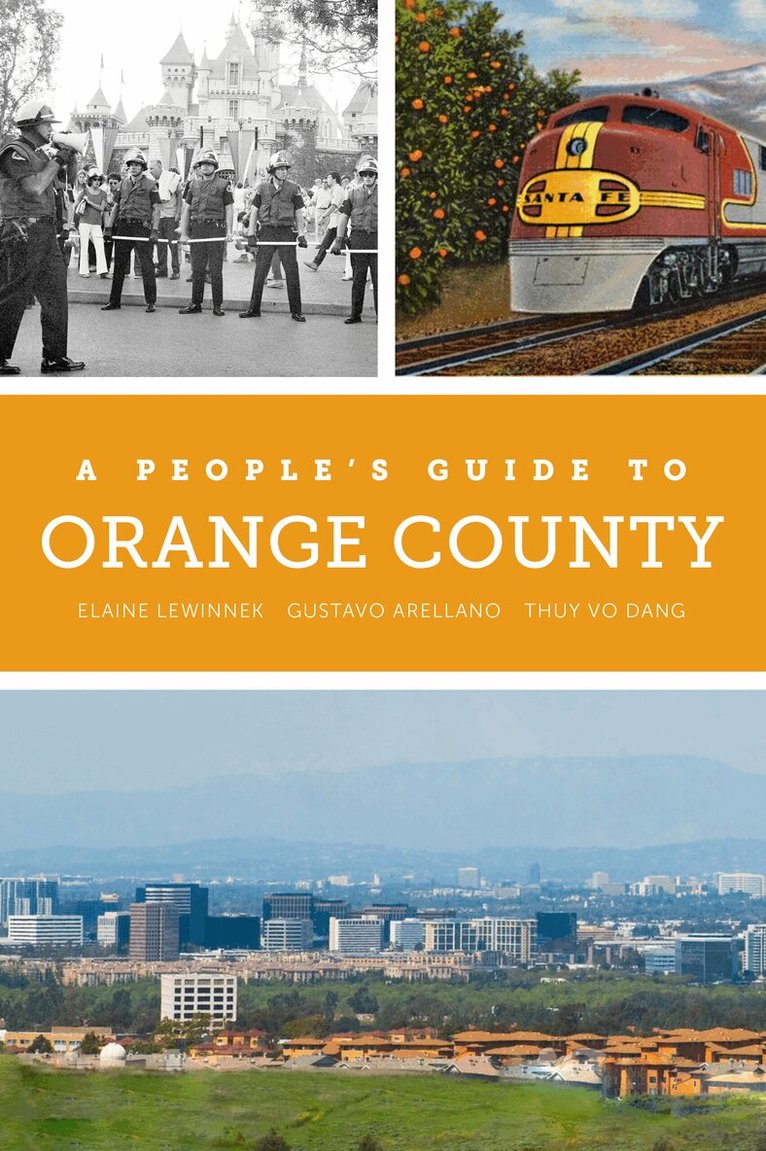
One of the Top Urban Planning Books of 2022, PlanetizenThe full and fascinating guidebook that Orange County deserves.A People’s Guide to Orange County is an alternative tour guide that documents sites of oppression, resistance, struggle, and transformation in Orange County, California. Orange County is more than the well-known images on orange crate labels, the high-profile amusement parks of Disneyland and Knott’s Berry Farm, or the beaches. It is also a unique site of agricultural and suburban history, political conservatism in a liberal state, and more diversity and discordance than its pop-cultural images show. It is a space of important agricultural labor disputes, segregation and resistance to segregation, privatization and the struggle for public space, politicized religions, Cold War global migrations, vibrant youth cultures, and efforts for environmental justice. Memorably, Ronald Reagan called Orange County the place “where all the good Republicans go to die,” but it is also the place where many working-class immigrants have come to live and work in its agricultural, military-industrial, and tourist service economies. Orange County is the fifth-most populous county in America. If it were a city, it would be the nation’s third-largest city; if it were a state, its population would make it larger than twenty-one other states. It attracts 42 million tourists annually. Yet Orange County tends to be a chapter or two squeezed into guidebooks to Los Angeles or Disneyland. Mainstream guidebooks focus on Orange County’s amusement parks and wealthy coastal communities, with side trips to palatial shopping malls. These guides skip over Orange County’s most heterogeneous half—the inland space, where most of its oranges were grown alongside oil derricks that kept the orange groves heated. Existing guidebooks render invisible the diverse people who have labored there. A People’s Guide to Orange County questions who gets to claim Orange County’s image, exposing the extraordinary stories embedded in the ordinary landscape.