Elissa Marder - Böcker
Visar alla böcker från författaren Elissa Marder. Handla med fri frakt och snabb leverans.
6 produkter
6 produkter
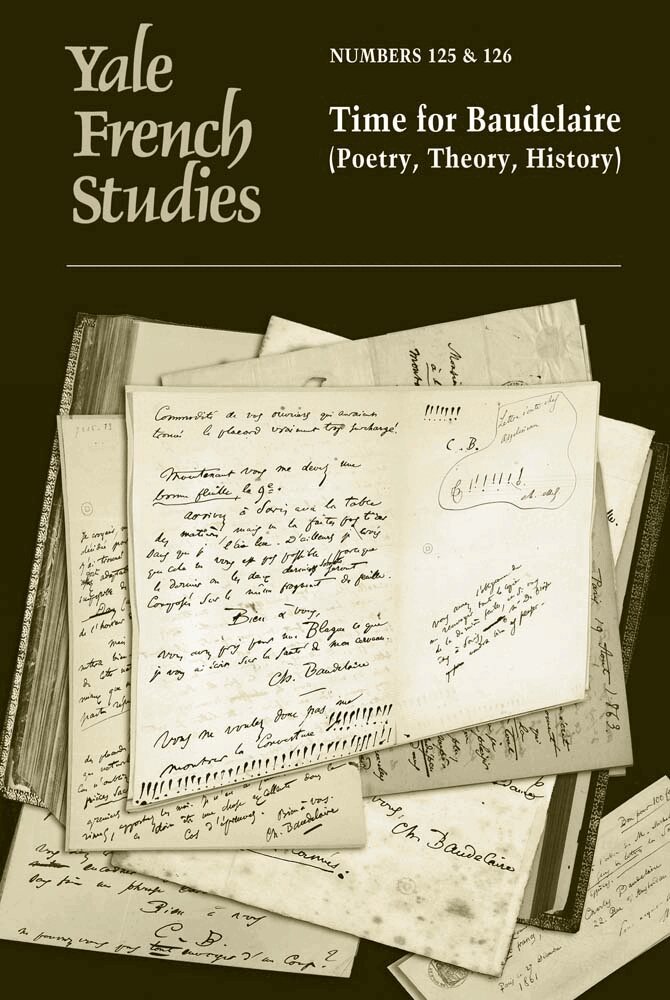
Yale French Studies, Number 125/126
Time for Baudelaire (Poetry, Theory, History)
Häftad, Engelska, 2014
518 kr
Skickas inom 5-8 vardagar
Time for Baudelaire suggests it’s time that Yale French Studies devote an issue to the poet who more than any other inaugurated the unfinished epoch of modernity. It also urges that we take or make time for thinking about the specific ways in which poetry—and perhaps poetry alone—allows a historical concept like modernity to become accessible in the first place. Finally, it asks what time means when it comes to reading the relation between Baudelaire’s writings and the moment, the event, the era—and our capacity to experience them together or in isolation from one another.
Dead Time
Temporal Disorders in the Wake of Modernity (Baudelaire and Flaubert)
Inbunden, Engelska, 2002
1 487 kr
Skickas inom 10-15 vardagar
This book explores how modernity gives rise to temporal disorders when time cannot be assimilated and integrated into the realm of lived experience. Inspired by Walter Benjamin's description of the shock experience of modernity through readings of Baudelaire, the book turns to Baudelaire and Flaubert in order to derive insights into the many temporal disorders (such as trauma, addiction, and fetishism) that pervade contemporary culture.Through close readings of Baudelaire's Flowers of Evil and Flaubert's Madame Bovary, Elissa Marder argues that these nineteenth-century texts can, paradoxically, make us aware of aspects of present-day life that are not easily described or perceived. Following reflections by Benjamin, Jameson, and Lyotard, she shows that the ability to measure time increases in inverse proportion to the human ability to express it and create meaning through it. Although we have increased our ability to record events, we have become collectively less able to assimilate the experience of the very events that new technologies enable us to record. The literary articulations of addiction and fetishism in Baudelaire and Flaubert reveal that these temporal disorders can be understood structurally as expressions of an inability to live in time. At a psychic level, they can be read as attempts to ward off increased stimuli and unwanted aspects of reality by stopping time.The book also interrogates the relationship between misogyny and modernity. By revealing the privileged function assigned to feminine figures in Baudelaire and Flaubert, and engaging with contemporary writings in psychoanalysis, feminism, and cultural studies, this work shows how the experience of time—and the attempts to stop it—become inscribed on a feminine or feminized body. Dead Time provides us with a way of understanding how our own collective temporal disorders may be part of the unassimilated legacy of nineteenth-century modernity.
Dead Time
Temporal Disorders in the Wake of Modernity (Baudelaire and Flaubert)
Häftad, Engelska, 2002
357 kr
Skickas inom 7-10 vardagar
This book explores how modernity gives rise to temporal disorders when time cannot be assimilated and integrated into the realm of lived experience. Inspired by Walter Benjamin's description of the shock experience of modernity through readings of Baudelaire, the book turns to Baudelaire and Flaubert in order to derive insights into the many temporal disorders (such as trauma, addiction, and fetishism) that pervade contemporary culture.Through close readings of Baudelaire's Flowers of Evil and Flaubert's Madame Bovary, Elissa Marder argues that these nineteenth-century texts can, paradoxically, make us aware of aspects of present-day life that are not easily described or perceived. Following reflections by Benjamin, Jameson, and Lyotard, she shows that the ability to measure time increases in inverse proportion to the human ability to express it and create meaning through it. Although we have increased our ability to record events, we have become collectively less able to assimilate the experience of the very events that new technologies enable us to record. The literary articulations of addiction and fetishism in Baudelaire and Flaubert reveal that these temporal disorders can be understood structurally as expressions of an inability to live in time. At a psychic level, they can be read as attempts to ward off increased stimuli and unwanted aspects of reality by stopping time.The book also interrogates the relationship between misogyny and modernity. By revealing the privileged function assigned to feminine figures in Baudelaire and Flaubert, and engaging with contemporary writings in psychoanalysis, feminism, and cultural studies, this work shows how the experience of time—and the attempts to stop it—become inscribed on a feminine or feminized body. Dead Time provides us with a way of understanding how our own collective temporal disorders may be part of the unassimilated legacy of nineteenth-century modernity.
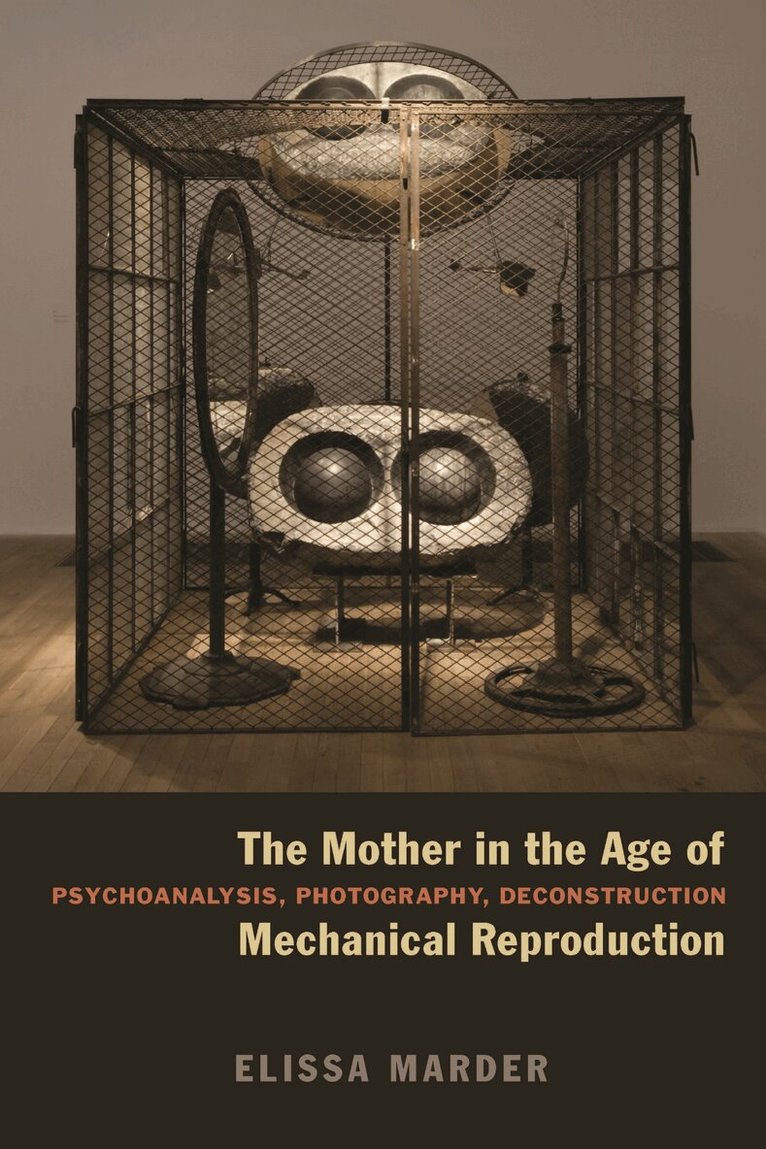
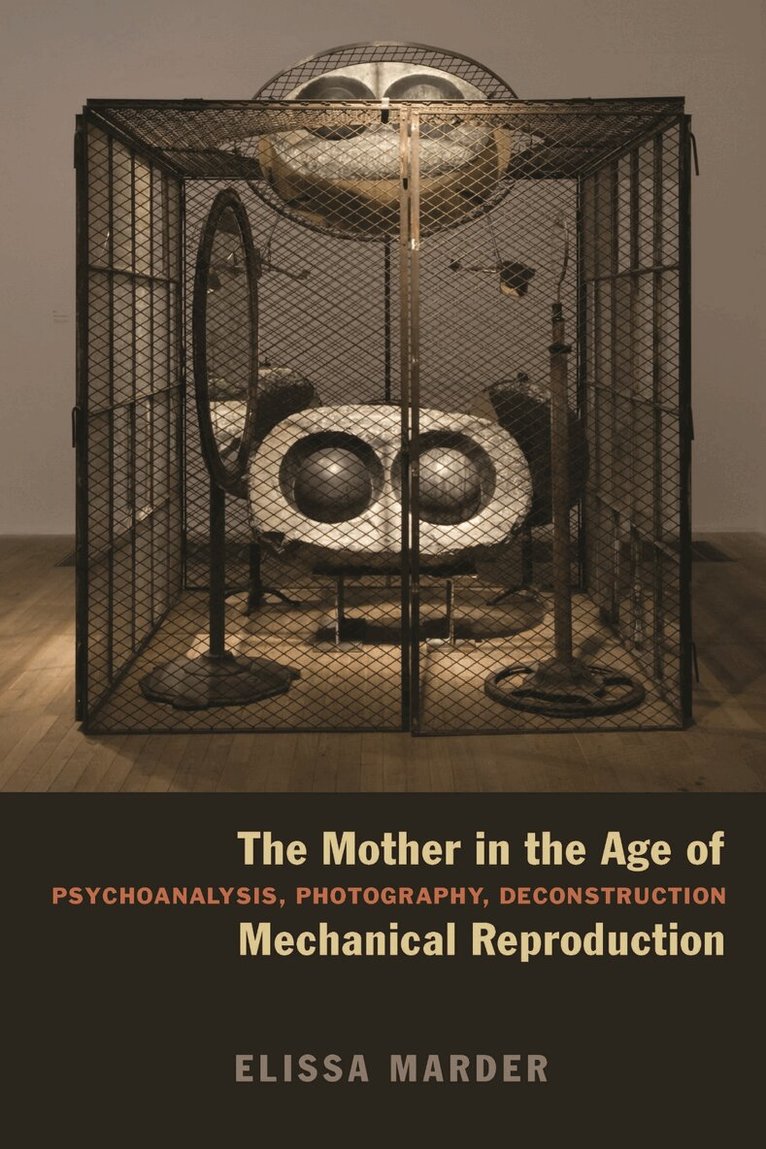
Mother in the Age of Mechanical Reproduction
Psychoanalysis, Photography, Deconstruction
Inbunden, Engelska, 2012
1 118 kr
Skickas inom 10-15 vardagar
This book grows out of a longstanding fascination with the uncanny status of the mother in literature, philosophy, psychoanalysis, film, and photography. The mother haunts Freud's writings on art and literature, emerges as an obscure stumbling block in his metapsychological accounts of the psyche, and ultimately undermines his patriarchal accounts of the Oedipal complex as a foundation for human culture. The figure ofthe mother becomes associated with some of psychoanalysis's most unruly and enigmatic concepts (the uncanny, anxiety, the primal scene, the crypt, and magical thinking). Read in relation to deconstructive approaches to the work of mourning, this book shows how the maternal function challenges traditional psychoanalytic models of the subject, troubles existing systems of representation, and provides afertile source for nonmimetic, nonlinear conceptions of time and space.The readings in this book examine the uncanny properties of the maternal function in psychoanalysis, technology, and literature in order to show that the event of birth is radically unthinkable and often becomes expressed through uncontrollable repetitions that exceed the bounds of any subject. The maternal body often serves as an unacknowledged reference point for modern media technologies such as photography and the telephone, which attempt to mimic its reproductive properties. To the extent that these technologies aim to usurp the maternal function, they are often deployed as a means of regulating or warding off anxieties that are provoked by the experience of loss that real separation from the mother invariably demands. As the incarnation of our first relation to the strange exile of language, the mother is inherently a literary figure, whose primal presence in literary texts opens us up to the unspeakable relation to our own birth and, in so doing, helps us give birth to new and fantasmatic images of futures that might otherwise have remained unimaginable.
Mother in the Age of Mechanical Reproduction
Psychoanalysis, Photography, Deconstruction
Häftad, Engelska, 2012
470 kr
Skickas inom 10-15 vardagar
This book grows out of a longstanding fascination with the uncanny status of the mother in literature, philosophy, psychoanalysis, film, and photography. The mother haunts Freud's writings on art and literature, emerges as an obscure stumbling block in his metapsychological accounts of the psyche, and ultimately undermines his patriarchal accounts of the Oedipal complex as a foundation for human culture. The figure ofthe mother becomes associated with some of psychoanalysis's most unruly and enigmatic concepts (the uncanny, anxiety, the primal scene, the crypt, and magical thinking). Read in relation to deconstructive approaches to the work of mourning, this book shows how the maternal function challenges traditional psychoanalytic models of the subject, troubles existing systems of representation, and provides afertile source for nonmimetic, nonlinear conceptions of time and space.The readings in this book examine the uncanny properties of the maternal function in psychoanalysis, technology, and literature in order to show that the event of birth is radically unthinkable and often becomes expressed through uncontrollable repetitions that exceed the bounds of any subject. The maternal body often serves as an unacknowledged reference point for modern media technologies such as photography and the telephone, which attempt to mimic its reproductive properties. To the extent that these technologies aim to usurp the maternal function, they are often deployed as a means of regulating or warding off anxieties that are provoked by the experience of loss that real separation from the mother invariably demands. As the incarnation of our first relation to the strange exile of language, the mother is inherently a literary figure, whose primal presence in literary texts opens us up to the unspeakable relation to our own birth and, in so doing, helps us give birth to new and fantasmatic images of futures that might otherwise have remained unimaginable.
385 kr
Skickas inom 7-10 vardagar
In 1977, Shoshana Felman opened up the question of how literature and psychoanalysis speak to each other's most intimate concerns with her landmark volume of Yale French Studies entitled Literature and Psychoanalysis: The Question of Reading ("Otherwise"). That relationship, she proposed, needed to be reinvented and transformed into a real dialogue between two different bodies of language and two different modes of knowledge. Over the forty years that have elapsed since the publication of Felman's 1977 volume, the encounter between literature and psychoanalysis has participated in the emergence of several new fields of critical inquiry, such as trauma, testimony, affect theory, neuro-psychoanalysis, and performance studies, and has been a privileged space for reflections on mourning, singularity, translation, transference, and translatability, the death drive, repetition, violence, cruelty, virtual reality, the clinic, and sexuality. In a world that has become enamored with modes of knowledge production that respond to ever increasing demands for quantifiable verification (the science of the brain) or for programmatic applicability, literature and psychoanalysis continue to offer an intractable resistance. Inspired (both directly and indirectly) by Felman's 1977 volume and working from the premise that this intractability is itself a source of potential transformation, the essays in this issue of Paragraph look to literature and psychoanalysis to invent new forms for the future.