Elizabeth Brake - Böcker
Visar alla böcker från författaren Elizabeth Brake. Handla med fri frakt och snabb leverans.
5 produkter
5 produkter
1 757 kr
Skickas inom 5-8 vardagar
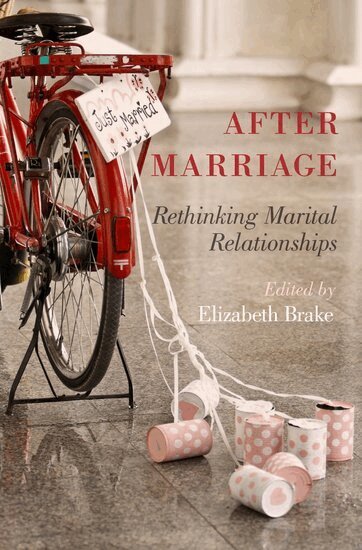
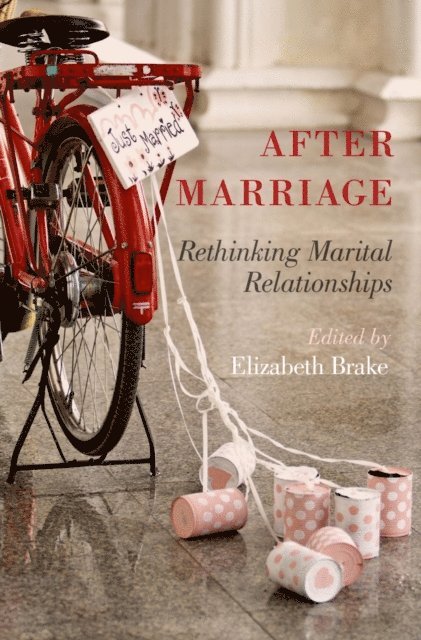
This collection of essays by liberal and feminist philosophers addresses the question of whether marriage reform ought to stop with same-sex marriage. Some philosophers have recently argued that marriage is illiberal and should be abolished or radically reformed to include groups and non-romantic friendships. In response, Simon May argues that marriage law can be justified without an illiberal appeal to an ideal relationship type, and Ralph Wedgwood argues that the liberal values which justify same-sex marriage do not justify further extension. Other authors argue for new legal forms for intimate relationships. Marriage abolitionist Clare Chambers argues that piecemeal directives rather than relationship contracts should replace marriage, and Samantha Brennan and Bill Cameron argue for separating marriage and parenting, with parenting rather than marriage becoming, legally and socially, the foundation of the family. Elizabeth Brake argues for a non-hierarchical friendship model for marriage. Peter de Marneffe argues that polygamy should be decriminalized, but that the liberal state need not recognize it, while Laurie Shrage argues that polygamy could be legally structured to protect privacy and equality. Dan Nolan argues for temporary marriage as a legal option, while Anca Gheaus argues that marital commitments are problematic instruments for securing the good of romantic and sexual love. Taken together, these essays challenge contemporary understandings of marriage and the state's role in it.
485 kr
Skickas inom 5-8 vardagar
This collection of essays by liberal and feminist philosophers addresses the question of whether marriage reform ought to stop with same-sex marriage. Some philosophers have recently argued that marriage is illiberal and should be abolished or radically reformed to include groups and non-romantic friendships. In response, Simon May argues that marriage law can be justified without an illiberal appeal to an ideal relationship type, and Ralph Wedgwood argues that the liberal values which justify same-sex marriage do not justify further extension. Other authors argue for new legal forms for intimate relationships. Marriage abolitionist Clare Chambers argues that piecemeal directives rather than relationship contracts should replace marriage, and Samantha Brennan and Bill Cameron argue for separating marriage and parenting, with parenting rather than marriage becoming, legally and socially, the foundation of the family. Elizabeth Brake argues for a non-hierarchical friendship model for marriage. Peter de Marneffe argues that polygamy should be decriminalized, but that the liberal state need not recognize it, while Laurie Shrage argues that polygamy could be legally structured to protect privacy and equality. Dan Nolan argues for temporary marriage as a legal option, while Anca Gheaus argues that marital commitments are problematic instruments for securing the good of romantic and sexual love. Taken together, these essays challenge contemporary understandings of marriage and the state's role in it.
1 565 kr
Skickas inom 7-10 vardagar
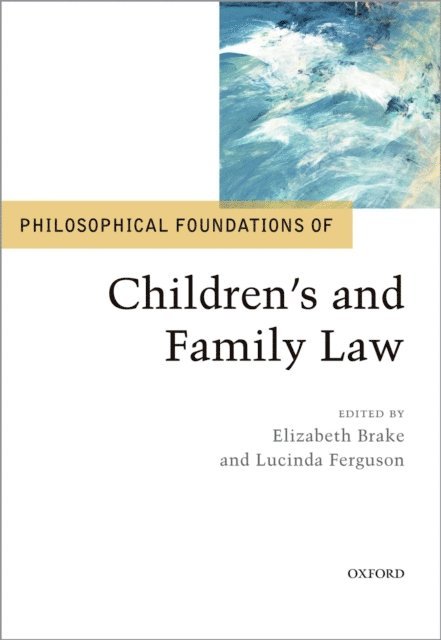
This volume brings together new essays in law and philosophy on a broad range of topics in children's and family law. It is the first volume to bring together essays by legal scholars and philosophers for an integrated, critical analysis of key issues in this area, marking the 'coming of age' of a comparatively new field of family law. Debates in children's and family law are at once theoretical and empirical in nature. Not only does children's and family law have significant consequences for individuals' intimate lives, the field's impact on lived experience highlights the socially constructed nature of law. Approaching this area of law often involves exploring a legal concept familiar from daily life, such as the very notion of 'marriage' or 'family', and examining it within its social, economic, and historical context. The normative basis for law regulating intimate personal and family life extends beyond any narrow legal philosophy or social context to its broader foundations in theories of morality or justice. The chapters included bring together a representative and broad range of pieces that engage with long-standing and contemporary debates. A wide range of perspectives is represented on topics such as same-sex marriage, polygamy and polyamory, alimony, unmarried cohabitation, gestational surrogacy and assisted reproductive technologies, child support, parental rights and responsibilities, children's rights, family immigration, religious freedom, and the rights of paid caregivers. There is also philosophical discussion of concepts such as care, intimacy, and the nature of family and family law itself.
456 kr
Skickas inom 5-8 vardagar
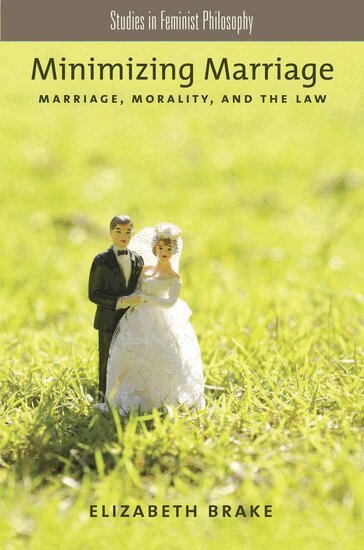
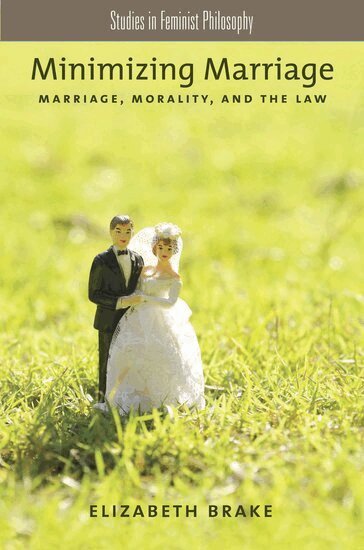
Even in secular and civil contexts, marriage retains sacramental connotations. Yet what moral significance does it have? This book examines its morally salient features - promise, commitment, care, and contract - with surprising results. In Part One, "De-Moralizing Marriage," essays on promise and commitment argue that we cannot promise to love and so wedding vows are (mostly) failed promises, and that marriage may be a poor commitment strategy. The book contends with the most influential philosophical accounts of the moral value of marriage to argue that marriage has no inherent moral significance. Further, the special value accorded marriage sustains amatonormative discrimination - discrimination against non-amorous or non-exclusive caring relationships such as friendships, adult care networks, polyamorous groups, or urban tribes. The discussion raises issues of independent interest for the moral philosopher such as the possibilities and bounds of interpersonal moral obligations and the nature of commitment.The central argument of Part Two, "Democratizing Marriage," is that liberal reasons for recognizing same-sex marriage also require recognition of groups, polyamorists, polygamists, friends, urban tribes, and adult care networks. Political liberalism requires the disestablishment of monogamous amatonormative marriage. Under the constraints of public reason, a liberal state must refrain from basing law solely on moral or religious doctrines; but only such doctrines could furnish reason for restricting marriage to male-female couples or romantic love dyads. Restrictions on marriage should thus be minimized. But public reason can provide a strong rationale for minimal marriage: care, and social supports for care, are a matter of fundamental justice. Part Two also responds to challenges posed by property division on divorce, polygyny, and supporting parenting, and builds on critiques of marriage drawn from feminism, queer theory, and race theory. It argues, using the example of minimal marriage, for the compatibility of liberalism and feminism.
1 932 kr
Skickas inom 5-8 vardagar
Even in secular and civil contexts, marriage retains sacramental connotations. Yet what moral significance does it have? This book examines its morally salient features - promise, commitment, care, and contract - with surprising results. In Part One, "De-Moralizing Marriage," essays on promise and commitment argue that we cannot promise to love and so wedding vows are (mostly) failed promises, and that marriage may be a poor commitment strategy. The book contends with the most influential philosophical accounts of the moral value of marriage to argue that marriage has no inherent moral significance. Further, the special value accorded marriage sustains amatonormative discrimination - discrimination against non-amorous or non-exclusive caring relationships such as friendships, adult care networks, polyamorous groups, or urban tribes. The discussion raises issues of independent interest for the moral philosopher such as the possibilities and bounds of interpersonal moral obligations and the nature of commitment.The central argument of Part Two, "Democratizing Marriage," is that liberal reasons for recognizing same-sex marriage also require recognition of groups, polyamorists, polygamists, friends, urban tribes, and adult care networks. Political liberalism requires the disestablishment of monogamous amatonormative marriage. Under the constraints of public reason, a liberal state must refrain from basing law solely on moral or religious doctrines; but only such doctrines could furnish reason for restricting marriage to male-female couples or romantic love dyads. Restrictions on marriage should thus be minimized. But public reason can provide a strong rationale for minimal marriage: care, and social supports for care, are a matter of fundamental justice. Part Two also responds to challenges posed by property division on divorce, polygyny, and supporting parenting, and builds on critiques of marriage drawn from feminism, queer theory, and race theory. It argues, using the example of minimal marriage, for the compatibility of liberalism and feminism.