Elizabeth Ezra - Böcker
Visar alla böcker från författaren Elizabeth Ezra. Handla med fri frakt och snabb leverans.
14 produkter
14 produkter
613 kr
Skickas inom 5-8 vardagar
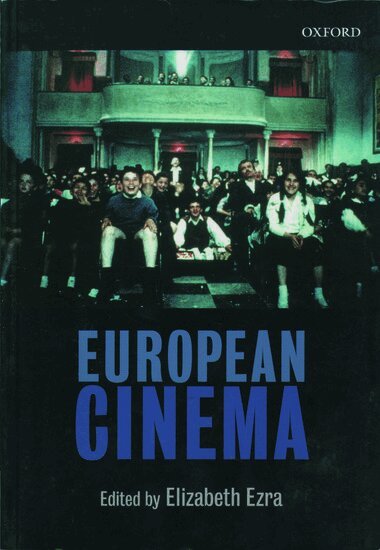
European Cinema is the first book to provide overviews of key movements in European film history, from the inception of the medium in 1895 to the present. This text includes accessible introductions to traditions as diverse as early Soviet cinema, German Expressionism, Surrealism, Italian Neoralism, the French New Wave, Ealing Comedy, East-Central European cinema, Contemporary Spanish cinema, and much more.Top international scholars specially commissioned for this volume examine artistic developments in their industrial and more broadly historical context. The book is divided chronologically into three sections, making it ideal for use in university film courses, and includes an invaluable glossary (comprising historical and foreign-language terms as well as technical terminology).
235 kr
Skickas inom 11-20 vardagar
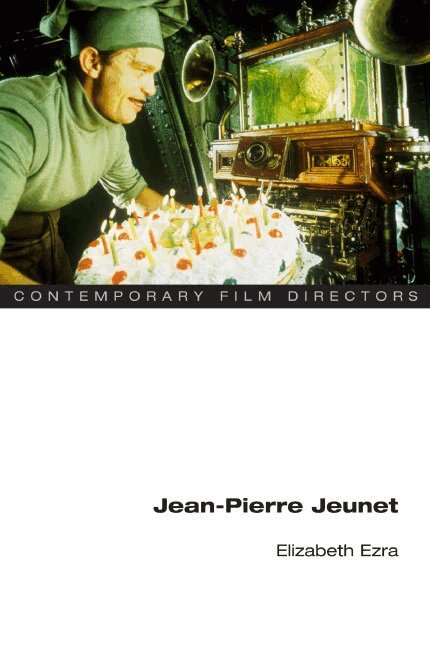
This is the first book on Jean-Pierre Jeunet, the popular and critically acclaimed director of films such as AmÉlie, Delicatessen, A Very Long Engagement, Alien Resurrection, and City of Lost Children. Jeunet's work exemplifies Europe's engagement with Hollywood, while at the same time making him a figurehead of the critically overlooked, specifically French tradition of the cinema of the fantastic.Having garnered both commercial success and critical esteem in genres such as science fiction, fantasy, romantic comedy, and the war epic, Jeunet's work nevertheless engages with key aspects of French history and contemporary French culture. This study analyzes the director's major films, including those he made with Marc Caro, and his early short works. Elizabeth Ezra brings a new perspective to the study of Jeunet's work, uncovering instances of repressed historical trauma involving France's role in Algeria and the Second World War. The book includes a commentary by Jeunet himself on his career and corpus of films.
2 216 kr
Skickas inom 10-15 vardagar
Transnational Cinema: The Film Reader provides an overview of the key concepts and debates within the developing field of transnational cinema. Bringing together seminal essays from a wide range of sources, this volume engages with films that fashion their narrative and aesthetic dynamics in relation to more than one national or cultural community. The reader is divided into four sections: From National to Transnational Cinema Global Cinema in the Digital Age Motion Pictures: Film, Migration and Diaspora Tourists and Terrorists.
655 kr
Skickas inom 10-15 vardagar
Transnational Cinema: The Film Reader provides an overview of the key concepts and debates within the developing field of transnational cinema. Bringing together seminal essays from a wide range of sources, this volume engages with films that fashion their narrative and aesthetic dynamics in relation to more than one national or cultural community. The reader is divided into four sections: From National to Transnational Cinema Global Cinema in the Digital Age Motion Pictures: Film, Migration and Diaspora Tourists and Terrorists.
367 kr
Skickas
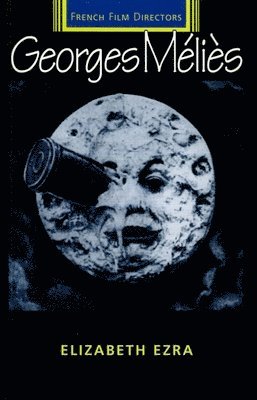
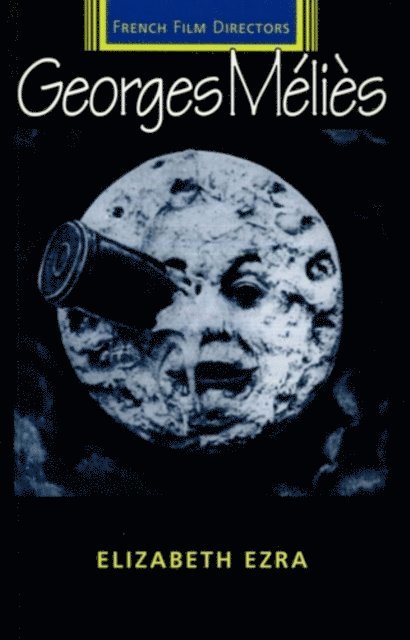
Before the turn of the twentieth century, before the nickelodeon, even before the first cinemas, Georges Méliès began making movies.. Directing, editing, producing, designing, and starring in over 500 films between 1896 to 1912, Méliès was also the first cinematic auteur.. This is the first study of Méliès's films to appear in English in over twenty years and the only book to interpret his work using the tools of modern film analysis.. Locates the roots of modern narrative cinema in Méliès's work, identifying techniques of editing and mise-en-scène previously thought to have originated with D. W. Griffith.
1 563 kr
Skickas inom 10-15 vardagar
France between the two World Wars was pervaded by representations of its own colonial power, expressed forcefully in the human displays at the expositions coloniales, films starring Josephine Baker, and the short stories of Paul Morand, and more subtly in the avant-garde writings of René Crevel and Raymond Roussel. In her lively book, Elizabeth Ezra interprets a fascinating array of cultural products to uncover what she terms the "colonial unconscious" of the Jazz Age—the simultaneous attraction and repulsion of exoticism and the double bind of a colonial discourse that foreclosed the possibility of the very assimilation it invited.Ezra situates the apotheosis of French colonialism in relation to both the internal tensions of the colonial project and the competing imperialisms of Great Britain and the United States. Examining both the uses and the limits of psychoanalytic theories of empire, she proposes a reading of French colonialism which, while historically specific, also contributes to our understanding of contemporary culture. The enduring legacy of empire is felt to this day, as Ezra demonstrates in a provocative epilogue on the remarkable similarities between the rhetoric of colonial France and accounts of the French victory in the 1998 World Cup.
488 kr
Skickas inom 10-15 vardagar
France between the two World Wars was pervaded by representations of its own colonial power, expressed forcefully in the human displays at the expositions coloniales, films starring Josephine Baker, and the short stories of Paul Morand, and more subtly in the avant-garde writings of René Crevel and Raymond Roussel. In her lively book, Elizabeth Ezra interprets a fascinating array of cultural products to uncover what she terms the "colonial unconscious" of the Jazz Age—the simultaneous attraction and repulsion of exoticism and the double bind of a colonial discourse that foreclosed the possibility of the very assimilation it invited.Ezra situates the apotheosis of French colonialism in relation to both the internal tensions of the colonial project and the competing imperialisms of Great Britain and the United States. Examining both the uses and the limits of psychoanalytic theories of empire, she proposes a reading of French colonialism which, while historically specific, also contributes to our understanding of contemporary culture. The enduring legacy of empire is felt to this day, as Ezra demonstrates in a provocative epilogue on the remarkable similarities between the rhetoric of colonial France and accounts of the French victory in the 1998 World Cup.
1 368 kr
Skickas inom 7-10 vardagar
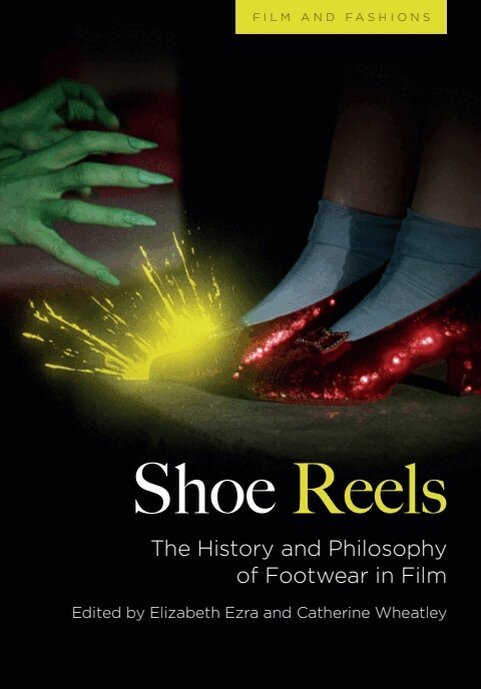
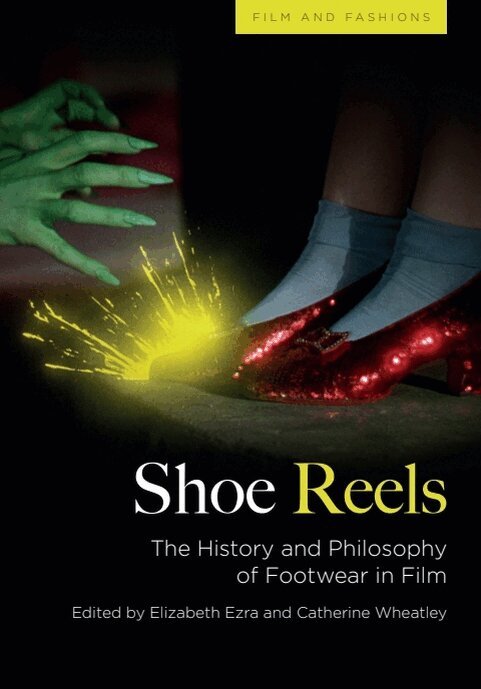
In his famous interpretation of Vincent Van Gogh’s painting A Pair of Peasant’s Shoes (1886), Heidegger argues that shoes tell us all we need to know about the world of the person who walks in them. In the case of Van Gogh’s painting, we learn this not through a description of the pair of shoes, nor by a report on how to make shoes, but by looking at the shoes. Heidegger thus gestures towards the power of the visual arts to show us human truths through images of footwear and the feet they conceal or reveal, a power that finds its fullest expression in the cinema. From Chaplin’s meal of boots (The Gold Rush, 1925), through Powell and Pressburger’s Red Shoes (1948) and Dorothy’s ruby slippers (The Wizard of Oz, 1939), to Julia Roberts’ pvc thigh-highs (Pretty Woman, 1990), Marty McFly’s power-lacing Nikes (Back to the Future, 1985) and the slim, spike-heeled stiletto that graces the poster for The Devil Wears Prada (2006), shoes are not only some of the cinema’s most enduring icons; they also serve as characterisations, plot devices, soundtracks, metaphors and philosophical touchpoints. This book anaylses their significnace through a range of approaches drawn from the fields of Film Studies, Philosophy, Cultural History, Fashion, Cultural Studies and Politics.
342 kr
Skickas
In his famous interpretation of Vincent Van Gogh’s painting A Pair of Peasant’s Shoes (1886), Heidegger argues that shoes tell us all we need to know about the world of the person who walks in them. In the case of Van Gogh’s painting, we learn this not through a description of the pair of shoes, nor by a report on how to make shoes, but by looking at the shoes. Heidegger thus gestures towards the power of the visual arts to show us human truths through images of footwear and the feet they conceal or reveal, a power that finds its fullest expression in the cinema. From Chaplin’s meal of boots (The Gold Rush, 1925), through Powell and Pressburger’s Red Shoes (1948) and Dorothy’s ruby slippers (The Wizard of Oz, 1939), to Julia Roberts’ pvc thigh-highs (Pretty Woman, 1990), Marty McFly’s power-lacing Nikes (Back to the Future, 1985) and the slim, spike-heeled stiletto that graces the poster for The Devil Wears Prada (2006), shoes are not only some of the cinema’s most enduring icons; they also serve as characterisations, plot devices, soundtracks, metaphors and philosophical touchpoints. This book anaylses their significnace through a range of approaches drawn from the fields of Film Studies, Philosophy, Cultural History, Fashion, Cultural Studies and Politics.
1 703 kr
Skickas inom 10-15 vardagar
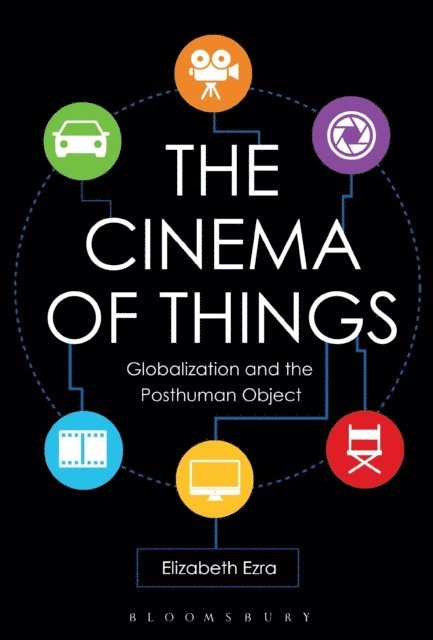
This book explores the border zones between life and non-life as represented in cinema from the end of the nineteenth century, when France led the global film industry, to the first decades of the twenty-first century, when world film markets are dominated by Hollywood. Informed by both the Internet of Things and the Parliament of Things, The Cinema of Things examines cinematic depictions of the ways in which human beings are prosthetically engaged with life beyond the self in the global age: by hyperconsumption; by structures of racial and sexual objectification that reduce people designated as “others” to objects of fascination, sexual gratification, warfare, or labor; and by information technology that replaces human agency with encoding. Consumer culture, a key feature of globalization, posits that we must supplement ourselves with commodities without which we would otherwise be incomplete: but these prostheses, rather than enhancing us, end up creating the insufficiencies they were meant to overcome. We are engulfed by objects, to the extent that we ourselves are becoming objectified. At the same time, objects, especially technological objects, are becoming increasingly autonomous, assuming roles that were once the preserve of human agency. We are becoming the objects of globalization, and cinema imaginatively represents this transformation, but it also offers us the possibility of retaining our humanity in the process.
474 kr
Skickas inom 10-15 vardagar
This book explores the border zones between life and non-life as represented in cinema from the end of the nineteenth century, when France led the global film industry, to the first decades of the twenty-first century, when world film markets are dominated by Hollywood. Informed by both the Internet of Things and the Parliament of Things, The Cinema of Things examines cinematic depictions of the ways in which human beings are prosthetically engaged with life beyond the self in the global age: by hyperconsumption; by structures of racial and sexual objectification that reduce people designated as “others” to objects of fascination, sexual gratification, warfare, or labor; and by information technology that replaces human agency with encoding. Consumer culture, a key feature of globalization, posits that we must supplement ourselves with commodities without which we would otherwise be incomplete: but these prostheses, rather than enhancing us, end up creating the insufficiencies they were meant to overcome. We are engulfed by objects, to the extent that we ourselves are becoming objectified. At the same time, objects, especially technological objects, are becoming increasingly autonomous, assuming roles that were once the preserve of human agency. We are becoming the objects of globalization, and cinema imaginatively represents this transformation, but it also offers us the possibility of retaining our humanity in the process.
92 kr
Skickas
Ruby McCracken's life is OVER. Her parents have forced her to move to the Ordinary World and that means -- new home, new school and worst of all, no magic! Seriously?! A witch without magic? That's LITERALLY tragic. Ruby has to leave behind her broomstick (and walk everywhere -- YUCK!) and her friends (no more watching Hex Factor together on a Saturday night). She's absolutely STARVING with no snack spell, and there's no way to get revenge on the mean girls at her boring new school without a good curse.Despite her best witching efforts, the Ordinary World remains tragically magic-deprived, until Ruby receives a mysterious hext that seems to offer an answer. That is, if she can figure out what it means and, more importantly, who sent it.Packed with great humour, loveable characters and witty banter, Ruby McCracken: Tragic Without Magic is perfect for fans of Witchworld and The Worst Witch.
1 703 kr
Skickas inom 10-15 vardagar
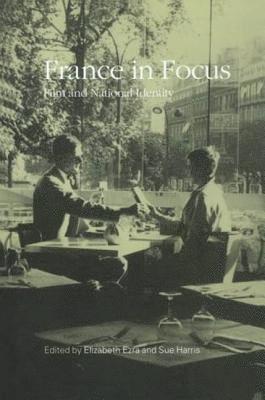
This volume brings together the work of leading film scholars from the UK, France and the US who assess a dominant art form's engagement with expressions of national identity at key moments in French cinematic history, from its origins at the end of the nineteenth century, through the inter-war period, the Occupation, the post-Liberation era, and the New Wave, up to the current state of the industry. The essays go against the grain in their attempts to construct an alternative history of French cinema, whether by bringing to light overlooked films or by examining well-known, indeed even 'over-exposed' films or filmmakers in a new light. In re-evaluating the work of Georges MEliEs, Jacques Becker, Jean Renoir, Diane Kurys, FranAois Truffaut, Jean-Luc Godard and Jean-Jacques Beineix, the contributors to this volume focus on the paradoxical centrality of the marginal in constructions of national identity. In doing so, they reveal the structure of 'l'exception franAaise', in which French culture makes an exception for itself by suppressing alterity within it.This multi-faceted assessment of French visual culture and identity will be of interest to students and scholars in French studies, media and film studies, cultural studies and French history.
474 kr
Skickas inom 10-15 vardagar
This volume brings together the work of leading film scholars from the UK, France and the US who assess a dominant art form's engagement with expressions of national identity at key moments in French cinematic history, from its origins at the end of the nineteenth century, through the inter-war period, the Occupation, the post-Liberation era, and the New Wave, up to the current state of the industry. The essays go against the grain in their attempts to construct an alternative history of French cinema, whether by bringing to light overlooked films or by examining well-known, indeed even 'over-exposed' films or filmmakers in a new light. In re-evaluating the work of Georges MEliEs, Jacques Becker, Jean Renoir, Diane Kurys, FranAois Truffaut, Jean-Luc Godard and Jean-Jacques Beineix, the contributors to this volume focus on the paradoxical centrality of the marginal in constructions of national identity. In doing so, they reveal the structure of 'l'exception franAaise', in which French culture makes an exception for itself by suppressing alterity within it.This multi-faceted assessment of French visual culture and identity will be of interest to students and scholars in French studies, media and film studies, cultural studies and French history.