Elizabeth Graham – författare
Visar alla böcker från författaren Elizabeth Graham. Handla med fri frakt och snabb leverans.
8 produkter
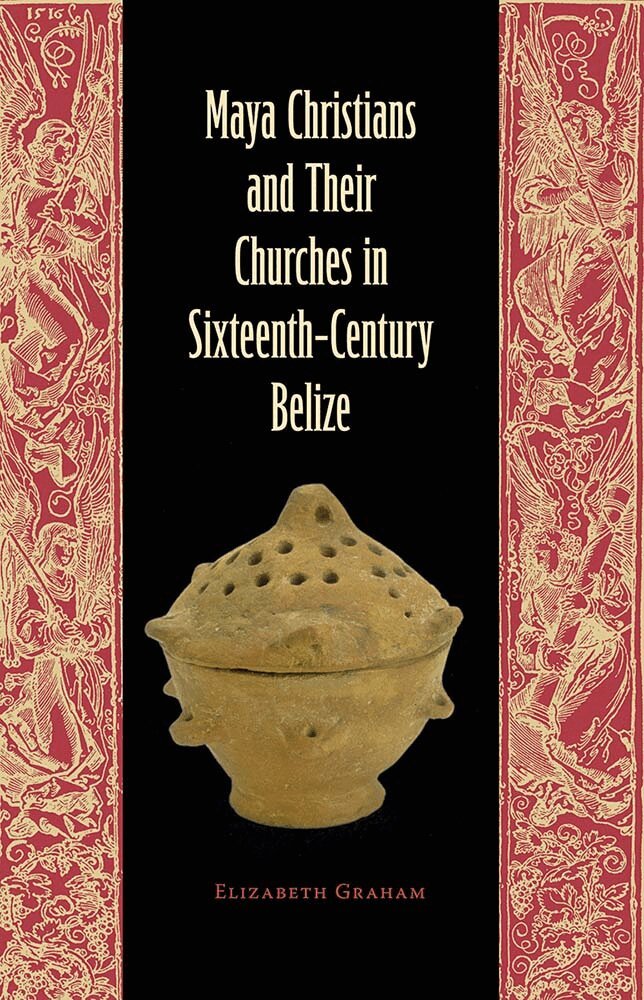
Maya Christians and Their Churches in Sixteenth-Century Belize
E-bok, 2011
1385 kr
Lägg i varukorg
Based on her analysis of archaeological evidence from the excavations of Maya churches at Tipu and Lamanai, Elizabeth Graham seeks to understand why the Maya sometimes actively embraced Catholicism during the period of European conquest and continued to worship in this way even after the end of …
Maya Christians and Their Churches in Sixteenth-Century Belize
E-bok, 2020
625 kr
Lägg i varukorg
It is widely held that Christianity came to Belize as an extension of the conquest of Yucatan and that adherence to Christian belief and practice was abandoned in the absence of enduring Spanish authority. An alternative view comes from the excavations of Maya churches at Tipu and Lamanai, which …
Maya Christians and Their Churches in Sixteenth-Century Belize
Häftad, 2020
387 kr
Lägg i varukorg
Based on her analysis of archaeological evidence from the excavations of Maya churches at Tipu and Lamanai, Elizabeth Graham seeks to understand why the Maya sometimes actively embraced Catholicism during the period of European conquest and continued to worship in this way even after the end of …
The last port
E-bok, 2017
34 kr
Lägg i varukorg
Here two years have passed since its separation and "Antonia" previously knew that it has talent to encourage travelers to destroy the shackles that restrict them on land, to enjoy what is going on on the ship, of matches, songs and disguised parties, and evenings revealing the talents of …
Wind tower
E-bok, 2017
34 kr
Lägg i varukorg
What if you spent Christmas with me in Athens? I have come up with events and I need to help you. It may be appropriate to inform you. And I will explain to you everything you find a ticket and everything you need, including some money inside the wallet, rely on your presence! If something happens …
Interpersonal Communication in Action
A Competency Approach
Av Elizabeth Graham, Aimee Miller-Ott
Häftad, 2025
1386 kr
Lägg i varukorg
This textbook helps students understand the intricacies of human interaction and communication practices in a variety of interpersonal contexts. Authors Elizabeth E. Graham and Aimee E. Miller-Ott demonstrate how being a competent communicator is a universal value, even more so now with rapidly …