Elizabeth Sheedy – författare
699 kr
Skickas inom 10-15 vardagar
2 241 kr
Skickas inom 10-15 vardagar
802 kr
Läs direkt efter köp
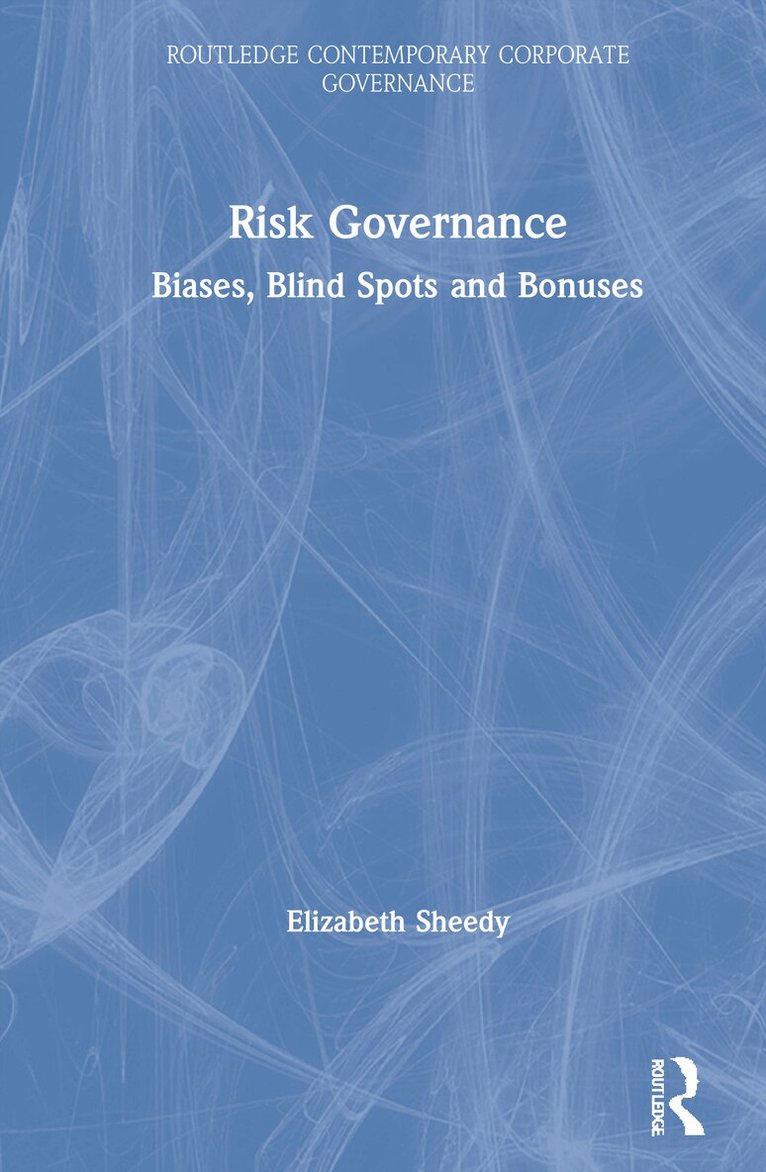
Biases, blind spots and bonuses (or incentives more broadly) have led to numerous risk management disasters. Risk governance is a potential solution to these problems yet is not always as effective as we would like it to be. One reason for that is the current dearth of risk governance expertise.
This book seeks to address this issue, providing:
Understanding of the fundamental forces that cause disasters: the biases, blind spots and bonuses. This understanding is drawn from the disciplines of economics/finance and psychology;
Explanation of the structures of risk governance and common challenges experienced in their use e.g. board risk committee, risk/compliance function, assurance function, risk appetite statement, risk disclosures;
Thorough investigation of risk culture and its importance in risk governance, including the assessment of risk culture;
Understanding of the mechanisms of executive compensation and how they link to risk management – one of the most difficult challenges confronting both risk and remuneration committees;
Explanation of the risk management process (based on international standards ISO31000), including practical guidance on risk communication, analysis and treatment;
Guidance on the management of strategic risk, emphasising the importance of scenario analysis;
Application of these principles to cyber risk, climate risk – two pervasive risks affecting almost every organisation;
Numerous case studies and examples drawn from various industries around the world; and
Discussion of what has been learned about risk governance from the COVID-19 experience.
The book is an essential guide for postgraduate students; participants in professional education programs in governance and risk management; directors; senior executives; risk, compliance and assurance professionals as well as conduct and prudential regulators worldwide.
802 kr
Läs direkt efter köp
Biases, blind spots and bonuses (or incentives more broadly) have led to numerous risk management disasters. Risk governance is a potential solution to these problems yet is not always as effective as we would like it to be. One reason for that is the current dearth of risk governance expertise.
This book seeks to address this issue, providing:
Understanding of the fundamental forces that cause disasters: the biases, blind spots and bonuses. This understanding is drawn from the disciplines of economics/finance and psychology;
Explanation of the structures of risk governance and common challenges experienced in their use e.g. board risk committee, risk/compliance function, assurance function, risk appetite statement, risk disclosures;
Thorough investigation of risk culture and its importance in risk governance, including the assessment of risk culture;
Understanding of the mechanisms of executive compensation and how they link to risk management – one of the most difficult challenges confronting both risk and remuneration committees;
Explanation of the risk management process (based on international standards ISO31000), including practical guidance on risk communication, analysis and treatment;
Guidance on the management of strategic risk, emphasising the importance of scenario analysis;
Application of these principles to cyber risk, climate risk – two pervasive risks affecting almost every organisation;
Numerous case studies and examples drawn from various industries around the world; and
Discussion of what has been learned about risk governance from the COVID-19 experience.
The book is an essential guide for postgraduate students; participants in professional education programs in governance and risk management; directors; senior executives; risk, compliance and assurance professionals as well as conduct and prudential regulators worldwide.
1 580 kr
Läs direkt efter köp
The definitive guide for any professional risk management in the financial services industry, Foundational Theories and Techniques for Risk Management provides a complete reference for financial theory and application, financial instruments, and the financial markets.
Part I provides details for financial risk managers managing risk in all areas of finance, from insurance and banking to asset management and institutional investing. Ten experts from around the world discuss every aspect of finance theory and how it is intertwined with the process of risk management. Beginning with an overview of risk and risk aversion, this resource delivers a comprehensive introduction to portfolio mathematics that includes discussion of the efficient frontier, portfolio theory, and the concept of portfolio diversification.
1 580 kr
Läs direkt efter köp
The definitive guide for any professional risk management in the financial services industry, Foundational Theories and Techniques for Risk Management provides a complete reference for financial theory and application, financial instruments, and the financial markets.
Part II provides an invaluable primer into navigating the complex and profitable area of hedge funds, with detailed descriptions of the major financial instruments, the valuation methods most appropriate for each, market risks, price drivers and their variables, and the professionals who participate in each. With the insights of an international group of investment professionals and thinkers, part II addresses the most active financial instruments, giving professional risk managers in financial services an invaluable edge in this high-risk, highly popular field.
1 580 kr
Läs direkt efter köp
The definitive guide for any professional risk management in the financial services industry, Foundational Theories and Techniques for Risk Management provides a complete reference for financial theory and application, financial instruments, and the financial markets.
Part III provides a robust discussion of how financial risk management takes place in the context of the world''s major financial markets: the money market, bonds, futures, commodities, stock, and foreign exchange. Beginning with an introduction to the world of financial markets, discussing the importance of liquidity, comparing exchanges to alternative markets, the role of technology, effects of post-trade processing, and new financial markets; each chapter delivers in-depth coverage of specific markets from a leading expert in the field.