
Elizabeth W. Goldstein – författare
Visar alla böcker från författaren . Handla med fri frakt och snabb leverans.
2 produkter
2 produkter
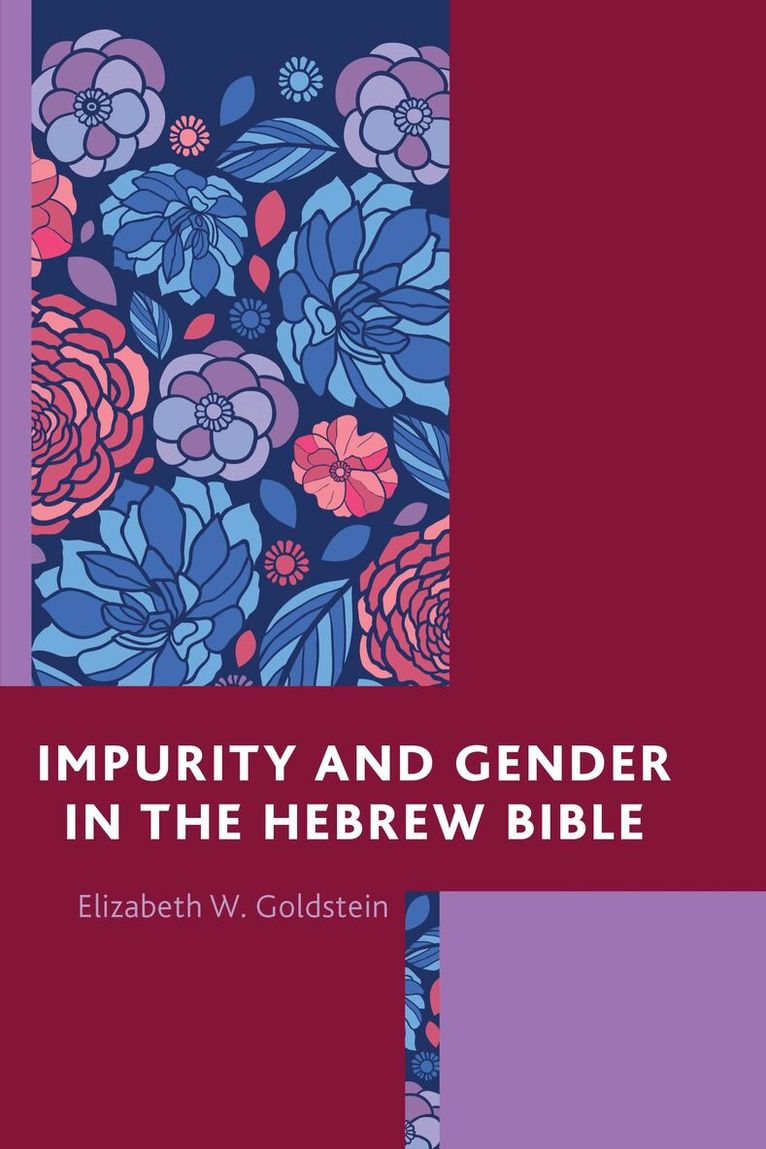
Häftad, Engelska, 2017
556 kr
Skickas inom 10-15 vardagar
Impurity and Gender in the Hebrew Bible explores the role of female blood in the Hebrew Bible and considers its theological implications for future understandings of purity and impurity in the Jewish religion. Influenced by the work of Jonathan Klawans (Sin and Impurity in Ancient Judaism), and using the categories of ritual and moral impurities, this book analyzes the way in which these categories intersect with women and with the impurity of female blood, and reads the biblical foundations of purity and blood taboos with a feminist lens. Ultimately, the purpose of this book is to understand the intersection between impurity and gender, figuratively and non-figuratively, in the Hebrew Bible. Goldstein traces this intersection from the years 1000 BCE-250 BCE and ends with a consideration of female impurity in the literature of Qumran.

Inbunden, Engelska, 2090
1 501 kr
Kommande
Addresses how Jewish women in particular have survived, suffered, and thrived overthree millennia.To study women in the Jewish traditions is to study women in history, literature, theology and religious law. This book contrasts the lives of real Jewish women with portrayals of Jewish women in religious texts and other sacred literature to investigate the presence or lack thereof of agency to express themselves religiously, the handling of social expectations, and pressure to transmit transitions to the next generation. Studying women in the Jewish traditions brings into sharp focus that any lived religion is not best studied by isolating such categories, but instead must be approached in a way that integrates all of them. Because of the diverse economic, geographical, historical, and political factors that have affected the forms of Jewish communities, the study of women in the Jewish traditions is an opportunity for students to begin to consider the multiple ways that group identities take shape. The study of women in the Jewish traditions also asks us to consider the importance of the individual in relationship to betterment of the group as a whole. These questions are important as we approach contemporary, penetrating questions about nationhood, global good, and the role of the individual.