Elliotte Rusty Harold – författare
342 kr
Skickas inom 5-8 vardagar
51 kr
Läs direkt efter köp
417 kr
Skickas inom 5-8 vardagar
436 kr
Läs direkt efter köp
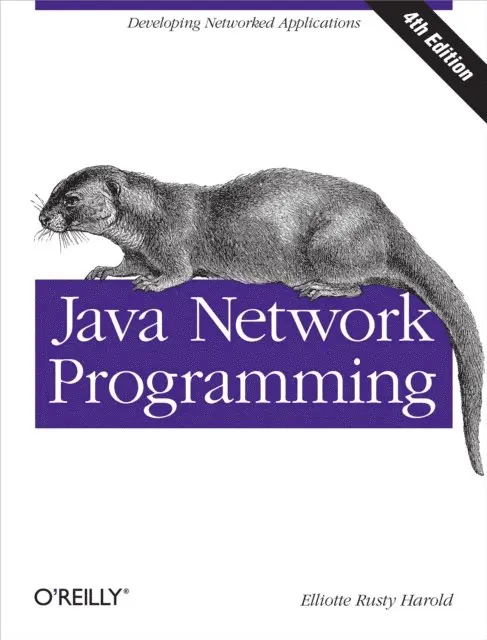
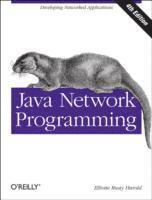
This practical guide provides a complete introduction to developing network programs with Java. You’ll learn how to use Java’s network class library to quickly and easily accomplish common networking tasks such as writing multithreaded servers, encrypting communications, broadcasting to the local network, and posting data to server-side programs.
Author Elliotte Rusty Harold provides complete working programs to illustrate the methods and classes he describes. This thoroughly revised fourth edition covers REST, SPDY, asynchronous I/O, and many other recent technologies.
Explore protocols that underlie the Internet, such as TCP/IP and UDP/IPLearn how Java’s core I/O API handles network input and outputDiscover how the InetAddress class helps Java programs interact with DNSLocate, identify, and download network resources with Java’s URI and URL classesDive deep into the HTTP protocol, including REST, HTTP headers, and cookiesWrite servers and network clients, using Java’s low-level socket classesManage many connections at the same time with the nonblocking I/O146 kr
Läs direkt efter köp
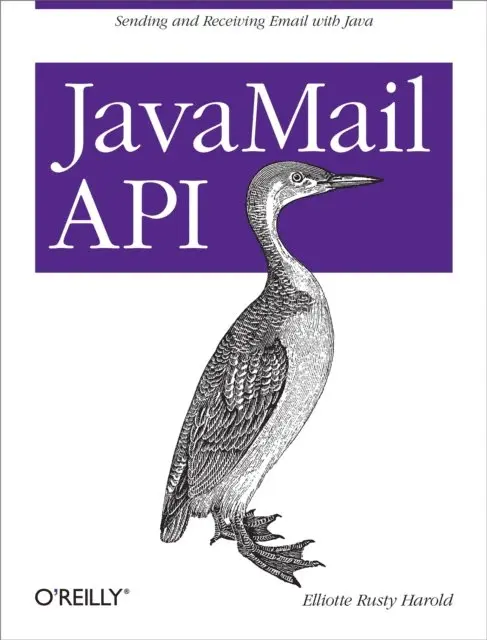
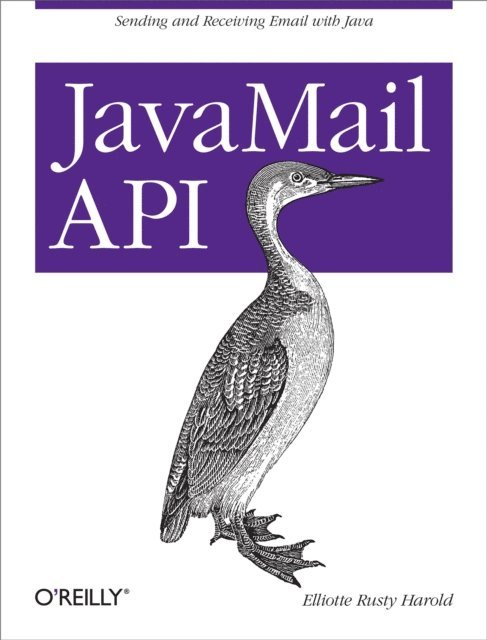
Send and receive email from Java applications by using the JavaMail API. With this concise book, you’ll learn how to communicate with existing SMTP, POP, and IMAP servers, and how to write your own.
Whether you need to build an email-centric application like a mailing list manager or simply add email notification to a larger product, JavaMail is the answer. Packed with code examples, this book shows you how JavaMail enables you to avoid low-level protocol details, so you can focus on what you actually want to say in a message.
Send, receive, and store email with POP3 and IMAPAdd password authentication to your programsManage mailboxes and accountsDownload mail attachmentsRespond to asynchronous email eventsDesign protocol-independent email programs130 kr
Läs direkt efter köp
Send and receive email from Java applications by using the JavaMail API. With this concise book, you’ll learn how to communicate with existing SMTP, POP, and IMAP servers, and how to write your own.
Whether you need to build an email-centric application like a mailing list manager or simply add email notification to a larger product, JavaMail is the answer. Packed with code examples, this book shows you how JavaMail enables you to avoid low-level protocol details, so you can focus on what you actually want to say in a message.
Send, receive, and store email with POP3 and IMAPAdd password authentication to your programsManage mailboxes and accountsDownload mail attachmentsRespond to asynchronous email eventsDesign protocol-independent email programs112 kr
Skickas inom 5-8 vardagar
367 kr
Läs direkt efter köp
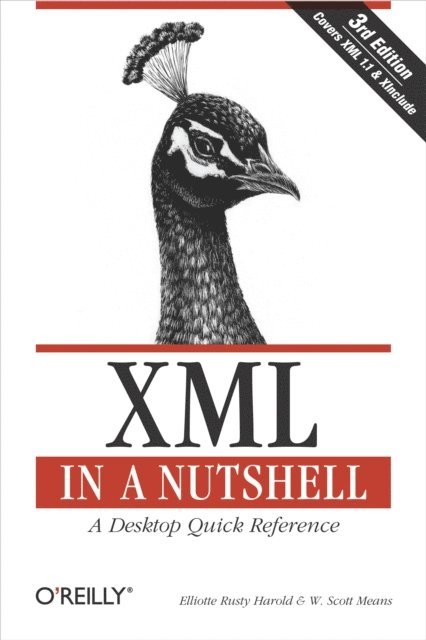
If you''re a developer working with XML, you know there''s a lot to know about XML, and the XML space is evolving almost moment by moment. But you don''t need to commit every XML syntax, API, or XSLT transformation to memory; you only need to know where to find it. And if it''s a detail that has to do with XML or its companion standards, you''ll find it--clear, concise, useful, and well-organized--in the updated third edition of XML in a Nutshell.With XML in a Nutshell beside your keyboard, you''ll be able to:
Quick-reference syntax rules and usage examples for the core XML technologies, including XML, DTDs, Xpath, XSLT, SAX, and DOMDevelop an understanding of well-formed XML, DTDs, namespaces, Unicode, and W3C XML SchemaGain a working knowledge of key technologies used for narrative XML documents such as web pages, books, and articles technologies like XSLT, Xpath, Xlink, Xpointer, CSS, and XSL-FOBuild data-intensive XML applicationsUnderstand the tools and APIs necessary to build data-intensive XML applications and process XML documents, including the event-based Simple API for XML (SAX2) and the tree-oriented Document Object Model (DOM)This powerful new edition is the comprehensive XML reference. Serious users of XML will find coverage on just about everything they need, from fundamental syntax rules, to details of DTD and XML Schema creation, to XSLT transformations, to APIs used for processing XML documents. XML in a Nutshell also covers XML 1.1, as well as updates to SAX2 and DOM Level 3 coverage. If you need explanation of how a technology works, or just need to quickly find the precise syntax for a particular piece, XML in a Nutshell puts the information at your fingertips.Simply put, XML in a Nutshell is the critical, must-have reference for any XML developer.489 kr
Läs direkt efter köp
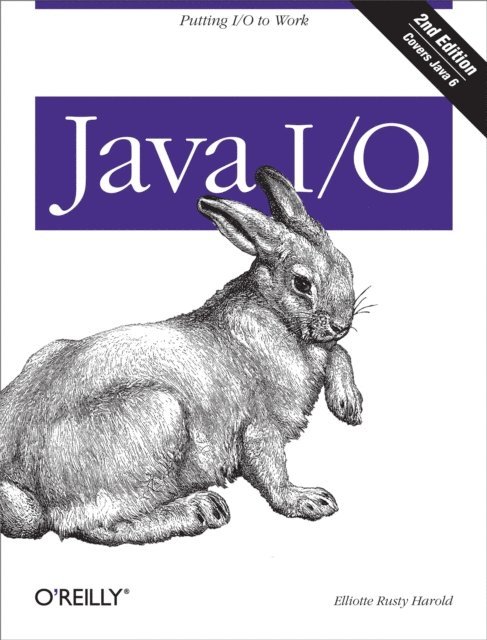
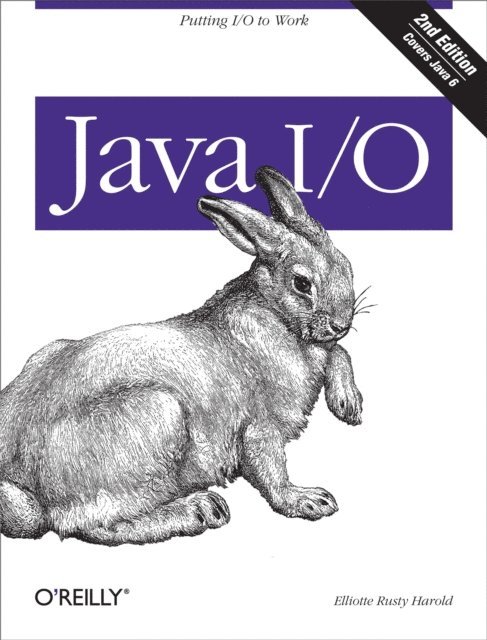
All of Java''s Input/Output (I/O) facilities are based on streams, which provide simple ways to read and write data of different types. Java provides many different kinds of streams, each with its own application. The universe of streams is divided into four largecategories: input streams and output streams, for reading and writing binary data; and readers and writers, for reading and writing textual (character) data. You''re almost certainly familiar with the basic kinds of streams--but did you know that there''s a CipherInputStream for reading encrypted data? And a ZipOutputStream for automaticallycompressing data? Do you know how to use buffered streams effectively to make your I/O operations more efficient? Java I/O, 2nd Edition has been updated for Java 5.0 APIs and tells you all you ever need to know about streams--and probably more.
A discussion of I/O wouldn''t be complete without treatment of character sets and formatting. Java supports the Unicode standard, which provides definitions for the character sets of most written languages. Consequently, Java is the first programming language that lets you do I/O in virtually any language. Java also provides a sophisticated model for formatting textual and numeric data. Java I/O, 2nd Edition shows you how to control number formatting, use characters aside from the standard (but outdated) ASCII character set, and get a head start on writing truly multilingual software.
Java I/O, 2nd Edition includes:
Coverage of all I/O classes and related classesIn-depth coverage of Java''s number formatting facilities and its support for international character sets527 kr
Läs direkt efter köp
All of Java''s Input/Output (I/O) facilities are based on streams, which provide simple ways to read and write data of different types. Java provides many different kinds of streams, each with its own application. The universe of streams is divided into four largecategories: input streams and output streams, for reading and writing binary data; and readers and writers, for reading and writing textual (character) data. You''re almost certainly familiar with the basic kinds of streams--but did you know that there''s a CipherInputStream for reading encrypted data? And a ZipOutputStream for automaticallycompressing data? Do you know how to use buffered streams effectively to make your I/O operations more efficient? Java I/O, 2nd Edition has been updated for Java 5.0 APIs and tells you all you ever need to know about streams--and probably more.
A discussion of I/O wouldn''t be complete without treatment of character sets and formatting. Java supports the Unicode standard, which provides definitions for the character sets of most written languages. Consequently, Java is the first programming language that lets you do I/O in virtually any language. Java also provides a sophisticated model for formatting textual and numeric data. Java I/O, 2nd Edition shows you how to control number formatting, use characters aside from the standard (but outdated) ASCII character set, and get a head start on writing truly multilingual software.
Java I/O, 2nd Edition includes:
Coverage of all I/O classes and related classesIn-depth coverage of Java''s number formatting facilities and its support for international character sets