Emanuela Arezzo – författare
Visar alla böcker från författaren Emanuela Arezzo. Handla med fri frakt och snabb leverans.
3 produkter
3 produkter
Inbunden, Engelska, 2011
2 084 kr
Skickas inom 5-8 vardagar
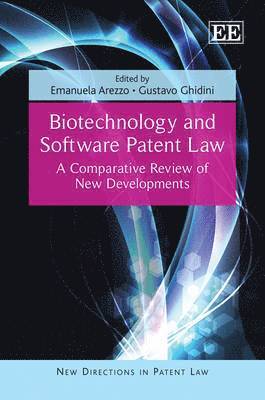
The new millennium has carried several challenges for patent law. This up-to-date book provides readers with an important overview of the most critical issues patent law is still facing today at the beginning of the twenty first century, on both sides of the Atlantic. New technological sectors have emerged, each one with its own features with regard to innovation process and pace. From the most controversial cases in biotech to the most recent decisions in the field of software and business methods patent, patent law has tried to stretch its boundaries in a way to accommodate such new and controversial subject matters into its realm. Biotechnology and Software Patent Law will strongly appeal to postgraduate students specializing in IP law, international law, commercial and business law, competition law as well as IP scholars, academics and lawyers. Contributors: S.D. Anderman, R.B. Bakels, S.J.R. Bostyn, D.L. Burk, V. Di Cataldo, V. Falce, C. Geiger, R.M. Hilty, C.M. Holman, M.A. Lemley, A. Ottolia, J. Pila, J.R. Thomas, P.L.C. Torremans
E-bok
Engelska, 20261 433 kr
Läs direkt efter köp
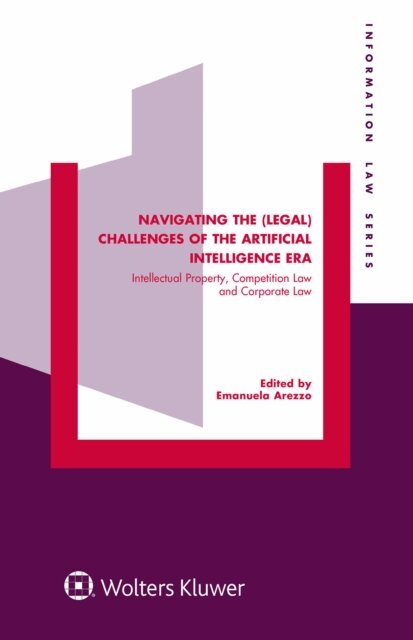
Information Law SeriesAs AI systems increasingly permeate corporate decision-making, consumer markets, research, education, and cultural production, they offer unprecedented opportunities for innovation while simultaneously raising fundamental regulatory, ethical, and legal challenges. In this timely and important book, a distinguished group of European scholars investigates how law and policy are responding to the multifaceted disruptions brought about by AI, focusing on issues of intellectual property, competition law, and corporate law.In the context of AI s legal challenges, the chapters present an in-depth analysis of such aspects as the following:the European regulatory framework governing the intersection of copyright and AI;how copyright law should treat outputs produced by artificial intelligence;authors remuneration rights and AI innovation;balancing broad access to knowledge with the protection of authors moral and material interests as human rights;enforcement of brand protection in the digital environment;adequacy of existing regimes for database protection in the age of AI;anti-discrimination value of morality-based exclusions from patentability;challenges for antitrust enforcement in the era of AI;necessity to protect diversity and freedom of choice in competition law;corporate and financial transformations induced by digitalization; andimperative to establish internal controls to ensure responsible use of AI systems.The volume is rich with comparative insights and critical reflections on relevant case law, regulatory initiatives, and enforcement challenges.In its exploration of sustainability, ethics, and fundamental rights as emerging parameters in the legal governance of AI, these chapters collectively present a comprehensive and critical account of the evolving legal landscape of AI. They underscore both the enduring relevance of established legal doctrines and the pressing need for their reinterpretation in light of technological change. The book will be welcomed by practitioners, scholars, and policymakers, equipping them with critical tools to navigate and anticipate the evolving legal framework of AI.
E-bok
PDF, Engelska, 20261 433 kr
Läs direkt efter köp
Information Law SeriesAs AI systems increasingly permeate corporate decision-making, consumer markets, research, education, and cultural production, they offer unprecedented opportunities for innovation while simultaneously raising fundamental regulatory, ethical, and legal challenges. In this timely and important book, a distinguished group of European scholars investigates how law and policy are responding to the multifaceted disruptions brought about by AI, focusing on issues of intellectual property, competition law, and corporate law.In the context of AI s legal challenges, the chapters present an in-depth analysis of such aspects as the following:the European regulatory framework governing the intersection of copyright and AI;how copyright law should treat outputs produced by artificial intelligence;authors remuneration rights and AI innovation;balancing broad access to knowledge with the protection of authors moral and material interests as human rights;enforcement of brand protection in the digital environment;adequacy of existing regimes for database protection in the age of AI;anti-discrimination value of morality-based exclusions from patentability;challenges for antitrust enforcement in the era of AI;necessity to protect diversity and freedom of choice in competition law;corporate and financial transformations induced by digitalization; andimperative to establish internal controls to ensure responsible use of AI systems.The volume is rich with comparative insights and critical reflections on relevant case law, regulatory initiatives, and enforcement challenges.In its exploration of sustainability, ethics, and fundamental rights as emerging parameters in the legal governance of AI, these chapters collectively present a comprehensive and critical account of the evolving legal landscape of AI. They underscore both the enduring relevance of established legal doctrines and the pressing need for their reinterpretation in light of technological change. The book will be welcomed by practitioners, scholars, and policymakers, equipping them with critical tools to navigate and anticipate the evolving legal framework of AI.