Emilia Onyema – författare
2 148 kr
Skickas inom 10-15 vardagar
720 kr
Skickas inom 10-15 vardagar
851 kr
Läs direkt efter köp
This book examines the formation, nature and effect of the arbitrators’ contract, addressing topics such as the appointment, challenge, removal and duties and rights of arbitrators, disputing parties and arbitration institutions. The arguments made in the book are based on a semi-autonomous theory of the juridical nature of international arbitration and a contractual theory of the legal nature of these relationships. From these premises, the book analyses the formation of the arbitrator’s contract in both ad hoc and institutional references. It also examines the institution’s contract with the disputing parties and its effect on the arbitrator’s contract under institutional references. The book draws from national arbitration laws and institutional rules in various jurisdictions to give a global view of the issues examined in it. The arbitrator’s contract is analysed from a global perspective of arbitral law and practice with insights from various jurisdictions in Africa, Asia, Europe, North and South America.
The primary focus of the book is an analysis of the formation of the arbitrator’s contract and the terms of this contract and the institution’s contract. The primary question of the consequences (if any) of the breaches of the terms of these contracts and its impact on the exclusion or limitation of liability of arbitrators and institutions is also analysed with the conclusion that since these transactions are contractual and the terms can be categorised as in any normal contract, then normal contractual remedies can be applied to the breaches of these terms.
International Commercial Arbitration and the Arbitrator’s Contract will be of great value to arbitration practitioners and researchers in arbitration. It will also be very useful to students of arbitration on the topics of arbitrators and arbitration institution.
821 kr
Läs direkt efter köp
This book examines the formation, nature and effect of the arbitrators’ contract, addressing topics such as the appointment, challenge, removal and duties and rights of arbitrators, disputing parties and arbitration institutions. The arguments made in the book are based on a semi-autonomous theory of the juridical nature of international arbitration and a contractual theory of the legal nature of these relationships. From these premises, the book analyses the formation of the arbitrator’s contract in both ad hoc and institutional references. It also examines the institution’s contract with the disputing parties and its effect on the arbitrator’s contract under institutional references. The book draws from national arbitration laws and institutional rules in various jurisdictions to give a global view of the issues examined in it. The arbitrator’s contract is analysed from a global perspective of arbitral law and practice with insights from various jurisdictions in Africa, Asia, Europe, North and South America.
The primary focus of the book is an analysis of the formation of the arbitrator’s contract and the terms of this contract and the institution’s contract. The primary question of the consequences (if any) of the breaches of the terms of these contracts and its impact on the exclusion or limitation of liability of arbitrators and institutions is also analysed with the conclusion that since these transactions are contractual and the terms can be categorised as in any normal contract, then normal contractual remedies can be applied to the breaches of these terms.
International Commercial Arbitration and the Arbitrator’s Contract will be of great value to arbitration practitioners and researchers in arbitration. It will also be very useful to students of arbitration on the topics of arbitrators and arbitration institution.
2 140 kr
Skickas inom 3-6 vardagar
1 920 kr
Läs direkt efter köp
Given the dynamic growth of African economies and the expansion of cross-border trade and commerce, the need for readily accessible African arbitral institutions has become increasingly urgent. Accordingly, this book not only offers an in-depth analysis of the role arbitration centres based in African cities currently play throughout the continent but also defines and recommends ways in which they can emerge as a major and indispensable factor in the growth and development of commerce in Africa.
Administrators of arbitration institutions from a variety of African countries offer insightful appraisals and suggestions directed to promoting the development and delivery of efficient, effective arbitration services to users across the continent. Among the issues and topics covered are the following:
• types of arbitration institutions available in Africa;• viability and sustainability of these institutions;• institutions’ relationship with government;• quality of service;• performance of arbitration institutions in their respective countries and regions;• national laws that regulate arbitration in Africa’s fifty-four states;• extent of collaboration with foreign institutions;• provision of functional facilities, transcription services, hearing rooms, document handling, and managerial and translation services;• marketing activities and strategies;• mending the disconnect between Francophone and Anglophone countries;• role of the Common Court of Justice and Arbitration (CCJA); and• necessity of overcoming foreign negative perceptions and bias.The book was inspired by an arbitration conference hosted by the African Union Commission at its headquarters in Addis Ababa in July 2015.
As a contribution to the discussion of the role arbitration and arbitration institutions can play in transforming the legal landscape in African countries for the resolution of commercial disputes – indeed, the entire discourse on legal efficiency and access to justice in African countries – this book will prove invaluable to practitioners and academics in international commercial arbitration within and beyond the continent. Its emphasis on the creation of a facilitative, supportive, and conducive cultural and infrastructural environment as a mechanism for commercial dispute resolution in Africa and for the practice of arbitration in Africa will appeal to in-house counsel, external legal advisors, consultants, arbitral institutions, arbitrators, and government policymakers.
2 589 kr
Skickas inom 5-8 vardagar
2 284 kr
Läs direkt efter köp
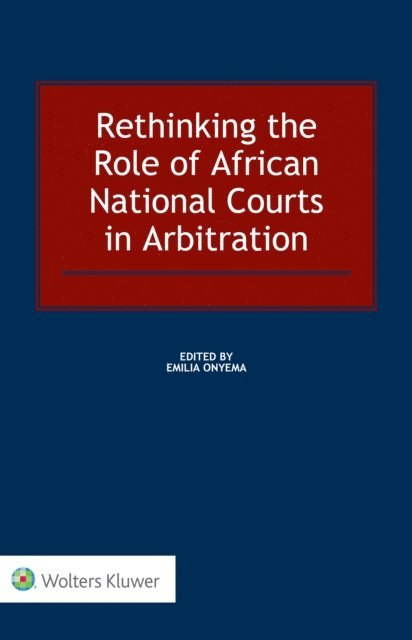
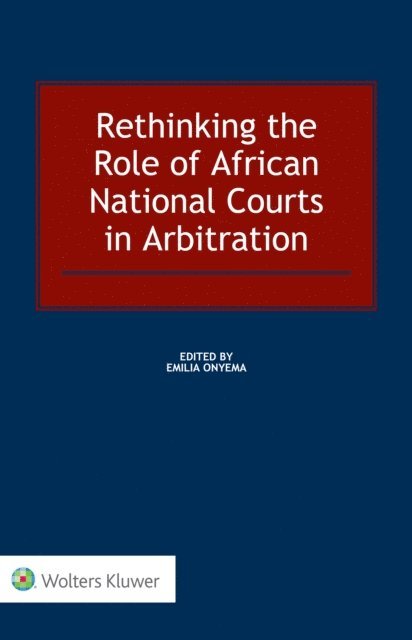
With the increase in commercial transactions within the fifty-four independent African states and at the international level, it has become apparent that most of the legal framework for arbitration across the continent require reform. Accordingly, in recent years, as this first in-depth treatment of arbitration in Africa shows, jurisprudence from national courts of various African jurisdictions demonstrates that the courts are becoming more pro-arbitration and judges increasingly better understand that their role is to support or complement the arbitral process.
This book documents the second SOAS Arbitration in Africa conference held in Lagos in June 2016. In thirteen lucid chapters, African practitioners and academics and European specialists in African legal and arbitral systems provide a remarkably thorough overview of the relation of courts and arbitration in the continent. Among the matters that arise for discussion are the:
• disposition of courts in Africa towards arbitration, whether supportive or interventionist;• involvement of courts in the arbitral process before, during, and after an award has been rendered;• publication and access to arbitration-related decisions from African courts;• enforcement of annulled awards in African states under the New York Convention;• prospects for the establishment of a pan-African investment court; and• how foreign courts (particularly in the United States, France, and Switzerland) perceive African arbitration.Because of the wide range of developmental stages among Africa’s numerous court and legal systems, Part I of the book explores generic issues relevant to courts and arbitration, followed by detailed descriptions, including court decisions, of the situation in eight specific jurisdictions – Egypt, South Africa, Sudan, Mauritius, Nigeria, Ghana, Rwanda, and Kenya. The authors of these latter chapters are legal practitioners and academics from each of these countries. Throughout this book, policy recommendations for improving access to court decisions and laws in African states are brought to the fore.
In its expertise-based advocacy for a mutually harmonious and supportive co-existence for arbitration and litigation in the context of the complexities and peculiarities of African states – and its confrontation of the predominantly negative perception that often leads to ‘arbitration flight’ from the continent – this book helps companies, investors, and their advisors to base their decisions on facts and not perceptions. It will be of great value to practising lawyers in arbitration as counsel or arbitrators, companies doing transnational business, global law firms, government officials, and academics in the field.
2 204 kr
Läs direkt efter köp
With the increase in commercial transactions within the fifty-four independent African states and at the international level, it has become apparent that most of the legal framework for arbitration across the continent require reform. Accordingly, in recent years, as this first in-depth treatment of arbitration in Africa shows, jurisprudence from national courts of various African jurisdictions demonstrates that the courts are becoming more pro-arbitration and judges increasingly better understand that their role is to support or complement the arbitral process.
This book documents the second SOAS Arbitration in Africa conference held in Lagos in June 2016. In thirteen lucid chapters, African practitioners and academics and European specialists in African legal and arbitral systems provide a remarkably thorough overview of the relation of courts and arbitration in the continent. Among the matters that arise for discussion are the:
• disposition of courts in Africa towards arbitration, whether supportive or interventionist;• involvement of courts in the arbitral process before, during, and after an award has been rendered;• publication and access to arbitration-related decisions from African courts;• enforcement of annulled awards in African states under the New York Convention;• prospects for the establishment of a pan-African investment court; and• how foreign courts (particularly in the United States, France, and Switzerland) perceive African arbitration.Because of the wide range of developmental stages among Africa’s numerous court and legal systems, Part I of the book explores generic issues relevant to courts and arbitration, followed by detailed descriptions, including court decisions, of the situation in eight specific jurisdictions – Egypt, South Africa, Sudan, Mauritius, Nigeria, Ghana, Rwanda, and Kenya. The authors of these latter chapters are legal practitioners and academics from each of these countries. Throughout this book, policy recommendations for improving access to court decisions and laws in African states are brought to the fore.
In its expertise-based advocacy for a mutually harmonious and supportive co-existence for arbitration and litigation in the context of the complexities and peculiarities of African states – and its confrontation of the predominantly negative perception that often leads to ‘arbitration flight’ from the continent – this book helps companies, investors, and their advisors to base their decisions on facts and not perceptions. It will be of great value to practising lawyers in arbitration as counsel or arbitrators, companies doing transnational business, global law firms, government officials, and academics in the field.