Emmanuel Gerard – författare
Visar alla böcker från författaren Emmanuel Gerard. Handla med fri frakt och snabb leverans.
3 produkter
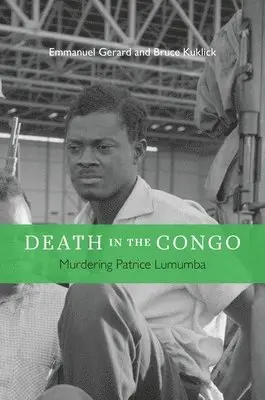
Death in the Congo
Murdering Patrice Lumumba
Av Emmanuel Gerard, Bruce Kuklick
Inbunden, 2015
4,0 utav 5 stjärnor. Totalt antal röster: (1)
396 kr
Lägg i varukorg
Death in the Congo is a gripping account of a murder that became one of the defining events in postcolonial African history. It is no less the story of the untimely death of a national dream, a hope-filled vision very different from what the war-ravaged Democratic Republic of the Congo became in …
Left Catholicism, 1943–1955
Catholics and Society in Western Europe at the Point of Liberation
Av Emmanuel Gerard, G.-R. Horn
Häftad, 2001
723 kr
Lägg i varukorg
This volume constitutes the first attempt to analyse the phenomenon of Western European Left Catholicism from a comparative and transnational perspective. Decisively shaped by the turbulent atmosphere of war, occupation and resistance, the years 1943-1955 gave rise to a most unusual flowering of …
Christian Democratic Parties in Europe since the End of the Cold War
Av Steven Van Hecke, Emmanuel Gerard
Häftad, 2004
387 kr
Tillfälligt slut
The period since the end of the Cold War has been characterised by an acceleration in the European integration process, a changing pattern of political ideologies and the emergence of new political parties and issues. This book assesses the impact of these phenomena on Christian Democratic parties …